
US Appeals Court Rejects Delay in Repaying Billions to Denmark
A US appeals court has rejected the Justice Department's request to delay the repayment of a multi-billion dollar sum to Denmark, dealing a blow to the Trump administration.
48 stories found
A US appeals court has rejected the Justice Department's request to delay the repayment of a multi-billion dollar sum to Denmark, dealing a blow to the Trump administration.
An appeals court has denied the Trump administration's request to pause a legal battle concerning refunds.

An appeals court is reviewing a government effort to reinstate findings from the 2007 interrogations of a Guantánamo Bay prisoner involved in the 9/11 case.

An appeals court has allowed Texas to enforce its law restricting drag shows in the presence of minors, a ruling celebrated by Attorney General Ken Paxton.
The Court of Appeal reinstated the Magistrate’s Court’s conviction and fine against a tow truck driver, nearly seven years after a fatal Johor highway crash.

International journalist organizations have expressed concern over the Appeals Court's decision in the case between IRL and Kočo Anđušev, believing judicial pressure on independent journalism will have far-reaching consequences for media freedom in North Macedonia.

The Belgrade Appeals Court has ruled that Radio Belgrade must reinstate journalist Mirjana Nikolić, who was dismissed seven years ago.

The ruling says a lower judge was wrong to force concert promoters to pay more than double their old rate and factor VIP packages into the fees.
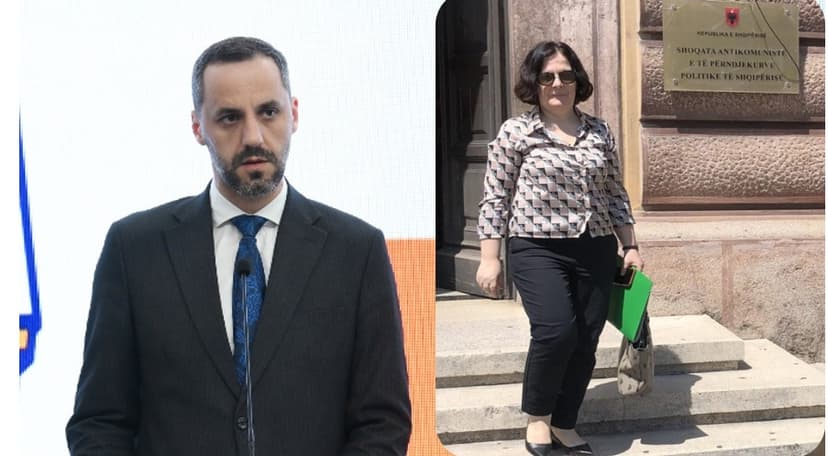
Albanian Minister of Justice, Besfort Lamallari, has requested a disciplinary investigation against Tirana Appeals Court judge Irena Brahimllari for a two-year delay in issuing a decision, which prevented an appeal.
An appeals court is questioning the shifting justifications provided by the Trump administration's EPA for canceling clean energy contracts.
With their antitrust trial tentatively set to start next Monday, Live Nation and Ticketmaster have filed a motion to delay the proceedings so that an appeals court can determine whether two legal ques
Hong Kong's Court of Appeal upheld convictions and sentences for twelve pro-democracy activists under China's national security law, a decision that has drawn international criticism.

A federal appeals court has lifted a block on a Louisiana law requiring the display of the Ten Commandments in public school classrooms, sparking constitutional debate.
Regenxbio secured a legal victory against Sarepta in an appeals court regarding a patent dispute.
Corcept Therapeutics' stock declined after an appeals court ruled in favor of Teva Pharmaceuticals in a patent dispute concerning Corcept's drug Korlym.
The Pentagon is reviewing its collaborations with higher education institutions, while a conservative appeals court has upheld the military's ban on recruits living with HIV.
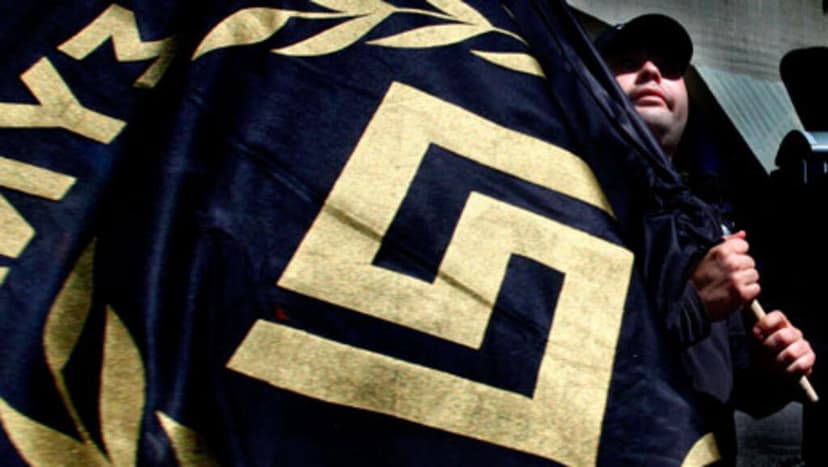
The Greek Court of Appeals has unanimously upheld the initial verdict, confirming that the far-right Golden Dawn party is a criminal organization and finding all 42 defendants, including Nikos Michaloliakos and Ilias Kasidiaris, guilty.

Administration to terminate appeals in four cases involving law firms that sued to block measures from taking effect
Appeals court upholds Sossion's dismissal, notes procedural lapses standardmedia.co.ke

A Finnish appeals court shortened the sentence for an elderly man convicted of human trafficking and aggravated rape, overturning the rape charge and making the remaining sentence conditional.

The Icelandic Court of Appeals has affirmed the conviction of nurse Steina Árnadóttir, who was found guilty of causing the death of a patient in a psychiatric ward at Landspítalinn in 2021.
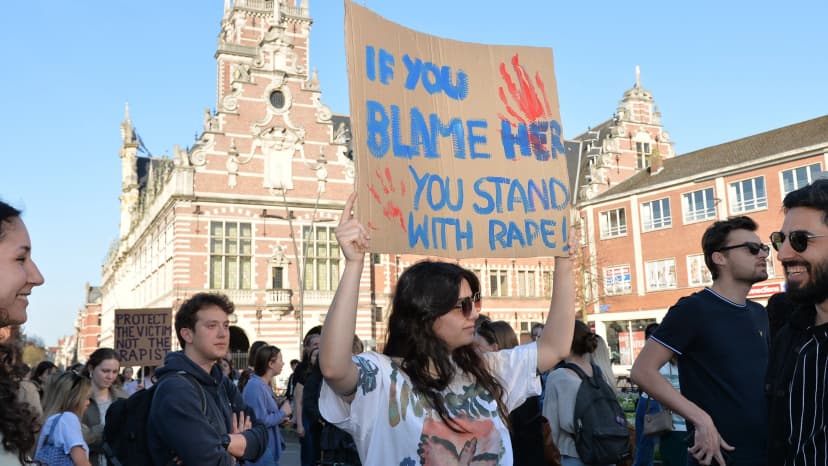
A Brussels appeals court confirmed the suspended sentence for a medical student convicted of rape, citing his 'considerate' behavior, a decision that has drawn significant criticism.
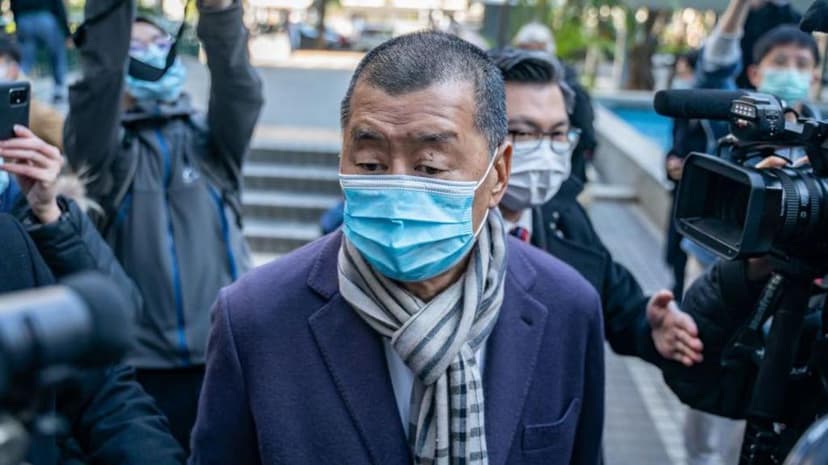
A Hong Kong appeals court has overturned pro-democracy media tycoon Jimmy Lai's fraud conviction related to an alleged lease violation at the now-shuttered Apple Daily newspaper headquarters, quashing his jail term stemming from the case.
An appeals court has overturned a previous finding that BNSF Railway contributed to two asbestos-related deaths in a Montana town, impacting a significant legal case.

War Secretary Pete Hegseth appeals court ruling that blocked Pentagon from punishing Sen. Mark Kelly over video urging troops to defy "illegal orders."
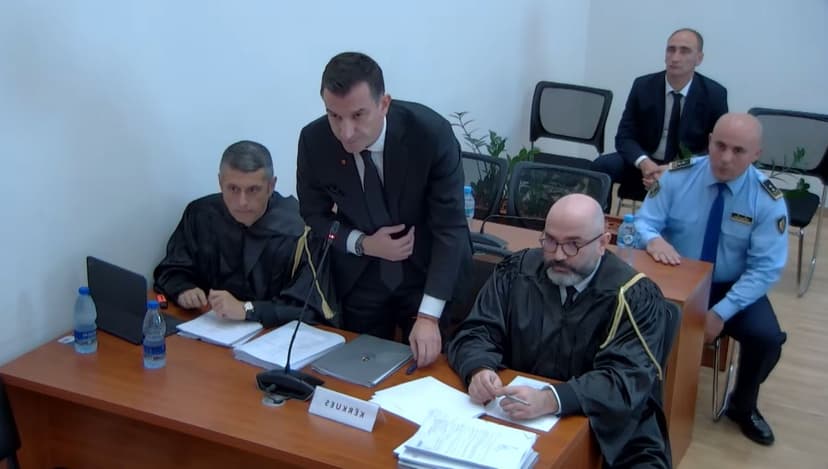
A session was held at the Special Appeals Court for Tirana Mayor Erion Veliaj, who is seeking a lighter measure and has offered financial guarantees, with Judge Nertina Kosova presiding over the hearing.
Hong Kong's appeals court has upheld the jailing of 12 democracy campaigners, a decision that has drawn international attention.

A Hong Kong court has upheld the imprisonment of 12 pro-democracy activists who had hoped for acquittal in a case related to the controversial security law.
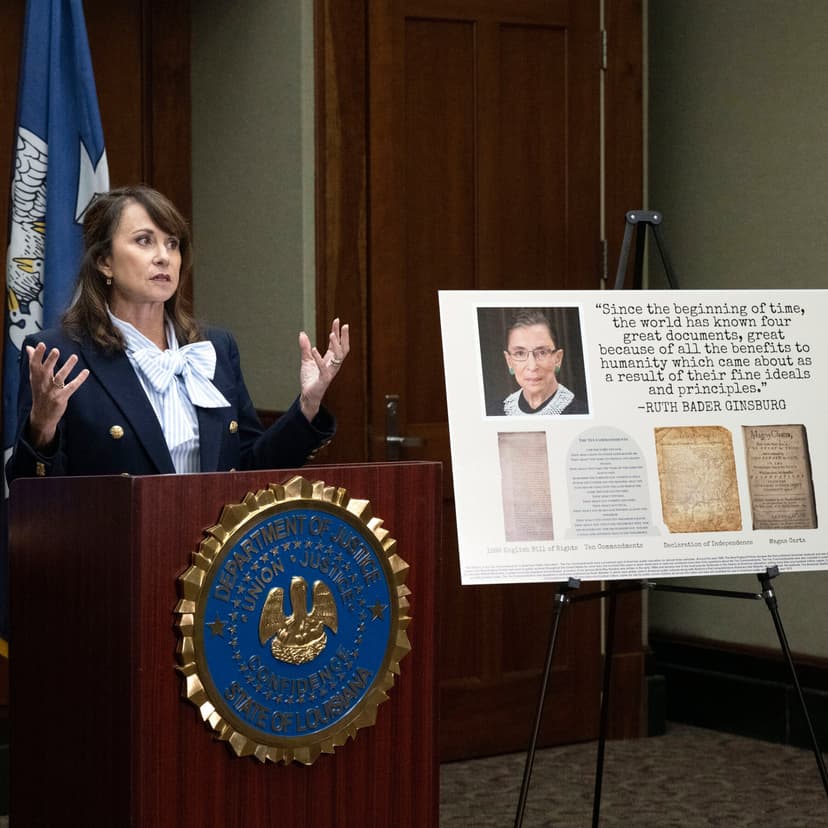
A federal appeals court has vacated a temporary block on Louisiana's 2024 law requiring the Ten Commandments in classrooms, overturning a previous decision that deemed it unconstitutional.

How Bhattacharya's NIH Is Rethinking China, DEI, And High‑Risk Labs Authored by Jeff Louderback, Jan Jekielek via The Epoch Times (emphasis ours), For decades, scientists have looked at the National Institutes of Health (NIH) as an agency that publishes papers, according to Dr. Jay Bhattacharya. Dr. Jay Bhattacharya, director of the National Institutes of Health, in Washington, on Feb. 8, 2026. Irene Luo/The Epoch Times Under President Donald Trump’s second term, the emphasis for NIH funding has shifted to “provable, testable hypotheses, not ideological narratives,” he said, which is resulting in widespread reforms to the agency. Bhattacharya, who obtained both a doctorate in economics and a medical degree from Stanford University within three years of each other, outlined changes that the NIH has implemented in his first year as the agency’s director and talked about his vision for the next three years in an interview with Epoch Times Senior Editor Jan Jekielek. The NIH has been instrumental in medical advances for decades, Bhattacharya said, but in the 21st century, it became “much more of a staid institution, not willing to take intellectual risks.” During the same time, the agency “was willing to take risks on dangerous gain-of-function and other social agendas, like DEI, that it had no business really engaging in.” “I think the NIH now, under my leadership, under President Trump’s leadership, and under what Secretary [Robert F.] Kennedy is looking over … is focused on actually addressing the chronic health problems of this country, reversing the flatlining of life expectancy, and making good on its mission ... research that improves the health and longevity of the American people, and the whole world,” he said. One of the 13 agencies managed by the Department of Health and Human Services, the NIH is the largest supporter of biomedical research globally, providing 85 percent of all biomedical research funding worldwide, according to Bhattacharya. It funds about $50 billion in scientific research via grants to hundreds of thousands of researchers at academic institutions and hospitals, he said. The NIH is not an agency that makes decisions or policies about public health directly, Bhattacharya said, noting that he intends to “remove the politicization of science that has existed for decades.” The National Institutes of Health Gateway Center in Bethesda, Md., on June 8, 2025. During President Donald Trump’s second term, National Institutes of Health Director Dr. Jay Bhattacharya said the agency “is focused on actually addressing the chronic health problems of this country.” Elizabeth Frantz/Reuters/File Photo Political Agendas Over the past 15 to 20 years, the NIH has incorporated political rather than scientific agendas, Bhattacharya told The Epoch Times. “Probably the most prominent example of this is DEI—diversity, equity and inclusion,” he said. “If you were a researcher outside the NIH, the ticket to getting sort of extra, relatively easy funds was to promise to do DEI research. Looking into it, much of that research had no real scientific basis at all. I don’t even characterize this as science.” As an example, Bhattacharya used a project that studied the question: “Is structural racism the root reason why African Americans have worse hypertension results than other races?” “The problem with that hypothesis is that there’s no way to test it,” he said. “If structural racism is the cause, then what control group can you have to test the idea that that is true? ... None of that actually translated over to better health for anybody, much less for African Americans. “Scientists of the country understand that if they want NIH support, they need to propose projects that have the chance of improving the health of people rather than achieving some ideology that should not belong at the NIH.” The NIH has redirected its funding since Trump took office for his second term. That includes allocating funds for “early career scientists,” Bhattacharya said. President Donald Trump (C) speaks as National Institutes of Health Director Dr. Jay Bhattacharya (2nd L) looks on during a press conference at the White House on May 12, 2025. The NIH redirected its funding priorities after Trump began his second term. Andrew Harnik/Getty Images Funding Changes There should be “fundamental changes” with the way the NIH funds educational institutions, Bhattacharya said, and he intends to work with Congress “to make [this] happen.” On Jan. 5, a federal appeals court ruled that the Trump administration cannot reduce the amount of money the NIH pays grant recipients for indirect costs, including administration and facility maintenance. The ruling applies to three lawsuits filed by the attorneys general of Massachusetts and 21 other states, as well as hospitals, schools, and the associations that represent them. The NIH published a guidance document in February 2025 to limit how much grant funding could flow to research institutions to cover their indirect costs. These are costs that cannot be directly attributed to an individual research project and include expenses related to funding equipment, facilities, and research staff. The guidance document states that these indirect costs could not exceed 15 percent of funding for direct research costs, regardless of the costs incurred at universities. The NIH stated that Johns Hopkins, Yale, and Harvard charged in excess of 60 percent for indirect costs, even though they had billions of dollars in endowments. Attorneys for those who filed suit said small universities don’t have such large endowments and that if the guidance took effect, there would be many layoffs, stalled clinical trials, and laboratory closures. “If you don’t have amazing scientists who can win the grants, you’re not going to get the facility support. But in order to attract excellent scientists to your institution, you have to have excellent facilities. It’s the kind of Catch-22 that guarantees that our funding from the NIH is going to be concentrated in relatively few institutions,” Bhattacharya said. Scientists at schools such as the University of Alabama, the University of Oklahoma, and the University of Kansas deserve access to funding like Stanford and Harvard, he said. A researcher studies skin wound healing in a lab at the University of Illinois Chicago in Chicago on March 5, 2025. On Jan. 5, a federal appeals court ruled that the Trump administration could not limit the percentage amount the National Institutes of Health pays grant recipients for indirect costs, including administrative expenses and facility maintenance. Scott Olson/Getty Images Dealing With China The NIH must be “very careful about how we fund research relationships with China, especially post-pandemic,” Bhattacharya said. “The U.S. invested in the Chinese biomedical research enterprise. Almost every single top Chinese biomedical research scientist of note was funded in some part by the NIH. Many were trained in the United States, so we invested heavily in that,” he said. “Post-pandemic, and especially given the geopolitical circumstances we are in now, it looks, in retrospect, like it wasn’t all that wise an investment.” The NIH must implement more secure measures with foreign research, he said, referencing the collaboration with the Wuhan Institute of Virology. “In the case of Wuhan, what happened was that the NIH funded … Eco Health Alliance, which had a sub-award relationship with the Wuhan Institute of Virology,” Bhattacharya said. “When the pandemic happened, and the NIH had an interest in getting the lab notebooks of what exactly was studied in Wuhan, the Eco Health Alliance essentially delayed reporting at all about what it knew had happened,” Bhattacharya said. “They ultimately said, ‘Oh, well, we don’t control Wuhan Institute of Virology. We can’t get the lab notebooks.’” He noted that the NIH “funded research in collaboration with China that was actually quite dangerous and may indeed have led to the pandemic.” Under Bhattacharya, the NIH now has more stringent auditing processes with domestic and foreign institutions. “If it is NIH-funded, then [the domestic and the foreign institutions] have to have direct auditing relationships united with the NIH,“ he said. ”Then the NIH can shut off money to the foreign institution, if it’s not cooperating. ... It’s called a sub-project system. It’s one of the first things that I did.” Read the rest here... Tyler Durden Thu, 02/19/2026 - 21:45

Haiti is facing the possible end of Temporary Protected Status (TPS) for more than 300,000 of its citizens in the United States, with a deadline for arguments to an appeals court approaching amidst worsening humanitarian conditions.
Kalshi's website Thomas Fuller/NurPhoto via Getty Images Nevada regulators sued Kalshi, saying its markets are actually illegal sports gambling. The suit was filed just as the Trump administration sided with prediction markets. Other states have also sued Kalshi, and many legal observers expect the Supreme Court to weigh in. Nevada gambling regulators sued the prediction markets company Kalshi on Tuesday, saying the platform's rapid growth forced their hand. The Nevada Gaming Control Board and the state attorney general sued in Carson City District Court shortly after a federal appeals court rejected a request by Kalshi to stop the state from taking action. The state is seeking an order to stop Kalshi, the country's largest prediction market, from operating what it sees as an unlicensed sports betting operation. "Kalshi has continued to dramatically expand its business, rather than attempting to maintain any kind of status quo," Nevada authorities said in a letter earlier this month. The regulators emphasized that Kalshi has grown rapidly, doing 27 times as much business on Super Bowl Sunday this year compared to the year before. Meanwhile, regulated Nevada gambling operations saw their business shrink, the state said. A Kalshi spokesperson declined to comment on Tuesday afternoon, but the company swiftly asked a federal court to take over the new state case. They argued that only federal law applies to prediction markets, and that the new state enforcement action turns on the same questions that federal courts are already considering. Kalshi has said that its markets are "event contracts," a financial instrument regulated by the Commodities Futures Trading Commission. The CFTC on Tuesday sided with another events-contracts company that is fighting with Nevada regulators, and its chairman, Michael Selig, filmed a video statement defending the new platforms. "Today, the CFTC is taking an important step to ensure that these markets have a place here in America," Selig said. "To those who seek to challenge our authority in this space, let me be clear: we will see you in court." Economists and political scientists have long been fascinated by prediction markets as a way to channel the so-called wisdom of the crowds. They were generally a niche activity until the 2024 US presidential election, when people wagered millions of dollars on sites like Polymarket. Since the election, sports and cryptocurrency speculation have become the dominant markets. Today, more than 90% of the money that flows through Kalshi's platform is staked on sports-related events, and the growth of platforms like Kalshi has spurred traditional sportsbooks like FanDuel and DraftKings to create their prediction markets to take advantage of the light-touch regulation and lower taxes they offer. Legal battles are pending on the East Coast as well, with regulators in Maryland and New Jersey having clashed with prediction markets. Attorneys and other industry commentators have said they expect the Supreme Court to eventually weigh in on the legality of sports contracts on prediction markets. Read the original article on Business Insider
The Tokyo High Court has overturned the initial prison sentences for two teachers involved in a 2017 avalanche accident in Nasu, Tochigi Prefecture, which killed 8 high school students, granting them suspended sentences. The sentence for a third teacher was upheld.
A federal appeals court has denied Donald Trump's request to delay tariff disputes, clearing the way for a lower court to proceed with cases that could involve billions of dollars in refunds to importers.
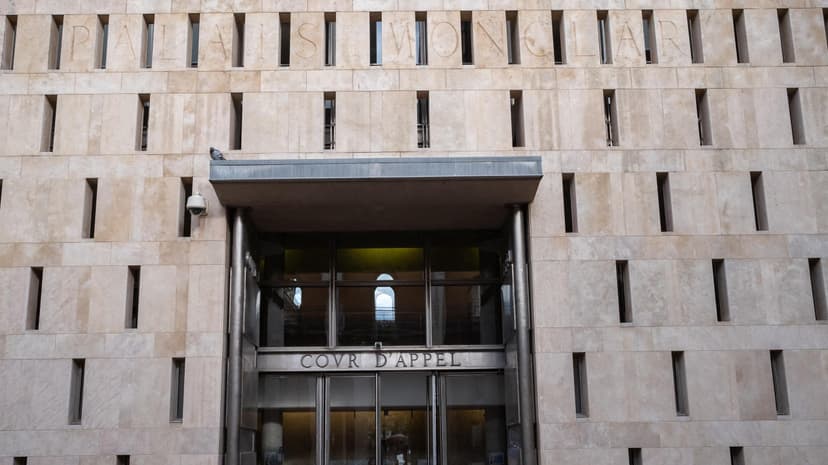
A French appeals court has ruled in favor of a police officer who fatally shot a driver in Nice after a refusal to comply, overturning a previous decision to send him to trial. The victim's family plans to appeal the non-lieu decision.

The Special Appeals College (KPA) announced its decision to close the vetting case of Administrative Appeals Court legal assistant Ervin Aliu, following the withdrawal of the appeal by the head of the Special Prosecution Office.
The Warsaw Court of Appeal definitively annulled an 88,000 PLN fine imposed on radio broadcaster TOK FM by former National Broadcasting Council (KRRiT) head Maciej Świrski, marking a second-instance victory for Agora.
A Brussels appeals court confirmed a controversial decision to suspend the sentence of a medical student convicted of rape, citing his 'considerate' behavior, a ruling that has drawn significant criticism.
A Finnish appeals court has increased the sentence for Kivimäki in the Vastaamo psychotherapy centre hacking case, which is considered the largest criminal case in Finnish history due to tens of thousands of victims.

The Association of Journalists of Macedonia (ZNM) and the Independent Union of Journalists and Media Workers (SSNM) announced they stand by investigative journalism and will follow further proceedings after receiving the written decision in the case between IRL and Kocho Angjushev.
An appeals court is scrutinizing the Trump administration's Environmental Protection Agency (EPA) for its inconsistent justifications in terminating clean energy contracts.
Malaysia's Appeals Court has upheld a six-year jail sentence and fine imposed on a woman convicted of baby trafficking.

A Hong Kong appeals court has upheld the convictions and sentences of a dozen democracy campaigners jailed for subversion during the city's largest trial under a Beijing-imposed national security law.

Court lifted injunction on law requiring display of religious text in every public school classroom A federal appeals court cleared the way on Friday for a controversial Louisiana law requiring poster-sized displays of the Ten Commandments in every public school classroom, allowing the state to enforce a law that was previously found to be unconstitutional. The US fifth circuit court of appeals voted 12-6 to lift a preliminary injunction on the law after most the judges found that it was prem...
An appeals court has ruled that the Trump administration can temporarily stop work on a slavery exhibit in Philadelphia while an appeal is pending.
A federal appeals court has sided with the Pentagon, reinstating the U.S. military's ban on HIV-positive individuals from enlisting.
Donald Trump has nominated a lawyer from his personal legal team for an appeals court position, raising questions about judicial appointments.

Mahdawi, arrested last year during US citizenship interview, says he is ‘grateful to the court for honoring the rule of law’ An immigration judge has blocked the Trump administration from deporting Mohsen Mahdawi, a 34-year-old Columbia University student and pro-Palestinian activist who was arrested by federal agents last year during a US citizenship interview in Vermont. Lawyers for Mahdawi gave details of the decision in a court filing on Tuesday with a federal appeals court in New York, which had been reviewing a ruling that led to his release from immigration custody in April. Continue reading...