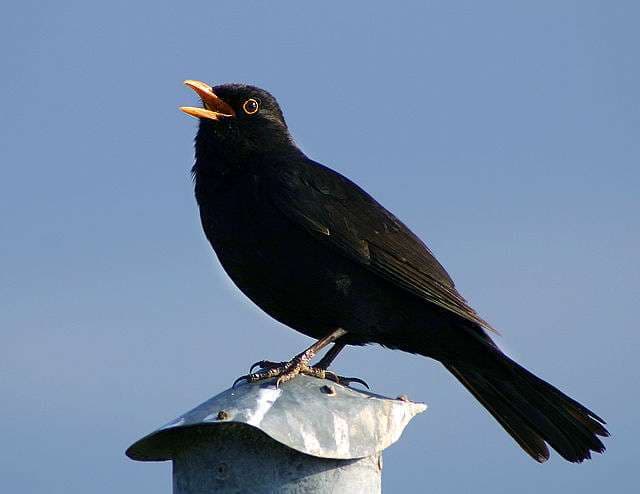
Reykjavik Cemeteries Urge Public Not to Feed Birds
Reykjavik cemeteries are appealing to the public to stop feeding birds in their gardens, citing recent instances of food scraps being left around.
46 stories found
Reykjavik cemeteries are appealing to the public to stop feeding birds in their gardens, citing recent instances of food scraps being left around.
The author (second from right) moved with her family from Utah to Denver. Courtesy of Katy Anderson Our house was affordable in rural Utah, but we sold it anyway to pay more for a rental in Denver. It was a financially risky move, but it's worked out great for us because we're closer to nature. To help with the increase in housing, we're driving less and canceled subscriptions. Sometimes, a decision doesn't make sense on paper, but it just feels right to your soul. That's what my family's big move was like. Last year, our family of five sold our affordable home in rural southern Utah to move into a more expensive rental in a Denver suburb. We had wanted a change for a long time, and the timing finally felt right. We could've stayed where we were "safe" financially, but all our family members were struggling in different ways. I couldn't shake the feeling that nothing would really get better until we were brave enough to make a big change — so we did. Moving from Utah to Denver was a difficult financial decision One of the hardest parts to accept about moving was leaving our extended family and a house that we had lived in for 13 years. Even more difficult was that our house in Utah was affordable. We were privileged to buy a house when prices were reasonable, and mortgage rates were low. We would have moved a long time ago, but we felt stuck in a home we had outgrown because it was cheap. We knew that if we sold our house, we would be paying a lot more elsewhere. But the decision still felt right for our family. We figured Denver was worth the price increase We chose a Denver suburb because we love the outdoors and also miss the opportunities that a city provides. We have friends in the area, so we knew we would have a community once we arrived. The author's kids enjoy Denver's nature. Courtesy of Katy Anderson We chose an area known for its "small town feel." As soon as we moved in, I immediately fell in love with the neighborhood. We are surrounded by an abundance of mature trees, and are within walking distance of wonderful trails for walking and biking. I've been amazed at the wildlife around us, especially considering we live in a Metro area. Just walking the trails in our neighborhood, we've seen rabbits, coyotes, elk, raccoons, turkeys, and many different species of birds. We feel closer to nature here than we did in rural Utah. After living here for a few weeks, we decided to purchase e-bikes so we could ride much farther along the trails, including to coffee shops, restaurants, city gardens, and parks. This area also provides us with access to shopping, museums, concerts, and sporting venues. After living in a secluded town for so many years, having these amenities feels like a luxury. We're saving money in other ways Our rent is high in Denver, and that has been the biggest adjustment. Before we made the move, I was also worried about the cost of living, but I have been pleasantly surprised. Our kids even get free school lunch thanks to a statewide Healthy School Meals for All program. My kids have all commented that the food is of better quality. They actually want to eat the school lunches here. We are paying much less for gas in Colorado, as we are driving substantially less. In Utah, we lived on the outskirts of town and had to drive 15 to 20 minutes to get to work or to the nearest grocery store. When we moved to Colorado, we also immediately ended most of our subscriptions and streaming services. We've cut down on our discretionary spending and are eating more family meals at home. We also chose jobs that would help us adjust to our new housing costs We knew we would be paying more for housing no matter where we moved, so we chose a location with ample work opportunities. My husband is a psychiatric nurse practitioner, and I have picked up a part time job in addition to my freelance writing business. We are all making more money in Colorado than we could in Utah, where the minimum wage is still $7.25 per hour. Two of my teenage sons were amazed when they realized how much more they could earn in their new city. Right now, we are enjoying the freedom of renting. Buying a home in this economy feels daunting, and we want to take our time exploring Colorado to see where we may want to buy if it feels right. For now, I am grateful that my kids have a chance to experience living in a bigger city with more diversity and opportunities. Overall, I feel like we fit in here in a way that we never did in our old town, and that is priceless. Read the original article on Business Insider

A bird atlas project in Tirupati, named 'Garuda Atlas,' has successfully recorded 55,000 individual birds belonging to 274 different species, providing valuable data on local avian diversity.

Two special nesting boxes for peregrine falcons have been installed on a heating plant chimney in Písek, Czech Republic, with hopes that the birds of prey will eventually nest there.

A nature diary entry describes the courtship rituals of wood pigeons in Caistor St Edmund, Norfolk, highlighting the challenges in distinguishing male and female birds.
Bradley Braves 7-foot-1 center Ahmet Jonovic found himself guarded by much smaller Illinois State opponents during BU's win over the Redbirds.

Two rare and protected vulture birds were found dead in the village of Garnikovo, Kavadarci region, prompting an investigation and autopsy.

A new gardening show titled 'Alan Knows How to Attract Birds to the Garden' is set to premiere, catering to both novice and experienced gardeners.

Millions expressed concern after a video showed Punch, a macaw chick known for befriending a plush orangutan, being attacked by other birds; the zoo later confirmed Punch was unharmed.
A Wall Street Journal article explores the ongoing quest to find the most comfortable shoe, following the success of brands like Allbirds.

Bird flu is once again spreading, affecting over four million birds at commercial egg-layer sites in Pennsylvania and potentially leading to another rise in egg prices.
Snowbird destinations from Palm Springs to southern Florida are feeling the impact as Canadians remain hesitant about traveling to the US. Sarah Gray/Business Insider New data from Longwoods International shows Canadians are still hesitant about traveling to the US. Major snowbird destinations from Palm Springs, California, to southern Florida are feeling the impact. Canadians are opting for Europe, Mexico, and the Caribbean instead, or for domestic travel. Canadian travellers are still unhappy with President Donald Trump, and that's affecting the 2026 outlook of visitors to the US from Canada. In 2025, there was a noticeable travel chill from the US's northern neighbor, following President Donald Trump's quips about the "51st state" and the levying of hefty tariffs. A January survey of more than 1,000 Canadian prospective travelers found that they remain hesitant to travel to the US and would rather support domestic tourism, according to Longwoods International, a tourism industry market research company. According to Longwoods International, 55% of surveyed Canadian travelers report that they intend to travel to the US within the next 12 months, which remains mostly unchanged from 54% reported in October 2025. Among those who intend to make the trip, only 9% say they have already made bookings. In 2025, 4 million fewer Canadian travelers visited the US than the previous year, marking a 22% drop, according to the US Commerce Department's National Travel and Tourism Office. Seventy-three percent of Canadian respondents to the latest survey, who said they changed their 2026 travel plans to avoid the US, cited economic policies and tariffs. Other factors are also at work. More than 40% of respondents told Longwoods International that they strongly or somewhat disagree that the US is a place that values international travelers, welcomes travelers with diverse backgrounds, is a safe place to visit, and feels welcoming in general, and the number of Canadians who agree that the US feels safe to visit has been declining over the past year. Popular destinations for Canadian snowbirds, such as southern California and Florida, have been trying to woo them back. But it appears that those attempts have fallen flat as Trump continues to threaten Canada with tariffs and recently threatened to delay the opening of a bridge Canada paid for. In 2025, California's Gov. Gavin Newsom began trying to convince Canadians with targeted video campaigns that California welcomes them. Recently, heart-shaped banners featuring the Canadian flag also popped up in Palm Springs, which, according to the Los Angeles Times, is feeling a chill this winter from fewer Canadian tourists. "Sure, you-know-who is trying to stir things up back in DC, but don't let that ruin your beach plans," Newsom said in a campaign video. "California is the ultimate playground — over 2,000 miles from Washington and a world away in mindset." According to Visit California, the number of Canadian visitors to the state still fell by over 18% in 2025 compared to the year prior, slipping to 1.4 million. In 2024, Visit California showed that 1.7 million Canadians visited the state and spent around $3.7 billion. Even Disney, the happiest place on earth, is feeling the impact as international travelers skip the US. In the Walt Disney Company's first-quarter earnings report earlier in February, the company said it is facing "international visitation headwinds" at its US parks, including Disney World in Florida and Disneyland in California. Visit Florida lists Canada as the state's top source of international visitors, with around 3.4 million travelers from Canada to the state in 2024. In 2025, the state saw a 15% year-over-year drop, according to Visit Florida, with only 2.9 million visitors from Canada. Canadian airlines Air Transat and WestJet are also suspending all or some flights from Canada to the US this summer. "We saw a notable decline in transborder travel demand throughout 2025," Julia Kaiser, media relations advisor for WestJet, told Global News earlier in February. "As a result, we made timely decisions to modify our network to stay aligned with where Canadians want to go." The slowdown in trips to the US doesn't mean that Canadians are no longer traveling. Longwoods International said that 45% of Canadian travelers who changed their plans for a US trip now say they would substitute it with a domestic trip, while about a quarter of prospective travelers are looking toward Europe, Mexico, and the Caribbean. As of February 17, China also opened up visa-free entry for all Canadian citizens, allowing up to 30 days of travel for business, tourism, family visits, or transit. Read the original article on Business Insider
James Deering's 1916 winter home is located less than 10 minutes away from the heart of Miami. Robin Hill/Courtesy of Vizcaya Museums and Gardens Vizcaya, built by James Deering more than a century ago, might be Miami's most valuable real estate. The 45,000-square-foot mansion has a total of 54 rooms, with the main house open to the public. Citadel CEO Ken Griffin began assembling a waterfront compound next to the historic mansion in 2022. The exorbitant price tags on Miami's luxury real estate are not a secret to anyone, least of all the flock of billionaires moving to the city. But unlike the high-rise apartments in the financial center of Brickell or exclusive mansions in Indian Creek — where you might be neighbors with Jeff Bezos or Ivanka Trump — the city's potentially most valuable piece of real estate is decorated with limestone, mangroves, and tiles salvaged from Cuban estates. Built between 1914 and 1922 by International Harvester heir and Gilded Age millionaire James Deering as a winter home, Villa Vizcaya sits fewer than 10 minutes from downtown Miami, in a waterfront neighborhood that's quickly becoming a magnet for the city's new billionaire residents. While built in the years following the Gilded Age, it is notable for its Gilded Age-era extravagance, technologies, and collection of fine art. Vizcaya Museum & Gardens estimates the mansion cost $26 million to build, which is more than $800 million in today's money, per the Bureau of Labor Statistics. Florida International University estimates that the mansion is worth over $1 billion today. In 1962, Miami-Dade County bought the property for $1 million, and today, the 45,000-square-foot mansion and its surrounding gardens operate as a museum open to the public. Shortly after announcing that Citadel would move its headquarters from Chicago to Miami, CEO Ken Griffin bought up a waterfront compound less than a half-mile from Vizcaya, in the neighborhood of Coconut Grove. The $106.9 million sale set a country record for the most expensive residential property purchase at the time. Since then, the hedge fund magnate has proposed relocating the historic Villa Serena mansion, located on his estate, to Vizcaya's campus after he donated $20 million to Vizcaya Museum and Gardens. Take a look inside James Deering's historic mansion and see how its new neighbor could alter the surrounding landscape. Vizcaya was James Deering's winter home from 1916 until his death in 1925. Robin Hill Photography/Courtesy of Vizcaya Museum & Gardens Struggling with illness toward the end of his life, James Deering came to Miami, then a small city surrounded by mangrove forests and wetlands, looking for tropical warmth, which was believed to help improve health. By the turn of the century, the Deering family had begun to develop estates around South Florida, with patriarch William Deering purchasing a home in Coconut Grove in 1900. By the time James Deering began building Vizcaya, his brother, Charles Deering, was also developing a winter home in the south of Miami. The property, known today as Deering Estate, also operates as a museum and is open to the public. The main house features 54 rooms, including 34 rooms decorated with their original furniture. Kristine Villarroel/Business Insider Spanning over 45,225 square feet, Vizcaya's main house features the living spaces of James Deering himself, his guests, and the house staff. Envisioned by interior designer Paul Chalfin, Vizcaya drew inspiration from the Italian Renaissance, adapted to South Florida's subtropical climate, and showcases furniture, artworks, and artifacts purchased by Chalfin and Deering on their travels to Europe. Although Miami's population was estimated to be only 10,000 in 1916, the construction of the Vizcaya estate employed an estimated 1,000 workers, many of whom were Black immigrants from the Bahamas. Apart from the main house, Vizcaya is also home to the Vizcaya Village, the historic quarters of the mansion's workers and farmers that allowed Vizcaya to serve as a self-sufficient farm-to-table estate. The Village expands over 12 acres and includes 11 "architecturally significant" buildings, according to the museum's website. The tour begins in the courtyard, which is adorned with tropical plants. Kristine Villarroel/Business Insider Lined with tropical plants such as palms and philodendrons, the courtyard highlights South Florida's natural beauty while reflecting the mansion's European inspirations. While today the courtyard is covered by a glass canopy that allows for the estate's air conditioning, it was originally open to the elements, allowing the tropical climate to seep into the main house. Meant to be used as Vizcaya's main entrance, the East Loggia opens up to the Biscayne Bay. Kristine Villarroel/Business Insider Featuring marble floors and columns and decorated ceilings, the East Loggia was meant to serve as Vizcaya's main entrance for guests arriving by sea, which was Deering's intended — and preferred — way of entering the mansion. It was used as an entrance for guests who arrived by boat, while the current main entrance of the museum was used as a back entrance for guests arriving by car. The room also features a model boat hanging from its ceiling in honor of the explorers who inspired Deering's interpretation of Vizcaya. Although he began living in Vizcaya during his retirement, Deering included multiple working spaces in the property. Kristine Villarroel/Business Insider James Deering was heir to the International Harvester manufacturing firm, which produced tractors and other agricultural machinery, and he worked as its vice president from 1902 until 1909. Deering might have been one of the first prominent Florida "snowbirds," retirees who travel South during the colder months. His downstairs library, located in the northwest corner of the main house, is steps from the entrance hall that welcomes guests. It features Deering's personal book collection, desks for him and a secretary, and seats for business guests. When closed, the door leading to the next room — a reception room meant for entertaining guests — is concealed within the book-lined walls. The reception room features a ceiling imported from Venice, which had to be resized to fit. Kristine Villarroel/Business Insider The reception room is lined with tropical-inspired silk panels showing palm trees. Our tour guide brought our attention to the ceiling, which is decorated with sculpted panels that extend to the sides of the room. The ceiling was imported from Venice and purchased before construction on the property was finished. By the time workers were putting up the decorations in the mansion, they realized that the ceiling panel did not fit the room dimensions, leading to the restructuring of the panel, which curved into the walls. "We should remember that this house was built during the First World War," curator Flaminia Gennari said in the audio tour. "So to import large quantities from Italy in the middle of the war was very complicated." Vizcaya's telephone line was one of the first in Miami. Kristine Villarroel/Business Insider Wired throughout the house, Vizcaya features a highly innovative telephone system for the time. Only 17 years before the start of Vizcaya's construction, the Miami Telephone Company began providing telephone service to the city. Vizcaya's telephones also featured automatic electric exchange, allowing users to connect directly to the number they dialed without going through a human operator. The telephone room, located between two of Vizcaya's main entertainment rooms, was meant for guests to communicate privately without disturbing the flow of the entertainment. The living room showcased Deering's most impressive collections. Kristine Villarroel/Business Insider The living room, with its 1600s limestone fireplace, features some of Vizcaya's most impressive items, including an "admiral carpet" originally commissioned in the 1450s by the grandfather of King Ferdinand II of Spain, the Spanish king who sponsored Christopher Columbus' exploration of the Americas. The room also features throne-like armchairs where US President Ronald Reagan and Pope John Paul II sat in 1987 during the Pope's visit to America. A centerpiece of the room is the Welte Philharmonic Organ, designed to fill the house with music through elaborate sound systems. Designed for guests rather than full-time professional players, the organ uses perforated paper rolls to aid the musicians' performance by adjusting notes and volume. Concealing the organ pipes is an oil painting, which was cut in half to cover wooden doors. "Chalfin had the idea of cutting it in half and using it as the doors of the organs, which is not a very respectful thing to do for a representation of the Virgin Mary, the child, and the saints, but it somehow testifies to the freedom and positive carelessness that they had around old objects," Gennari said in the audio tour. The mansion's formal dining room features the house's oldest artifacts, although it was rarely used. Robin Hill Photography/Courtesy of Vizcaya Museum & Gardens While Deering himself didn't often eat in the formal dining room, he made sure it was impressively decorated for his guests. Sitting to the side is the room's most awe-inspiring feature: a marble tabletop on carved bases resembling mythical creatures, historical artifacts unearthed near Pompeii, dating back to the times before Mount Vesuvius' eruption. Next to the dining room, on the south side of the mansion, the enclosed loggia gave guests a view of the gardens. Kristine Villarroel/Business Insider The colorful glass panels, designed for Vizcaya, feature the estate's main symbols: the seahorse and the caravan. Providing a view of the garden through the glass panels and double doors, the enclosed loggia allowed guests to take in the garden views while staying cool from the Florida sun. The loggia also connects the gardens to the main house through sculpted iron gates. Kristine Villarroel/Business Insider Aside from giving guests an inside view of the gardens from the ground level, the room also connects the outdoors to the rest of the mansion. Downstairs, the kitchen worked as a serving space for staff to plate food and bring it to guests. Kristine Villarroel/Business Insider When designing Vizcaya, Deering asked for the main kitchen to be built upstairs as he didn't want the smell of food to flood the main entertaining rooms on the first floor. To facilitate the transportation of meals and the serving of guests to the dining room, the entertaining rooms, and the loggia, he built a downstairs serving pantry. Today, the serving pantry cabinets display one set of Deering's fine dining china, the one designated for his 80-foot-long luxury yacht, Nepenthe. Commissioned in 1912 to be shipped from Europe, the original set of china purchased by Deering was transported to America as cargo aboard the Titanic. After the ship sank, a replacement set was ordered and is now displayed. The kitchens feature state-of-the-art Gilded Age technology. Kristine Villarroel/Business Insider Throughout the house, Deering incorporated cutting-edge technology, including annunciators with bells connected throughout the house that Deering or guests could ring at any time to get the house staff's attention. Another then-advanced feature of the serving kitchen were its refrigerators, which were rare at the time. The kitchen also featured a warming oven that helped keep food warm while guests were served. Connecting to the upstairs kitchen, which serves as the house's main cooking area, was a dumbwaiter: a food elevator meant to carry the food cooked upstairs to the downstairs plating area, where staff would then take it to the main entertaining rooms, like the dining and sitting rooms. Upstairs, 24 rooms housed guests, staff, and Deering himself. Kristine Villarroel/Business Insider Nine of the bedrooms were dedicated to guests and each was given a name and decorated uniquely, showcasing the artifacts and furniture purchased by Deering and Chalfin on trips to Europe. While not open to the public, an additional 14 rooms housed staff. Another then-advanced technological feature of Vizcaya was its elevator. Kristine Villarroel/Business Insider Deering was motivated to move to South Florida because of his illness, so accessibility features were built throughout the house, including an elevator he would use when using a wheelchair or to avoid walking upstairs. Today, the elevator isn't open to the public, and the museum's second floor is not wheelchair accessible. Deering's main office was inspired by the Napoleonic era. Kristine Villarroel/Business Insider Connected to Deering's bedroom and bathroom, the sitting room was his office where he would tend to business and personal matters, such as sorting his mail. The decoration style was inspired by Napoleonic France. Deering's bedroom was modest compared to some of his guest bedrooms. Robin Hill/Courtesy of Vizcaya Museum and Gardens Unmarried all his life, Deering's room features a single bed rather than a larger size, and his room is furnished for practicality rather than aesthetics. His personal bathroom has one of the most breathtaking views of the property. Kristine Villarroel/Business Insider Opening onto a balcony, Deering's bathroom overlooks Biscayne Bay and offers one of the best views of the house, although it is not accessible to the public today. The closed-off balcony also leads to a secret door to the Espagnolette, the guest bedroom located next to his, usually reserved for Deering's dearest guests. Spiral staircases lead to the South tower. Kristine Villarroel/Business Insider A set of spiral staircases leads up to the South tower, one of the two guest suites overlooking the estate. The tower bedroom has views of the bay and the gardens. Kristine Villarroel/Business Insider The corner room atop the North tower was designed to transport guests to Europe. "Water reflects upwards to the ceiling and the sound of waves is audible in this room, precisely as upon the quay of this great canal of Venice," noted Chalfin about the room, according to the mansion's website. A central piece in the room is a large wardrobe assembled with 1700s Venetian panels, as well as antique painted closet doors. The breakfast room was Deering's preferred dining space. Robin Hill Photography/Courtesy of Vizcaya Museum & Gardens Back on the second floor, the breakfast room was the central entertaining spot. The room is lined with oil paintings depicting ocean scenes, and the windows slide into pocket doors, revealing views of the garden. It also features a sound system, with a piano hidden in a room off the spiral staircase next door and connected to the breakfast room through floor vents that allow sound to travel into the space. Most of the time, Deering opted to dine in this room rather than the formal dining space. Tucked next to the breakfast room is the main kitchen. Kristine Villarroel/Business Insider Designed to maximize staff efficiency, the main kitchen upstairs has different areas for different tasks, including separate sinks for washing dishes and produce. It also features ice boxes, or refrigerators of the time, powered by salt water. During Deering's time at the estate, Vizcaya employed two French chefs dedicated to food and pastries. Food served at the mansion was sourced from the staff village built across the street, where a farm provided vegetables, dairy, chicken, herbs, and citrus. "You and I could come down and drive into the farm area, stop and buy a dozen Deering eggs and take them home and have them for breakfast, and I think that was probably particularly important during World War I," historian Arva Moore Parks said in the audio tour. "He was able to supply not only himself but his workers also." Inspired by European designs, the gardens feature mazes, terraces, fountains, and more. Kristine Villarroel/Business Insider Inspired by 17th- and 18th-century Italian and French villas, the Vizcaya gardens feature a variety of scenes, from a garden theater to multiple paths and mazes, intended to highlight and enhance the native South Florida flora surrounding the estate. The original layout of Vizcaya featured over 180 acres of subtropical forests. Today, that number has gone down to 50 acres. In 1987, President Ronald Reagan hosted Pope John Paul II at the estate. Diana Walker/Getty Images On September 10, 1987, President Ronald Reagan welcomed Pope John Paul II at Vizcaya, where the two conversed while exploring the gardens and the estate. Atop a garden mount is the Casino, a focal point of the gardens. Robin Hill/Courtesy of Vizcaya Museums and Gardens Located at the top of garden mounds designed to block the reflection of water ponds into the main house, the garden casino — Italian for "little house" — was a space where Deering and his guests could take in the garden views or enjoy the subtropical weather without being in direct contact with the sun. Inside the building, a painted ceiling depicts heavenly images. Underneath, bathrooms and other now closed-off areas hide under decorated ceilings. Originally, the casino overlooked a water park part of the estate, where gondolas would be launched, a crucial part of Deering's vision for Vizcaya. Today, the water park no longer exists, and the land is instead taken up by a Catholic church, hospital, and schools after the Deering family sold part of the property to the Catholic Diocese of St. Augustine in 1946. The opposite side of the estate was once used for clandestine entertainment; now, it is a café. Kristine Villarroel/Business Insider While today a café sits underneath the mansion, the space served as a leisure center during Deering's stay. The rooms were filled with billiard tables, bowling alleys, and leather chairs. Hidden underneath the billiards table was also a roulette table, which Deering often used when his college friends visited the estate. The mansion, which opened at the peak of the Prohibition era, also had a decent supply of liquor, which Deering smuggled into the estate and hid in secret bars and cellars. The swimming pool is half-covered, providing relief from South Florida's relentless sun. Robin Hill/Courtesy of Vizcaya Museum and Gardens Tucked next to the leisure rooms underneath the main house is the half-indoor swimming pool, in which Deering is said to have only swum once. Designed as the main entry point to the mansion, the east side of the mansion opens up to a stone barge in the Biscayne Bay. Kristine Villarroel/Business Insider When he first moved into his winter home in December 1916, Deering arrived by sea on what he intended was the front entrance to Vizcaya. Opening up to the Biscayne Bay, the waterfront side of the property features a stone barge, a sculpted structure that acts as a breakwater and protects the main house from changing tides and waves. Today, the mansion hosts private events and has become a local staple for Quinceañera pictures. The mansion is often used for private events. Kristine Villarroel/Business Insider Purchased from the Deering family by Miami-Dade County for $1 million in 1962, Vizcaya today operates as a museum open to the public and for private reservations. The estate often serves as the backdrop for Quinceañera pictures among Miami's large Hispanic population. Walking around the gardens, I saw multiple young women dressed in extravagant gowns posing in the many stunning locations of the estate. Along with being a photographic hot spot, Vizcaya also hosts private events, from Miami Swim Week runway shows to floral-decorated weddings in the gardens. Today, the estate remains an icon of Miami, a city that many would often relate to modern luxury rather than the old and classic wealth on display in Gilded Age-style mansions like Vizcaya. The Vizcaya Village could be the future home of Ken Griffin's Villa Serena. Robin Hil Photography/Courtesy of Vizcaya Museum and Gardens After purchasing the historic Villa Serena estate in Coconut Grove in 2022, Citadel CEO Ken Griffin proposed relocating the 1913 Mediterranean Revival mansion to Vizcaya's Village campus. The home, designed by architect August Geiger for William Jennings Bryan, a three-time Democratic presidential candidate and former US secretary of state, is considered one of Miami's earliest grand waterfront residences. The proposal would move the century-old home from Griffin's property to Vizcaya's Village grounds, where it would be open to the public for the first time in its history and would benefit from an additional $5 million endowment provided by Griffin for its preservation. Any relocation would require extensive planning and government approvals, which have not yet been cleared. Skeptics have said that moving the structure would be an ambitious undertaking that wouldn't align with preservation goals. "Moving a historic structure is absolutely a last resort solution, to be done only if (there) is no other way possible to save a structure… It is not a preservation-minded alternative just because someone bought it and now doesn't want it," Kathleen Slesnick Kauffman, Miami's former historic preservation officer, told the Chicago Tribune in 2023. The Village originally served as Vizcaya's self-sufficient farm and the servants' quarters. Robin Hil Photography/Courtesy of Vizcaya Museum and Gardens The Vizcaya Village, which covers about 12 acres of agricultural fields and includes nearly a dozen buildings, was originally built as the quarters for the mansion's servants and farmers. Today, the campus houses a café and hosts a weekly farmers market, and is undergoing construction and expansions to transform the grounds into a cultural and community space. The Citadel CEO's $20 million donation will expand the village's role in the community. Robin Hil Photography/Courtesy of Vizcaya Museum and Gardens In November 2025, Vizcaya Museum and Gardens announced a $20 million capital donation from Griffin and said that the funds would be used toward building a brand new Center for Learning and Discovery in the village grounds. Once open, the center will offer educational programming like "hands-on artmaking and urban-agriculture experiences," the museum organization wrote in the announcement. The expansion will seek to expand Vizcaya's role in its community. Read the original article on Business Insider
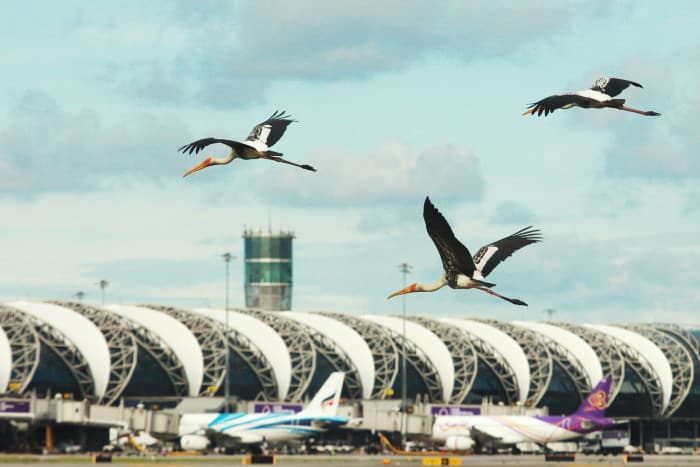
Ten bird species have been identified as a growing threat to aviation safety in Thailand, with over 6,000 birdstrikes reported nationwide in the past five years.

New evidence suggests that feeding wild birds, while seemingly kind, may be contributing to the spread of disease and diminishing bird numbers, posing a dilemma for conservation efforts.
Researchers and volunteers in Texas have documented instances of birds from different species preening one another, suggesting this interspecies behavior may be more common than previously thought.
The management of Reykjavík Cemeteries has requested the public to stop feeding birds in the cemeteries, as food scraps attract other animals.
Three decades after a major oil spill killed thousands of birds and caused one of the worst environmental disasters, its long-term impact and the debates surrounding it continue.
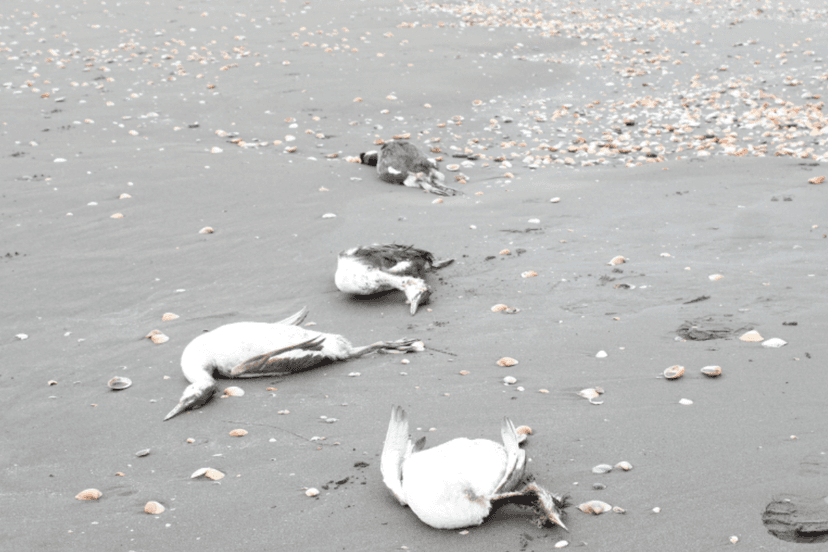
Thousands of bird carcasses have been discovered along Azerbaijan's Caspian Sea coast, with state-run media reporting that the birds have been lying in coastal areas for over 20 days.

This week features screenings of films nominated for the National Film Award 'Lielais Kristaps' and several premieres, notably Laila Pakalniņa's new documentary 'Scarecrows' about birds and animals.

“The Garden We Dreamed” opens on a complex symphony of natural sound: layer upon layer of birdsong, insect chatter and weather-rustled foliage, all the more intensified for playing out over a virtually dark screen. It’s barely the first light of dawn in the forested wilds of central Mexico, as the camera pans across treetops just […]
The first migratory birds have begun to return to Switzerland, signaling the changing seasons.

A German article provides TV recommendations for Sunday, featuring films like 'The Birds' and 'Hard Powder,' along with other programs.
New San Francisco Giants right-hander Blade Tidwell worked a filthy slider after Hayden Birdsong failed to escape the first inning of his Cactus League start Saturday.
An article explores Americans' unique fascination with bald eagles and suggests that many people have misconceptions about the birds' true nature.
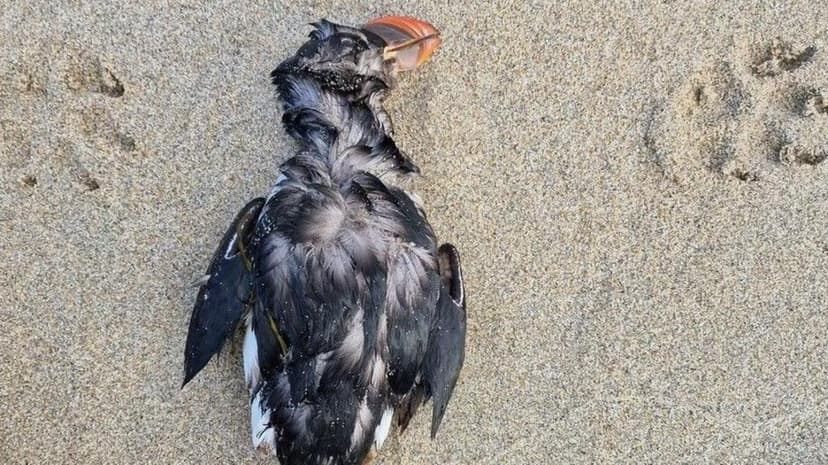
Hundreds of dead and dying seabirds, including puffins, are washing up on British beaches, threatening a mass seabird 'wreck' due to severe winter storms.
Plymouth Argyle midfielder Joe Ralls will miss his reunion with former club Cardiff City due to a hamstring injury sustained in January.
Chinese manjha, a sharp synthetic kite string, poses a deadly threat during Indian festivals, causing severe injuries and fatalities to motorcyclists and birds. Despite government bans and enforcement drives, its illegal sale persists, turning a cherished tradition into a recurring public safety crisis.

A letter written by a young Queen Elizabeth II, inquiring about the well-being of her birds and goldfish, is set to be auctioned.

Australian Antarctic Program scientists say virus on Heard Island has spread to new species Follow our Australia news live blog for latest updates Sign up for climate and environment editor Adam Morton’s free Clear Air newsletter here The gentoo penguin has become the first bird to test positive for the H5N1 bird flu on an Australian territory, with samples confirming the virus has spread on a sub-Antarctic island. The deadly and contagious strain of bird flu, which has already killed millions of seabirds, wild birds and poultry overseas, was confirmed in southern elephant seals on Heard Island in November 2025. Continue reading...
Some lovebirds in Hong Kong are expressing their affection this Valentine’s Day by spending hundreds of dollars on bouquets and gifts, while several vendors have recorded growth in sales of about 20 per cent. At the bustling Flower Market in Mong Kok, many men were among the crowds picking bouquets of roses, while others browsed for flowers to celebrate the coming Lunar New Year. The high number of shoppers on Tung Choi Street even prompted police to put in place crowd control measures. Stalls...

As spring approaches, more people are installing birdhouses to help birds safely nest and raise their young. Foresters emphasize the importance of this initiative for bird conservation.

A country diary entry describes the elaborate courtship rituals of wood pigeons in Caistor St Edmund, Norfolk, noting the difficulty in distinguishing male from female birds and their unique system of interaction.

A program in Ireland has seen 170 landowners commit over 2,300 hectares of land to active conservation management, focusing on protecting important ecosystems for breeding waders and other endangered birds.
Panna Lal Mahto, known as the "Birdman" of Jharkhand, is dedicated to helping sparrows and other birds through nest-building, awareness programs, and mimicking bird calls to promote conservation.
A rare sight of six long-eared owls perched together on a single fence was captured in Grudziądz, Poland. While these birds gather in groups during winter, it's uncommon to see them during the day.
The first migratory birds have been observed returning to Switzerland, marking the beginning of their seasonal migration back to the region.
A new gardening show titled 'Alan Knows How to Attract Birds to the Garden' is set to premiere, catering to both beginner and experienced gardeners.
Hayden Birdsong falters on the mound while new acquisition Harrison Bader delivers early offensive sparks for the San Francisco Giants.
The Wall Street Journal investigates the market for comfortable footwear, seeking out potential successors to the popular Allbirds brand.

"Hubris Generally Precedes Clusterf**k": Does It Smell Like Victory? Authored by James Howard Kunstler, The message seems to be something like the USA isn’t messing around with all those strike forces in the waters around Iran. The Islamic Republic suddenly looks like Rock-and-Hard-Place-Land. Everybody and his uncle are trying to figure out the calculus in play, World War Three or a happy ending? You’re seeing the most significant US military build-up over there in memory. Smells a little bit like first Gulf War, 1991 — minus all those allies we roped in then. Mr. Trump (via Marco Rubio) has read Euroland out on this one. We are in a cold war with those birds, in case you haven’t noticed. The UK, France, Germany & Co.? They are as crazy as the ladies of The View and their millions of Cluster-B followers. Euroland is yet in thrall to the climate nutters, the farm-and-industry-destroyers, the one-worlders, the Jihad-migrationists, the floundering banksters, and the Klaus Schwab wannabes. Euroland seeks to throttle free speech throughout Western Civ and meddle in everyone’s elections. Euroland keeps mouthing off about a war with Russia despite having no military mojo and going broke-ass broke faster than you can say Götterdämmerung. Bottom line: the US is going solo on this one. What is the objective? Ostensibly “a deal” over Iran’s nuclear weapons program. Like, just cut it out, will you, please? By the way, did you know that Supreme Leader Ayatollah Khamenei issued a fatwa in 2005 saying production, stockpiling, and use of nuclear weapons was forbidden under Islam. But then deception is allowed in Islam under the doctrine of taqiyya, against the threat of attack from hostile forces, I’m sure you remember Operation Midnight Hammer in June last year when we attacked and supposedly “obliterated” Iran’s nuclear research and development bunkers at Fordow, Natanz, and Isfahan? They got pretty banged-up, you may be sure, and nobody in Iran denied there was something nukey going on in those installations. Is there a will there to rebuild the whole darn infrastructure of uranium enrichment and so forth? The mullahs are not saying, which means: of course, they intend to continue developing nuclear weapons — and even if that’s a stupid and futile gambit, given recent history, they still have factories churning out plain old long-range ballistic missiles and new drones by the thousands. Let’s face it: the mullahs are hardcore for Jihad and martyrdom. Since being elevated to Supreme Leader in 1989, Ayatollah Khamenei has sought relentlessly to transform the traditional Islamic concept of Jihad and establish it as the central pillar of the regime’s ideology. Are we doing Israel’s bidding there? (Cue: roar of affirmation.) But then, Israel has a point. Iran has been cuckoo for going on forty years. If Israel wasn’t a target of the mullahs’ eternal Shia wrath, there are their other enemies, the Sunni, on the west side of the Persian Gulf (and next door in Iraq). And consider, too, Iran’s obdurate sponsorship of Jihad, wherever possible, both within and outside the Ummah — including especially Western Civ, where low-grade Jihad has been going on for over a decade. . . mass murders, rape gangs, beheadings, trucks through the Christmas markets. . . . Okay, if Euroland is out, what about the other big dogs, Russia and China. Will they just stand by and let the US have its wicked way with Iran? Russia sent a corvette-class naval vessel down to the Straits of Hormuz for a joint operation with Iran’s navy, but what does that mean? Probably not much more than occupational therapy. Besides, Mr. Trump is just now promising to bring Russia “out from the cold” of all those onerous economic sanctions. . . to begin the process of normalizing relations. You might doubt that Russia wants to blow that for Iran’s sake. And, while it is somewhat out of the news due to the Epstein stink-bomb, and the deepness of mid-winter, there is still a war going on over in Ukraine. Which is to say, the Russians have their hands full in their own back-yard and might, perhaps, be hesitant about piling-on in Iran. And, let’s just suppose that the US objective is actually regime change in Iran. Would Russia be indisposed if the mullahs got kicked out of power? I doubt it. Russia has longstanding annoying issues with Islamic factions distributed throughout their adjoining former Soviet republics. Russia does not need Jihad. Russia might actually live more comfortably with Iran under a secular government, tilting a bit more western in temperament. Just sayin’. . . . China has more urgent concerns with Iran. China gets around 13-percent of its oil imports from Iran, and it enjoys a three to four percent discount on it. Regime change or war that could damage Iran’s oil terminals would be bad news for China. But then, China is at a long geographic remove from Iran, and China is not used to conducting military adventures so far from home, so don’t expect much assistance there. China’s other option would be to start a kerfuffle over Taiwan to distract and divert the US. We’ll just have to see about that. Uncle Xi Jinping has been busy lately sacking the upper echelons of his own military leadership. Are they even ready for action? Plus, China’s economy is wobbly. Consider also: has the US given China assurances of continued oil imports from Iran if it steers clear of the situation there? What are we operationally capable of over in Iran with all our warships, fighter jets, and other stuff? I don’t know. . . and neither do you. Looks impressive, but a couple of Sunburn-type missiles landing on the USS Abraham Lincoln could produce a profound instant attitude adjustment. Perhaps President Trump, WarSec Hegseth, and StateSec Rubio have more refined plans for disarming Iran and surgically removing the cuckoo-birds in charge. Our guys are certainly acting confident. But then in geopolitics confidence is best friends with hubris. And hubris generally precedes clusterfuck. The art of the deal is not for sissies. Tyler Durden Fri, 02/20/2026 - 16:20

Hundreds of wild bird deaths, primarily geese, have been reported across seven New Jersey counties, leading to park closures. Health experts suspect bird flu and advise residents to avoid contact with dead birds.
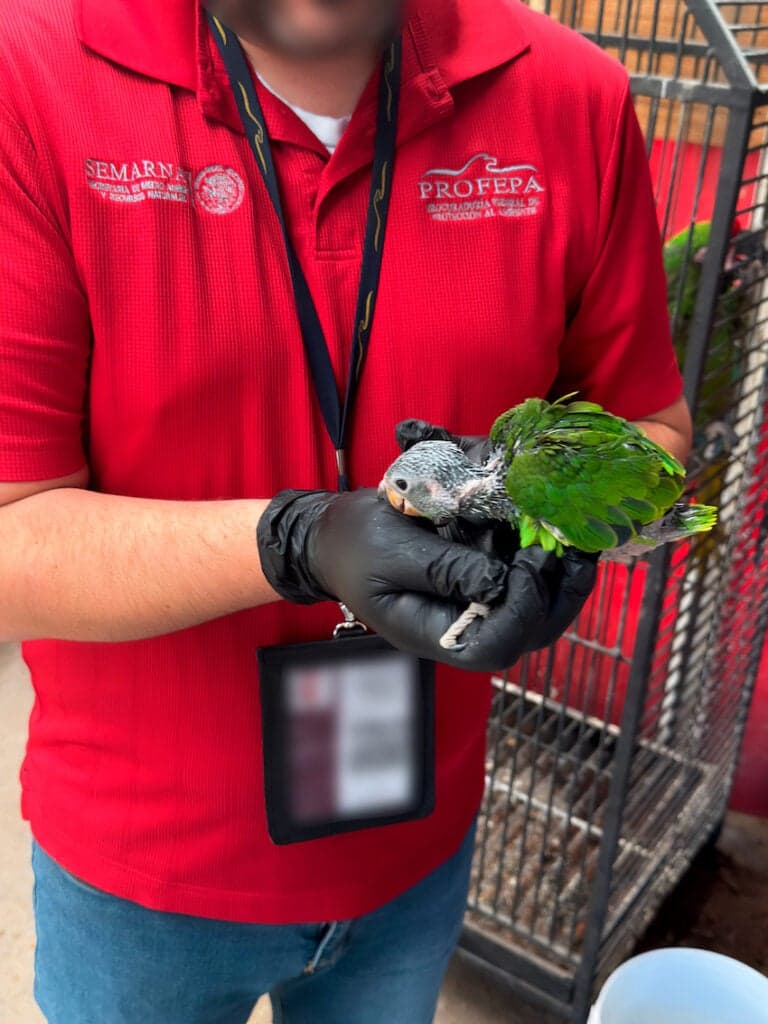
Protections in Mexico go further for parrots and related birds, such as macaws, cockatoos, amazons and lovebirds, forbidding their removal from the wild except for scientific purposes. The post US authorities return 11 Mexican parrots seized at border appeared first on Mexico News Daily

A letter written by a young Queen Elizabeth II, inquiring about the well-being of her birds and goldfish, is set to be auctioned.

The growing number of birds in Norwich market has pushed the council to adopt extreme measures – including a hawk and oral contraceptives. But for the city’s pigeon-loving activists, they are just misunderstood creatures At nine o’clock on Saturday morning, Norwich market is only just stirring: shutters are still down and the aisles are quiet. In the nearby Memorial Gardens, however, a large crowd has already gathered: the market’s pigeons are waiting to be fed. Jenny Coupland arrives on the scene a little later than her usual hour, with a backpack brimming with seed. As she begins doling it out, the birds descend from their perches and cover the ground, pecking furiously. The sun catches their bobbing heads, sending iridescent shimmers across their brown and grey feathers. Continue reading...
New research reveals that most Hawaiian forest birds carry avian malaria, leading to widespread transmission and increasing the risk of extinction for native wildlife.