Huawei Cloud Strengthens Data & AI Leadership in Thailand's Financial Sector
Huawei Cloud is enhancing its data and AI leadership in Thailand, empowering financial institutions with cloud-native database innovations.
37 stories found
Huawei Cloud is enhancing its data and AI leadership in Thailand, empowering financial institutions with cloud-native database innovations.
Multiple financial institutions have updated their ratings and price targets for various companies, including Wells Fargo raising Globe Life (GL) target, Bank of America downgrading Fox (FOX), KeyBanc raising Zoom (ZM) target, H.C. Wainwright raising United Therapeutics (UTHR) target, Bernstein upgrading Newmont (NEM), analysts maintaining a hold on PepsiCo (PEP), Truist raising BILL Holdings (BILL) target, Barclays reiterating a buy on Charles Schwab (SCHW), Barclays upgrading Etsy (ETSY) and Truist raising its target, Goldman Sachs cutting Pinterest (PINS) target and RBC downgrading shares, Wells Fargo maintaining a hold on Hewlett Packard Enterprise (HPE), UBS upgrading Southwest Airlines (LUV), Stifel raising Triple Flag Precious Metals (TFPM) target, Barclays raising Phillips 66 (PSX) target, and Veritas downgrading Suncor Energy (SU).
The number of NISA (Nippon Individual Savings Account) accounts opened at financial institutions in Japan has surpassed 28 million, increasing by over 10% in the past year, a trend attributed to rising stock prices.
An analysis suggests that falling trust in government and financial institutions, exacerbated by issues like inflation and stablecoins, is jeopardizing the U.S. economy.
Toyota is reportedly planning a significant share sale of approximately $19 billion, with financial institutions involved in the process.
Ares Management Corporation is scheduled to present at the 2026 RBC Capital Markets Global Financial Institutions Conference, likely to discuss its financial performance and outlook.
Bank of America's stock slipped on February 24th, reflecting broader economic uncertainty that is putting pressure on major financial institutions.

The Dutch Central Bank (DNB) believes that Dutch banks, insurers, and pension funds can significantly reduce their reliance on large American technology companies within five years, requiring increased investment from these institutions.
Nicolet Bankshares, Inc. (NIC) has successfully completed its merger with MidWestOne Financial Group, finalizing the integration of the two financial institutions.
Jesse Jackson's vision for American business, advocating for inclusivity and opportunity, has been credited with sparking a revolution that impacted businesses from small enterprises to major financial institutions like Goldman Sachs.
Several financial institutions are offering competitive interest rates on money market accounts, high-yield savings accounts, and Certificates of Deposit (CDs) as of February 18, 2026, with some reaching up to 4% APY.
Several financial institutions, including Stifel, Scotiabank, and Jefferies, have issued updated price targets and ratings for various companies. These reports reflect analysts' current outlooks on stock performance and investment recommendations.

A contentious debate over stablecoin regulations is creating a rift within Trump's political base, as it fundamentally questions the future of deposits within major financial institutions.
Various financial institutions are offering competitive interest rates for money market accounts, CDs, high-yield savings, HELOCs, home equity loans, and mortgages as of March 3, 2026.

In January, financial institutions in Latvia successfully prevented 2,281 fraud attempts, which is four times more than the 560 cases that were actually carried out, according to data from the Financial Industry Association.
Several financial institutions, including Pinnacle Financial Partners, First Horizon Corporation, Huntington Bancshares, Truist Financial, Wells Fargo, PNC Financial Services, KeyCorp, Citizens Financial Group, Citigroup, and Bank of America, are receiving updated analyst ratings and outlooks regarding their performance, growth, and strategic positions.
Several companies, including Oneok, Workday, Clearway Energy, MongoDB, Ferguson, and Kiniksa, have received updated price targets from various financial institutions.

Sources indicate that Toyota is planning a significant share sale, estimated to be around $19 billion, to be executed by financial institutions.
Ares Management Corporation to Present at the 2026 RBC Capital Markets Global Financial Institutions Conference The Globe and Mail

The Ghanaian government is urging policymakers, financial institutions, academia, and private operators to collaborate and address the country's deep-rooted transport system challenges.

Hungarian Minister of National Economy, Márton Nagy, stated that only five major financial institutions should remain in Hungary, but his own 2006 paper, which he cited, does not support this claim.

The Astana Times provides news and information from Kazakhstan and around the world. ASTANA — Financial institutions across Central Asia are accelerating the adoption of artificial intelligence, with

Panics, Politics, & Power: America's 3 Experiments With Central Banks Authored by Andrew Moran via The Epoch Times, The Federal Reserve, established more than a century ago, is the United States’ third experiment with central banking. For much of its existence, the institution maintained a low public profile. Only after the 2008 global financial crisis did the Fed begin communicating more openly, introducing post-meeting press conferences and allowing monetary policymakers to engage more frequently with the media. Greater transparency, however, has brought greater scrutiny. Public sentiment toward the Fed and its leadership has fluctuated over the years. Today, YouGov polling suggests the central bank is viewed favorably by 44 percent of Americans and unfavorably by 18 percent. If the Fed pursues a series of reforms, it will have “another great 100 years,” said Kevin Warsh, who was nominated by President Donald Trump to serve as the institution’s next chair. Comparable to past central banks, Warsh said, the current Federal Reserve System is beginning to lose the consent of the governed. “You can think about the Jacksonians of prior times say that the central bank seems like they’re trying to focus and they’re all preoccupied with those special interests on the East Coast, and they’ve lost track of what’s happening to us in the center of the country,” Warsh said in a July 2025 interview with the Hoover Institution’s Peter Robinson. “It’s a version of what worries me today.” What happened in the past, and why is it relevant to today’s central bank? The First Bank of the United States In the aftermath of the American Revolution, the United States faced a series of immense economic disruptions, forcing the nation’s architects to rebuild the economy. The objective was to lower inflation, restore the value of the nation’s currency, repay war debt, and revive the economy. Alexander Hamilton, the first secretary of the Treasury under the new Constitution, proposed establishing a national bank modeled on the Bank of England. Hamilton stated that a U.S. version would perform various duties, including issuing paper money, serving as the government’s fiscal agent, and protecting public funds. Not everyone shared Hamilton’s ebullience over a central bank. Thomas Jefferson, for example, feared that such an institution would not serve the nation’s best interests. Additionally, Jefferson and other critics argued that the Constitution did not grant the government the authority to create these entities. Nevertheless, Congress enacted legislation to establish the Bank of the United States. President George Washington then signed the bill in February 1791. Two of America's founding fathers: Thomas Jefferson (L) and Alexander Hamilton. The White House While bank officials did not conduct monetary policy as modern central banks do, they did influence the supply of money and credit, as well as interest rates. The entity managed the money supply by controlling when to redeem or retain state‑bank notes. If it sought to tighten credit, it would require payment in gold or silver, thereby draining state banks’ reserves and limiting their ability to issue new notes. If it wanted to expand credit, it simply held on to those notes, boosting state‑bank reserves and enabling them to lend more. By 1811, the national bank’s charter expired. While there had been discussions of allowing it to continue maintaining operations, Congress—both chambers—voted against renewing its mandate by a single vote. Its closure came shortly before the War of 1812, which fueled inflation and weakened the currency. Second Bank of the United States Lawmakers believed another central bank was critical at a time of fiscal, inflationary, and trade pressures. Congress used a similar 20-year model to produce the Second Bank of the United States, headed by Nicholas Biddle. The second incarnation had a federal charter, was privately owned, and was tasked with regulating state banks (with gold and silver for note redemption). President James Madison, who opposed the first central bank on constitutional grounds, supported the new institution out of financial necessity. Its creation stabilized credit and brought down inflation. However, by the 1830s, the bank faced strong opposition, particularly from President Andrew Jackson. Labeled the Bank War, Jackson engaged in a years-long initiative to dissolve the central bank. Jackson claimed the national bank was a tool for the wealthy eastern elite and a threat to self-government. “The Jacksonians described themselves as conscious hard-money men who supported the rigid discipline of the gold standard, yet they opposed the newly powerful national Bank because it restrained the expansion of credit and, thus, thwarted robust economic expansion,” author William Greider wrote in “Secrets of the Temple.” In 1832, Jackson vetoed legislation to recharter the bank four years early, delivering a fiery message that historians say was one of the most important vetoes in the nation’s history. “It is to be regretted that the rich and powerful too often bend the acts of government to their selfish purposes. Distinctions in society will always exist under every just government,” Jackson wrote. “There are no necessary evils in government. Its evils exist only in its abuses. If it would confine itself to equal protection, and, as Heaven does its rains, shower its favors alike on the high and the low, the rich and the poor, it would be an unqualified blessing. In the act before me, there seems to be a wide and unnecessary departure from these just principles.” The charter expired in 1836, leading to the panic of 1837. An economic crisis unfolded, leading to bank failures, business bankruptcies, rising unemployment, and contracting credit. While the collapse of the central bank is often considered a leading cause, the British also urged London banks to reduce credit to American merchants, causing a sharp drop in global trade. As the smoke cleared and dust settled, it was not until the 1840s that the United States embarked on a historic economic recovery, now known as the Free Banking Era. Banking was decentralized, and finance was largely unregulated. Despite an erratic financial system, the U.S. economy grew rapidly: agricultural production accelerated, railroads were built, and the country expanded westward. Additionally, deflation was paramount throughout most of the economic expansion. The Federal Reserve System The panic of 1907 led to the creation of the Federal Reserve System. Following years of heavy borrowing, speculative commodities investments (mainly copper), and enormous stock market gains, a financial crisis was brewing. The event nearly brought down the U.S. banking system. J.P. Morgan, a financier, intervened and emulated the actions of modern central banks. He met with the nation’s top bankers, facilitated emergency loans to financial institutions, and backed stockbrokers. The damage had been done as the United States fell into a year-long recession, marked by high unemployment and widespread bank failures. The Federal Reserve Board of Governors seal in Washington on Oct. 29, 2025. Madalina Kilroy/The Epoch Times Washington realized that it could not rely on private bailouts to prevent sharp downturns. Sen. Nelson Aldrich (R-R.I.) is widely regarded as one of the chief architects of the modern Federal Reserve System. In 1910, Aldrich hosted the famous Jekyll Island meetings, a gathering of U.S. officials and bankers, to discuss the blueprint of a new central bank. While the initial draft laid the foundation for the institution, the official Federal Reserve Act was drafted by President Woodrow Wilson, Rep. Carter Glass (D-Va.), and H. Parker Willis, an economist on the House Banking Committee. The new system was a public-private hybrid, with the federal government firmly in charge, and bankers running the regional reserve banks. “It was Wilson’s great compromise,” wrote Greider, “creating a hybrid institution that mixed private and public control, an approach without precedent at the time.” The legislation triggered a contentious political debate over the extent of its independence from the Treasury and the degree of authority delegated to policymakers over currency issuance. Days before Christmas, the bill cleared both chambers and was signed into law by Wilson on Dec. 23. “Wilson’s conviction that he had struck the right moderate balance seemed confirmed, however, by the reactions to his legislation,” Greider noted. “It was attacked by both extremes—the ‘radicals’ from the Populist states and the bankers in Wall Street and elsewhere.” Since its inception in 1913, the modern Federal Reserve has undergone numerous changes and has gained greater power. The New Deal, for instance, allowed the Fed to become the lender of last resort as Washington learned the central bank could not prevent bank failures. In 1951, the Treasury-Fed Accord restored central bank independence after the Federal Reserve had been forced to keep interest rates artificially low throughout the Second World War. Congress then enacted the Federal Reserve Reform Act in 1977, establishing the dual mandate of promoting maximum employment and maintaining price stability. 2026 and Beyond Over the past 50 years, the Fed has undergone modest changes, including the issuance of forward guidance and the disclosure of emergency lending facilities. But while each new regime has nibbled around the edges, Warsh has suggested he could effect substantial reforms at the central bank. “Until there’s regime change at the Fed and new people running the Fed, a new operating framework, they’re stuck with their old mistakes,” Warsh told Fox Business Network in October 2025. “Bygones aren’t just bygones.” Tyler Durden Wed, 02/18/2026 - 16:20
Several financial institutions have updated their price targets for a range of companies, including CytomX Therapeutics, Upwork, Coursera, Tripadvisor, and The Wendy's Company, while maintaining various ratings.
An ETF initially rejected by major financial institutions BlackRock and State Street has achieved returns five times its category average.
Singapore is reportedly engaging financial institutions like JPMorgan and UBS to advance its goal of becoming a prominent regional gold trading hub.
Multiple financial institutions have updated their price targets and ratings for various companies, reflecting new outlooks on their performance and market conditions.
Fed Governor Michelle Bowman supports easing regulations to enable banks to better compete with non-bank financial institutions.
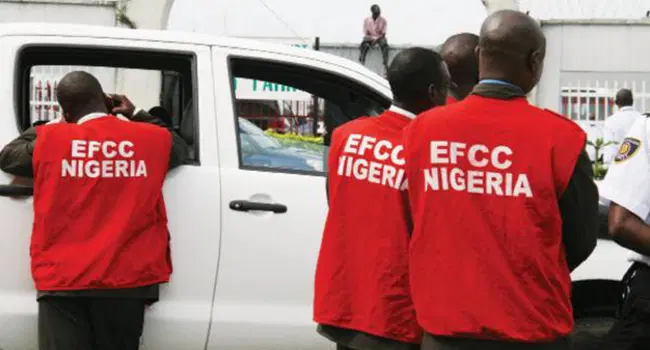
The Economic and Financial Crimes Commission (EFCC) has filed a petition against a Federal High Court judge, alleging that the defendants undertook transactions valued at about $9.7 million without using financial institutions.
Bowman states that banks require 'flexibility' to effectively compete with non-bank financial institutions.
The US Federal Reserve is reportedly moving to remove reputation risk as a factor in its bank reviews, potentially altering how financial institutions are assessed.
Financial institutions are advised to prepare for the practical execution of stablecoins, moving beyond just the debate surrounding them.
BNP Paribas is reportedly joining BlackRock and JPMorgan in the movement to tokenize funds on the Ethereum blockchain, indicating a growing trend among major financial institutions.

A proposed merger between DBP and LandBank is being advocated not as a rescue operation, but as a necessary step towards modernization for the financial institutions.
Several financial institutions have updated their price targets and ratings for various companies, including Centene, Unity Software, Block, Zillow, DraftKings, Instacart, CoStar, and Occidental Petroleum.
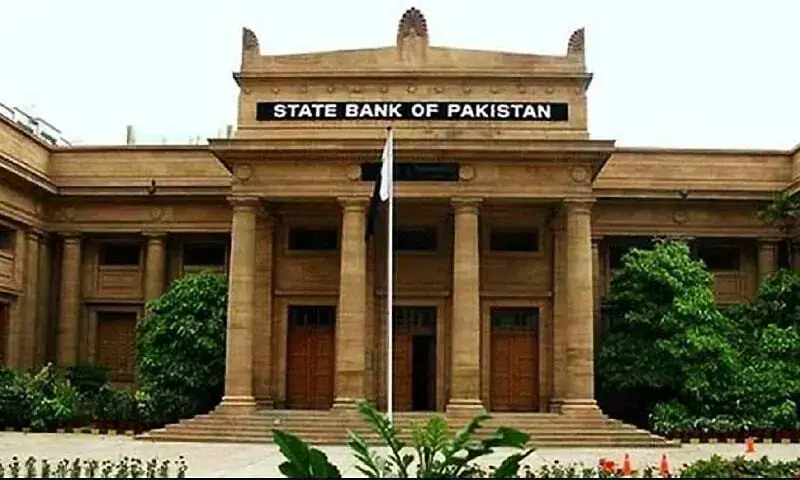
KARACHI: The State Bank of Pakistan (SBP) has launched ‘Cyber Shield’, a comprehensive cyber resilience strategy, to counter growing global and domestic cyber threats to the financial ecosystem, aligning with international best practices. As part of its Vision 2028 agenda, the SBP launched Cyber Shield, a major initiative aimed at strengthening the safety and robustness of the country’s banking and financial system. The banks have been facing increasing incidents of cyber crimes, while the international organisations believe that every second Pakistani is facing the cybersecurity problem. With the rapid digitisation and very high growth of online payments, cyber threats have also increased. Bankers said the situation is not alarming, but there is a need to implement quick remedies to control it, which would help strengthen the banking system in Pakistan. Outlines key priorities to counter growing threats by 2030 “The milestones laid down in the strategy will be implemented in a phased manner by 2030. All regulated entities are required to align their internal cybersecurity programs with the strategy to ensure compliance,” said the SBP. The central bank said the strategy has been designed to better protect banks and financial institutions from cyber threats, thus ensuring that people and businesses can continue to access financial services safely. The SBP said it set out a clear roadmap to help financial institutions strengthen their systems and controls, prevent cyber incidents, respond quickly when cyber threats materialise, and recover effectively from them. “As the banking ecosystem faces increasingly sophisticated cyber threats, the strategy aims to enhance cyber defences of the regulated entities through a holistic, forward-looking and collaborative approach,” said the SBP. Bankers said cybersecurity experts are not available to meet the growing demand in financial institutions, as many young Pakistani experts prefer jobs abroad with higher pay. There is no attractive policy to retain cybersecurity experts in the country. The SBP said the Cyber Shield focuses on five key priorities: strengthening the ability of banks to withstand cyber incidents, improving governance and accountability for cybersecurity, encouraging cooperation and information-sharing across the financial sector, building skilled cyber talent, and continuously updating security practices to keep pace with new risks. “The SBP will closely monitor both global and domestic cyber developments and will update the strategy as needed to address emerging threats,” said the SBP. By strengthening cyber resilience across the banking sector, SBP aims to safeguard customers, support digital innovation in a secure environment and ensure financial stability, it added. About 90 per cent of bankers believe that cybercrime is the biggest challenge confronting the banking industry in the country, according to a previous survey conducted by PricewaterhouseCoopers (PwC) Pakistan. Seventy per cent list fraud as their major concern, and 60 per cent believe terrorism financing is the biggest threat, the survey showed. “Banks in Pakistan operate within an evolving financial crime compliance ecosystem,” said the survey report. Published in Dawn, February 17th, 2026
Various financial institutions and analysts are issuing new ratings, price targets, and risk assessments for a range of companies, including banks like Santander and ING, automotive giant Stellantis, packaging firm Amcor, mining company Rio Tinto, and pharmaceutical company GSK.