Spain Experiences Unseasonably Warm Weather, Crowds Flock to Beaches
Spain is experiencing unseasonably warm temperatures, exceeding 20 degrees Celsius in the south due to an anticyclone, leading to crowds gathering on Barcelona's beaches.
22 stories found
Spain is experiencing unseasonably warm temperatures, exceeding 20 degrees Celsius in the south due to an anticyclone, leading to crowds gathering on Barcelona's beaches.

As Malaysians flock to Ramadan bazaars and breaking fast gatherings, the health ministry is reminding the public to observe tuberculosis (TB) precautions, especially in crowded and enclosed spaces. In a statement issued on Saturday, the ministry said a total of 596 new TB cases were reported nationwide during the sixth epidemiological week. The statement said the latest detections brought the cumulative number of tuberculosis cases to 3,161 across Malaysia. “Crowded, enclosed and poorly...

The number of US visits climbed by 17 per cent compared to the previous year
James Deering's 1916 winter home is located less than 10 minutes away from the heart of Miami. Robin Hill/Courtesy of Vizcaya Museums and Gardens Vizcaya, built by James Deering more than a century ago, might be Miami's most valuable real estate. The 45,000-square-foot mansion has a total of 54 rooms, with the main house open to the public. Citadel CEO Ken Griffin began assembling a waterfront compound next to the historic mansion in 2022. The exorbitant price tags on Miami's luxury real estate are not a secret to anyone, least of all the flock of billionaires moving to the city. But unlike the high-rise apartments in the financial center of Brickell or exclusive mansions in Indian Creek — where you might be neighbors with Jeff Bezos or Ivanka Trump — the city's potentially most valuable piece of real estate is decorated with limestone, mangroves, and tiles salvaged from Cuban estates. Built between 1914 and 1922 by International Harvester heir and Gilded Age millionaire James Deering as a winter home, Villa Vizcaya sits fewer than 10 minutes from downtown Miami, in a waterfront neighborhood that's quickly becoming a magnet for the city's new billionaire residents. While built in the years following the Gilded Age, it is notable for its Gilded Age-era extravagance, technologies, and collection of fine art. Vizcaya Museum & Gardens estimates the mansion cost $26 million to build, which is more than $800 million in today's money, per the Bureau of Labor Statistics. Florida International University estimates that the mansion is worth over $1 billion today. In 1962, Miami-Dade County bought the property for $1 million, and today, the 45,000-square-foot mansion and its surrounding gardens operate as a museum open to the public. Shortly after announcing that Citadel would move its headquarters from Chicago to Miami, CEO Ken Griffin bought up a waterfront compound less than a half-mile from Vizcaya, in the neighborhood of Coconut Grove. The $106.9 million sale set a country record for the most expensive residential property purchase at the time. Since then, the hedge fund magnate has proposed relocating the historic Villa Serena mansion, located on his estate, to Vizcaya's campus after he donated $20 million to Vizcaya Museum and Gardens. Take a look inside James Deering's historic mansion and see how its new neighbor could alter the surrounding landscape. Vizcaya was James Deering's winter home from 1916 until his death in 1925. Robin Hill Photography/Courtesy of Vizcaya Museum & Gardens Struggling with illness toward the end of his life, James Deering came to Miami, then a small city surrounded by mangrove forests and wetlands, looking for tropical warmth, which was believed to help improve health. By the turn of the century, the Deering family had begun to develop estates around South Florida, with patriarch William Deering purchasing a home in Coconut Grove in 1900. By the time James Deering began building Vizcaya, his brother, Charles Deering, was also developing a winter home in the south of Miami. The property, known today as Deering Estate, also operates as a museum and is open to the public. The main house features 54 rooms, including 34 rooms decorated with their original furniture. Kristine Villarroel/Business Insider Spanning over 45,225 square feet, Vizcaya's main house features the living spaces of James Deering himself, his guests, and the house staff. Envisioned by interior designer Paul Chalfin, Vizcaya drew inspiration from the Italian Renaissance, adapted to South Florida's subtropical climate, and showcases furniture, artworks, and artifacts purchased by Chalfin and Deering on their travels to Europe. Although Miami's population was estimated to be only 10,000 in 1916, the construction of the Vizcaya estate employed an estimated 1,000 workers, many of whom were Black immigrants from the Bahamas. Apart from the main house, Vizcaya is also home to the Vizcaya Village, the historic quarters of the mansion's workers and farmers that allowed Vizcaya to serve as a self-sufficient farm-to-table estate. The Village expands over 12 acres and includes 11 "architecturally significant" buildings, according to the museum's website. The tour begins in the courtyard, which is adorned with tropical plants. Kristine Villarroel/Business Insider Lined with tropical plants such as palms and philodendrons, the courtyard highlights South Florida's natural beauty while reflecting the mansion's European inspirations. While today the courtyard is covered by a glass canopy that allows for the estate's air conditioning, it was originally open to the elements, allowing the tropical climate to seep into the main house. Meant to be used as Vizcaya's main entrance, the East Loggia opens up to the Biscayne Bay. Kristine Villarroel/Business Insider Featuring marble floors and columns and decorated ceilings, the East Loggia was meant to serve as Vizcaya's main entrance for guests arriving by sea, which was Deering's intended — and preferred — way of entering the mansion. It was used as an entrance for guests who arrived by boat, while the current main entrance of the museum was used as a back entrance for guests arriving by car. The room also features a model boat hanging from its ceiling in honor of the explorers who inspired Deering's interpretation of Vizcaya. Although he began living in Vizcaya during his retirement, Deering included multiple working spaces in the property. Kristine Villarroel/Business Insider James Deering was heir to the International Harvester manufacturing firm, which produced tractors and other agricultural machinery, and he worked as its vice president from 1902 until 1909. Deering might have been one of the first prominent Florida "snowbirds," retirees who travel South during the colder months. His downstairs library, located in the northwest corner of the main house, is steps from the entrance hall that welcomes guests. It features Deering's personal book collection, desks for him and a secretary, and seats for business guests. When closed, the door leading to the next room — a reception room meant for entertaining guests — is concealed within the book-lined walls. The reception room features a ceiling imported from Venice, which had to be resized to fit. Kristine Villarroel/Business Insider The reception room is lined with tropical-inspired silk panels showing palm trees. Our tour guide brought our attention to the ceiling, which is decorated with sculpted panels that extend to the sides of the room. The ceiling was imported from Venice and purchased before construction on the property was finished. By the time workers were putting up the decorations in the mansion, they realized that the ceiling panel did not fit the room dimensions, leading to the restructuring of the panel, which curved into the walls. "We should remember that this house was built during the First World War," curator Flaminia Gennari said in the audio tour. "So to import large quantities from Italy in the middle of the war was very complicated." Vizcaya's telephone line was one of the first in Miami. Kristine Villarroel/Business Insider Wired throughout the house, Vizcaya features a highly innovative telephone system for the time. Only 17 years before the start of Vizcaya's construction, the Miami Telephone Company began providing telephone service to the city. Vizcaya's telephones also featured automatic electric exchange, allowing users to connect directly to the number they dialed without going through a human operator. The telephone room, located between two of Vizcaya's main entertainment rooms, was meant for guests to communicate privately without disturbing the flow of the entertainment. The living room showcased Deering's most impressive collections. Kristine Villarroel/Business Insider The living room, with its 1600s limestone fireplace, features some of Vizcaya's most impressive items, including an "admiral carpet" originally commissioned in the 1450s by the grandfather of King Ferdinand II of Spain, the Spanish king who sponsored Christopher Columbus' exploration of the Americas. The room also features throne-like armchairs where US President Ronald Reagan and Pope John Paul II sat in 1987 during the Pope's visit to America. A centerpiece of the room is the Welte Philharmonic Organ, designed to fill the house with music through elaborate sound systems. Designed for guests rather than full-time professional players, the organ uses perforated paper rolls to aid the musicians' performance by adjusting notes and volume. Concealing the organ pipes is an oil painting, which was cut in half to cover wooden doors. "Chalfin had the idea of cutting it in half and using it as the doors of the organs, which is not a very respectful thing to do for a representation of the Virgin Mary, the child, and the saints, but it somehow testifies to the freedom and positive carelessness that they had around old objects," Gennari said in the audio tour. The mansion's formal dining room features the house's oldest artifacts, although it was rarely used. Robin Hill Photography/Courtesy of Vizcaya Museum & Gardens While Deering himself didn't often eat in the formal dining room, he made sure it was impressively decorated for his guests. Sitting to the side is the room's most awe-inspiring feature: a marble tabletop on carved bases resembling mythical creatures, historical artifacts unearthed near Pompeii, dating back to the times before Mount Vesuvius' eruption. Next to the dining room, on the south side of the mansion, the enclosed loggia gave guests a view of the gardens. Kristine Villarroel/Business Insider The colorful glass panels, designed for Vizcaya, feature the estate's main symbols: the seahorse and the caravan. Providing a view of the garden through the glass panels and double doors, the enclosed loggia allowed guests to take in the garden views while staying cool from the Florida sun. The loggia also connects the gardens to the main house through sculpted iron gates. Kristine Villarroel/Business Insider Aside from giving guests an inside view of the gardens from the ground level, the room also connects the outdoors to the rest of the mansion. Downstairs, the kitchen worked as a serving space for staff to plate food and bring it to guests. Kristine Villarroel/Business Insider When designing Vizcaya, Deering asked for the main kitchen to be built upstairs as he didn't want the smell of food to flood the main entertaining rooms on the first floor. To facilitate the transportation of meals and the serving of guests to the dining room, the entertaining rooms, and the loggia, he built a downstairs serving pantry. Today, the serving pantry cabinets display one set of Deering's fine dining china, the one designated for his 80-foot-long luxury yacht, Nepenthe. Commissioned in 1912 to be shipped from Europe, the original set of china purchased by Deering was transported to America as cargo aboard the Titanic. After the ship sank, a replacement set was ordered and is now displayed. The kitchens feature state-of-the-art Gilded Age technology. Kristine Villarroel/Business Insider Throughout the house, Deering incorporated cutting-edge technology, including annunciators with bells connected throughout the house that Deering or guests could ring at any time to get the house staff's attention. Another then-advanced feature of the serving kitchen were its refrigerators, which were rare at the time. The kitchen also featured a warming oven that helped keep food warm while guests were served. Connecting to the upstairs kitchen, which serves as the house's main cooking area, was a dumbwaiter: a food elevator meant to carry the food cooked upstairs to the downstairs plating area, where staff would then take it to the main entertaining rooms, like the dining and sitting rooms. Upstairs, 24 rooms housed guests, staff, and Deering himself. Kristine Villarroel/Business Insider Nine of the bedrooms were dedicated to guests and each was given a name and decorated uniquely, showcasing the artifacts and furniture purchased by Deering and Chalfin on trips to Europe. While not open to the public, an additional 14 rooms housed staff. Another then-advanced technological feature of Vizcaya was its elevator. Kristine Villarroel/Business Insider Deering was motivated to move to South Florida because of his illness, so accessibility features were built throughout the house, including an elevator he would use when using a wheelchair or to avoid walking upstairs. Today, the elevator isn't open to the public, and the museum's second floor is not wheelchair accessible. Deering's main office was inspired by the Napoleonic era. Kristine Villarroel/Business Insider Connected to Deering's bedroom and bathroom, the sitting room was his office where he would tend to business and personal matters, such as sorting his mail. The decoration style was inspired by Napoleonic France. Deering's bedroom was modest compared to some of his guest bedrooms. Robin Hill/Courtesy of Vizcaya Museum and Gardens Unmarried all his life, Deering's room features a single bed rather than a larger size, and his room is furnished for practicality rather than aesthetics. His personal bathroom has one of the most breathtaking views of the property. Kristine Villarroel/Business Insider Opening onto a balcony, Deering's bathroom overlooks Biscayne Bay and offers one of the best views of the house, although it is not accessible to the public today. The closed-off balcony also leads to a secret door to the Espagnolette, the guest bedroom located next to his, usually reserved for Deering's dearest guests. Spiral staircases lead to the South tower. Kristine Villarroel/Business Insider A set of spiral staircases leads up to the South tower, one of the two guest suites overlooking the estate. The tower bedroom has views of the bay and the gardens. Kristine Villarroel/Business Insider The corner room atop the North tower was designed to transport guests to Europe. "Water reflects upwards to the ceiling and the sound of waves is audible in this room, precisely as upon the quay of this great canal of Venice," noted Chalfin about the room, according to the mansion's website. A central piece in the room is a large wardrobe assembled with 1700s Venetian panels, as well as antique painted closet doors. The breakfast room was Deering's preferred dining space. Robin Hill Photography/Courtesy of Vizcaya Museum & Gardens Back on the second floor, the breakfast room was the central entertaining spot. The room is lined with oil paintings depicting ocean scenes, and the windows slide into pocket doors, revealing views of the garden. It also features a sound system, with a piano hidden in a room off the spiral staircase next door and connected to the breakfast room through floor vents that allow sound to travel into the space. Most of the time, Deering opted to dine in this room rather than the formal dining space. Tucked next to the breakfast room is the main kitchen. Kristine Villarroel/Business Insider Designed to maximize staff efficiency, the main kitchen upstairs has different areas for different tasks, including separate sinks for washing dishes and produce. It also features ice boxes, or refrigerators of the time, powered by salt water. During Deering's time at the estate, Vizcaya employed two French chefs dedicated to food and pastries. Food served at the mansion was sourced from the staff village built across the street, where a farm provided vegetables, dairy, chicken, herbs, and citrus. "You and I could come down and drive into the farm area, stop and buy a dozen Deering eggs and take them home and have them for breakfast, and I think that was probably particularly important during World War I," historian Arva Moore Parks said in the audio tour. "He was able to supply not only himself but his workers also." Inspired by European designs, the gardens feature mazes, terraces, fountains, and more. Kristine Villarroel/Business Insider Inspired by 17th- and 18th-century Italian and French villas, the Vizcaya gardens feature a variety of scenes, from a garden theater to multiple paths and mazes, intended to highlight and enhance the native South Florida flora surrounding the estate. The original layout of Vizcaya featured over 180 acres of subtropical forests. Today, that number has gone down to 50 acres. In 1987, President Ronald Reagan hosted Pope John Paul II at the estate. Diana Walker/Getty Images On September 10, 1987, President Ronald Reagan welcomed Pope John Paul II at Vizcaya, where the two conversed while exploring the gardens and the estate. Atop a garden mount is the Casino, a focal point of the gardens. Robin Hill/Courtesy of Vizcaya Museums and Gardens Located at the top of garden mounds designed to block the reflection of water ponds into the main house, the garden casino — Italian for "little house" — was a space where Deering and his guests could take in the garden views or enjoy the subtropical weather without being in direct contact with the sun. Inside the building, a painted ceiling depicts heavenly images. Underneath, bathrooms and other now closed-off areas hide under decorated ceilings. Originally, the casino overlooked a water park part of the estate, where gondolas would be launched, a crucial part of Deering's vision for Vizcaya. Today, the water park no longer exists, and the land is instead taken up by a Catholic church, hospital, and schools after the Deering family sold part of the property to the Catholic Diocese of St. Augustine in 1946. The opposite side of the estate was once used for clandestine entertainment; now, it is a café. Kristine Villarroel/Business Insider While today a café sits underneath the mansion, the space served as a leisure center during Deering's stay. The rooms were filled with billiard tables, bowling alleys, and leather chairs. Hidden underneath the billiards table was also a roulette table, which Deering often used when his college friends visited the estate. The mansion, which opened at the peak of the Prohibition era, also had a decent supply of liquor, which Deering smuggled into the estate and hid in secret bars and cellars. The swimming pool is half-covered, providing relief from South Florida's relentless sun. Robin Hill/Courtesy of Vizcaya Museum and Gardens Tucked next to the leisure rooms underneath the main house is the half-indoor swimming pool, in which Deering is said to have only swum once. Designed as the main entry point to the mansion, the east side of the mansion opens up to a stone barge in the Biscayne Bay. Kristine Villarroel/Business Insider When he first moved into his winter home in December 1916, Deering arrived by sea on what he intended was the front entrance to Vizcaya. Opening up to the Biscayne Bay, the waterfront side of the property features a stone barge, a sculpted structure that acts as a breakwater and protects the main house from changing tides and waves. Today, the mansion hosts private events and has become a local staple for Quinceañera pictures. The mansion is often used for private events. Kristine Villarroel/Business Insider Purchased from the Deering family by Miami-Dade County for $1 million in 1962, Vizcaya today operates as a museum open to the public and for private reservations. The estate often serves as the backdrop for Quinceañera pictures among Miami's large Hispanic population. Walking around the gardens, I saw multiple young women dressed in extravagant gowns posing in the many stunning locations of the estate. Along with being a photographic hot spot, Vizcaya also hosts private events, from Miami Swim Week runway shows to floral-decorated weddings in the gardens. Today, the estate remains an icon of Miami, a city that many would often relate to modern luxury rather than the old and classic wealth on display in Gilded Age-style mansions like Vizcaya. The Vizcaya Village could be the future home of Ken Griffin's Villa Serena. Robin Hil Photography/Courtesy of Vizcaya Museum and Gardens After purchasing the historic Villa Serena estate in Coconut Grove in 2022, Citadel CEO Ken Griffin proposed relocating the 1913 Mediterranean Revival mansion to Vizcaya's Village campus. The home, designed by architect August Geiger for William Jennings Bryan, a three-time Democratic presidential candidate and former US secretary of state, is considered one of Miami's earliest grand waterfront residences. The proposal would move the century-old home from Griffin's property to Vizcaya's Village grounds, where it would be open to the public for the first time in its history and would benefit from an additional $5 million endowment provided by Griffin for its preservation. Any relocation would require extensive planning and government approvals, which have not yet been cleared. Skeptics have said that moving the structure would be an ambitious undertaking that wouldn't align with preservation goals. "Moving a historic structure is absolutely a last resort solution, to be done only if (there) is no other way possible to save a structure… It is not a preservation-minded alternative just because someone bought it and now doesn't want it," Kathleen Slesnick Kauffman, Miami's former historic preservation officer, told the Chicago Tribune in 2023. The Village originally served as Vizcaya's self-sufficient farm and the servants' quarters. Robin Hil Photography/Courtesy of Vizcaya Museum and Gardens The Vizcaya Village, which covers about 12 acres of agricultural fields and includes nearly a dozen buildings, was originally built as the quarters for the mansion's servants and farmers. Today, the campus houses a café and hosts a weekly farmers market, and is undergoing construction and expansions to transform the grounds into a cultural and community space. The Citadel CEO's $20 million donation will expand the village's role in the community. Robin Hil Photography/Courtesy of Vizcaya Museum and Gardens In November 2025, Vizcaya Museum and Gardens announced a $20 million capital donation from Griffin and said that the funds would be used toward building a brand new Center for Learning and Discovery in the village grounds. Once open, the center will offer educational programming like "hands-on artmaking and urban-agriculture experiences," the museum organization wrote in the announcement. The expansion will seek to expand Vizcaya's role in its community. Read the original article on Business Insider

Hong Kong welcomed 10 per cent more visitors on the first day of Lunar New Year on Tuesday, with crowds continuing to flock to hiking trails and tourists packing border crossing checkpoints. The latest Immigration Department data showed that 153,383 visitors arrived in the city on Tuesday, representing about a 10.4 per cent increase compared with the same day last year. Of these, more than 120,000 came from mainland China. Inbound trips over the first two days of Lunar New Year totalled 265,140,...
Cricket fans from India and Pakistan are converging on Colombo for a highly anticipated T20 World Cup match between the two rival nations.

More Hollywood stars are increasingly participating in international cinema, attracted by bold auteurs, creative freedom, and challenges within the American indie scene.

Birdwatchers in Montréal are flocking to witness Canada's first recorded European robin, a 'vagrant' bird whose unexpected appearance during a harsh winter has sparked curiosity.
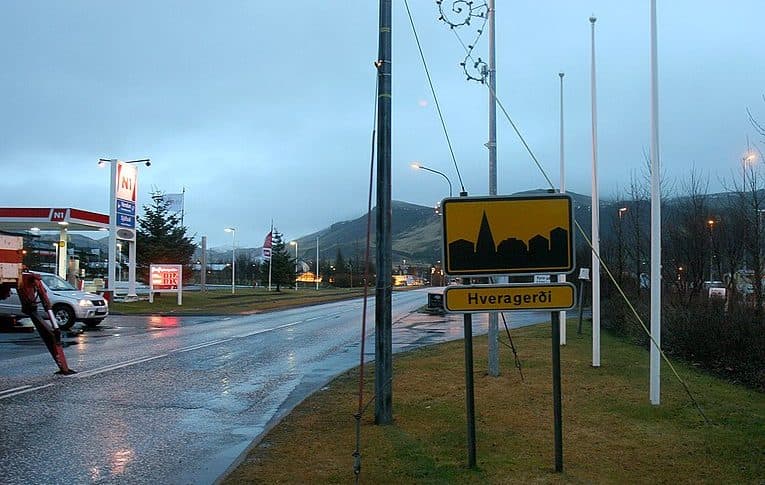
The upcoming project of the Ölfusár Bridge is driving significant business growth in the eastern part of Selfoss. As reported by RÚV, businesses are increasingly flocking to the east side of the town. One of the latest additions to the area is the Álnó store, which has relocated from Hveragerði to the Austurgarður shopping centre […] The post Selfoss Sees Commercial Growth with New Bridge and Retail Moves appeared first on Iceland Review.

Cootamundra hosts Australia's hottest beach event, an annual volleyball tournament that brings tonnes of sand and flocks of tourists to an inland location.
The Magpies made the furthest trip on record by an English club in the UEFA Champions League, travelling 2529 miles to face Qarabağ FK in their Play-Off Phase first leg.Thankfully, it was more than a...
Bernard Hoffman/Getty Images Thanks to the postwar Baby Boom and other factors, families in the '50s began moving to the suburbs. Levittown in Long Island, New York, is widely recognized as the first modern American suburb. Each home looked the same — they were all built in the Cape Cod-style and cost around $7,000. As World War II came to an end, families looked for ways to start over. Emboldened by the GI Bill's provisions for home loans, they moved out of the cities in droves for newly developed suburban communities. In fact, the suburbs expanded by 47% during the 1950s, according to the Gilder Lehrman Institute of American History. Levittown in Long Island, New York, was one of the first to introduce the idea of a pre-planned, mass-produced uniform suburban community, The New York Times reported. Families started moving there on October 1, 1947. Though the community welcomed an influx of families, non-white prospects weren't allowed. Notably, African Americans didn't see the same benefits from the GI Bill, and it would take some years before racial and ethnic minorities broadly shifted to the suburbs. Here's what it was like to live in America's first modern suburb in the 1950s. Before the 1950s, people mostly lived in cities to be close to factory jobs. Historical/Getty Images At the time, most people lived close to the city center to work in factories, or they lived in rural communities to work on farms, according to economist Jay Zagorsky. Everything changed in the 1950s when soldiers returned from World War II, sparking the great migration to the suburbs. Irving Haberman/IH Images/Getty Images The 1950 Census found that 60% of people lived in cities, while 40% lived in the suburbs. Thanks to factors like the construction of highways, the development of new neighborhoods from farmland, and even safety in the event of an atomic attack, these percentages would soon shift drastically. The GI Bill made it easier to afford a new home, prompting this transition from urban to suburban. Newsday LLC/Getty Images The GI Bill provided each returning soldier with benefits designed to stimulate economic growth. Each soldier was given a year of unemployment and free tuition to go to college. The military pledged to back all home loans, which allowed veterans to buy houses with little to no down payments. The Baby Boom started at the same time, causing many families to outgrow their city apartments. A family of four stands in front of their house in Levittown, NY. Joseph Scherschel/Getty Images Shortly after WWII ended, the Baby Boom began. In 1946, 3.4 million babies were born, more than ever before, and 20% more than in 1945, per History.com. This trend continued into the '50s. By the end of the boom in 1964, this generation made up 40% of the country's population. Most historians think it was because Americans were eager to have families after having postponed marriage and childbirth because of the Great Depression and World War II. Whatever the reason, people flocked to the suburbs to accommodate their growing families. In response to this growing need for space, suburban communities popped up at a faster rate in the '50s. An aerial view of a suburban community. Hulton Archive/Getty Images During the war, factories focused on creating wartime essentials, like airplanes and barracks. In the '50s, they refocused their efforts on building home components and automobiles using the new practices — like the assembly line — they implemented in the war, As a result, factories were able to produce materials for homes faster than ever before. Levittown in Long Island, New York, is widely recognized as the first modern American suburb. Tony Linck/Getty Images Levitt and Sons, a construction company, purchased a 7-square-mile plot of potato and onion farms in Long Island in 1947. They set out to build one of the first uniform suburban communities in the US. The community grew fast. In fact, a house was built every 16 minutes in Levittown. Tony Linck/Getty Images To construct the new community, which sits about 30 miles east of Manhattan, Levitt and Sons hired mostly unskilled workers to build the homes. They gave each a specific skill and created a sort of human assembly line. William Levitt even called his firm "the General Motors of the housing industry," The Guardian reported. The Levitts eventually constructed 17,447 houses between 1947 and 1951. During the peak of the construction boom, one was built every 16 minutes. People flocked to home sale events to get themselves a slice of suburbia. Al Fenn/Getty Images The first homes in Levittown cost new residents around $7,000, The Guardian reported. For veterans, there was no down payment. When adjusting for inflation, a Levittown home in 1950 would be roughly $97,000 in today's money. Every house in Levittown was identical. The Levitt family called it "the best house in the US." Joseph Scherschel/Getty Images At first, all the homes were built in the same style, and some residents even admitted to walking into the wrong house at times because they couldn't tell them apart, according to Khan Academy, citing Kenneth T. Jackson's "Crabgrass Frontier: The Suburbanization of the United States." The picturesque community was lined with greenery. In fact, a tree was planted every 28 feet in Levittown. Newsday LLC/Getty Images Each home in Levittown sat on a 6,000-square-foot lot, The New York Times reported. Outdoor spaces, like backyards, became focal points. Robert W. Kelley/Getty Images With the growing number of children, outdoor spaces became increasingly important to the suburban neighborhood. Inside each home, there were four rooms, a built-in TV set, and Hi-Fi for the radio. Joseph Scherschel/Getty Images At first, they were modest homes, but most families saw their new suburban lives as luxurious. Most Levittown residents experienced the responsibilities of owning a home for the first time. A man and a woman clean opposite sides of a window. Many homeowners experienced the responsibilities of owning a home for the first time. Newsday LLC/Newsday via Getty Images Many Levittown homeowners learned homeownership responsibilities, such as tending to a lawn. The suburb helped cement the idea of the "nuclear family" in American culture. The community prided itself on neighborhood amenities, like this mobile public library. Joseph Scherschel/Getty Images There were also swimming pools that children could use during the summer. Levittown also had seven shopping centers. Underwood Archives/Getty Images The shopping centers were called "village greens" and were designed to make the town more of a bustling community, per Encyclopedia.com. The suburbs were also known for being a safe alternative to the gritty city streets. Joseph Scherschel/Getty Images Since the streets in the suburban neighborhood were considered safer than those in the city, parents used to allow children to bike around by themselves, per the National Center for Safe Routes to School. Levittown was also known as a cheaper option compared to an apartment in the city. Bernard Hoffman/Getty Images The mortgage on a home in Levittown was reportedly about $29 per month, while most paid $90 per month in the city. By comparison, the average rent in New York City in 2026 is just under $3,500, according to Zillow. The monthly cost of a 30-year mortgage on a Levittown home today would be roughly $2,000. With all the amenities and perks, the community grew rapidly. In less than a decade, the population of Levittown reached 82,000. Bettmann/Getty Images The community has over 17,000 homes, making it one of the largest private housing projects in the history of the US. As a result, Levittown became a model for other suburban communities in the US during the 1950s. A suburban community in the 1950s. Joseph Scherschel/Getty Images Suburban home construction boomed in the 1950s. In fact, at least 15 million units were under construction by the end of the decade, according to the Wealth Management Group. Although suburban communities boomed in the '50s, the shift was reserved for white Americans. Joseph Scherschel/Getty Images For years, there were rules that restricted minorities from buying homes in Levittown, and even as the Civil Rights Movement was starting to take form and the rest of the country began integrating after Brown v Board of Education in 1954, Levittown remained mostly white. Two-thirds of Levittown residents today are white, according US Census estimates. Some of the few non-white families resisted this standard. Some non-white residents like William Cotter and his family fought against Levittown's whites-only standard. Newsday LLC/Newsday RM via Getty Images In 1952, William Cotter, a Black man, and his family, sublet a home at 26 Butternut Lane. When the lease was up, Levitt refused to renew it or sell them the home. The refusal sparked support for the Cotters, and the family eventually purchased another home from a white homeowner. With modern highways leading to the suburbs, men commuted into the city. New highways leading to the suburbs didn't come without traffic. Newsday LLC/Newsday via Getty Images The suburban boom corresponded with the expansion of interstate highways in the US, starting the modern iteration of the commute from the suburbs to the city. In 1950, 80% of men in Levittown commuted to Manhattan for work, The Guardian reported. During a typical day, the streets of Levittown were filled with women, as the men were mostly working in the city. Bettmann/Getty Images When men left to fight in WWII, women began entering the workforce, gaining newfound independence and freedom. However, they were suddenly expected to give this up again and instead focus on childbearing and rearing. In 1963, author Betty Friedan wrote in "The Feminine Mystique" that the suburbs "were burying women alive." However, some believe that women's dissatisfaction with staying home "contributed to the rebirth of the feminist movement in the 1960s," History.com reported. Women also got active in civic engagement. Women and children protest in favor of new stop signs. Newsday LLC/Newsday RM via Getty Images In 1959, women of Levittown, with children in hand, protested in favor of putting stop signs in an area with automobile-related deaths. Levittown became a symbol of prosperity and anticommunism in American politics and culture. William J. Levitt speaks with three senators. Bettmann/Bettmann Archive/Getty Images As American politics increasingly centered on anticommunism and Cold War tensions rose, Levittown and suburbs like it took on a symbolic meaning in American culture, representing prosperity and the "American Dream." Levitt was once quoted saying, "No man who owns his own house and lot can be a Communist. He has too much to do." In 2026, Levittown is still a sizable community with a population of about 50,000. Though it's full of modern businesses and technology, the community still holds a legacy as a post-war suburban haven. Read the original article on Business Insider

Vietnamese workers are increasingly learning Chinese due to surging Chinese investments and growing job opportunities.

Couples are increasingly choosing budget fast-food chains like White Castle and Waffle House for their Valentine's Day celebrations. These establishments offer special reservations and tablecloths, transforming into 'beacons of love' for the holiday.
Hundreds of visitors are flocking to a muddy field to witness the crumbling beauty of 42 massive concrete sculptures honoring most of America’s former presidents.
The upcoming project of the Ölfusár Bridge is driving significant business growth in the eastern part of Selfoss. As reported by RÚV, businesses are increasingly flocking to the east side of the town.

Dozens of fans flocked to a Japanese zoo on Friday to catch a glimpse of a baby macaque who shot to social media stardom months after being abandoned by his mother.

More people in China are choosing to stay away from their villages and families during Lunar New Year, according to Chinese national and businessman Xue Gang, 44. “Our parents do not mind, and even my parents are currently travelling around China. “Maybe next year I will bring them to Penang to witness the celebrations here,” he said. Xue, who was in Malaysia’s Penang state with his wife, daughter and friends, said festive performances were no longer common to enjoy back home. “If we want to...

Europe is experiencing a rise in long-haul travelers and spending, particularly from Chinese and Indian tourists, while Americans are shunning the continent.

Millions of people around the world are celebrating the start of the Lunar New Year, with festivities taking place from Hong Kong to Buenos Aires.
Photos from around the world capture the vibrant celebrations of Carnival and Lunar New Year, while anticipation builds for the results of the 2026 Carnival samba school competitions in Brazil.
Researchers and volunteers in Texas have documented instances of birds from different species preening one another, suggesting this interspecies behavior may be more common than previously thought.