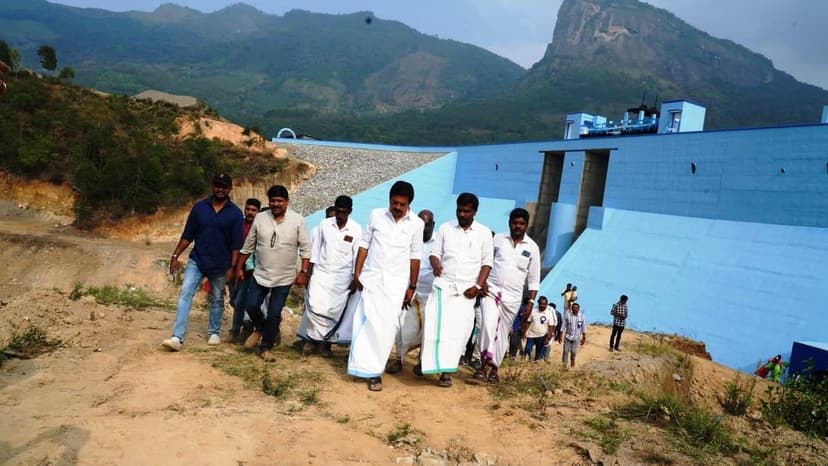
Pattissery Dam project inaugurated in Idukki
The Pattissery Dam project has been inaugurated in Idukki, though further details about the project are not provided in the snippet.
29 stories found
The Pattissery Dam project has been inaugurated in Idukki, though further details about the project are not provided in the snippet.
The first episode of the new season of TV 2's 'First to the End of the World' mostly takes place at Brazilian bus stations. And it's boring, writes Sune Højrup Bencke in this column.
NFL insider Tom Pelissero's latest update on the trade rumors swirling around star Raiders' defensive end Maxx Crosby will surely catch the Patriots' attention.

Their friendship and musical partnership spans four decades. As the legendary Hungarian composer turns 100, cellist Steven Isserlis celebrates a musician of boundless imagination, humour – and his…

Analyse: Regeringens 2035-plan er et forsøg på at sætte rammerne for den forestående valgkamp. Men ændrer man bare lidt på præmisserne i den politiske plan, er råderummet meget større eller meget mind

A review of Slastičarnica M&M, a highly-regarded patisserie in Zagreb's Rudeš neighborhood, known for its reliable cakes.

Measles transmission has been detected among people with no recent overseas travel or known public exposure. Follow today’s news live Good morning, and happy Monday. Nick Visser here to get things started this week. Here’s what’s on deck: Victoria is warning residents of an increased risk of measles in the state after local transmission of the virus in Melbourne among people with no recent travel or public exposure. Health officials have published a long list of exposure sites, warning people...
Verslunarkjarni hefur vaxið hratt austast á Selfossi undanfarin misseri. Bragi Bjarnason, bæjarstjóri Árborgar, segir nálægðina við nýja Ölfusárbrú laða fyrirtæki að og heilmikil uppbygging sé fyrirh

Georges-Louis Bouchez, president of the MR party, proposes strengthening Belgium's Quintin law to prevent the proliferation of 'enemies of freedom,' citing concerns about political clashes similar to those in France.
Two players in their own backyard that the Saints could look at in the upcoming draft.

Christine Busch and Mads Vestergaard clearly lost to a Chinese pair in the German Open final.

The Chinese Liu Yi and Chen Boyang comfortably defeated the Danes Kim Astrup and Anders Skaarup.
Within the next few weeks, the Minnesota Vikings probably add a new quarterback for 2026, and that man will probably […]
Internet betting exchanges are experiencing a boom in America, allowing users to bet on various events and potentially get rich overnight.

Alysa Liu var kørt træt i den disciplin, som kunstskøjteløb og hendes far lagde på hende. Hun gik derfor på pension som 16-årig. Nu har hun genfundet glæden på sine egne præmisser og er blevet dobbelt

Sébastien Lecornu, the French Minister of the Armed Forces, urged supporters of the 2030 Winter Olympics bid in the French Alps to unite and ignore detractors.

Belgian political parties PS and DéFI have accused MR president Georges-Louis Bouchez of leaning towards the far-right, citing screenshots of a retweeted message that called RTBF journalists 'gestapistes,' which Bouchez denies retweeting.
Costco is facing a second lawsuit concerning its rotisserie chickens, raising further questions about the product.
The rumor mill has recently offered optimism about Aaron Rodgers returning to the Pittsburgh Steelers in 2026. An NFL reporter pushed back on that sentiment with a more sobering perspective. NFL Network’s Tom Pelissero claimed on Super Bowl Sunday that the “odds are increasing” of Rodgers delaying retirement another year and re-signing with the Steelers. […]
Costco is facing a lawsuit from a nonprofit organization alleging salmonella contamination in its rotisserie chicken produced at a Nebraska plant. The suit raises concerns about food safety practices.

Health authorities say the combination of extreme temperatures, low humidity and dust creates favourable conditions for the spread of Neisseria meningitidis. The post How extreme heat is deepening public health concerns in Nigeria appeared first on Premium Times Nigeria.
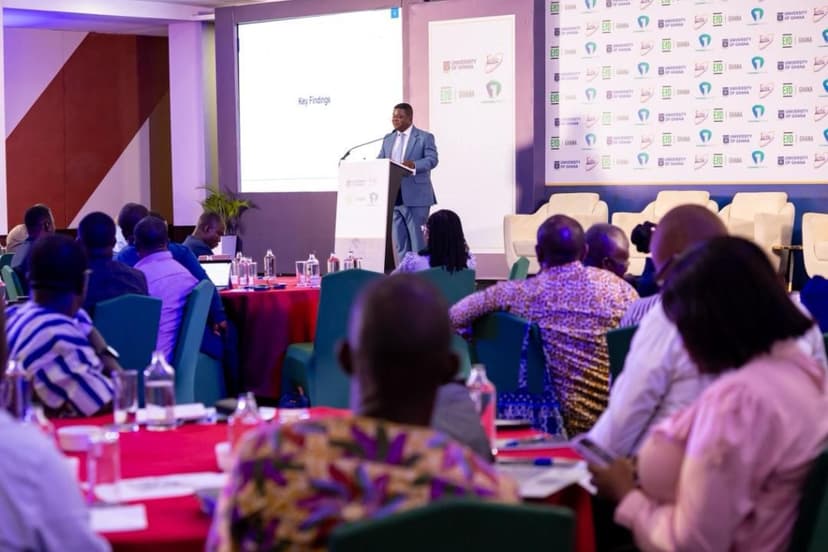
Poor sanitation costs Ghana GH₵6.2bn a year, ISSER study finds Graphic Online
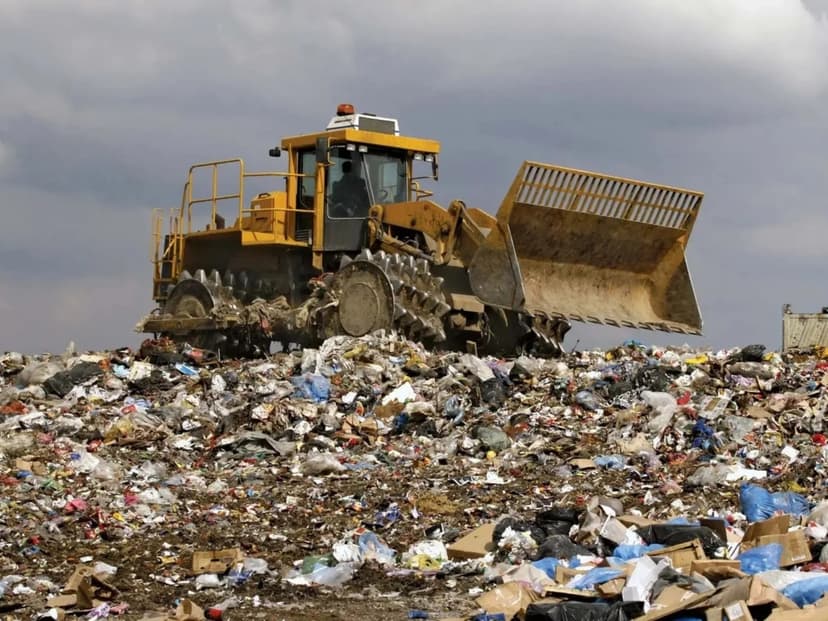
A new study by Ghana's Institute of Statistical, Social and Economic Research (ISSER) reveals that Ghana could generate up to GHS 47.9 billion in annual economic benefits by 2032 through significant investment in waste management and sanitation.

The family of a Canadian University of Toronto PhD student is concerned after he was arrested in Pakistan while conducting research for his dissertation.

Mark Carney coming to Australia as part of Pacific diplomatic tour. Follow today’s news live Get our breaking news email, free app or daily news podcast Good morning and welcome to our live news blog. I’m Martin Farrer with the top overnight stories and then it will be Nick Visser with the main action. Canada’s prime minister, Mark Carney, will travel to Australia early next month as part of a broader Asia-Pacific tour aimed at diversifying trade links amid ongoing tariff turbulence from th...

A recipe from Zagreb's Amelie patisserie offers a quick and easy crumble dessert, combining warm, juicy fruit with a crispy, buttery topping.
Zehn Prozent, 15 Prozent, oder darf‘s noch ein bisserl mehr sein? Das Urteil des US-Höchstgerichts über die Zollpolitik des US-Präsidenten bringt keine Klarheit, sondern mehr Unsicherheit. Für Europa

Amy Grant is set to release her first new album in 13 years, 'The Me That Remains,' with the title track reflecting on her 2023 bike accident.
Kevin Dietsch/Getty Images; Getty Images; Rebecca Zisser/BI Tech's elite are taking their talents to South Beach — again. In January, David Sacks, the venture capitalist and crypto and AI czar, proclaimed that Miami will soon replace New York City as America's financial capital. Stripe's Patrick Collison has been marveling at the city's "boomtown" vibes. With California flirting with a one-time tax on billionaires, said billionaires like Larry Page, Sergey Brin, and Mark Zuckerberg are buying oceanfront mansions. And on Tuesday, Palantir announced that it's moving its headquarters from Denver to Miami. Is Miami the next Silicon Valley? We've been here before. The pandemic sent waves of coastal workers to the city, turning it into a Zoomtown full of online venture capitalists like Keith Rabois and Delian Asparouhov, bitcoin bull runners, and purveyors of the finest NFTs. Billboards went up in San Francisco featuring a mock tweet from then-Miami mayor Francis Suarez: "Thinking about moving to Miami? DM me." Here's the thing: It's easy to fall for Miami when a big chunk of the workforce is stuck at home and online. Five years later, it's a lot harder to build companies there. "Miami is great three months out of the year," says one prominent venture capitalist who moved to the city during the pandemic but is now returning to an established hub. While the Floridian tax benefits are real, the investor has found that the social scene hollows out in the summer as residents leave, making it "hard to build roots or have reliable friends." More critically for the startup ecosystem, the scene lacked the "hustle" of San Francisco or New York. Silicon Valley practically runs on a conveyor belt from Stanford and Caltech to Y Combinator's Dogpatch offices. The machine turns students into founders, builders into companies, and companies into the next wave of founders. Miami, meanwhile, lacks a major university to pipe in tech talent. Instead, the investor says, the city tends to attract people who have already "made it." Miami and Fort Lauderdale-based startups raised $3 billion in 2025. Bay Area-based startups raised $177 billion. The Miami market, while busy, significantly lags behind the major hubs. Startups in the Miami-Fort Lauderdale metro raised about $3 billion in 2025, per PitchBook, down from $8.6 billion in 2022, when money and crypto sloshed about. The Bay Area, by contrast, still grabs 52% of the nation's venture funding, with $177 billion in capital pouring in last year. Alligators may be all around in Miami, but unicorns are hard to find. In January, Cast AI, a startup that helps companies cut cloud costs, crossed the $1 billion valuation mark, becoming the region's first homegrown unicorn in years. Before that, Adam Neumann, the ousted WeWork cofounder, debuted his Miami residential real-estate venture, Flow, at a $1 billion valuation in 2022. Even Garry Tan, the Y Combinator president and gadfly who's usually first in line to dunk on San Francisco's politics, has been blunt about where the breeding grounds are best. Tan recently said on X that the accelerator still hasn't opened offices outside the Bay Area because founders are simply more likely to build unicorns there. According to a Business Insider analysis of Crunchbase data, of the at least 97 new unicorns that investors minted in 2025, 43 of them were based in the Bay Area. But those who dismiss the city entirely miss the point. Miami isn't the next San Francisco. It's establishing itself as something else. Patrick Murphy, a former Florida congressman and entrepreneur, says that Miami's tech scene is growing, it's just being built in "reverse order." Silicon Valley, he says, emerged from an if you build it, they will come approach: Engineers built great companies first, which eventually created fortunes that cycled back into the community to fund the next generation of companies. Miami, however, has a more if you come, they will build it tact. It's attracted the "wealth achievers" first — the family offices, private equity names, and already-successful founders who emigrated for lifestyle reasons. Finance heavyweights like Citadel and Thoma Bravo arrived early. Vanguard, one of the world's largest asset managers, is eyeing an expansion in Miami as it targets more Latin American wealth. The city is now importing the machinery that follows them. Legal, accounting, and consulting firms are opening local offices to stay close to clients — and scoop up star talent that no longer needs to live near HQ. This dynamic has established Miami as a "control center" for decision-makers, Murphy argues, but not yet the "factory floor" where the actual work gets done. Murphy says that despite running a successful construction-tech startup, Togal.AI, his engineering team has been offshore from the beginning because the local talent pool simply "didn't exist" when he started in 2019. "If you go to Miami, you're not going to see dozens of engineers at a Starbucks cranking away," he says. "That's not here yet." Still, Miami's flood of wealth is creating demand for startups built on the city's local economy, especially in property tech and fintech, Murphy says. Togal.AI's annual recurring revenue has grown 1,000% over the past two years, Murphy says, and is now raising fresh venture funding in order to hire dozens of new employees this year. Palantir's move immediately became a kind of Rorschach test for Miami's future. "Florida is the new crypto," one user wrote on X. Maya Bakhai, a Fort Lauderdale resident and founder of the early-stage venture firm Spice Capital, tells me that the city will flourish alongside "net new" industries that are still taking shape and where the center of gravity isn't locked in yet. Crypto firms like MoonPay and QuickNode still treat South Florida as a home base, she notes. A new space-tech accelerator backed by the state is trying to persuade founders to stick around by pairing them with funders. Bakhai's bigger bet is that just as New York became the hub for e-commerce, Miami could become the place where creator businesses get built. Research out of the University of Hong Kong found Miami has more top influencers per capita than New York or Los Angeles. And then there's Palantir, the strongest signal flare yet that tech is taking America's Playground seriously. It's hard to know what the data giant's HQ move will mean in practice — Palantir hasn't said how many employees it plans to relocate, or whether it will offer moving packages to lure talent south. The company did not respond to an email request for comment. If Palantir does move a meaningful slice of its workforce, it would give Miami something it's been short on: a marquee tech employer that can recruit and keep technical workers on the ground year-round. On X, Palantir's move immediately became a kind of Rorschach test for Miami's future. ""Florida is the future," cheered Andreessen Horowitz investor Katherine Boyle. Others were less convinced. "Florida is the new crypto," one user wrote. "For the next 20 years, nothing will change, but they will always tell you 'big things are happening in Florida.'" Turning Miami into Silicon Beach is a long game, Bakhai argues. It won't be built by the billionaires buying houses to snowbird in today, she argues, but by the young strivers arriving for their first serious jobs — the entry-level analysts heading to Citadel and the junior lawyers starting at firms like Orrick. For the first time, she says, ambitious graduates can launch careers in Miami instead of treating New York or San Francisco as the default. The payoff, she says, comes years later, when they eventually spin off to start their own companies. Until then, Miami remains largely a playground for the "made it" crowd, waiting in the sun for the builders to come. Melia Russell is a reporter with Business Insider, covering the intersection of law and technology. Read the original article on Business Insider