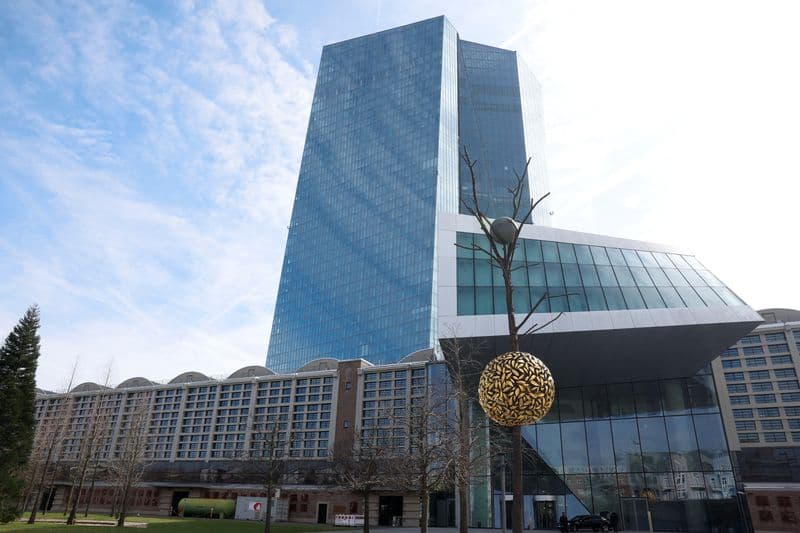
FinanceYahoochannel-news-asia3h ago2 sources ECB Paper Warns Stablecoin Use Could Weaken Central Bank's Influence and Harm Lenders
A new paper from the European Central Bank (ECB) suggests that the widespread adoption of stablecoins could diminish the ECB's monetary policy effectiveness and negatively impact traditional lenders.

UK Banks Face 'Stick or Twist' Moment on Growth Strategy
UK high street lenders are at a critical juncture, deciding whether to maintain disciplined growth plans or take on riskier bets to boost their fee income.

UK Property Lender Collapse Sends Shockwaves Through Wall Street
The collapse of UK property lender Market Financial Solutions, linked to a Bangladeshi politician's real estate empire, has caused concern among lenders on Wall Street.
FinanceReutersbloombergseeking-alpha4d ago3 sources Banks Exposed to Failed UK-based MFS
A report indicates that major lenders including Barclays, Santander, and Wells Fargo have exposure to the failed UK-based MFS.
ATHEX: Lenders and LNG-relate stocks rise - eKathimerini.com
ATHEX: Lenders and LNG-relate stocks rise eKathimerini.com
Lenders to Commercial Real Estate Owners Reach Breaking Point
Lenders providing financing to commercial real estate owners are reportedly reaching a breaking point, signaling potential distress in the sector.

Turkey Secures Preliminary Deals for Largest Foreign-Funded Railway Project
Turkey has reached preliminary agreements with six international lenders to secure $6.75 billion for a new railway line across the Bosphorus, marking what would be the country's largest foreign-financed railway project.
Family and friends overtake banks in loans to farmers
Formal lenders struggle with innovative agricultural financing.
European Private Lenders' Shares Tumble
Shares of European private lenders have tumbled as a selloff intensifies, with Blue Owl's performance clouding the outlook for private credit.

Trump's admin confirms that selling federal student loans to private companies is still on the table
President Donald Trump
Saul Loeb/AFP/Getty Images
The Education Department said it has not made a final decision on selling off federal student loans.
It's the first time the administration has publicly acknowledged that a sale to private companies is under consideration.
It comes as private lenders prepare for an influx of borrowers amid looming repayment changes.
The future ownership of the federal student-loan portfolio is up in the air.
On Monday, Sen. Elizabeth Warren released a respon...
Lenders to Commercial Real Estate Owners Reach Breaking Point - The Wall Street Journal
Lenders to Commercial Real Estate Owners Reach Breaking Point The Wall Street Journal

Blue Owl shopped debt for a CoreWeave data center. Lenders weren't sold.
Bloomberg/Getty Images
Blue Owl Capital failed to secure financing for a $4 billion data center project in Pennsylvania.
One lender said the lack of interest was due to CoreWeave's creditworthiness.
AI data center investments face financing challenges due to concerns about credit risk.
Blue Owl Capital, a leading investor in the data center boom, was unable to arrange financing for a $4 billion data center it is co-developing in Pennsylvania after pitching lenders to help bankroll the project in recent months.
The facility, 80 miles west of Philadelphia in the city of Lancaster, will be occupied by CoreWeave, a provider of artificial intelligence cloud computing services that has become a closely watched name in the AI race for its rapid expansion — and the billions of dollars of high-interest-rate debt it has taken on to fuel that growth.
An executive who arranges debt for major data center deals told Business Insider that the lack of interest in the Lancaster project was due to growing caution among lenders and investors about taking on sizable exposures to AI players with less-than-sterling credit.
CoreWeave has a below-investment-grade rating of B+, according to S&P Global Ratings.
"We saw it. We passed," a senior executive at a large specialty lender told Business Insider.
The financing executive and the lender did not want to be identified because they were speaking about an industry name they may seek to do business with.
A spokesman for Blue Owl said that the company had "considered" third-party financing for the Lancaster project "as we would with any transaction as we explore alternatives before choosing the most attractive path forward."
The spokesman added that the project, which he said is already under construction, "is fully funded, on time, and on budget."
It is unclear whether Blue Owl has been funding construction entirely from its own capital. If Blue Owl is unable to raise debt for the Lancaster development, it could be on the hook for a potentially huge outlay of cash to pay for the data center's construction.
The situation shows the complications and risks involved in financing the massive buildout of infrastructure for AI computing.
Brennan Hawken, an equity analyst at BMO Capital Markets who covers Blue Owl, said that difficulties to raise debt for the Lancaster project would raise concern.
"I'm not familiar with this deal, but if there is a struggle to find the debt financing, that's a bit of a red flag that I would want to drill into," Hawken said.
Business Insider previously reported that major banks had recent difficulty selling off pieces of $38 billion of debt to finance the construction of two data center campuses that will be anchored by Oracle. Banks often sell pieces of such large commitments to other lenders to spread risk and also reap a quick profit.
The slowdown in interest in participating in that financing was due to worries about Oracle's enormous AI spending and whether the tech company's credit rating could be impacted by those outlays. Oracle has since sought to calm the lending market, announcing that it would raise up to $50 billion of cash from stock and bond offerings in order to "maintain a solid investment-grade balance sheet."
One of the boom's most creative financiers
Last summer, CoreWeave announced it would lease 100 megawatts of initial capacity at the Lancaster data center and potentially expand its commitment to 300 megawatts. The company said it would pour up to $6 billion into the project to equip it with chips and other cloud infrastructure.
A month later, in August, Chirisa Technology Parks announced it would partner with Blue Owl and Machine Investment Group to develop the project. The partnership said it would provide $4 billion of funding, an amount separate from CoreWeave's investment, to support the construction of the project's data center facilities.
In the fall, Blue Owl began shopping the development to potential lenders, a person familiar with that effort said.
Blue Owl has been one of the most creative financial architects of the data center building boom. Last year, it structured a deal to partner with Meta in the ownership of a large data center campus that Meta will build and operate in Louisiana. Blue Owl utilized Meta's strong credit to raise $27.3 billion of investment-grade corporate bonds against its share of the project's equity, proceeds that will be used to help pay for construction, according to S&P.
Blue Owl could arrange a similar type of vehicle that could attempt to tap the credit of an investment-grade customer of CoreWeave's who might use the Lancaster facility or Nvidia, the chipmaker that has purchased large stakes in CoreWeave. It could also potentially raise cash for construction debt by tapping large institutional investor clients to pool together a loan, Hawken said.
Much of the development of hyperscale data center campuses has sought to utilize the strong credit ratings and deep pockets of big-tech partners.
Fluidstack, a peer of CoreWeave's, announced a deal last year to lease a 168-megawatt data center in Colorado City, Texas, which will be built by the crypto mining firm Cipher. Google, Fluidstack's tenant for the project, said it would guarantee about half of the $3 billion due under the 10-year lease. Fluidstack signed another similar-sized lease in December with the data center builder TeraWulf that will also provide "investment-grade credit support."
Read the original article on Business Insider

Student-loan borrowers are now getting checks in the mail through a $100 million settlement with a major lender
Former CFPB Director Rohit Chopra reached a settlement with Navient over claims the lender overcharged student-loan borrowers.
Michael A. McCoy/Getty Images
Student-loan borrowers are now receiving checks from a $100 million settlement by Navient.
A government watchdog accused Navient of misleading borrowers on their repayment options.
The settlement comes as the Trump administration has reduced student-loan oversight.
Student-loan borrowers, check the mail: there might be some money waiting for you.
The Consumer Financial Protection Bureau — a federal watchdog — announced that on February 13, checks began going out in the mail to student-loan borrowers who qualified for a portion of the settlement the agency reached with major lender Navient in 2024.
The settlement resolved claims from a 2017 lawsuit that accused the servicer of misleading borrowers about their repayment plan options, leaving them "cheated" out of lower monthly payments. The settlement permanently banned Navient from servicing federal student loans and required it to return $100 million to borrowers.
Do you have a story to share about your experience with private student loans? Reach out to this reporter at asheffey@businessinsider.com.
The payments are ongoing, and the CFPB has contracted with Rust Consulting — a firm that manages settlements — to administer them. The CFPB said in its latest announcement that the payments do not reduce any student loans that borrowers currently have.
"I think there's been millions of Americans who could have avoided the consequences of default if they had been treated properly by their servicer," Former CFPB Director Rohit Chopra told Business Insider in 2024 after the settlement was announced.
In addition to misleading borrowers about their payment plans, the CFPB accused Navient in its lawsuit of making errors in processing borrowers' payments, failing to deliver relief to defaulted borrowers, and misrepresenting cosigner requirements for taking out loans.
Navient did not deny any wrongdoing and said in a statement at the time that "while we do not agree with the CFPB's allegations, this resolution is consistent with our go-forward activities and is an important positive milestone in our transformation of the company."
The settlement was reached under former President Joe Biden, and it's unlikely that the Trump administration will pursue similar oversight. President Donald Trump slashed CFPB staff as part of his broader effort to reduce the federal workforce, and an April 2025 internal memo from the CFPB's chief legal officer called on the CFPB to "deprioritize" oversight over student loans.
With Trump's looming changes to student-loan repayment, oversight over the industry could be even more critical, some lawmakers and policy experts have said. The Department of Education's plan to place lower caps on borrowing could push some borrowers into the private lending market, which lacks federal protection and could have higher interest rates.
"Student debt places a tremendous burden on borrowers, their families, their communities, and the U.S. economy, driving employment, spending, and housing decisions that have long-lasting negative impacts on borrowers' financial health," a group of Democratic lawmakers wrote in a letter last year. "Placing a greater share of student loans into the hands of private lenders threatens to make these problems much worse."
Read the original article on Business Insider
Lenders to Commercial Real Estate Owners Reach Breaking Point - The Wall Street Journal
Lenders to Commercial Real Estate Owners Reach Breaking Point The Wall Street Journal
Lenders to Commercial Real Estate Owners Reach Breaking Point - The Wall Street Journal
Lenders to Commercial Real Estate Owners Reach Breaking Point The Wall Street Journal
Lenders to Commercial Real Estate Owners Reach Breaking Point - The Wall Street Journal
Lenders to Commercial Real Estate Owners Reach Breaking Point The Wall Street Journal
Lenders to Commercial Real Estate Owners Reach Breaking Point - The Wall Street Journal
Lenders to Commercial Real Estate Owners Reach Breaking Point The Wall Street Journal
Lenders to Commercial Real Estate Owners Reach Breaking Point - The Wall Street Journal
Lenders to Commercial Real Estate Owners Reach Breaking Point The Wall Street Journal
Lenders to Commercial Real Estate Owners Reach Breaking Point - The Wall Street Journal
Lenders to Commercial Real Estate Owners Reach Breaking Point The Wall Street Journal

JPMorgan Chase Plans Branch Expansion as Peers Embrace In-Person Banking
JPMorgan Chase is embarking on a significant branch opening spree, reflecting a broader trend among US lenders to expand physical locations to compete for customer deposits.
Lenders to Commercial Real Estate Owners: Pay Up Now - The Wall Street Journal
Lenders to Commercial Real Estate Owners: Pay Up Now The Wall Street Journal
Lenders to Commercial Real Estate Owners: Pay Up Now - The Wall Street Journal
Lenders to Commercial Real Estate Owners: Pay Up Now The Wall Street Journal
Lenders to Commercial Real Estate Owners: Pay Up Now - The Wall Street Journal
Lenders to Commercial Real Estate Owners: Pay Up Now The Wall Street Journal

Keir Starmer Faces Limited Options for Increased Defence Spending
Keir Starmer is grappling with significant challenges in funding a proposed rise in defence spending. Competing domestic priorities, Treasury borrowing limits, and nervous lenders are among the obstacles limiting his options.

NHA stays govt’s biggest fiscal drain despite higher tolls
• Accumulated losses hit Rs2.07tr by June 2025; half of it piled up in just three years
• Outstanding loans stand near Rs3.1tr, debt rising Rs300bn a year
• Financing cost reaches Rs210bn in FY25, highest among SOEs
ISLAMABAD: Carrying the largest outstanding loan portfolio on its books and a negative return on assets, the National Highway Authority (NHA) — the country’s logistics backbone — is the single largest entity bleeding the federal budget, exposing Pakistan to substantial fiscal risk despite the recent doubling of tolls.
The NHA is the “largest loss-maker”, operating on a “structural deficit model and reliant on budgetary support”, the Central Monitoring Unit (CMU) of the Ministry of Finance said in its Annual Aggregate Report on state-owned enterprises (SOEs) for the year ended June 30, 2025.
With accumulated losses of Rs2.074 trillion, the entity that owns and operates all the national highways and motorways accrued around Rs1.004tr in the last three years alone — about Rs295 billion each in FY24 and FY25 and Rs413bn in FY23.
Moreover, it stands out at the top of the SOE list, with the largest accrued financing cost of Rs210bn in FY25, as its toll revenue remains unaligned with debt servicing, leading to fiscal dependence and sovereign guarantee exposure.
“Currently, the NHA holds outstanding loans totalling approximately Rs3.1tr, with an annual debt accretion rate of Rs300bn. This debt portfolio generates Rs98bn in markup, which is expected to rise to more than Rs150bn per annum, creating a substantial credit risk for the government of Pakistan (GoP), which guarantees these loans”, the CMA said.
It said the presence of sovereign guarantees for public-private partnership (PPP) contracts added further financial strain, amplifying the government’s credit risk exposure.
With more than Rs115 billion in loans given by the federal government last year, it is also among the top borrowers. On the other hand, its net assets remained almost static over the last three years, actually declining slightly from Rs5.84tr in FY23 to Rs5.83tr in FY25. Its total equity has been declining over time from Rs2.57tr in FY23 to Rs2.27tr in FY24 and Rs1.95tr in FY25.
Conversely, NHA’s total liabilities have been increasing, making it the single-largest entity to accrue current liabilities. Its total liabilities amounted to Rs3.27tr in FY23, increasing to Rs3.54tr in FY24 and reaching Rs3.88tr by the end of FY25.
The CMU observed that National Highway Authority’s 2025 performance underscored its strategic importance yet exposed growing fiscal vulnerability. “Despite an impressive surge in toll revenues and build, own and transfer (BOT) project inflows, the authority continues to operate under a persistent deficit, driven by high depreciation and finance costs,” it said.
Operating income rose sharply to Rs83.1bn in FY25 (against Rs42.4bn in FY24), propelled by the doubling of toll income to Rs64.4bn. However, the overall income of Rs119.7bn remained insufficient against total expenditures of Rs408.1bn. Consequently, the deficit before levy and taxation stood at Rs292.98bn and the deficit after tax at Rs294.86bn, reflecting continued structural stress.
It noted that two critical components eroded National Highway Authority’s profitability. These include depreciation expense of Rs133.8bn, reflecting a heavily capital-intensive asset base and growing maintenance backlog and Rs193.5bn finance cost, up from Rs182bn last year, highlighting the escalating burden of debt and interest rate exposure.
The CMU advised diversification of funding sources through infrastructure bonds targeted at domestic institutional investors and international development markets.
It said the expansion of public-private partnerships for new road construction, maintenance outsourcing and service area development can shift part of the fiscal and operational burden to the private sector while improving efficiency and service quality.
The CMU also called for renegotiating loan terms with lenders to extend maturities, reduce interest rates or convert debt into quasi-equity instruments to create immediate fiscal space.
Published in Dawn, February 16th, 2026

Blank cheques, threats & humiliation: Triple suicide horror in Hyderabad; 4 arrested
Four money lenders have been arrested in Hyderabad for allegedly abetting the suicide of a family of three. The victims, a couple and their son, reportedly took their lives due to relentless harassment and threats from financiers demanding repayment of a ₹57 lakh loan. Police recovered suicide notes and seized blank cheques and land documents from the deceased.

FinanceKorea Heraldyonhap-english2d ago2 sources Number of complaints against illegal private lenders hits 13-yr high in 2025
The number of complaints filed against illegal money lenders climbed to the highest level in 13 years last year, data showed Sunday.

What is a secured loan and how does it work?
An article explains the concept of a secured loan, detailing how it works and its implications for borrowers and lenders.

Loan Sharking on the Rise in Montenegro, Victims Sent Between Lenders
Loan sharks in Montenegro operate with an established pattern, sending victims to different acquaintances under the guise of not being able to lend money themselves, with some lenders reportedly known for their brutality.
Commercial Real Estate Lenders Reach Breaking Point
Lenders to commercial real estate owners are reportedly reaching a critical juncture, indicating significant stress in the sector.
Lenders to Commercial Real Estate Owners Face Breaking Point
Lenders providing financing to commercial real estate owners are reportedly reaching a critical juncture, indicating potential distress in the sector.

Financewsjcnbcnaftemporiki7d ago3 sources From Dimon’s ‘cockroaches’ to the Blue Owl freeze: How stress is spreading in private credit
Private credit's meteoric rise to a roughly $3 trillion cornerstone of global finance was fueled by demand for lending outside the traditional banking system.

Jamie Dimon says 'watch out’ as high asset prices add to economic risks: ‘My anxiety is high’
JPMorgan Chase CEO Jamie Dimon is anxious as high asset levels collide with increased competition among lenders and jitters over loans to the software industry.
European Private Lenders’ Shares Tumble as Selloff Intensifies - WSJ
European Private Lenders’ Shares Tumble as Selloff Intensifies WSJ

Finnish Youth Housing Company Faces Financial Difficulties
A state-funded housing business run by youth politicians in Finland is reportedly in severe financial trouble, with even state lenders losing confidence.
Lenders to Commercial Real Estate Owners Reach Breaking Point - The Wall Street Journal
Lenders to Commercial Real Estate Owners Reach Breaking Point The Wall Street Journal
Lenders to Commercial Real Estate Owners Reach Breaking Point - The Wall Street Journal
Lenders to Commercial Real Estate Owners Reach Breaking Point The Wall Street Journal
Lenders to Commercial Real Estate Owners Reach Breaking Point - The Wall Street Journal
Lenders to Commercial Real Estate Owners Reach Breaking Point The Wall Street Journal
Lenders to Commercial Real Estate Owners Reach Breaking Point - The Wall Street Journal
Lenders to Commercial Real Estate Owners Reach Breaking Point The Wall Street Journal
Lenders to Commercial Real Estate Owners Reach Breaking Point - The Wall Street Journal
Lenders to Commercial Real Estate Owners Reach Breaking Point The Wall Street Journal
Lenders to Commercial Real Estate Owners Reach Breaking Point - The Wall Street Journal
Lenders to Commercial Real Estate Owners Reach Breaking Point The Wall Street Journal
Lenders to Commercial Real Estate Owners Reach Breaking Point - The Wall Street Journal
Lenders to Commercial Real Estate Owners Reach Breaking Point The Wall Street Journal
Lenders to Commercial Real Estate Owners Reach Breaking Point
Lenders to commercial real estate owners are reportedly reaching a breaking point, signaling potential distress in the sector.
Lenders to Commercial Real Estate Owners: Pay Up Now - The Wall Street Journal
Lenders to Commercial Real Estate Owners: Pay Up Now The Wall Street Journal
Lenders to Commercial Real Estate Owners: Pay Up Now - The Wall Street Journal
Lenders to Commercial Real Estate Owners: Pay Up Now The Wall Street Journal
Lenders to Commercial Real Estate Owners: Pay Up Now - The Wall Street Journal
Lenders to Commercial Real Estate Owners: Pay Up Now The Wall Street Journal
Lenders to Commercial Real Estate Owners: Pay Up Now - The Wall Street Journal
Lenders to Commercial Real Estate Owners: Pay Up Now The Wall Street Journal
Lenders to Commercial Real Estate Owners: Pay Up Now - The Wall Street Journal
Lenders to Commercial Real Estate Owners: Pay Up Now The Wall Street Journal

Mortgage price wars as two major lenders slash rates in boost to homeowners and first time buyers
Nationwide’s best rate is now down to 3.54 per cent - but you need a big deposit to benefit

Private Credit’s Software Bet Is Even Bigger Than It Appears
And so it goes in the world of private credit. Time and again, companies widely regarded as software firms are frequently labeled otherwise by lenders, a practice that raises fresh questions over the full extent of their exposure as the threat from artificial intelligence upends markets and rattles investors.

Barclays Blocked Transactions for Property Lender MFS Before Collapse
Barclays was among several lenders that identified issues with property lender Market Financial Solutions (MFS) and blocked transactions linked to it months before its eventual collapse.

Best Mortgage Lenders for First-Time Homebuyers in 2026
An article provides a guide to the best mortgage lenders for first-time homebuyers, offering advice and options for 2026.

Przełom w produkcji chipów. Ta technologia zmieni rynek AI i zagrozi pozycji Chin
Holenderski gigant ASML ogłosił, że jego najnowsze maszyny są gotowe do produkcji mniejszych i bardziej wydajnych układów scalonych.

Credit Card Interest Rate Caps Could Harm Working Families
Capping credit card interest rates could lead to reduced credit access for working families, potentially pushing them towards high-interest payday lenders, similar to past price control failures.
Commercial Real Estate Lenders Reach Breaking Point
Lenders to commercial real estate owners are reportedly reaching a breaking point, indicating stress in the sector.

Spirit Airlines Plans Fleet and Flight Reductions to Exit Bankruptcy by Spring
Spirit Airlines has announced an agreement with its lenders to emerge from bankruptcy by late spring or early summer, a plan that includes significant reductions in its fleet and flight schedule.

Money mule who handled about S$450,000, including proceeds from scam victims, gets jail
A sum of S$600 he owed to a loan shark ballooned with interest and he blocked the moneylenders on his phone, but two men approached him near his house asking for payment.

FinanceReuterswsjtimes-uk+3globe-and-mailiefimeridaseeking-alpha7d ago6 sources Wall Street dragged down by AI-disruption fears, tariff uncertainty
European Private Lenders' Shares Tumble
Shares of European private lenders have fallen significantly as a selloff in the market intensifies.

AI threatens enterprise software companies, says Franklin Templeton CEO
Jenny Johnson’s warning comes amid a sell-off in buyout shops and private credit lenders that have bet heavily on tech

Private Credit Market Faces Scrutiny Amid Fund Withdrawal Changes and Share Declines
Steep declines in the shares of private lenders, following a major fund's change in investor withdrawal policies, have raised concerns about potential broader market troubles.

Financewsjmarketwatchseeking-alpha12d ago3 sources The bullish breakout in these stocks suggests the housing market has turned a corner
With U.S. housing starts perking up, investors may be looking at an early entry point for a broad recovery for home builders and their stocks.
Lenders to Commercial Real Estate Owners Reach Breaking Point - The Wall Street Journal
Lenders to Commercial Real Estate Owners Reach Breaking Point The Wall Street Journal
Lenders Face Breaking Point in Commercial Real Estate Market
Lenders to commercial real estate owners are reportedly reaching a critical juncture, signaling potential stress in the sector.
Lenders to Commercial Real Estate Owners Reach Breaking Point - The Wall Street Journal
Lenders to Commercial Real Estate Owners Reach Breaking Point The Wall Street Journal
Lenders to Commercial Real Estate Owners Reach Breaking Point - The Wall Street Journal
Lenders to Commercial Real Estate Owners Reach Breaking Point The Wall Street Journal
Lenders to Commercial Real Estate Owners Reach Breaking Point - The Wall Street Journal
Lenders to Commercial Real Estate Owners Reach Breaking Point The Wall Street Journal
Lenders to Commercial Real Estate Owners Reach Breaking Point - The Wall Street Journal
Lenders to Commercial Real Estate Owners Reach Breaking Point The Wall Street Journal

Carmakers to win reprieve in £11bn UK motor finance redress scheme
Regulator’s planned climbdown follows lobbying by banks and car groups with in-house lenders
Lenders to Commercial Real Estate Owners: Pay Up Now - The Wall Street Journal
Lenders to Commercial Real Estate Owners: Pay Up Now The Wall Street Journal
Lenders to Commercial Real Estate Owners: Pay Up Now - The Wall Street Journal
Lenders to Commercial Real Estate Owners: Pay Up Now The Wall Street Journal
Lenders to Commercial Real Estate Owners: Pay Up Now - The Wall Street Journal
Lenders to Commercial Real Estate Owners: Pay Up Now The Wall Street Journal
Lenders to Commercial Real Estate Owners: Pay Up Now - The Wall Street Journal
Lenders to Commercial Real Estate Owners: Pay Up Now The Wall Street Journal

EU cross-border banking deals jump to highest since 2008 crisis
Lenders’ rising profits make international mergers more attractive despite regulatory hurdles