First look inside the new Wellington Library
Sewing machines, 3D printers and a taniwha slide sit amongst the hundreds of thousands of books inside the fresh, five storey library.
69 stories found
Sewing machines, 3D printers and a taniwha slide sit amongst the hundreds of thousands of books inside the fresh, five storey library.

I received an email from Jelenčica from Čačak. Nothing is happening here anyway, and the director of the Library is a good friend of my uncle, and I think we could bring you here.

Volunteers in Gaza are working to salvage books from a mosque library that was damaged during the ongoing conflict.
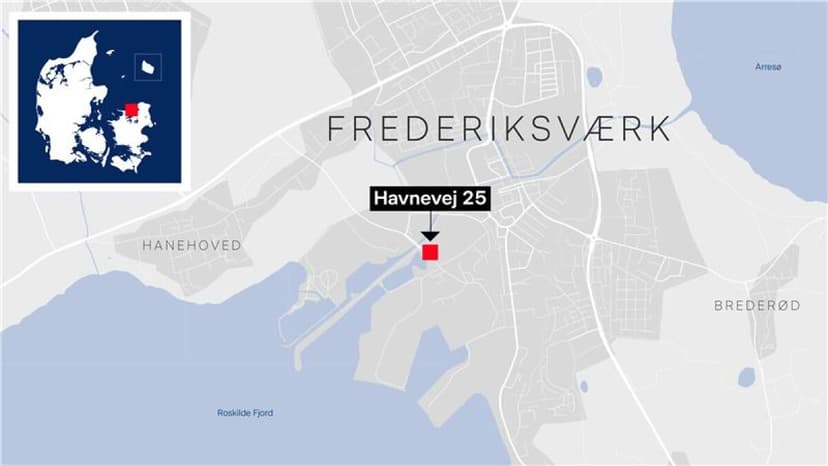
The fire started late Sunday evening in a pile of waste at the company DeNova Recycling in Frederiksværk.

A reader expresses concern about the overcrowding in the children's department of Helsinki's Oodi library and proposes limiting tourist access to the play area to address capacity issues.
Retro Japan: Nihon Univ. library in Chiba Pref. a mix of expressions and techniques 毎日新聞

The Fairfax County Public Library hosted a National Day of Reading event featuring books celebrating transgender and non-binary youth for ages 3-8.

The National Library of Serbia today celebrated 194 years of work.
Lionsgate Studios announced record library revenue and significant franchise success for its third fiscal quarter of 2026.

Users have reported issues with the search tool for the DOJ's Epstein Files Library, with several complaining about its non-functionality.
A 61-year-old suspect in the Fukuoka library stabbing incident, which injured three people, has told investigators he was struggling financially. Police are investigating the circumstances leading to the incident.

Fallout 4 is a great fit for the Switch 2’s expanding library, but some players say Bethesda’s asking too high a price for the decade-old game.

ITV said it will give brands and creators “unprecedented access” to its IP with a view to creating new and next-generation content under the auspices of a new label, Studio 55. ITV Studios unveiled the newly-minted banner at the London TV Screenings today, and said the first project will be an LGBTQ+ dating podcast called […]

Elikplim Akurugu, the Member of Parliament for Dome-Kwabenya, has officially handed over a newly constructed library to the Kwabenya Community Senior High School, aiming to enhance academic resources for students.
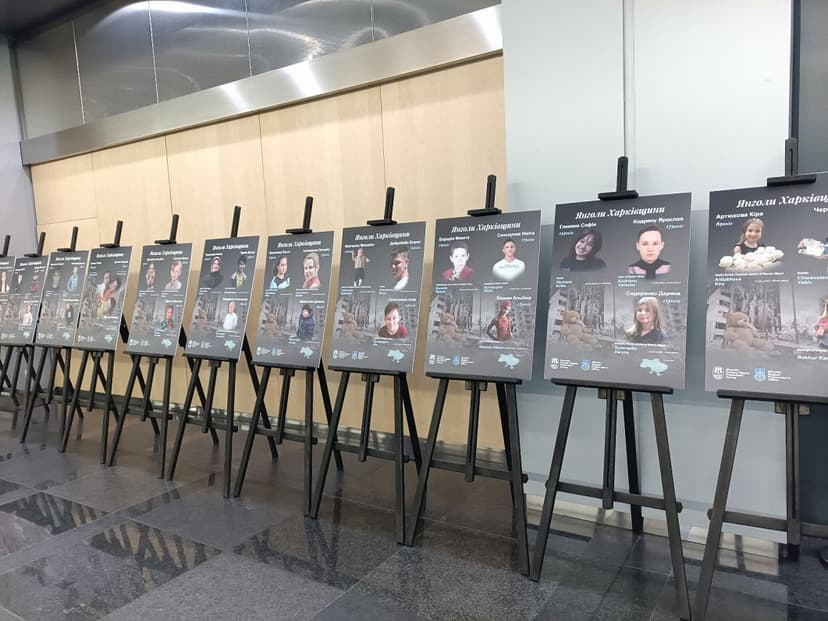
A photo exhibition titled 'Angels of the Kharkiv Region' has opened at the National Library in Latvia, commemorating Ukrainian children whose lives were lost due to Russian attacks.
Members of the Danish People's Party in Favrskov, near Aarhus, have sparked a debate over whether libraries should make a children's book about masturbation available, drawing strong reactions from library directors.

A new sports library, named after the renowned journalist Gianni Mura, is set to open in Milan, featuring an unseen archive of his writings, letters, and poems.
Alfândega da Fé in Portugal is set to establish a Culture and Science hub for the Open University in its municipal library, aiming to attract young people to the region.
An informal conversation about the lasting impact of books on our lives, featuring Irene Flunser Pimentel, Inês Bernardo, and José Mário Silva.
A 61-year-old suspect has been arrested after stabbing three people at a library in Fukuoka, Japan, telling police he 'wanted to kill people' and brought a knife from home.
A 61-year-old man was arrested for allegedly stabbing three people in a Fukuoka library, claiming he had no prior connection to the victims.
Three people were injured, two seriously, in a stabbing incident at a library in Sawara Ward, Fukuoka. Police have apprehended a suspect.
Bernard Hoffman/Getty Images Thanks to the postwar Baby Boom and other factors, families in the '50s began moving to the suburbs. Levittown in Long Island, New York, is widely recognized as the first modern American suburb. Each home looked the same — they were all built in the Cape Cod-style and cost around $7,000. As World War II came to an end, families looked for ways to start over. Emboldened by the GI Bill's provisions for home loans, they moved out of the cities in droves for newly developed suburban communities. In fact, the suburbs expanded by 47% during the 1950s, according to the Gilder Lehrman Institute of American History. Levittown in Long Island, New York, was one of the first to introduce the idea of a pre-planned, mass-produced uniform suburban community, The New York Times reported. Families started moving there on October 1, 1947. Though the community welcomed an influx of families, non-white prospects weren't allowed. Notably, African Americans didn't see the same benefits from the GI Bill, and it would take some years before racial and ethnic minorities broadly shifted to the suburbs. Here's what it was like to live in America's first modern suburb in the 1950s. Before the 1950s, people mostly lived in cities to be close to factory jobs. Historical/Getty Images At the time, most people lived close to the city center to work in factories, or they lived in rural communities to work on farms, according to economist Jay Zagorsky. Everything changed in the 1950s when soldiers returned from World War II, sparking the great migration to the suburbs. Irving Haberman/IH Images/Getty Images The 1950 Census found that 60% of people lived in cities, while 40% lived in the suburbs. Thanks to factors like the construction of highways, the development of new neighborhoods from farmland, and even safety in the event of an atomic attack, these percentages would soon shift drastically. The GI Bill made it easier to afford a new home, prompting this transition from urban to suburban. Newsday LLC/Getty Images The GI Bill provided each returning soldier with benefits designed to stimulate economic growth. Each soldier was given a year of unemployment and free tuition to go to college. The military pledged to back all home loans, which allowed veterans to buy houses with little to no down payments. The Baby Boom started at the same time, causing many families to outgrow their city apartments. A family of four stands in front of their house in Levittown, NY. Joseph Scherschel/Getty Images Shortly after WWII ended, the Baby Boom began. In 1946, 3.4 million babies were born, more than ever before, and 20% more than in 1945, per History.com. This trend continued into the '50s. By the end of the boom in 1964, this generation made up 40% of the country's population. Most historians think it was because Americans were eager to have families after having postponed marriage and childbirth because of the Great Depression and World War II. Whatever the reason, people flocked to the suburbs to accommodate their growing families. In response to this growing need for space, suburban communities popped up at a faster rate in the '50s. An aerial view of a suburban community. Hulton Archive/Getty Images During the war, factories focused on creating wartime essentials, like airplanes and barracks. In the '50s, they refocused their efforts on building home components and automobiles using the new practices — like the assembly line — they implemented in the war, As a result, factories were able to produce materials for homes faster than ever before. Levittown in Long Island, New York, is widely recognized as the first modern American suburb. Tony Linck/Getty Images Levitt and Sons, a construction company, purchased a 7-square-mile plot of potato and onion farms in Long Island in 1947. They set out to build one of the first uniform suburban communities in the US. The community grew fast. In fact, a house was built every 16 minutes in Levittown. Tony Linck/Getty Images To construct the new community, which sits about 30 miles east of Manhattan, Levitt and Sons hired mostly unskilled workers to build the homes. They gave each a specific skill and created a sort of human assembly line. William Levitt even called his firm "the General Motors of the housing industry," The Guardian reported. The Levitts eventually constructed 17,447 houses between 1947 and 1951. During the peak of the construction boom, one was built every 16 minutes. People flocked to home sale events to get themselves a slice of suburbia. Al Fenn/Getty Images The first homes in Levittown cost new residents around $7,000, The Guardian reported. For veterans, there was no down payment. When adjusting for inflation, a Levittown home in 1950 would be roughly $97,000 in today's money. Every house in Levittown was identical. The Levitt family called it "the best house in the US." Joseph Scherschel/Getty Images At first, all the homes were built in the same style, and some residents even admitted to walking into the wrong house at times because they couldn't tell them apart, according to Khan Academy, citing Kenneth T. Jackson's "Crabgrass Frontier: The Suburbanization of the United States." The picturesque community was lined with greenery. In fact, a tree was planted every 28 feet in Levittown. Newsday LLC/Getty Images Each home in Levittown sat on a 6,000-square-foot lot, The New York Times reported. Outdoor spaces, like backyards, became focal points. Robert W. Kelley/Getty Images With the growing number of children, outdoor spaces became increasingly important to the suburban neighborhood. Inside each home, there were four rooms, a built-in TV set, and Hi-Fi for the radio. Joseph Scherschel/Getty Images At first, they were modest homes, but most families saw their new suburban lives as luxurious. Most Levittown residents experienced the responsibilities of owning a home for the first time. A man and a woman clean opposite sides of a window. Many homeowners experienced the responsibilities of owning a home for the first time. Newsday LLC/Newsday via Getty Images Many Levittown homeowners learned homeownership responsibilities, such as tending to a lawn. The suburb helped cement the idea of the "nuclear family" in American culture. The community prided itself on neighborhood amenities, like this mobile public library. Joseph Scherschel/Getty Images There were also swimming pools that children could use during the summer. Levittown also had seven shopping centers. Underwood Archives/Getty Images The shopping centers were called "village greens" and were designed to make the town more of a bustling community, per Encyclopedia.com. The suburbs were also known for being a safe alternative to the gritty city streets. Joseph Scherschel/Getty Images Since the streets in the suburban neighborhood were considered safer than those in the city, parents used to allow children to bike around by themselves, per the National Center for Safe Routes to School. Levittown was also known as a cheaper option compared to an apartment in the city. Bernard Hoffman/Getty Images The mortgage on a home in Levittown was reportedly about $29 per month, while most paid $90 per month in the city. By comparison, the average rent in New York City in 2026 is just under $3,500, according to Zillow. The monthly cost of a 30-year mortgage on a Levittown home today would be roughly $2,000. With all the amenities and perks, the community grew rapidly. In less than a decade, the population of Levittown reached 82,000. Bettmann/Getty Images The community has over 17,000 homes, making it one of the largest private housing projects in the history of the US. As a result, Levittown became a model for other suburban communities in the US during the 1950s. A suburban community in the 1950s. Joseph Scherschel/Getty Images Suburban home construction boomed in the 1950s. In fact, at least 15 million units were under construction by the end of the decade, according to the Wealth Management Group. Although suburban communities boomed in the '50s, the shift was reserved for white Americans. Joseph Scherschel/Getty Images For years, there were rules that restricted minorities from buying homes in Levittown, and even as the Civil Rights Movement was starting to take form and the rest of the country began integrating after Brown v Board of Education in 1954, Levittown remained mostly white. Two-thirds of Levittown residents today are white, according US Census estimates. Some of the few non-white families resisted this standard. Some non-white residents like William Cotter and his family fought against Levittown's whites-only standard. Newsday LLC/Newsday RM via Getty Images In 1952, William Cotter, a Black man, and his family, sublet a home at 26 Butternut Lane. When the lease was up, Levitt refused to renew it or sell them the home. The refusal sparked support for the Cotters, and the family eventually purchased another home from a white homeowner. With modern highways leading to the suburbs, men commuted into the city. New highways leading to the suburbs didn't come without traffic. Newsday LLC/Newsday via Getty Images The suburban boom corresponded with the expansion of interstate highways in the US, starting the modern iteration of the commute from the suburbs to the city. In 1950, 80% of men in Levittown commuted to Manhattan for work, The Guardian reported. During a typical day, the streets of Levittown were filled with women, as the men were mostly working in the city. Bettmann/Getty Images When men left to fight in WWII, women began entering the workforce, gaining newfound independence and freedom. However, they were suddenly expected to give this up again and instead focus on childbearing and rearing. In 1963, author Betty Friedan wrote in "The Feminine Mystique" that the suburbs "were burying women alive." However, some believe that women's dissatisfaction with staying home "contributed to the rebirth of the feminist movement in the 1960s," History.com reported. Women also got active in civic engagement. Women and children protest in favor of new stop signs. Newsday LLC/Newsday RM via Getty Images In 1959, women of Levittown, with children in hand, protested in favor of putting stop signs in an area with automobile-related deaths. Levittown became a symbol of prosperity and anticommunism in American politics and culture. William J. Levitt speaks with three senators. Bettmann/Bettmann Archive/Getty Images As American politics increasingly centered on anticommunism and Cold War tensions rose, Levittown and suburbs like it took on a symbolic meaning in American culture, representing prosperity and the "American Dream." Levitt was once quoted saying, "No man who owns his own house and lot can be a Communist. He has too much to do." In 2026, Levittown is still a sizable community with a population of about 50,000. Though it's full of modern businesses and technology, the community still holds a legacy as a post-war suburban haven. Read the original article on Business Insider

The National and University Library of Bosnia and Herzegovina (NUB BiH) claims that the Sarajevo City Administration is preventing them from returning to the Vijećnica building after a meeting with city officials.
Gazans salvage ancient books in mosque library damaged by war Kuwait Times
The Kennedy scion, whose late uncle John F. Kennedy Jr. and wife Carolyn Bessette are portrayed in the FX TV show, is continuing to speak out against what he calls a "grotesque display of someone…
Yuncheng library hosts Spring Festival exchange with Norwegian visitors China Daily

The books, which were due to be returned in March 1976, were unearthed at a Beverley charity shop.

Con la apertura de la MOP Library, la Fundación Marta Ortega Pérez amplía su proyecto cultural en A Coruña

Building up the Switch 2 library.

Primary school students at the Oraiokastro Municipal Library took the threads of tradition into their hands, participating in the activity "Loom: threads and fabric stories".
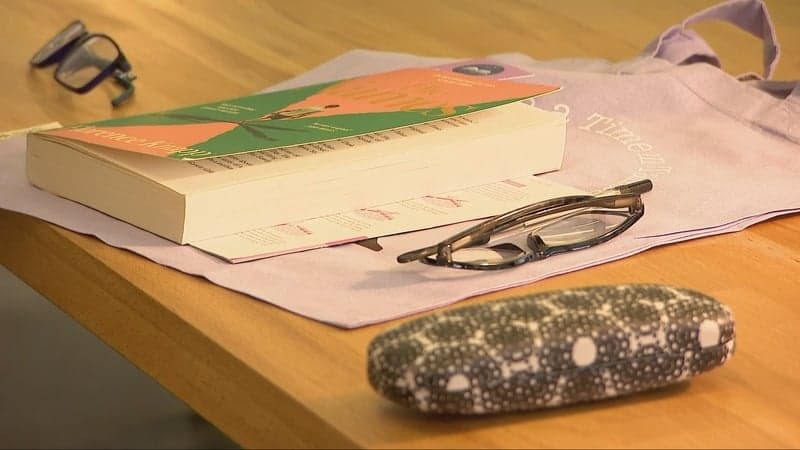
For the month of February, readers across the country have been invited to get lost in a book to celebrate the Ireland Reads campaign.

Chief Minister M.K. Stalin laid the foundation for a small dam across the Koilmalaiyar river in Vellore and virtually inaugurated a District Central Library in Ranipet.

‘Come Together’ at New York’s Morgan Library is a treasure-chest of art and objects from the last 3,000 years
Former Food Network star Valerie Bertinelli launched her own direct-to-fan platform, “Valerie’s Place,” Wednesday, a subscription service powered by new tech company Visible Things. Bertinelli’s Valerie’s Place offering, which his now live as a website and will debut as an app in the coming weeks, features “a curated library of fan-favorite content, including new episodes […]
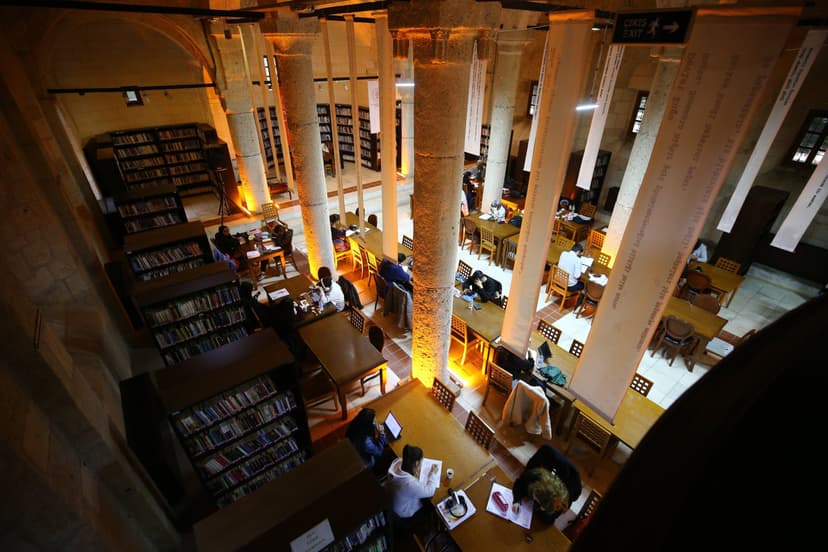
Following the damage to the Adana Provincial Public Library in the February 2023 Türkiye earthquakes, the library has been relocated to the Aya Nikola Church.

Access to functional library facilities remains a challenge in many public senior high schools across Ghana, where limited infrastructure and inadequate learning resources continue to hinder effective

The Ghana Library Authority (GhLA) has warned that at least 40 Ghanaian languages are on the verge of extinction, urging immediate and deliberate measures for their preservation.
Local politicians in Favrskov, Denmark, are debating whether libraries should offer a children's book about masturbation, leading to strong reactions from library directors.

Fans of retro games can now access the Virtual Boy's small library on the Nintendo Switch, offering a preservationist's dream, albeit with a cost.

A report alleges that the Barack Obama Presidential Center in Chicago is sticking taxpayers with a $200 million-plus bill, with accusations that the true costs are being hidden from the public.

A new book series, 'Ukrainian Library,' is making classic Ukrainian literature accessible to a wider audience, with writer Karl-Markus Gauß discussing the first two volumes featuring Lesya Ukrainka and Taras Shevchenko.

Florida Lawmakers Approve Renaming Palm Beach Airport After Trump Authored by Kimberly Hayek via The Epoch Times, Florida lawmakers on Thursday completed the approval of a bill to rename Palm Beach International Airport in honor of President Donald Trump. The measure, now awaiting Gov. Ron DeSantis’s signature, comes at the same time as the Trump family’s recent federal trademark filings for airport names incorporating the president’s identity. The Trump Organization says it will see no financial gain from the Palm Beach site. The Florida Senate passed SB 706 in a 25–11 vote. The legislation is sponsored by state Sen. Debbie Mayfield, a Republican from Melbourne. The vote came days after the House approved a companion bill, HB 919, 81–30. “President Trump is the first president that Florida has had in our history, and I think it’s very appropriate for us to be naming one of the other icons in Palm Beach after him,” Mayfield told Politico in January. The legislation renames the airport as “President Donald J. Trump International Airport.” The bill is effective July 1, provided the Federal Aviation Administration approves the change. The bill also includes a $5.5 million budget request for signage, marketing, and other rebranding efforts. Some lawmakers, including Rep. Lois Frankel (D-Fla.), criticized the effort, saying it went around Palm Beach County residents. “It’s misguided and unfair that the Republican-controlled Florida Legislature ignored the voices of Palm Beach County by pushing forward a bill to rename Palm Beach International Airport without giving County residents a real opportunity for input,” Frankel said. “Decisions about naming major infrastructure should wait until after an honoree’s service has concluded—and should include meaningful input from the local residents and communities most directly affected.” Trump relocated to Florida in 2019. His primary residence is Mar-a-Lago in West Palm Beach, which is near the airport. At the same time, the Trump Organization filed for trademark protections through DTTM Operations LLC. The company filed applications with the U.S. Patent and Trademark Office on Feb. 13 and 14 this year. The submissions cover “President Donald J. Trump International Airport,” “Donald J. Trump International Airport,” and the abbreviation “DJT,” extending to airport-related goods and services such as passenger shuttles, umbrellas, travel bags, and flight attire. “To be clear, the President and his family will not receive any royalty, licensing fee, or financial consideration whatsoever from the proposed airport renaming,” the company said in a statement. The filings coincide with other proposals, such as renaming Dulles International Airport. Florida recently set aside land in Miami for Trump’s presidential library in 2025, and in January 2026, renamed a segment of road “President Donald J. Trump Boulevard.” Tyler Durden Fri, 02/20/2026 - 15:20

Just When You Thought Obama's Tower Of Doom Couldn't Get Any More Ugly... Authored by Steve Watson via Modernity.news, Barack Obama’s infamous Presidential Center in Chicago, already slammed as a dystopian “prison-like” monstrosity, has just received a bizarre new update that’s ignited widespread mockery online. The addition of disjointed words from one of Obama’s speeches has been dubbed “headache-inducing,” amplifying the backlash against this $830 million behemoth that’s overrun budgets, displaced locals, and turned a public park into a narcissistic shrine. As construction drags on toward a June 2026 opening, the former president’s ego-driven tweaks have only fueled the fire, with X users unleashing savage roasts and memes comparing the structure to everything from a Soviet-era bunker to a “concrete porta potty.” The latest fiasco stems from Obama’s decision to etch excerpts from his 2015 Selma speech onto the building’s facade. But instead of inspiring awe, the disjointed lettering has sparked hilarity and disgust. They somehow managed to make the Obama presidential library even uglier. My gosh. ? pic.twitter.com/lmZnyJ4FSs February 17, 2026 One X user highlighted how the words appear chopped and unreadable, calling it a “headache-inducing” mess that perfectly encapsulates the project’s overall failure. I's indistinguishable from L's and T's. E's indistinguishable from F's. Multiple words get disjointed–not just on one plane but two. pic.twitter.com/hohr6Whusy February 17, 2026 what don’t you understand about YOU ARE AMERICA https://t.co/kmHawlABHO February 16, 2026 Fixed it for Obama. pic.twitter.com/BJU5eA6vIx February 18, 2026 This is what the text should read… pic.twitter.com/YaZ2iSJQuY February 18, 2026 pic.twitter.com/N60Kwjw9Q5 February 18, 2026 As we previously reported, the Obama Presidential Center has ballooned to nearly $1 billion in costs, resembling a “Tower of Doom” that’s sucking the life out of Chicago’s South Side. Locals have decried it as a “totalitarian command center dropped straight out of 1984,” with property values skyrocketing and forcing out longtime residents. Alderwoman Jeanette Taylor warned that such developments “displace the very people they say they want to improve it for,” as rents for two-bedroom apartments jumped from $800 to over $1,800 per month. The project’s DEI-focused hiring of diverse contractors has backfired spectacularly, leading to lawsuits over “racial discrimination” and claims of poor performance, proving once again that woke policies lead to broke outcomes. President Trump didn’t hold back when mocking the stalled eyesore. “He needs help,” Trump quipped, noting how the library-museum hybrid is “not too pretty” and has “run out of money” despite Obama’s insistence on DEI builders. Trump contrasted this with his own push for classical architecture, like the grand Arch near Arlington Memorial Bridge, symbolizing a return to American greatness. The center’s foundation is now scrambling with only $116 million in reserves against $230 million in remaining costs, not including staff salaries. Scheduled tours have started, but critics question who’d visit this overpriced ode to Obama’s ego amid Chicago’s economic woes. Obama’s defenders claim it’ll be an “economic catalyst” for the black community, but the reality is displacement and fiscal chaos. This project exemplifies the hypocrisy of elite liberals: preaching equity while building vast ego towers that burden the working class. In the end, as Trump restores beauty and dignity to American landmarks, Obama’s legacy crumbles under the weight of its own pretension— a fitting monument to an era of division and decline. Your support is crucial in helping us defeat mass censorship. Please consider donating via Locals or check out our unique merch. Follow us on X @ModernityNews. Tyler Durden Thu, 02/19/2026 - 15:40
James Deering's 1916 winter home is located less than 10 minutes away from the heart of Miami. Robin Hill/Courtesy of Vizcaya Museums and Gardens Vizcaya, built by James Deering more than a century ago, might be Miami's most valuable real estate. The 45,000-square-foot mansion has a total of 54 rooms, with the main house open to the public. Citadel CEO Ken Griffin began assembling a waterfront compound next to the historic mansion in 2022. The exorbitant price tags on Miami's luxury real estate are not a secret to anyone, least of all the flock of billionaires moving to the city. But unlike the high-rise apartments in the financial center of Brickell or exclusive mansions in Indian Creek — where you might be neighbors with Jeff Bezos or Ivanka Trump — the city's potentially most valuable piece of real estate is decorated with limestone, mangroves, and tiles salvaged from Cuban estates. Built between 1914 and 1922 by International Harvester heir and Gilded Age millionaire James Deering as a winter home, Villa Vizcaya sits fewer than 10 minutes from downtown Miami, in a waterfront neighborhood that's quickly becoming a magnet for the city's new billionaire residents. While built in the years following the Gilded Age, it is notable for its Gilded Age-era extravagance, technologies, and collection of fine art. Vizcaya Museum & Gardens estimates the mansion cost $26 million to build, which is more than $800 million in today's money, per the Bureau of Labor Statistics. Florida International University estimates that the mansion is worth over $1 billion today. In 1962, Miami-Dade County bought the property for $1 million, and today, the 45,000-square-foot mansion and its surrounding gardens operate as a museum open to the public. Shortly after announcing that Citadel would move its headquarters from Chicago to Miami, CEO Ken Griffin bought up a waterfront compound less than a half-mile from Vizcaya, in the neighborhood of Coconut Grove. The $106.9 million sale set a country record for the most expensive residential property purchase at the time. Since then, the hedge fund magnate has proposed relocating the historic Villa Serena mansion, located on his estate, to Vizcaya's campus after he donated $20 million to Vizcaya Museum and Gardens. Take a look inside James Deering's historic mansion and see how its new neighbor could alter the surrounding landscape. Vizcaya was James Deering's winter home from 1916 until his death in 1925. Robin Hill Photography/Courtesy of Vizcaya Museum & Gardens Struggling with illness toward the end of his life, James Deering came to Miami, then a small city surrounded by mangrove forests and wetlands, looking for tropical warmth, which was believed to help improve health. By the turn of the century, the Deering family had begun to develop estates around South Florida, with patriarch William Deering purchasing a home in Coconut Grove in 1900. By the time James Deering began building Vizcaya, his brother, Charles Deering, was also developing a winter home in the south of Miami. The property, known today as Deering Estate, also operates as a museum and is open to the public. The main house features 54 rooms, including 34 rooms decorated with their original furniture. Kristine Villarroel/Business Insider Spanning over 45,225 square feet, Vizcaya's main house features the living spaces of James Deering himself, his guests, and the house staff. Envisioned by interior designer Paul Chalfin, Vizcaya drew inspiration from the Italian Renaissance, adapted to South Florida's subtropical climate, and showcases furniture, artworks, and artifacts purchased by Chalfin and Deering on their travels to Europe. Although Miami's population was estimated to be only 10,000 in 1916, the construction of the Vizcaya estate employed an estimated 1,000 workers, many of whom were Black immigrants from the Bahamas. Apart from the main house, Vizcaya is also home to the Vizcaya Village, the historic quarters of the mansion's workers and farmers that allowed Vizcaya to serve as a self-sufficient farm-to-table estate. The Village expands over 12 acres and includes 11 "architecturally significant" buildings, according to the museum's website. The tour begins in the courtyard, which is adorned with tropical plants. Kristine Villarroel/Business Insider Lined with tropical plants such as palms and philodendrons, the courtyard highlights South Florida's natural beauty while reflecting the mansion's European inspirations. While today the courtyard is covered by a glass canopy that allows for the estate's air conditioning, it was originally open to the elements, allowing the tropical climate to seep into the main house. Meant to be used as Vizcaya's main entrance, the East Loggia opens up to the Biscayne Bay. Kristine Villarroel/Business Insider Featuring marble floors and columns and decorated ceilings, the East Loggia was meant to serve as Vizcaya's main entrance for guests arriving by sea, which was Deering's intended — and preferred — way of entering the mansion. It was used as an entrance for guests who arrived by boat, while the current main entrance of the museum was used as a back entrance for guests arriving by car. The room also features a model boat hanging from its ceiling in honor of the explorers who inspired Deering's interpretation of Vizcaya. Although he began living in Vizcaya during his retirement, Deering included multiple working spaces in the property. Kristine Villarroel/Business Insider James Deering was heir to the International Harvester manufacturing firm, which produced tractors and other agricultural machinery, and he worked as its vice president from 1902 until 1909. Deering might have been one of the first prominent Florida "snowbirds," retirees who travel South during the colder months. His downstairs library, located in the northwest corner of the main house, is steps from the entrance hall that welcomes guests. It features Deering's personal book collection, desks for him and a secretary, and seats for business guests. When closed, the door leading to the next room — a reception room meant for entertaining guests — is concealed within the book-lined walls. The reception room features a ceiling imported from Venice, which had to be resized to fit. Kristine Villarroel/Business Insider The reception room is lined with tropical-inspired silk panels showing palm trees. Our tour guide brought our attention to the ceiling, which is decorated with sculpted panels that extend to the sides of the room. The ceiling was imported from Venice and purchased before construction on the property was finished. By the time workers were putting up the decorations in the mansion, they realized that the ceiling panel did not fit the room dimensions, leading to the restructuring of the panel, which curved into the walls. "We should remember that this house was built during the First World War," curator Flaminia Gennari said in the audio tour. "So to import large quantities from Italy in the middle of the war was very complicated." Vizcaya's telephone line was one of the first in Miami. Kristine Villarroel/Business Insider Wired throughout the house, Vizcaya features a highly innovative telephone system for the time. Only 17 years before the start of Vizcaya's construction, the Miami Telephone Company began providing telephone service to the city. Vizcaya's telephones also featured automatic electric exchange, allowing users to connect directly to the number they dialed without going through a human operator. The telephone room, located between two of Vizcaya's main entertainment rooms, was meant for guests to communicate privately without disturbing the flow of the entertainment. The living room showcased Deering's most impressive collections. Kristine Villarroel/Business Insider The living room, with its 1600s limestone fireplace, features some of Vizcaya's most impressive items, including an "admiral carpet" originally commissioned in the 1450s by the grandfather of King Ferdinand II of Spain, the Spanish king who sponsored Christopher Columbus' exploration of the Americas. The room also features throne-like armchairs where US President Ronald Reagan and Pope John Paul II sat in 1987 during the Pope's visit to America. A centerpiece of the room is the Welte Philharmonic Organ, designed to fill the house with music through elaborate sound systems. Designed for guests rather than full-time professional players, the organ uses perforated paper rolls to aid the musicians' performance by adjusting notes and volume. Concealing the organ pipes is an oil painting, which was cut in half to cover wooden doors. "Chalfin had the idea of cutting it in half and using it as the doors of the organs, which is not a very respectful thing to do for a representation of the Virgin Mary, the child, and the saints, but it somehow testifies to the freedom and positive carelessness that they had around old objects," Gennari said in the audio tour. The mansion's formal dining room features the house's oldest artifacts, although it was rarely used. Robin Hill Photography/Courtesy of Vizcaya Museum & Gardens While Deering himself didn't often eat in the formal dining room, he made sure it was impressively decorated for his guests. Sitting to the side is the room's most awe-inspiring feature: a marble tabletop on carved bases resembling mythical creatures, historical artifacts unearthed near Pompeii, dating back to the times before Mount Vesuvius' eruption. Next to the dining room, on the south side of the mansion, the enclosed loggia gave guests a view of the gardens. Kristine Villarroel/Business Insider The colorful glass panels, designed for Vizcaya, feature the estate's main symbols: the seahorse and the caravan. Providing a view of the garden through the glass panels and double doors, the enclosed loggia allowed guests to take in the garden views while staying cool from the Florida sun. The loggia also connects the gardens to the main house through sculpted iron gates. Kristine Villarroel/Business Insider Aside from giving guests an inside view of the gardens from the ground level, the room also connects the outdoors to the rest of the mansion. Downstairs, the kitchen worked as a serving space for staff to plate food and bring it to guests. Kristine Villarroel/Business Insider When designing Vizcaya, Deering asked for the main kitchen to be built upstairs as he didn't want the smell of food to flood the main entertaining rooms on the first floor. To facilitate the transportation of meals and the serving of guests to the dining room, the entertaining rooms, and the loggia, he built a downstairs serving pantry. Today, the serving pantry cabinets display one set of Deering's fine dining china, the one designated for his 80-foot-long luxury yacht, Nepenthe. Commissioned in 1912 to be shipped from Europe, the original set of china purchased by Deering was transported to America as cargo aboard the Titanic. After the ship sank, a replacement set was ordered and is now displayed. The kitchens feature state-of-the-art Gilded Age technology. Kristine Villarroel/Business Insider Throughout the house, Deering incorporated cutting-edge technology, including annunciators with bells connected throughout the house that Deering or guests could ring at any time to get the house staff's attention. Another then-advanced feature of the serving kitchen were its refrigerators, which were rare at the time. The kitchen also featured a warming oven that helped keep food warm while guests were served. Connecting to the upstairs kitchen, which serves as the house's main cooking area, was a dumbwaiter: a food elevator meant to carry the food cooked upstairs to the downstairs plating area, where staff would then take it to the main entertaining rooms, like the dining and sitting rooms. Upstairs, 24 rooms housed guests, staff, and Deering himself. Kristine Villarroel/Business Insider Nine of the bedrooms were dedicated to guests and each was given a name and decorated uniquely, showcasing the artifacts and furniture purchased by Deering and Chalfin on trips to Europe. While not open to the public, an additional 14 rooms housed staff. Another then-advanced technological feature of Vizcaya was its elevator. Kristine Villarroel/Business Insider Deering was motivated to move to South Florida because of his illness, so accessibility features were built throughout the house, including an elevator he would use when using a wheelchair or to avoid walking upstairs. Today, the elevator isn't open to the public, and the museum's second floor is not wheelchair accessible. Deering's main office was inspired by the Napoleonic era. Kristine Villarroel/Business Insider Connected to Deering's bedroom and bathroom, the sitting room was his office where he would tend to business and personal matters, such as sorting his mail. The decoration style was inspired by Napoleonic France. Deering's bedroom was modest compared to some of his guest bedrooms. Robin Hill/Courtesy of Vizcaya Museum and Gardens Unmarried all his life, Deering's room features a single bed rather than a larger size, and his room is furnished for practicality rather than aesthetics. His personal bathroom has one of the most breathtaking views of the property. Kristine Villarroel/Business Insider Opening onto a balcony, Deering's bathroom overlooks Biscayne Bay and offers one of the best views of the house, although it is not accessible to the public today. The closed-off balcony also leads to a secret door to the Espagnolette, the guest bedroom located next to his, usually reserved for Deering's dearest guests. Spiral staircases lead to the South tower. Kristine Villarroel/Business Insider A set of spiral staircases leads up to the South tower, one of the two guest suites overlooking the estate. The tower bedroom has views of the bay and the gardens. Kristine Villarroel/Business Insider The corner room atop the North tower was designed to transport guests to Europe. "Water reflects upwards to the ceiling and the sound of waves is audible in this room, precisely as upon the quay of this great canal of Venice," noted Chalfin about the room, according to the mansion's website. A central piece in the room is a large wardrobe assembled with 1700s Venetian panels, as well as antique painted closet doors. The breakfast room was Deering's preferred dining space. Robin Hill Photography/Courtesy of Vizcaya Museum & Gardens Back on the second floor, the breakfast room was the central entertaining spot. The room is lined with oil paintings depicting ocean scenes, and the windows slide into pocket doors, revealing views of the garden. It also features a sound system, with a piano hidden in a room off the spiral staircase next door and connected to the breakfast room through floor vents that allow sound to travel into the space. Most of the time, Deering opted to dine in this room rather than the formal dining space. Tucked next to the breakfast room is the main kitchen. Kristine Villarroel/Business Insider Designed to maximize staff efficiency, the main kitchen upstairs has different areas for different tasks, including separate sinks for washing dishes and produce. It also features ice boxes, or refrigerators of the time, powered by salt water. During Deering's time at the estate, Vizcaya employed two French chefs dedicated to food and pastries. Food served at the mansion was sourced from the staff village built across the street, where a farm provided vegetables, dairy, chicken, herbs, and citrus. "You and I could come down and drive into the farm area, stop and buy a dozen Deering eggs and take them home and have them for breakfast, and I think that was probably particularly important during World War I," historian Arva Moore Parks said in the audio tour. "He was able to supply not only himself but his workers also." Inspired by European designs, the gardens feature mazes, terraces, fountains, and more. Kristine Villarroel/Business Insider Inspired by 17th- and 18th-century Italian and French villas, the Vizcaya gardens feature a variety of scenes, from a garden theater to multiple paths and mazes, intended to highlight and enhance the native South Florida flora surrounding the estate. The original layout of Vizcaya featured over 180 acres of subtropical forests. Today, that number has gone down to 50 acres. In 1987, President Ronald Reagan hosted Pope John Paul II at the estate. Diana Walker/Getty Images On September 10, 1987, President Ronald Reagan welcomed Pope John Paul II at Vizcaya, where the two conversed while exploring the gardens and the estate. Atop a garden mount is the Casino, a focal point of the gardens. Robin Hill/Courtesy of Vizcaya Museums and Gardens Located at the top of garden mounds designed to block the reflection of water ponds into the main house, the garden casino — Italian for "little house" — was a space where Deering and his guests could take in the garden views or enjoy the subtropical weather without being in direct contact with the sun. Inside the building, a painted ceiling depicts heavenly images. Underneath, bathrooms and other now closed-off areas hide under decorated ceilings. Originally, the casino overlooked a water park part of the estate, where gondolas would be launched, a crucial part of Deering's vision for Vizcaya. Today, the water park no longer exists, and the land is instead taken up by a Catholic church, hospital, and schools after the Deering family sold part of the property to the Catholic Diocese of St. Augustine in 1946. The opposite side of the estate was once used for clandestine entertainment; now, it is a café. Kristine Villarroel/Business Insider While today a café sits underneath the mansion, the space served as a leisure center during Deering's stay. The rooms were filled with billiard tables, bowling alleys, and leather chairs. Hidden underneath the billiards table was also a roulette table, which Deering often used when his college friends visited the estate. The mansion, which opened at the peak of the Prohibition era, also had a decent supply of liquor, which Deering smuggled into the estate and hid in secret bars and cellars. The swimming pool is half-covered, providing relief from South Florida's relentless sun. Robin Hill/Courtesy of Vizcaya Museum and Gardens Tucked next to the leisure rooms underneath the main house is the half-indoor swimming pool, in which Deering is said to have only swum once. Designed as the main entry point to the mansion, the east side of the mansion opens up to a stone barge in the Biscayne Bay. Kristine Villarroel/Business Insider When he first moved into his winter home in December 1916, Deering arrived by sea on what he intended was the front entrance to Vizcaya. Opening up to the Biscayne Bay, the waterfront side of the property features a stone barge, a sculpted structure that acts as a breakwater and protects the main house from changing tides and waves. Today, the mansion hosts private events and has become a local staple for Quinceañera pictures. The mansion is often used for private events. Kristine Villarroel/Business Insider Purchased from the Deering family by Miami-Dade County for $1 million in 1962, Vizcaya today operates as a museum open to the public and for private reservations. The estate often serves as the backdrop for Quinceañera pictures among Miami's large Hispanic population. Walking around the gardens, I saw multiple young women dressed in extravagant gowns posing in the many stunning locations of the estate. Along with being a photographic hot spot, Vizcaya also hosts private events, from Miami Swim Week runway shows to floral-decorated weddings in the gardens. Today, the estate remains an icon of Miami, a city that many would often relate to modern luxury rather than the old and classic wealth on display in Gilded Age-style mansions like Vizcaya. The Vizcaya Village could be the future home of Ken Griffin's Villa Serena. Robin Hil Photography/Courtesy of Vizcaya Museum and Gardens After purchasing the historic Villa Serena estate in Coconut Grove in 2022, Citadel CEO Ken Griffin proposed relocating the 1913 Mediterranean Revival mansion to Vizcaya's Village campus. The home, designed by architect August Geiger for William Jennings Bryan, a three-time Democratic presidential candidate and former US secretary of state, is considered one of Miami's earliest grand waterfront residences. The proposal would move the century-old home from Griffin's property to Vizcaya's Village grounds, where it would be open to the public for the first time in its history and would benefit from an additional $5 million endowment provided by Griffin for its preservation. Any relocation would require extensive planning and government approvals, which have not yet been cleared. Skeptics have said that moving the structure would be an ambitious undertaking that wouldn't align with preservation goals. "Moving a historic structure is absolutely a last resort solution, to be done only if (there) is no other way possible to save a structure… It is not a preservation-minded alternative just because someone bought it and now doesn't want it," Kathleen Slesnick Kauffman, Miami's former historic preservation officer, told the Chicago Tribune in 2023. The Village originally served as Vizcaya's self-sufficient farm and the servants' quarters. Robin Hil Photography/Courtesy of Vizcaya Museum and Gardens The Vizcaya Village, which covers about 12 acres of agricultural fields and includes nearly a dozen buildings, was originally built as the quarters for the mansion's servants and farmers. Today, the campus houses a café and hosts a weekly farmers market, and is undergoing construction and expansions to transform the grounds into a cultural and community space. The Citadel CEO's $20 million donation will expand the village's role in the community. Robin Hil Photography/Courtesy of Vizcaya Museum and Gardens In November 2025, Vizcaya Museum and Gardens announced a $20 million capital donation from Griffin and said that the funds would be used toward building a brand new Center for Learning and Discovery in the village grounds. Once open, the center will offer educational programming like "hands-on artmaking and urban-agriculture experiences," the museum organization wrote in the announcement. The expansion will seek to expand Vizcaya's role in its community. Read the original article on Business Insider

PlayStation Plus subscribers can now access one of the most visually stunning open-world games, enhancing the service's gaming library.

Aktuálně.cz organizes a live debate at the Václav Havel Library, featuring its editor-in-chief, brand manager, and reporters discussing the reality and impact of the war in Ukraine.

The national Storage Library in Kuopio, Finland, will begin charging fees for interlibrary loans and article copies, a service previously free. Students express concern over the new costs.

Civil rights leader will get final full honors from state where, in 1960, he led Black students into segregated library After a long career of fighting for civil rights, the Rev Jesse Jackson Sr is visiting his home for one last time to lie in state at the South Carolina capitol on Monday. The final full honors from the state where he was born is a far cry from his childhood in segregated Greenville, where in 1960 he couldn’t go inside the local library’s much better funded whites-only branch...

The old building of the South Bohemian Scientific Library on Lidická Street in České Budějovice is awaiting reconstruction. The repair of the building from the 1970s will cost almost 130 million Czech crowns.

Firefighters rescued approximately 400 rare books from a library in the small town of Niscemi, Sicily, after a landslide occurred, stretching four kilometers.
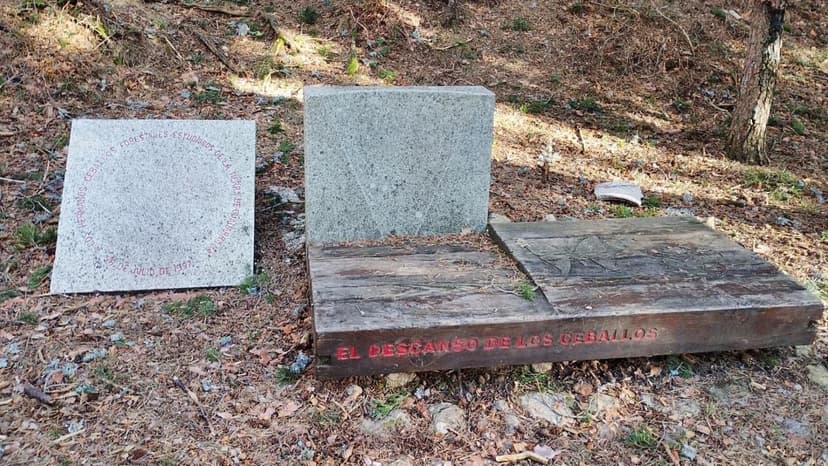
A tribute was held in the protected natural area of Sierra de Guadarrama, Spain, honoring the creator of the 'Biblioteca del Bosque' (Forest Library) and forest rangers.

Chief Minister M.K. Stalin inspected the ₹300-crore Thanthai Periyar Library project in Coimbatore.

In Niscemi, Sicily, firefighters successfully rescued hundreds of books from a library that was left precariously close to a ravine following a landslide that occurred in January.

Firefighters in Niscemi, Sicily, have rescued approximately 400 rare books from a library situated on the edge of a mudflow, following a devastating landslide in January that created a 4km chasm.
In Pori, Finland, a debate is ongoing regarding the prioritization of a new main library over indoor sports facilities, with the city manager attempting to calm fears.
Bojana Đačić, director of the 'Stevan Samardžić' National Library in Pljevlja, was found by a budget inspection to have illegally determined her own salary, violating legal regulations.
The Yorogo community has inaugurated a self-initiated library and ICT centre, valued at GH¢1 million.

Working amid the dust and rubble, a group of Gazan volunteers are battling to save what remains of the collection of ancient books inside the library of the Omari Mosque. The mosque holds one of the oldest libraries in the Palestinian territories but it sustained terrible damaged during the war in Gaza, which erupted in October 2023 and devastated swathes of the Palestinian territory, including cultural and religious sites.

The facilities included marriage halls, a playground, and a library built with funds from the Local Area Development Scheme and Ward Development Scheme
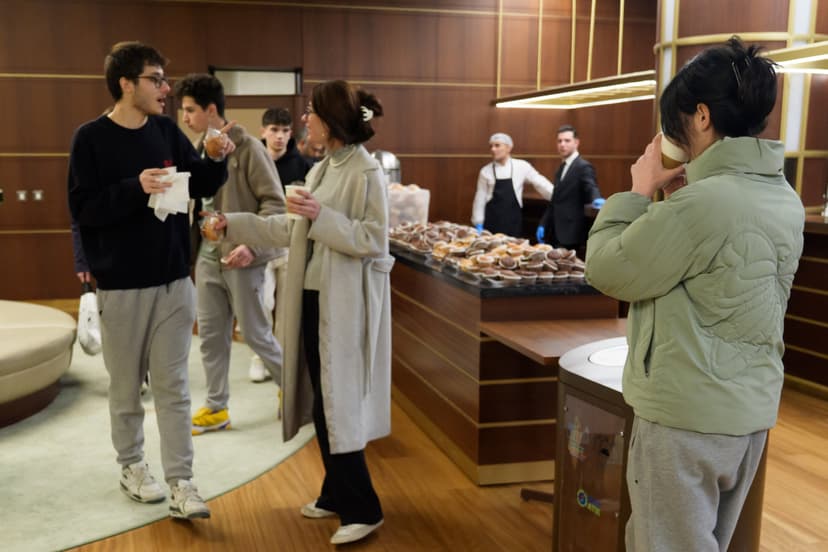
The Presidential National Library in Ankara is providing complimentary sahur refreshments to students studying late during Ramadan, establishing itself as a key academic hub.

The Pori City Council in Finland is expected to make a decision regarding the future of the main library and indoor sports facilities this spring, amidst questions about the tight schedule and protection of the current library building.
A teenager has died after being stabbed outside a library, with details of the incident under investigation.

Research indicates that young adults who did not have a television in their bedroom as children are significantly more likely to hold a university degree, suggesting a correlation between early childhood environment and academic success.
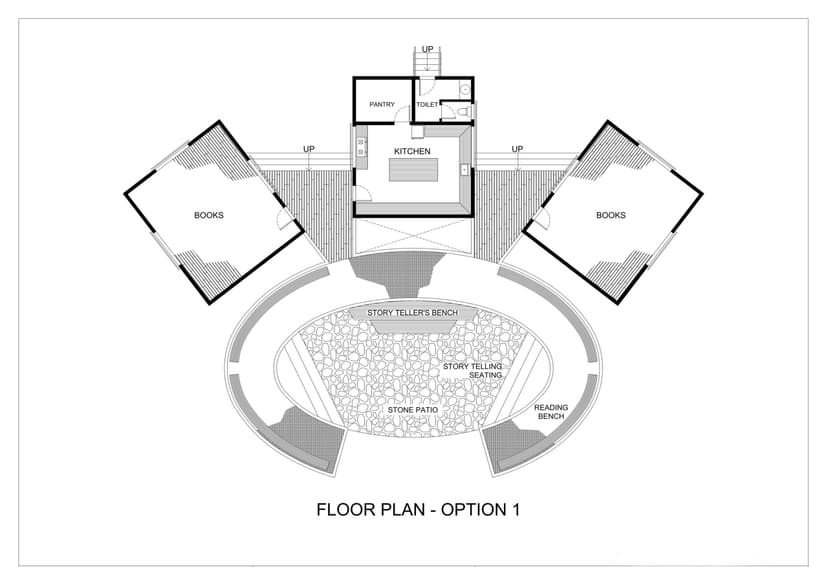
A new community project called 'Tiny Library' has been launched in Kalinga, aiming to serve as a book repository and attract visitors to the village by 2026.
Three people were injured in a stabbing incident at a library in Fukuoka, Japan, where a 61-year-old suspect was arrested for allegedly attacking multiple individuals.
The author is worried her daughter might be lonely in the near-empty nest. Courtesy of Laura Falin I'm preparing myself to deal with an empty nest, but my youngest is still living here. I recently realized she might feel left behind and lonely in the house with just me and her dad. I want to help her with the transition to being the only child at home. I'm in the middle of what feels like a long transition period. One of my four kids is a young adult who has already moved out on his own. Another one of them graduates this year and will likely move away to college. Another opted for a community college but plans to move out in the next few years. I've been thinking about what I want my life to look like when I become an empty nester. I've already been making changes — like trying to make some new friends — with that life in mind. But recently, it hit me that my youngest daughter will probably have some similar "empty nest" feelings when she's the last sibling stuck at home with her parents. My youngest hasn't known a quiet house since she was born As the youngest of four, my daughter probably hasn't known a totally peaceful day since she arrived home from the hospital. She was the travel baby — waking up in her infant seat to discover she'd been carted to a school play, T-ball practice, or school pickup. She had built-in playmates right from the start, though, of course, they bickered and fought like any other siblings. Since I was a stay-at-home mom, even when her brothers and sister were in school, she was always going somewhere. We headed to the library, to storytime, or out hiking in the mornings because neither of us liked being stuck at home. And now, when all of my kids are teens or young adults leading busy lives, we still have noisy dinners or pile on the couch together to unwind with a TV show before bed. Our house is still pretty active, and her siblings might take her on a coffee run or to the thrift store on a Saturday to hang out. I'm concerned she might get lonely when everyone leaves It seems likely that my daughter will have some time living with just me and her dad after everyone else has moved out. I can't even comprehend what that will be like. The thought of just one child here at every dinnertime or weekend? We haven't had that in 20 years. But it goes beyond just the fact that the house will be quieter. She tells her sister about school drama, and they hash things out together. Her brother jokes around with her, or they talk about mutual friends and after-school activities. They're involved in her life in ways that I can't be, and I think she's going to be lonely when they're not there. I sought out expert advice I wanted advice from an expert on all of this, so I spoke with child therapist Alisha Simpson-Watt of Collaborative ABA Services. She told me that yes, the transition can be hard for some kids. "Siblings often serve as companions, role models, and sources of emotional support. When that daily interaction changes, younger children may experience feelings of loss, loneliness, or uncertainty," Simpson-Watt told me. She also said younger kids can get clingy, moody, or anxious when a sibling moves out. The best thing parents can do for their younger kids is to prepare them and communicate a lot. My daughter is older, but I know she'll still need some extra attention, and we'll need to communicate well with her. We'll also need to be ready to listen to her. Simpson-Watt said, "Research consistently shows that children who feel heard and supported during family transitions demonstrate stronger emotional adjustment." I'll plan some fun things for us to do as well We may be missing the other family members, but we'll have time to spend together as a smaller family. Simpson-Watt also said it's important to continue with our regular family routines to give everyone a sense of stability and security. I'll encourage my daughter to keep up her relationships with her siblings, even if they're not physically here as much. When my oldest son moved out, we all stayed in touch with texts and phone calls. He only lives about an hour away, so we also see him often, which has helped with the transition. In fact, my husband and I were out of town one weekend, and my son invited his siblings over for dinner. He cooked for them, they played games, and they all watched the Grammys together. I was kind of sorry I missed it, to be honest. But it makes me very happy to know that my kids are forging relationships with each other that go beyond my husband and me. Read the original article on Business Insider

A Reform-run council in Lancashire has withdrawn all its libraries from the City of Sanctuary UK program, which supports new arrivals to the UK, citing that the free library scheme for refugees is 'not value for money'.

The McMillan Memorial library in Nairobi, once a whites-only institution, has been restored and transformed into a community resource, alongside two other libraries in the Kenyan capital.