
Twenty-four U.S. states announce lawsuit to stop Trump’s latest global tariffs
The states are asking the court to issue an order that would block the new tariffs and order any tariff payments already made under Section 122 authority to be refunded
41 stories found
The states are asking the court to issue an order that would block the new tariffs and order any tariff payments already made under Section 122 authority to be refunded

An article provides a geographical comparison of Iran's size to various US states, noting it is similar in size to Alaska and covers about one-sixth of the US land area.
Forbes reports on an alert for the Northern Lights, indicating that the aurora borealis will be visible in 10 US states on Thursday night.
A wave of dangerous weather phenomena, including potential tornadoes and hurricane-force winds, is forecast for several US states from Texas to Illinois later this week.

About 20 US states are tightening eligibility requirements for patients in drug assistance programs, citing shortfalls in federal support for H.I.V. treatment.

Four US states are reportedly considering measures to prevent former Immigration and Customs Enforcement (ICE) agents from holding public service jobs after retirement.
Eleven US states have called on the Department of Justice to conduct a thorough investigation into the proposed deal between Netflix and Warner Bros.
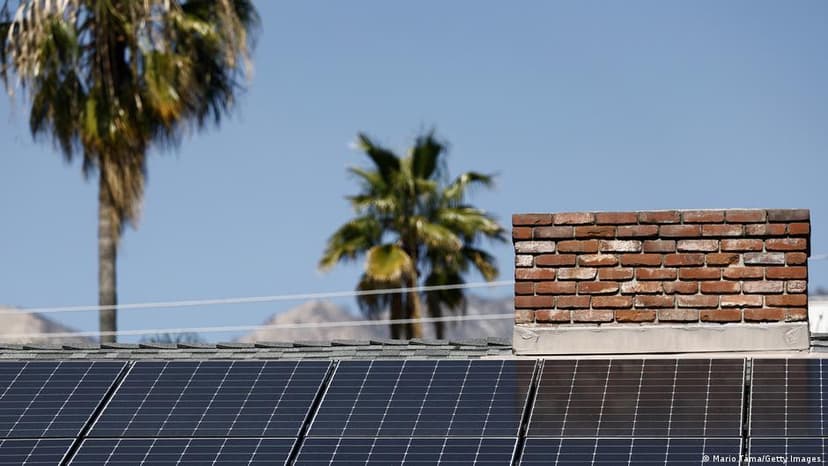
Simple, money-saving plug-in solar systems are taking off in the US, despite the best efforts by the Trump administration to quash the shift toward renewable energy.

Fifteen Democratic-led US states have filed lawsuits against the Donald Trump administration, challenging its policy to reduce recommended childhood vaccinations.
Over 20 US states were impacted by the Winter Storm Fern in late January. Brett Carlsen/Getty Images Historic blizzards have caused fatalities, major damage, and lasting infrastructure changes. The G

An opinion piece suggests that Rahul Gandhi desperately needs a political 'fixer' like the late Ahmed Patel to address the Congress party's repeated setbacks in various states.
Several billionaires are reportedly running for governor in Ohio, Georgia, and California this year.

In Defense Of Sir Jim Ratcliffe Authored by Charles Johnson via TheCritic.co.uk, Far more energy has gone into condemning his phrasing than confronting the questions he raised... Sir Jim Ratcliffe’s statement that Britain has been “colonised by immigrants” has sparked a fierce reaction. From Starmer to Bluesky, to the Athletic and all the football social media pundits in between, the co-owner of Manchester United has been bombarded with the same attack lines repeatedly. He has been called a tax dodging, racist immigrant hypocrite. Such an uproar has flared up in such a short space of time because Ratcliffe is radically different from those who have issued similar statements before. Ratcliffe is not a political figure: you do not see billionaires nor football club owners voicing discontent like this. The pushback has been fierce because Ratcliffe has no political incentive to say any of this. He isn’t running for office, seeking favour, or chasing votes — which makes his intervention harder to dismiss. Part of the backlash, too, reflects an unease that his diagnosis may be accurate. The remarks came from an initial conversation regarding the economic challenges Britain faces in general, not solely on immigration. The snippet that has been so widely shared is merely part of a wider statement of the economic problems Britain faces; Ratcliffe refers to the issues of “immigration” and “nine million people” on benefits simultaneously. Manchester United part-owner has told @EdConwaySky the UK has been "colonised" by immigrants, who are draining resources from the state, as he warns of the country facing profound political, social and economic challenges. 🔗 https://t.co/bie6uFZ1Tp pic.twitter.com/qFpiO0HkfO February 11, 2026 Colonised is a strong opening salvo for a figure such as Ratcliffe, who is not known for any previous anti-migration stance. This generated responses of tone policing from his critics – cries that his choice of words were “disgraceful and deeply divisive” and that “this language and leadership has no place in English football” from Kick It Out, a notable “Anti Racism” football pressure group. There was no attempt to argue or debate: this was no more than tone policing, of “mate mate mate, you can’t say that mate”. It did not engage with the substantive point. It was not an argument. The Prime Minister has pushed for Ratcliffe to apologise. Less than a year ago, Starmer was referring to Britain as an ”Island of Strangers”; he has little argument here. Sir Ed Davey has stated that Ratcliffe is “totally wrong” and is “out of step with British Values”. Once again this is weak tone policing, not an argument. Regardless, which British values are being violated in particular? What are British values precisely meant to mean here? The fact is that Ratcliffe’s vocabulary choice is nowhere near as divisive as the impacts of mass migration in the last quarter century. Mass migration is the most important issue in British political debate. It has bought sectarianism, Bengali and Palestinian politics swinging both local council and Parliamentary elections, a deepening of housing crisis, the rape and murder of British women from taxpayer funded hotels and programs which bloat the welfare state even further. It is undeniable mass migration has defined British politics of the 2010s onwards. It has been much more harmful and divisive than any comment made by Sir Jim Ratcliffe. His words are nothing compared to the actions of Deng Chol Majek, or Hedash Kebatu, to name a couple of examples. Critics have also cried that Ratcliffe is “an immigrant himself, dodging tax in Monaco”. The difference between Ratcliffe and migration into Britain is so different they are almost incomparable. In the 2017/18 tax year Ratcliffe was the fifth highest taxpayer in the country, footing a bill of £110.5 million. With such an extraordinarily high bill, it is no wonder that he has since moved to Monaco. Meanwhile, the average salary of of a migrant entering Britain in 2023 (which has fallen by £10,000 since 2021) was £32,946, according to a report by the Centre for Migration Control. From this we can estimate a migrant would pay about £5,000 in income tax. That means it would take over 22,000 (statistically average) migrants to foot the tax bill that Ratcliffe paid in one year alone. Ratcliffe has been an exceptional cash cow to the British state. He has been taxed incredible amounts and contributed more to this country than almost anyone currently living; to call him hypocritical since he dared to criticise migration and its impact on the welfare state is simply not fair. Census data from the ONS in 2021 shows that migrants from four nations – Somalia, Nigeria, Jamaica and Bangladesh – head over 104,000 social homes in London alone. With such incredible numbers of subsidised housing going to foreign born nationals, it is absolutely correct to state that mass migration is costing the British economy a fortune. The same census states that over 70% of Somali born households are in social housing in England and Wales, whilst also being of lowest contributors to income tax in the nation – paying well under the £5,000 stated per head previously. The increase and sheer scale of benefit reliance for many immigrants in Britain is not sustainable, and it is a problem that is right to be addressed. Perhaps the most nonsensical argument presented by some is that as co-owner of Manchester United he employs a significant number of immigrant players. Bruno Fernandes is not living in social housing in Wythenshawe. Benjamin Sesko is not in a single bed council flat in Hulme. When he arrived in Manchester last year, the first thing Senne Lammens did was not register for Universal Credit. Not a single foreign player is a drain on the state. They are, as elite athletes in the most lucrative league in the world, very clearly exceptions to the norm of British migration. The difference between Bruno Fernandes, who earns a reported £300,000 a week, and the over 40% of Bangladeshi immigrants who are economically inactive should really not need spelling out. We are referring to just 17 foreign senior team players who all earn more in a week than the average migrant – or Brit – will earn in a year. It is ludicrous to even attempt to compare the two. Regardless, employing or working with immigrants does not mean you waive your right to criticise the state of affairs in Britain. As an Englishman, Sir Jim Ratcliffe has a given and inalienable right to comment on the affairs of his country. Ratcliffe’s critics have entirely focused on his choice of the word “colonised”, and how they consider it inflammatory. This choice of phrase was not entirely accurate or intentional by Ratcliffe – proved by the fact he issued an apology over his “choice of language”, rather than the substance and argument behind his critique of the broader economic challenge of Britain. The bottom line is, Ratcliffe was right to raise a perfectly reasonable concern. He is directionally correct, and close enough to the truth that the obsessive focus around his phrasing is both absurd and clearly no more than a tactic to dodge the substance of his argument entirely. His critics have been intentionally evasive around the underlying subject: it is a harsh, necessary truth they have no reply too. They avoid the debate because, despite his wording being wrong, Ratcliffe is right. Tyler Durden Tue, 02/17/2026 - 06:30
The river, which runs through seven US states that share it, is currently facing the worst drought in 1,200 years.

A coalition of 24 US states has filed a lawsuit against the Donald Trump administration, seeking to block a new 10% global tariff and demand the return of already collected funds.

The United Nations reports that women and girls are experiencing setbacks in equality and increasing discrimination in many countries, with numerous states reversing hard-won progress.

MEP Virginijus Sinkevičius states that Prime Minister Inga Ruginienė's claim that she cannot express a personal opinion on the funding of 'Nemuno aušros' is an attempt to 'turn reality upside down'.
An article identifies 10 US states where relying solely on Social Security benefits is particularly difficult, even for those without a mortgage, highlighting financial challenges for retirees.
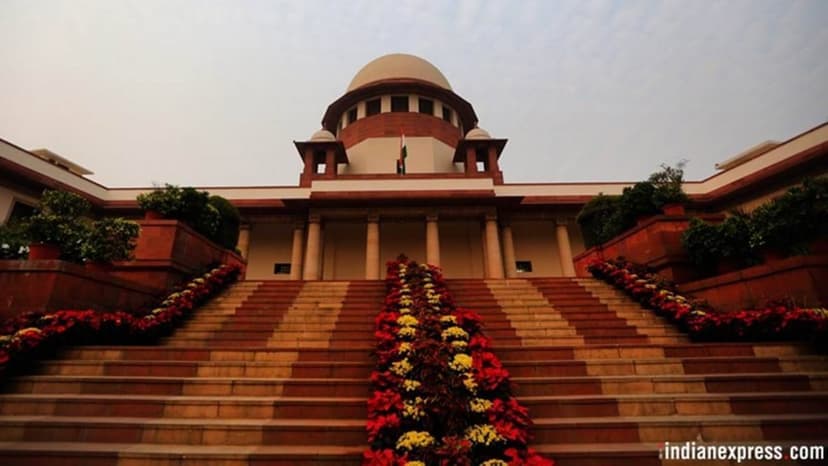
The Indian Supreme Court has requested responses from the Centre and various states on a Public Interest Litigation (PIL) seeking intervention to curb the registration of fake legal cases.
Root Inc. has outlined its strategic plan for 2026, focusing on accelerating PIF (Policies In Force) growth and expanding its operations to all contiguous states by 2027.
Eleven US states urge DOJ to thoroughly probe Netflix-Warner Bros. deal Reuters

Fifteen US states are suing the government after the Health Minister announced a reduction in recommended childhood vaccinations, including those for rotavirus, influenza, and hepatitis B.
Fifteen US states are suing the federal government over its vaccine policy, which was reportedly inspired by Denmark's decision to reduce the number of recommended childhood vaccines in January.

European Commissioner Andrius Kubilius states that Russia's Putin is well aware of Europe's problems, particularly regarding military mobility, and warns that a lack of preparedness could invite Russian aggression.
The Winter Olympics have come to a close with a thrilling, historical victory by the Team USA men’s hockey team. The 2026 Winter Olympics were filled with breathtaking moments, historical feats, and g
Live Nation is set to face trial in an antitrust case brought against it by the Department of Justice and several US states.
A report details President Donald Trump's approval ratings across various states as of February 2026, providing a snapshot of public sentiment.

Negotiators disbanded on Friday without a plan for the basin supplying water to 40m people, thrusting the region into uncertainty The future of the American west hung in the balance after seven states remained at a stalemate over who should bear the brunt of the enormous water cuts needed to pull the imperiled Colorado River back from the brink. Negotiators, who have spent years trying to iron out thorny disagreements, ended their talks on Friday without a deal – one day before a critical deadline to form a plan that had been set for Saturday. Continue reading...

Iran is nearly the size of Alaska, the largest US state, and more than twice the size of Texas, ranking as the 17th largest country globally by area.
The battle for US states in the upcoming November congressional elections has begun, with James Talarico emerging as a new Democratic rising star after winning the Democratic primary for the Senate in Texas.
More US states are exploring options to license lawyers without requiring them to pass the traditional bar exam.

A guide detailing the dates for primary elections across various states in the United States.

Across the United States, Democrats and Republicans are finding common ground and bipartisan agreement on regulating artificial intelligence and data centers, among other issues.
A new report ranks the 20 US states with the lowest property tax rates, providing insights for homeowners.
A new report or study has ranked US states based on their work ethic, highlighting the six hardest-working and six least-working states.

Fifteen Democratic-led US states have filed a lawsuit against the Donald Trump administration for shortening the recommended vaccine list for children, a move critics argue goes against scientific consensus.
The Northern Lights (Aurora Borealis) are predicted to be visible on Tuesday from at least 10 states in the United States, offering a rare celestial display for residents in those regions.
A 'hole in the sun' is expected to cause a strong display of the Northern Lights, making them visible across 11 US states on Monday.
Several billionaires are running for governor in various US states this year, including Ohio, Georgia, and California.

US states are suing the Trump administration to unlock funding for clean energy projects.

Which US States Are Seeing Incomes Rise The Fastest (And Slowest) Since 2019, U.S. household incomes have surged - rising from $68,700 to $83,730 nationally, a 21.9% increase in just five years. But where you live matters a lot. While some states tracked close to the national average, others saw incomes climb at nearly double the pace, driven by booming local industries and major investment. States like Colorado posted outsized gains, while Georgia’s expanding EV industry brought billions in investment and rising paychecks. The map, via Visual Capitalist's Dorothy Neufeld, shows which states saw the fastest growth in median household income from 2019 to 2024, using data from the U.S. Census Bureau. Trends in Median Income by State Below, we show the change in median household income for all 50 U.S. states and D.C. between 2019 and 2024 using nominal figures (not adjusted for inflation): Rank State Change in Median Household Income Median Household Income 2019 Median Household Income 2024 1 Colorado 46.9% $72,500 $106,500 2 Georgia 43.4% $56,630 $81,210 3 Maine 36.3% $66,550 $90,730 4 Montana 36.1% $60,190 $81,920 5 Tennessee 34.0% $56,630 $75,860 6 Rhode Island 31.6% $70,150 $92,290 7 Massachusetts 29.9% $87,710 $113,900 8 Florida 29.6% $58,370 $75,630 9 Iowa 29.4% $66,050 $85,480 10 Missouri 29.4% $60,600 $78,390 11 California 28.8% $78,100 $100,600 12 New Hampshire 28.7% $86,900 $111,800 13 North Dakota 25.8% $70,030 $88,080 14 Mississippi 25.0% $44,790 $55,980 15 Ohio 24.5% $64,660 $80,520 16 South Dakota 24.3% $64,260 $79,850 17 Michigan 23.9% $64,120 $79,460 18 South Carolina 23.8% $62,030 $76,780 19 Idaho 23.7% $65,990 $81,650 20 Utah 23.0% $84,520 $104,000 21 Wisconsin 22.6% $67,350 $82,560 22 New York 20.8% $71,850 $86,830 23 Texas 20.8% $67,440 $81,490 24 Wyoming 20.8% $65,130 $78,680 25 New Mexico 20.8% $53,110 $64,140 26 Oregon 20.5% $74,410 $89,700 27 Virginia 20.2% $81,310 $97,720 28 Kansas 19.9% $73,150 $87,690 29 Arizona 19.9% $70,670 $84,700 30 Arkansas 18.9% $54,540 $64,840 31 Washington 18.3% $82,450 $97,500 32 New Jersey 18.0% $87,730 $103,500 33 Nebraska 17.9% $73,070 $86,140 34 West Virginia 17.6% $53,710 $63,150 35 Louisiana 17.5% $51,710 $60,740 36 Alabama 16.7% $56,200 $65,560 37 Alaska 16.4% $78,390 $91,260 38 Kentucky 16.4% $55,660 $64,790 39 Delaware 15.7% $74,190 $85,860 40 Indiana 15.0% $66,690 $76,710 41 Maryland 14.8% $95,570 $109,700 42 Vermont 14.7% $74,310 $85,260 43 Connecticut 13.7% $87,290 $99,240 44 Nevada 13.7% $70,910 $80,590 45 Pennsylvania 13.4% $70,580 $80,060 46 Minnesota 13.4% $81,430 $92,350 47 Illinois 13.2% $74,400 $84,210 48 District of Columbia 12.6% $93,110 $104,800 49 Hawaii 11.6% $88,010 $98,240 50 Oklahoma 9.9% $59,400 $65,310 51 North Carolina 9.9% $61,160 $67,220 Colorado’s thriving tech industry helped push median income up 46.9%, the fastest rise across states. With $165,606 in average earnings across the sector in 2023, Colorado ranked sixth-highest nationally. From software to renewable energy, employment growth has expanded by double- or even triple-digit percentages across various roles since 2018. Georgia ranks in a close second, with median incomes climbing 43.4%. In particular, the EV and aerospace sectors are playing a key role in job creation. Since 2018, the state has seen $27.3 billion in investment across EV, aerospace, and battery manufacturers including Rivian and SK Battery America. Maine, meanwhile, saw wages rise 36.3%. In 2024, wages across the tech sector saw the steepest jump of 11.4% while those in the construction sector saw strong gains of 8.5%. Other factors, such as its older population and tight labor market, have further boosted wages. Falling near the middle of the pack were New York and Texas, each with wage gains of 20.8% between 2019 and 2024. By contrast, North Carolina and Oklahoma saw only 9.9% cumulative wage growth, the weakest performance nationwide. Median household income in both states remains well below the U.S. average and still trails pre-pandemic levels. To learn more about this topic, check out this graphic on average hourly earnings by state in 2025. Tyler Durden Sat, 02/14/2026 - 22:45