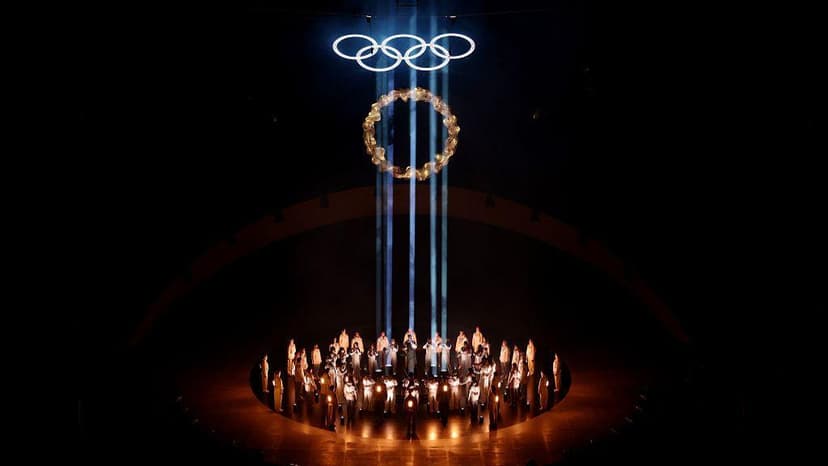
'Two unforgettable weeks' - Winter Olympics close with music and flags in Verona's big show
IOC president Kirsty Coventry says the athletes "showed us that the Olympic Games are a place for everyone" as she closes this year's Winter Games.
71 stories found
IOC president Kirsty Coventry says the athletes "showed us that the Olympic Games are a place for everyone" as she closes this year's Winter Games.
IOC president Kirsty Coventry says the athletes "showed us that the Olympic Games are a place for everyone" as she closes this year's Winter Games.
Luis Zubeldía collected yellow and red cards during his time in charge of São Paulo.But he had not yet been sent off while managing Fluminense.That changed for the first time this Sunday (22), durin...
Vasco and Fluminense have announced their starting line-ups for the first leg of the Campeonato Carioca semi-final clash.
VERONA, Italy — Here we are! The 2026 Milan Cortina Olympics have come and gone. We’ve had dominant wins, shocking upsets and you-couldn’t-script-it-if-you-tried podiums. The IOC has handed out 116 se

The International Olympic Committee (IOC) praised the Milan-Cortina 2026 Winter Olympics as 'incredible,' stating that they exceeded expectations despite numerous obstacles, ahead of the closing ceremony.

Lindsey Vonn stürzt in ihrem letzten großen Rennen schwer, Lena Dürrs Medaillentraum platzt am ersten Tor und die IOC-Präsidentin Kirsty Coventry weint.
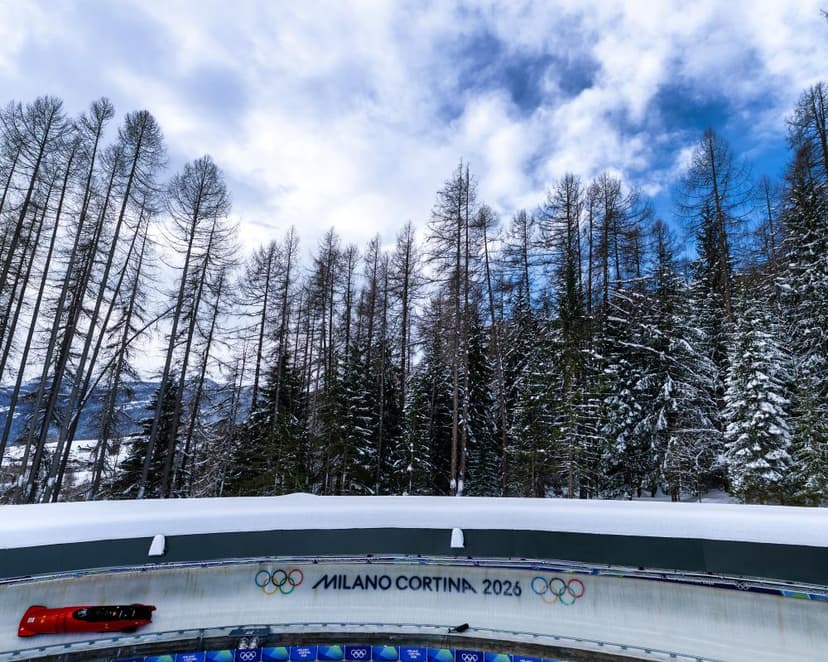
Rivers drained dry to create artificial snow, a forest cut down for the bobsleigh track – IOC’s claims to prioritise sustainability at Milano Cortina exposed


An opinion piece criticizes 'nostalgic feminists,' arguing that their approach makes the women's struggle appear ridiculous and that their names are not celebrated like those of even mediocre men.
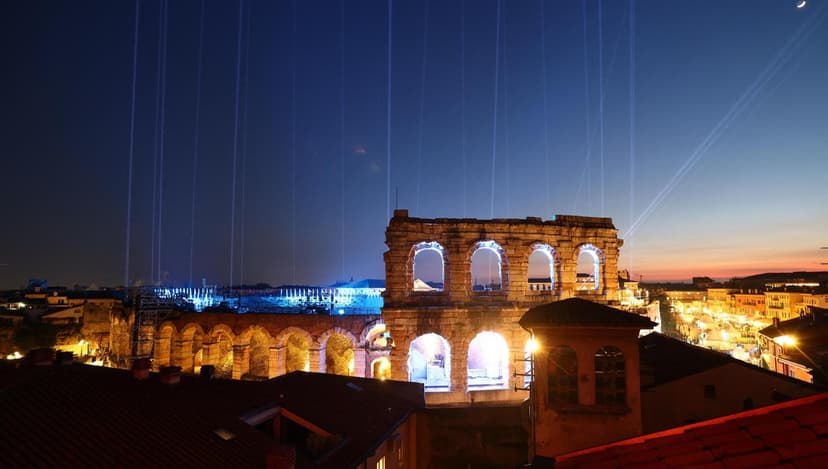
The Milan Cortina closing ceremony, titled 'Beauty in Action,' took place at the Arena di Verona with guests like Roberto Bolle and Achille Lauro, but notably without Donald Trump.

Rivers drained dry to create artificial snow, a forest cut down for the bobsleigh track – IOC’s claims to prioritise sustainability at Milano Cortina exposed On the foothills of the mountains, by the
Rosy, a soil brand specializing in biochar-fueled products for houseplants, has successfully closed a $5 million Series A funding round.
Alfonso Ribeiro, known for his acting roles, opens up about his approach to fatherhood, particularly his intense involvement in his sons' baseball activities, emphasizing his refusal to accept mediocrity.

The final three finishers in the men's 15km biathlon final engaged in a playful competition to avoid finishing last at the 2026 Winter Olympics.

The Olympics chief will launch an investigation after Fifa president and IOC member Gianni Infantino attended a Board of Peace meeting with Donald Trump.
Olympic athletes have elected a Korean bobsled pilot and an Estonian biathlete to represent them on the International Olympic Committee.
James Deering's 1916 winter home is located less than 10 minutes away from the heart of Miami. Robin Hill/Courtesy of Vizcaya Museums and Gardens Vizcaya, built by James Deering more than a century ago, might be Miami's most valuable real estate. The 45,000-square-foot mansion has a total of 54 rooms, with the main house open to the public. Citadel CEO Ken Griffin began assembling a waterfront compound next to the historic mansion in 2022. The exorbitant price tags on Miami's luxury real estate are not a secret to anyone, least of all the flock of billionaires moving to the city. But unlike the high-rise apartments in the financial center of Brickell or exclusive mansions in Indian Creek — where you might be neighbors with Jeff Bezos or Ivanka Trump — the city's potentially most valuable piece of real estate is decorated with limestone, mangroves, and tiles salvaged from Cuban estates. Built between 1914 and 1922 by International Harvester heir and Gilded Age millionaire James Deering as a winter home, Villa Vizcaya sits fewer than 10 minutes from downtown Miami, in a waterfront neighborhood that's quickly becoming a magnet for the city's new billionaire residents. While built in the years following the Gilded Age, it is notable for its Gilded Age-era extravagance, technologies, and collection of fine art. Vizcaya Museum & Gardens estimates the mansion cost $26 million to build, which is more than $800 million in today's money, per the Bureau of Labor Statistics. Florida International University estimates that the mansion is worth over $1 billion today. In 1962, Miami-Dade County bought the property for $1 million, and today, the 45,000-square-foot mansion and its surrounding gardens operate as a museum open to the public. Shortly after announcing that Citadel would move its headquarters from Chicago to Miami, CEO Ken Griffin bought up a waterfront compound less than a half-mile from Vizcaya, in the neighborhood of Coconut Grove. The $106.9 million sale set a country record for the most expensive residential property purchase at the time. Since then, the hedge fund magnate has proposed relocating the historic Villa Serena mansion, located on his estate, to Vizcaya's campus after he donated $20 million to Vizcaya Museum and Gardens. Take a look inside James Deering's historic mansion and see how its new neighbor could alter the surrounding landscape. Vizcaya was James Deering's winter home from 1916 until his death in 1925. Robin Hill Photography/Courtesy of Vizcaya Museum & Gardens Struggling with illness toward the end of his life, James Deering came to Miami, then a small city surrounded by mangrove forests and wetlands, looking for tropical warmth, which was believed to help improve health. By the turn of the century, the Deering family had begun to develop estates around South Florida, with patriarch William Deering purchasing a home in Coconut Grove in 1900. By the time James Deering began building Vizcaya, his brother, Charles Deering, was also developing a winter home in the south of Miami. The property, known today as Deering Estate, also operates as a museum and is open to the public. The main house features 54 rooms, including 34 rooms decorated with their original furniture. Kristine Villarroel/Business Insider Spanning over 45,225 square feet, Vizcaya's main house features the living spaces of James Deering himself, his guests, and the house staff. Envisioned by interior designer Paul Chalfin, Vizcaya drew inspiration from the Italian Renaissance, adapted to South Florida's subtropical climate, and showcases furniture, artworks, and artifacts purchased by Chalfin and Deering on their travels to Europe. Although Miami's population was estimated to be only 10,000 in 1916, the construction of the Vizcaya estate employed an estimated 1,000 workers, many of whom were Black immigrants from the Bahamas. Apart from the main house, Vizcaya is also home to the Vizcaya Village, the historic quarters of the mansion's workers and farmers that allowed Vizcaya to serve as a self-sufficient farm-to-table estate. The Village expands over 12 acres and includes 11 "architecturally significant" buildings, according to the museum's website. The tour begins in the courtyard, which is adorned with tropical plants. Kristine Villarroel/Business Insider Lined with tropical plants such as palms and philodendrons, the courtyard highlights South Florida's natural beauty while reflecting the mansion's European inspirations. While today the courtyard is covered by a glass canopy that allows for the estate's air conditioning, it was originally open to the elements, allowing the tropical climate to seep into the main house. Meant to be used as Vizcaya's main entrance, the East Loggia opens up to the Biscayne Bay. Kristine Villarroel/Business Insider Featuring marble floors and columns and decorated ceilings, the East Loggia was meant to serve as Vizcaya's main entrance for guests arriving by sea, which was Deering's intended — and preferred — way of entering the mansion. It was used as an entrance for guests who arrived by boat, while the current main entrance of the museum was used as a back entrance for guests arriving by car. The room also features a model boat hanging from its ceiling in honor of the explorers who inspired Deering's interpretation of Vizcaya. Although he began living in Vizcaya during his retirement, Deering included multiple working spaces in the property. Kristine Villarroel/Business Insider James Deering was heir to the International Harvester manufacturing firm, which produced tractors and other agricultural machinery, and he worked as its vice president from 1902 until 1909. Deering might have been one of the first prominent Florida "snowbirds," retirees who travel South during the colder months. His downstairs library, located in the northwest corner of the main house, is steps from the entrance hall that welcomes guests. It features Deering's personal book collection, desks for him and a secretary, and seats for business guests. When closed, the door leading to the next room — a reception room meant for entertaining guests — is concealed within the book-lined walls. The reception room features a ceiling imported from Venice, which had to be resized to fit. Kristine Villarroel/Business Insider The reception room is lined with tropical-inspired silk panels showing palm trees. Our tour guide brought our attention to the ceiling, which is decorated with sculpted panels that extend to the sides of the room. The ceiling was imported from Venice and purchased before construction on the property was finished. By the time workers were putting up the decorations in the mansion, they realized that the ceiling panel did not fit the room dimensions, leading to the restructuring of the panel, which curved into the walls. "We should remember that this house was built during the First World War," curator Flaminia Gennari said in the audio tour. "So to import large quantities from Italy in the middle of the war was very complicated." Vizcaya's telephone line was one of the first in Miami. Kristine Villarroel/Business Insider Wired throughout the house, Vizcaya features a highly innovative telephone system for the time. Only 17 years before the start of Vizcaya's construction, the Miami Telephone Company began providing telephone service to the city. Vizcaya's telephones also featured automatic electric exchange, allowing users to connect directly to the number they dialed without going through a human operator. The telephone room, located between two of Vizcaya's main entertainment rooms, was meant for guests to communicate privately without disturbing the flow of the entertainment. The living room showcased Deering's most impressive collections. Kristine Villarroel/Business Insider The living room, with its 1600s limestone fireplace, features some of Vizcaya's most impressive items, including an "admiral carpet" originally commissioned in the 1450s by the grandfather of King Ferdinand II of Spain, the Spanish king who sponsored Christopher Columbus' exploration of the Americas. The room also features throne-like armchairs where US President Ronald Reagan and Pope John Paul II sat in 1987 during the Pope's visit to America. A centerpiece of the room is the Welte Philharmonic Organ, designed to fill the house with music through elaborate sound systems. Designed for guests rather than full-time professional players, the organ uses perforated paper rolls to aid the musicians' performance by adjusting notes and volume. Concealing the organ pipes is an oil painting, which was cut in half to cover wooden doors. "Chalfin had the idea of cutting it in half and using it as the doors of the organs, which is not a very respectful thing to do for a representation of the Virgin Mary, the child, and the saints, but it somehow testifies to the freedom and positive carelessness that they had around old objects," Gennari said in the audio tour. The mansion's formal dining room features the house's oldest artifacts, although it was rarely used. Robin Hill Photography/Courtesy of Vizcaya Museum & Gardens While Deering himself didn't often eat in the formal dining room, he made sure it was impressively decorated for his guests. Sitting to the side is the room's most awe-inspiring feature: a marble tabletop on carved bases resembling mythical creatures, historical artifacts unearthed near Pompeii, dating back to the times before Mount Vesuvius' eruption. Next to the dining room, on the south side of the mansion, the enclosed loggia gave guests a view of the gardens. Kristine Villarroel/Business Insider The colorful glass panels, designed for Vizcaya, feature the estate's main symbols: the seahorse and the caravan. Providing a view of the garden through the glass panels and double doors, the enclosed loggia allowed guests to take in the garden views while staying cool from the Florida sun. The loggia also connects the gardens to the main house through sculpted iron gates. Kristine Villarroel/Business Insider Aside from giving guests an inside view of the gardens from the ground level, the room also connects the outdoors to the rest of the mansion. Downstairs, the kitchen worked as a serving space for staff to plate food and bring it to guests. Kristine Villarroel/Business Insider When designing Vizcaya, Deering asked for the main kitchen to be built upstairs as he didn't want the smell of food to flood the main entertaining rooms on the first floor. To facilitate the transportation of meals and the serving of guests to the dining room, the entertaining rooms, and the loggia, he built a downstairs serving pantry. Today, the serving pantry cabinets display one set of Deering's fine dining china, the one designated for his 80-foot-long luxury yacht, Nepenthe. Commissioned in 1912 to be shipped from Europe, the original set of china purchased by Deering was transported to America as cargo aboard the Titanic. After the ship sank, a replacement set was ordered and is now displayed. The kitchens feature state-of-the-art Gilded Age technology. Kristine Villarroel/Business Insider Throughout the house, Deering incorporated cutting-edge technology, including annunciators with bells connected throughout the house that Deering or guests could ring at any time to get the house staff's attention. Another then-advanced feature of the serving kitchen were its refrigerators, which were rare at the time. The kitchen also featured a warming oven that helped keep food warm while guests were served. Connecting to the upstairs kitchen, which serves as the house's main cooking area, was a dumbwaiter: a food elevator meant to carry the food cooked upstairs to the downstairs plating area, where staff would then take it to the main entertaining rooms, like the dining and sitting rooms. Upstairs, 24 rooms housed guests, staff, and Deering himself. Kristine Villarroel/Business Insider Nine of the bedrooms were dedicated to guests and each was given a name and decorated uniquely, showcasing the artifacts and furniture purchased by Deering and Chalfin on trips to Europe. While not open to the public, an additional 14 rooms housed staff. Another then-advanced technological feature of Vizcaya was its elevator. Kristine Villarroel/Business Insider Deering was motivated to move to South Florida because of his illness, so accessibility features were built throughout the house, including an elevator he would use when using a wheelchair or to avoid walking upstairs. Today, the elevator isn't open to the public, and the museum's second floor is not wheelchair accessible. Deering's main office was inspired by the Napoleonic era. Kristine Villarroel/Business Insider Connected to Deering's bedroom and bathroom, the sitting room was his office where he would tend to business and personal matters, such as sorting his mail. The decoration style was inspired by Napoleonic France. Deering's bedroom was modest compared to some of his guest bedrooms. Robin Hill/Courtesy of Vizcaya Museum and Gardens Unmarried all his life, Deering's room features a single bed rather than a larger size, and his room is furnished for practicality rather than aesthetics. His personal bathroom has one of the most breathtaking views of the property. Kristine Villarroel/Business Insider Opening onto a balcony, Deering's bathroom overlooks Biscayne Bay and offers one of the best views of the house, although it is not accessible to the public today. The closed-off balcony also leads to a secret door to the Espagnolette, the guest bedroom located next to his, usually reserved for Deering's dearest guests. Spiral staircases lead to the South tower. Kristine Villarroel/Business Insider A set of spiral staircases leads up to the South tower, one of the two guest suites overlooking the estate. The tower bedroom has views of the bay and the gardens. Kristine Villarroel/Business Insider The corner room atop the North tower was designed to transport guests to Europe. "Water reflects upwards to the ceiling and the sound of waves is audible in this room, precisely as upon the quay of this great canal of Venice," noted Chalfin about the room, according to the mansion's website. A central piece in the room is a large wardrobe assembled with 1700s Venetian panels, as well as antique painted closet doors. The breakfast room was Deering's preferred dining space. Robin Hill Photography/Courtesy of Vizcaya Museum & Gardens Back on the second floor, the breakfast room was the central entertaining spot. The room is lined with oil paintings depicting ocean scenes, and the windows slide into pocket doors, revealing views of the garden. It also features a sound system, with a piano hidden in a room off the spiral staircase next door and connected to the breakfast room through floor vents that allow sound to travel into the space. Most of the time, Deering opted to dine in this room rather than the formal dining space. Tucked next to the breakfast room is the main kitchen. Kristine Villarroel/Business Insider Designed to maximize staff efficiency, the main kitchen upstairs has different areas for different tasks, including separate sinks for washing dishes and produce. It also features ice boxes, or refrigerators of the time, powered by salt water. During Deering's time at the estate, Vizcaya employed two French chefs dedicated to food and pastries. Food served at the mansion was sourced from the staff village built across the street, where a farm provided vegetables, dairy, chicken, herbs, and citrus. "You and I could come down and drive into the farm area, stop and buy a dozen Deering eggs and take them home and have them for breakfast, and I think that was probably particularly important during World War I," historian Arva Moore Parks said in the audio tour. "He was able to supply not only himself but his workers also." Inspired by European designs, the gardens feature mazes, terraces, fountains, and more. Kristine Villarroel/Business Insider Inspired by 17th- and 18th-century Italian and French villas, the Vizcaya gardens feature a variety of scenes, from a garden theater to multiple paths and mazes, intended to highlight and enhance the native South Florida flora surrounding the estate. The original layout of Vizcaya featured over 180 acres of subtropical forests. Today, that number has gone down to 50 acres. In 1987, President Ronald Reagan hosted Pope John Paul II at the estate. Diana Walker/Getty Images On September 10, 1987, President Ronald Reagan welcomed Pope John Paul II at Vizcaya, where the two conversed while exploring the gardens and the estate. Atop a garden mount is the Casino, a focal point of the gardens. Robin Hill/Courtesy of Vizcaya Museums and Gardens Located at the top of garden mounds designed to block the reflection of water ponds into the main house, the garden casino — Italian for "little house" — was a space where Deering and his guests could take in the garden views or enjoy the subtropical weather without being in direct contact with the sun. Inside the building, a painted ceiling depicts heavenly images. Underneath, bathrooms and other now closed-off areas hide under decorated ceilings. Originally, the casino overlooked a water park part of the estate, where gondolas would be launched, a crucial part of Deering's vision for Vizcaya. Today, the water park no longer exists, and the land is instead taken up by a Catholic church, hospital, and schools after the Deering family sold part of the property to the Catholic Diocese of St. Augustine in 1946. The opposite side of the estate was once used for clandestine entertainment; now, it is a café. Kristine Villarroel/Business Insider While today a café sits underneath the mansion, the space served as a leisure center during Deering's stay. The rooms were filled with billiard tables, bowling alleys, and leather chairs. Hidden underneath the billiards table was also a roulette table, which Deering often used when his college friends visited the estate. The mansion, which opened at the peak of the Prohibition era, also had a decent supply of liquor, which Deering smuggled into the estate and hid in secret bars and cellars. The swimming pool is half-covered, providing relief from South Florida's relentless sun. Robin Hill/Courtesy of Vizcaya Museum and Gardens Tucked next to the leisure rooms underneath the main house is the half-indoor swimming pool, in which Deering is said to have only swum once. Designed as the main entry point to the mansion, the east side of the mansion opens up to a stone barge in the Biscayne Bay. Kristine Villarroel/Business Insider When he first moved into his winter home in December 1916, Deering arrived by sea on what he intended was the front entrance to Vizcaya. Opening up to the Biscayne Bay, the waterfront side of the property features a stone barge, a sculpted structure that acts as a breakwater and protects the main house from changing tides and waves. Today, the mansion hosts private events and has become a local staple for Quinceañera pictures. The mansion is often used for private events. Kristine Villarroel/Business Insider Purchased from the Deering family by Miami-Dade County for $1 million in 1962, Vizcaya today operates as a museum open to the public and for private reservations. The estate often serves as the backdrop for Quinceañera pictures among Miami's large Hispanic population. Walking around the gardens, I saw multiple young women dressed in extravagant gowns posing in the many stunning locations of the estate. Along with being a photographic hot spot, Vizcaya also hosts private events, from Miami Swim Week runway shows to floral-decorated weddings in the gardens. Today, the estate remains an icon of Miami, a city that many would often relate to modern luxury rather than the old and classic wealth on display in Gilded Age-style mansions like Vizcaya. The Vizcaya Village could be the future home of Ken Griffin's Villa Serena. Robin Hil Photography/Courtesy of Vizcaya Museum and Gardens After purchasing the historic Villa Serena estate in Coconut Grove in 2022, Citadel CEO Ken Griffin proposed relocating the 1913 Mediterranean Revival mansion to Vizcaya's Village campus. The home, designed by architect August Geiger for William Jennings Bryan, a three-time Democratic presidential candidate and former US secretary of state, is considered one of Miami's earliest grand waterfront residences. The proposal would move the century-old home from Griffin's property to Vizcaya's Village grounds, where it would be open to the public for the first time in its history and would benefit from an additional $5 million endowment provided by Griffin for its preservation. Any relocation would require extensive planning and government approvals, which have not yet been cleared. Skeptics have said that moving the structure would be an ambitious undertaking that wouldn't align with preservation goals. "Moving a historic structure is absolutely a last resort solution, to be done only if (there) is no other way possible to save a structure… It is not a preservation-minded alternative just because someone bought it and now doesn't want it," Kathleen Slesnick Kauffman, Miami's former historic preservation officer, told the Chicago Tribune in 2023. The Village originally served as Vizcaya's self-sufficient farm and the servants' quarters. Robin Hil Photography/Courtesy of Vizcaya Museum and Gardens The Vizcaya Village, which covers about 12 acres of agricultural fields and includes nearly a dozen buildings, was originally built as the quarters for the mansion's servants and farmers. Today, the campus houses a café and hosts a weekly farmers market, and is undergoing construction and expansions to transform the grounds into a cultural and community space. The Citadel CEO's $20 million donation will expand the village's role in the community. Robin Hil Photography/Courtesy of Vizcaya Museum and Gardens In November 2025, Vizcaya Museum and Gardens announced a $20 million capital donation from Griffin and said that the funds would be used toward building a brand new Center for Learning and Discovery in the village grounds. Once open, the center will offer educational programming like "hands-on artmaking and urban-agriculture experiences," the museum organization wrote in the announcement. The expansion will seek to expand Vizcaya's role in its community. Read the original article on Business Insider
SARAJEVO, BOSNIA AND HERZEGOVINA â" JANUARY 4: Snowfall blankets city as winter weather affects the capital Sarajevo, Bosnia and Herzegovina, on January 4, 2025. Samir Jordamovic/Anadolu/Getty Images Sarajevo, the capital of Bosnia and Herzegovina, hosted the Winter Olympics in 1984. Not even a decade later, the city was ground zero in the war for Bosnian independence. Four decades after the Games, many of the Olympic venues have remained abandoned. Over 40 years ago, the Yugoslavian city of Sarajevo hosted the 1984 Winter Olympics. Many new structures were built, and the Games were seen as something of a reunion since many countries had boycotted the 1980 Summer Olympics held in Moscow. But six years later, the country would be thrown into turmoil during the Yugoslav Wars, which led to the fall of Yugoslavia. Sarajevo became the capital of a new country, Bosnia and Herzegovina, in 1992, but the fighting didn't end until 2001. During the fighting, Olympic venues became battlegrounds, with ski slopes heavily mined and hotels turned into prisons. While Sarajevo's story is singular, it's not the only former Olympics host city where venues now resemble ghost towns. Olympics host countries famously pour millions of dollars into building new venues, which sometimes fall into disrepair after the crowds have gone home. Milan Cortina, the host of this year's Olympics, hopes to avoid this costly mistake. "The Games are capitalizing on existing infrastructure and local winter sports expertise, aiming to create lasting socio-economic benefits for the local population," said Marie Sallois, the IOC director for sustainability. Of the 13 venues being used across northern Italy, 11 either already exist or are set to be torn down after the games. The country only needed to construct two new permanent venues, per the IOC. Here's what the 1984 Sarajevo Olympic venues look like in 2026. The 1984 Winter Olympics were held in Sarajevo, Yugoslavia, from February 8 to 19. The medal podium at the ski jump venue. Ioanna Sakellaraki / Barcroft Im / Barcroft Media via Getty Images The 1984 Games were the first Winter Olympics to be held in a socialist state and the second consecutive Games to be held in a socialist country after the 1980 Summer Olympics in Moscow. The 1984 Games were seen as a grand reunion, since many Western countries had boycotted the 1980 Summer Olympics, including the US. The Olympic rings are seen on the Jahorina mountain near Sarajevo, Bosnia and Herzegovina February 5, 2019. Picture is taken February 5, 2019. Dado Ruvic/Reuters The US boycotted the Olympics in Moscow in response to the Soviet invasion of Afghanistan in 1979. More than 60 nations refused to take part, according to the US State Department. In 1984, many of the events took place near Jahorina Mountain, seen here in 2019. But soon after the Olympics ended, Yugoslavia was thrust into turmoil, with the country formally collapsing in 1992. In this picture taken on Friday, Feb. 21, 2014, graffiti by London creative collective The Lurkers "The Lurkers do Sarajevo" is written on a destroyed hotel at Mt. Igman. Wartime destruction and negligence have turned most of Sarajevo's 1984 Winter Olympic venues into painful reminders of the city's golden times. The world came together in the former Yugoslavia in 1984 after the West had boycotted the 1980 Olympics in Moscow and Russia boycotted the 1984 Summer Games in Los Angeles. Just eight years later, the bobsleigh and luge track on Mount Trbevic was turned into an artillery position from which Bosnian Serbs pounded the city for almost four years. Today, the abandoned concrete construction looks like a skeleton littered with graffiti. Amel Emric/AP A destroyed hotel at Mount Igman, where events including ski jumping were held in 1984, is pictured in 2014. Sarajevo was almost immediately put under siege — just eight years after the Olympics ended, the bobsled track was turned into an artillery position by the Bosnian Serbs. The bobsleigh track originally built for the 1984 Sarajevo Winter Olympics lies unused on Mount Trebevic Tim Goode/PA Images via Getty Images This is what the bobsled track looked like in 2014 — it's been almost completely left to nature. Sylvia Hui at the Associated Press wrote that year, "Today, the abandoned concrete construction looks like a skeleton littered with graffiti." Sarajevo was under siege for almost four years, "the longest siege of a capital city in the history of modern warfare," NPR reported. BOSNIA AND HERZEGOVINA - FEBRUARY 20, 2014: Former Winter Olympic Venue now abandoned Giles Clarke/Getty Images NPR reported the Bosnian war led to 100,000 deaths and the "worst atrocities in Europe since World War II." This hotel, which was built as part of the Olympic Village, was turned into a prison during the war. BOSNIA AND HERZEGOVINA - FEBRUARY 20, 2014: The abandoned shell of a hotel constructed for the 1984 Winter Olympics and where competitors stayed. Ten years later, the hotel was turned into a prison and place of execution for Bosnian Muslims - all overseen by Serb Forces Giles Clarke/Getty Images According to Getty, 10 years after the Winter Olympics, "the hotel was turned into a prison and place of execution for Bosnian Muslims — all overseen by Serb Forces." Even the medal podium was turned into an execution site, Bloomberg reported. By the time the war ended in February 1996, thousands of civilians were dead, and the new country of Bosnia and Herzegovina had to decide how to move forward. Sarajevo 1984 Winter Olympics logo is seen on the tower near the Zetra hall in Sarajevo, Bosnia and Herzegovina on July 14, 2015. Jakub Porzycki/NurPhoto via Getty Images Many of the Olympic venues had been damaged or destroyed by the constant bombing and warfare. Decades later, many of the tracks and venues are still empty and abandoned, like these ski jumps at Mount Igman. Abandoned Igman Olympic Jumps in Sarajevo, Bosnia and Herzegovina on July 14, 2015. Jakub Porzycki/NurPhoto via Getty Images According to Getty, "The area around the 90-meter hill was heavily mined during the Bosnian war." Here's what they look like from another angle. IGMAN, BOSNIA AND HERZEGOVINA - FEBRUARY 20, 2014: Children gather at foot of the 1984 Olympic Ski jump hill at Igman just 25km from downtown Sarajevo. The area around the 90m hill was heavily mined during the Bosnian war just 8 years after the 1984 Winter Olympics. Giles Clarke/Getty Images The mountains border the city. The ski jump was left to the elements. In this picture taken Friday, Feb. 21, 2014, the abandoned ski jumping facility is seen covered in moss at Mt. Igman near Bosnian capital of Sarajevo. Wartime destruction and negligence have turned most of Sarajevo's 1984 Winter Olympic venues into painful reminders of the city's golden times. The world came together in the former Yugoslavia in 1984 after the West had boycotted the 1980 Olympics in Moscow and Russia boycotted the 1984 Summer Games in Los Angeles. Just eight years later, the bobsleigh and luge track on Mount Trbevic was turned into an artillery position from which Bosnian Serbs pounded the city for almost four years. Today, the abandoned concrete construction looks like a skeleton littered with graffiti. Amel Emric/AP Moss and debris cover the jumps. There are reminders of the Olympics scattered throughout the old venues. Destroyed Olympic rings on the abandoned Igman Olympic Ski Jump in Sarajevo, Bosnia and Herzegovina on July 14, 2015. Jakub Porzycki/NurPhoto via Getty Images These Olympic rings have fallen into disrepair. Here's where the judges sat during the ski-jumping competition. Judges tower on the Igman Olympic Jumps in Sarajevo, Bosnia and Herzegovina on July 14, 2015. Jakub Porzycki/NurPhoto via Getty Images East Germany's Jens Weißflog and Finland's Matti Nykänen each took home gold medals in ski jumping that year. The bobsled track was located on Mount Trebević, which was reachable by cable car from the city. It closed in 1989 and was destroyed during the war. picture taken on February 5, 2014 shows Sarajevo's abandoned Sarajevo's bob sleigh track near Sarajevo. Built and used as an Olympic venue during Sarajevo's 1984 Winter Olympic Games, the track was heavily damaged during Bosnia's 1992-95 war. It was never rebuilt and it's large concrete fragments remain standing as a memento of past and training ground for young generations of graffiti artists ELVIS BARUKCIC/AFP via Getty Images "The remains of destroyed restaurants, hotels, sports facilities and mountain huts were left to rot and the thousands of mines were cleared at a painstakingly slow pace" after the war ended, The Guardian wrote in 2018. After the war ended, the track gained two new uses: a place for graffiti artists to paint and a place for bikers to practice. Downhill bikers Kemal Mulic (C), Tarik Hadzic (L) and Kamer Kolar train on the disused bobsled track from the 1984 Sarajevo Winter Olympics on Trebevic mountain near Sarajevo, Bosnia and Herzegovina, August 8, 2015. Abandoned and left to crumble into oblivion, most of the 1984 Winter Olympic venues in Bosnia's capital Sarajevo have been reduced to rubble by neglect as much as the 1990s conflict that tore apart the former Yugoslavia. The bobsled and luge track at Mount Trebevic, the Mount Igman ski jumping course and accompanying infrastructure are now decomposing into obscurity. The bobsled and luge track, which was also used for World Cup competitions after the Olympics, became a Bosnian-Serb artillery stronghold during the war and is nowadays a target of frequent vandalism Dado Ruvic/Reuters A photo from 2015 shows downhill bikers using the bobsled tracks for training. There are hundreds of feet of concrete for artists to express themselves. The bobsleigh track originally built for the 1984 Sarajevo Winter Olympics lies unused on Mount Trebevic Tim Goode/PA Images via Getty Images The walls are covered in tags and street art. This is what it looked like in early 2018. The bobsleigh track is seen on Mount Trebevic in Sarajevo, January 16, 2018 Dado Ruvic/Reuters The track on Mount Trebević was covered in snow when it was photographed in January 2018. However, the cable car, which ferried people to the bobsled events on the mountain, triumphantly reopened in 2018. Sarajevo below the Mount Trebevic cable car in 2018. Tim Goode/PA Images via Getty Images The cable car follows the same route today as it did during the Olympics. People can now walk the old tracks without fear. People walk along the Sarajevo bobsleigh track on Mount Trebevi, built for the 1984 Winter Olympics and later repurposed by Bosnian Serb forces as an artillery position during The 1992-1995 siege of Sarajevo on July 13, 2025 in Sarajevo, Bosnia and Herzegovina. The war ended with the signing of the Dayton Peace Agreement in 1995, which established Bosnia and Herzegovina's current political structure Pierre Crom/Getty Images "The mountain has slowly returned to something like its former self," The Guardian wrote in 2018. "Hotels, restaurants and cafes have been rebuilt, mines swept away and hikers from all over Sarajevo visit en masse." Yet, the reminders of the war will always be part of Sarajevo's history, along with the Olympics. A picture taken on March 19, 2019 shows the Kosevo wartime cemetery in Sarajevo. - The cemetery was established on an auxiliary football pitch of the Sarajevo city stadium, next to the "Zetra" Olympic Hall (seen in the background). ELVIS BARUKCIC/AFP via Getty Images A wartime cemetery was built right next to the Zetra Olympic Hall. Following the war, the Zetra Ice Hall was rebuilt in 1997 and reopened in 1999. It's still in use and is now known as the Juan Antonio Samaranch Olympic Hall. In 2024, Sarajevo marked the 40th anniversary of the Olympics. Olympic rings adorn ski slopes at Mount Jahorina, used as one of Alpine skiing Olympic venues during Sarajevo's XIV Winter Olympics in 1984, south of Sarajevo, on February 6, 2024 ELVIS BARUKCIC/AFP/Getty Images In 2024, some of the slopes remain abandoned. Olympics branding, like these rings, was still visible. Even though it's been four decades, graffiti with the Olympic mascot Vucko is still seen on the streets of Sarajevo. Pedestrians walk past graffiti depicting the official olympic mascot "Vucko" from the XIV Winter Olympic Games held in Sarajevo in 1984, on a painted wall painted mural in a an alley, in Sarajevo city center, on February 7, 2024. ELVIS BARUKCIC/AFP/Getty Images Unfortunately, Sarajevo isn't the only city that has to reckon with abandoned Olympic venues. There are empty stadiums all over the world. Read the original article on Business Insider
Stepinac will compete against Hayes for the Archdiocesan basketball championship, aiming for a historic fourth consecutive City Championship.

Leo Woodall is set to co-star with Sydney Sweeney in the film adaptation of Edith Wharton’s novel 'Custom of the Country'.
The Winter Olympic organizing committee has promised to restock condoms in Olympic villages after a shortage with more than a week remaining in the Games.
They came, they saw, they collapsed. After the hullabaloo of the boycott and “un-boycott”, after the claim of a moral victory in the immoral corridors of the ICC, there was some expectation that Pakistan’s chutzpah in cricket politics would translate onto the cricket pitch. But it was not to be. For the Pakistani fan, it is usually the expectation that kills you. Beyond the post-boycott optimism, there were genuine cricketing reasons to be optimistic this time around. The only silver lining for Pakistan now is that the outcome of this match should not stop their qualification for the next stage. In recent months, Pakistan have looked like a team getting to grips with modern T20 cricket. They rediscovered spin and are reconnected with the joy of hitting. In recent months, Pakistan seem to have rediscovered spin and the joy of hitting, but the team still have much to learn if they are to challenge the stronger nations A team and game formula has begun to emerge under the low-key technocracy of Mike Hesson. Importantly, Pakistan seem to have rediscovered themselves, and built a platform for a better future. It is worth remembering that they also started this tournament well. Yet, that platform is very much under construction, and on Sunday, India ruthlessly exposed how far it is from being finished. It is a shocking and sobering statistic, but India have now defeated Pakistan in 11 consecutive World T20 matches. The question the PCB should be asked now is: What are you going to do about this form of cricket domination? Salman Ali Agha’s team will have learnt an important lesson: you need to walk before you can run. Pakistan can walk, but breaking out too early into a sprint is inadvisable. In Colombo, Pakistan’s execution of their plan was hapless, but the plan itself was also a problem. The bowling plan failed to apply early pressure on India, and the batting plan threw the game away in the first power play. For once, only the fielding stood up to scrutiny. Dissecting the failures India’s target looked a stiff challenge, and Pakistan began in disastrous fashion. Being positive is good, but Pakistan were reckless, especially since they were losing wickets. Saim Ayub was undone by a Jaspreet Bumrah pearler, but the rest of the top order hit like they were playing tape-ball cricket on the streets of Lahore, not in an ICC showcase event against India. It was a baffling and careless effort. What adds salt to the wound is the fact that while India were competent in the field, they weren’t spectacular enough to deliver a 61-run thrashing. The parade of irresponsibility was led by Salman Agha and Babar Azam, Pakistan’s most senior top order batsmen. When Pakistan needed at least one of them to stand and anchor the innings, neither was willing to embrace the mental application required from them. The easy option was to hit out, and get out. Resistance came in the form of Usman Khan, but the pressure of losing early wickets — and the consequent impact on run rate — was too much. Usman’s rally was half-decent, at a time when something extraordinary was needed. All eyes were on the toss for evidence of a reset in the rivalry. Would the captains shake hands, the standard etiquette of cricket? They didn’t. Normal service resumed. Salman and Suryakumar barely exchanged a glance. The decision at the toss — to bowl first — looked a defensive one. What followed suggested that Pakistan had, once again, shrivelled to the occasion. Suryakumar was happy to be invited to bat. But Salman followed this decision by bowling the first over himself. It was a good one on a turning track, with the wicket of Abhishek Sharma to boot. That was as good as it got. Any genuine hopes lasted but one over. From that point on, Pakistan’s plan and senses unravelled. Kishan VS the bowling This was in large part due to the brilliance of Ishan Kishan. The small opener stood and delivered, rooted to the crease and striking powerfully. When he did dance down to the spinners, he moved decisively. For the first half of the match, it was Kishan versus Pakistan, and Kishan won. On a day of batting mediocrity, he was a class apart. Pakistan’s bowlers didn’t help themselves. Shaheen Shah Afridi and Abrar Ahmed, arguably the spearheads of our attack, were poor. Shadab Khan was also off his game. They bowled like a team going through the motions, barely adjusting to Kishan’s advance. If you can’t get the man while he’s on a rampage, the captain’s job is to get the rampager off strike. But Pakistan were stuck in a groove of needless variation. The general problem was that having backed spin, Pakistan didn’t utilise it properly. Bright sparks The pitch was taking turn off a length, and when Pakistan chose to exploit it with more classical spin bowling, it worked. Usman Tariq kept this in mind as he reeled off his freeze frame variations to valuable effect. Saim Ayub stuck to the disciplines best, though, bringing Pakistan back into the contest with Kishan’s wicket, followed immediately by Hardik Pandya’s. Pakistan’s impact player was suddenly on a hat trick. It was possibly game on. The hat-trick ball that Saim produced was perhaps the ball of the innings. Shivam Dube might have been bowled, caught or stumped, but managed to avoid each of these catastrophes. Still, Pakistan’s spinners pulled the game back, slowing a run rate of 9 an over to a mere 6-7 an over, until Afridi’s disastrous final offering allowed India to reach a formidable 175. For the Pakistan fan, the main takeaway on Sunday is the relief that they are not out of the tournament, yet. But the team have much to learn if they are to challenge the stronger nations. And even if Pakistan did not please their fans with their performance in Colombo, they at least did manage to placate Sri Lanka, India, and the ICC by honouring their tournament commitment. Published in Dawn, February 16th, 2026
Botafogo and Flamengo have announced their starting lineups ahead of their highly anticipated Campeonato Carioca quarter-final match this Sunday.
Fluminense gained an advantage over Vasco in a heated match with expulsions, positioning themselves favorably for the Campeonato Carioca final.
IOC president Kirsty Coventry says the athletes "showed us that the Olympic Games are a place for everyone" as she closes this year's Winter Games.

VERONA, Italy — The Milan Cortina Olympics ended Sunday with a closing ceremony paying tribute to Italian dance and music inside the ancient Verona Arena, roughly mid-distance between the far-flung mo

Pau Gasol has been appointed as a new member of the International Olympic Committee's Executive Board, replacing Finnish hockey player Emma Terho.
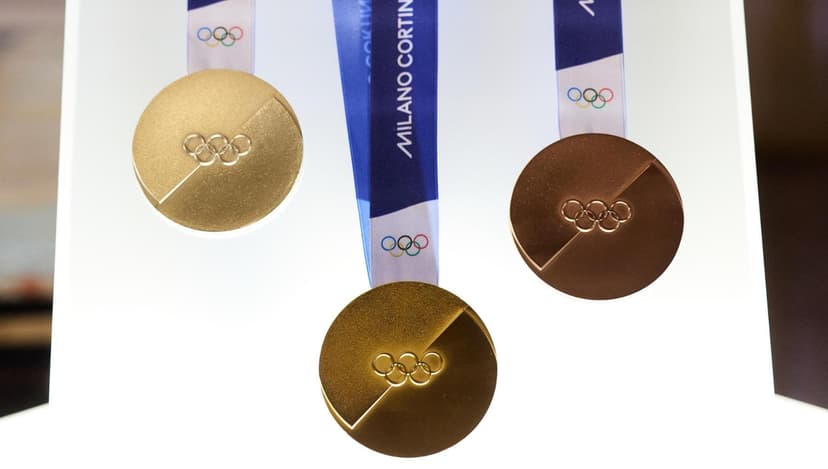
L'elenco delle medaglie vinte ai Giochi invernali aggiornato in tempo reale, nazione per nazione

Journalists from Il Sole 24 Ore Radiocor are covering the activities of the 32nd annual Assiom Forex Congress, held on Saturday, February 21, with articles and video interviews.

The Israeli bobsled team, led by athlete Edelman, has been at the center of controversy due to a suspected theft, telecasts, and remarks about 'Free Palestine'.
Rivers drained dry to create artificial snow, a forest cut down for the bobsleigh track – IOC’s claims to prioritise sustainability at Milano Cortina exposed On the foothills of the mountains, by the

Cala il sipario sui Giochi di Milano Cortina, si assegnano gli ultimi quattro titoli. Attesa per la finale dell’hockey su ghiaccio tra Stati Uniti e Canada

Emmanuel Macron et Keir Starmer coprésideront mardi une réunion par visioconférence de la "coalition des volontaires" en soutien à l'Ukraine, à l'occasion du quatrième anniversaire de l'invasion russe

The body of 19-year-old Manuel Ametov, an autistic young man who had been missing, was recovered from a city lake in Zrenjanin by gendarmerie diving units.
FIFA's Gianni Infantino will face no action from the IOC regarding Olympic neutrality rules concerning his involvement with a Trump peace board.
The International Olympic Committee will not take action against Gianni Infantino regarding a potential breach of political neutrality rules related to a Trump peace board.
The International Olympic Committee (IOC) will examine FIFA leader Gianni Infantino's political neutrality after his participation in U.S. President Donald Trump’s Board of Peace launch.

Eve Muirhead expresses optimism that 'Super Saturday,' with gold medal opportunities for Bruce Mouat's curling team and Zoe Atkin in ski halfpipe, could lead to Team GB's most successful Winter Olympics.

This week's International Insider covers political discussions at the Berlin Film Festival, upcoming screenings in London, and the arrest of Andrew.
Athletes at the Milan Cortina Winter Games have elected a South Korean bobsled pilot and an Estonian biathlete to represent them at the International Olympic Committee.
A Catholic diocese in New Jersey has agreed to a $180 million settlement to resolve allegations of clergy sexual abuse.

An article questions whether America has reached 'Peak Idiocracy,' suggesting a societal trend towards the lowest common denominator.
RioCan Real Estate Investment Trust has released its fourth-quarter financial results.

The International Olympic Committee has quietly removed a t-shirt from its online store that commemorated the 1936 Berlin Games, which were held during Adolf Hitler's regime.
Fluminense takes the field this Monday (16th) to face Bangu at Maracanã, at 6 PM (Brasília time), for the quarter-finals of the Cariocão 2026.The winner will advance to face Vasco in the semi-final...
At the Nilton Santos Stadium, Flamengo defeated Botafogo 2-1 this Sunday (15), in the quarter-finals of the Cariocão 2026.The first half of the classic match showcased different playing styles.While ...
Canada concluded a perfect preliminary campaign in Olympic ice hockey, while Team GB celebrated a 'Super Sunday' with multiple gold medals, amidst escalating curling controversy involving Britain.
Flamengo and Madureira kick off the battle for the semifinals of the Campeonato Carioca on Sunday night (22).The ball gets rolling soon, starting at 8:30 PM (Brasília time) at Maracanã. The return ...

Danijela Maletić, nekadašnja pomoćnica direktora Uprave za sprečavanje pranja novca pri Ministarstvu finasija, večeras je u „Utisku nedelje“ ispričala šta se dogodilo pre nekoliko dana kada joj je pol
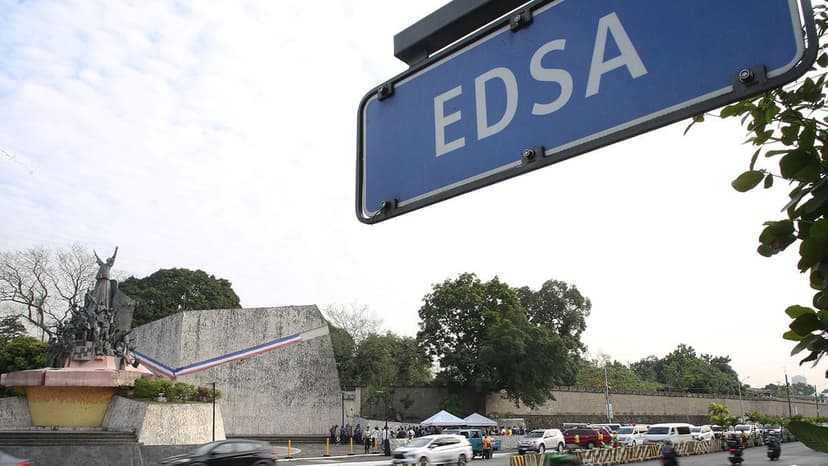
The Philippines is marking the 40th anniversary of the Edsa People Power Revolution with various activities, including calls for parishioners to join a march rally, class suspensions in schools and LGUs, and a proposed bill to declare February 25 a non-working holiday.
The first female president in the International Olympic Committee’s 132 years got a proper stress test in the first games of her history-making leadership. Kirsty Coventry was widely seen as having good overall success at the Milan Cortina Winter Games that also gave a taste of challenges set to be tougher running into the 2028 Los Angeles Olympics. “An incredible games, and an incredible experience for me as my first in this role,” she told IOC colleagues Sunday.

Nei Giochi di casa, per i colori azzurri, soddisfazioni fin dal primo giorno. Trenta volte sul podio, superato di dieci il record di Lillehammer 1994. Ecco tutti i nostri atleti premiati

Lawyers in Serbia are set to begin a three-day work stoppage, following a decision by the Serbian Bar Association, citing concerns that state authorities have not addressed issues within the judiciary.

The International Olympic Committee (IOC) stated that FIFA President Gianni Infantino's attendance at the inaugural Peace Council meeting with US President Donald Trump and other heads of state does not violate Olympic Charter rules.

German football club Werder Bremen canceled its planned US tour to Minneapolis and Detroit, stating they would not play where citizens are shot.

IOC President Kirsty Coventry presented a weak image at the closing conference of the Winter Olympics, leaving many questions unanswered.

Ruske vlasti izvijestile su da su ronioci izvukli tijela sedam kineskih turista i ruskog vozača koji su poginuli nakon što je njihov autobus u petak p
An investigation reveals the significant environmental damage caused by the Winter Olympics, including drained rivers for artificial snow and deforestation for bobsleigh tracks, contradicting the IOC's sustainability claims.
The International Olympic Committee has stated that FIFA chief Gianni Infantino's involvement with Donald Trump's Board of Peace does not violate the Olympic Charter's neutrality rules.
The International Olympic Committee announced an investigation into FIFA President Gianni Infantino's conduct following his appearance at a meeting with Donald Trump.
Olympics boss Kirsty Coventry says she will see if FIFA president Gianni Infantino has broken any rules because of a deal with US President Donald Trump's new Board of Peace. Infantino, who is a member of the International Olympic Committee (IOC), signed what FIFA described as "a strategic partnership to drive recovery and peace through football" with Trump's Board - which European nations see as an unwanted rival to the United Nations.
International Olympic Committee President Kirsty Coventry stated she was unaware of world soccer chief Gianni Infantino's attendance at a Board of Peace meeting and will investigate the matter.
Danika Mason, a sports reporter for Australia’s Channel Nine, has apologized after appearing to slur her words during a live segment from the Winter Olympics.
A new book by an IOC insider delves into the political pressures on Olympic officials and the history of sports marketing, citing examples like the Ukraine skeleton racer's memorial helmet.

A New Jersey Catholic diocese has agreed to pay $180 million to settle claims of alleged clergy sexual abuse from approximately 300 survivors.
True North Commercial Real Estate Investment Trust has declared a dividend of CAD 0.0575.
He Just Won an Olympic Medal. First, He Had to Learn German Grammar. The Wall Street Journal

Ukrainian President Volodymyr Zelenskyy has criticized the International Olympic Committee (IOC) for disqualifying a Ukrainian athlete from the 2026 games.
The IOC is moving closer to potentially reinstating Russia and Belarus for the LA28 Olympics, but strong support for Ukrainian athletes at the Milan-Cortina Games suggests significant challenges and potential backlash.

Olympic chiefs are facing strong criticism for their decision to ban Ukrainian Olympian Heraskevych, with calls for an apology from athletes who believe the IOC has made a significant error.