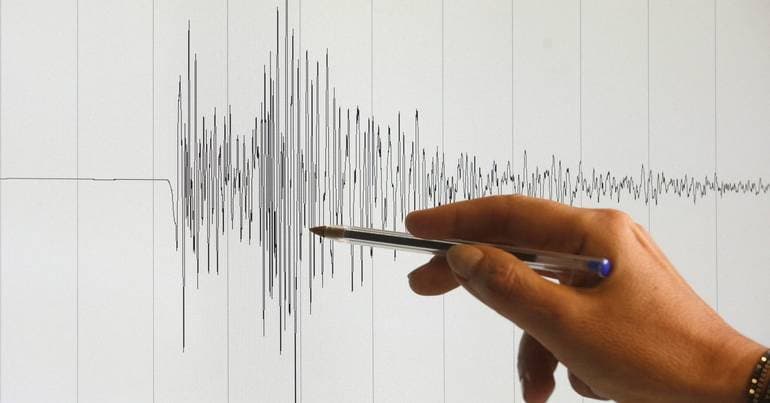
Earthquake of 2.1 on the Richter scale felt in Vendas Novas
The epicenter of the earthquake, which "caused no personal or material damage," was located about eight kilometers east of Vendas Novas, in the district of Évora.
34 stories found
The epicenter of the earthquake, which "caused no personal or material damage," was located about eight kilometers east of Vendas Novas, in the district of Évora.
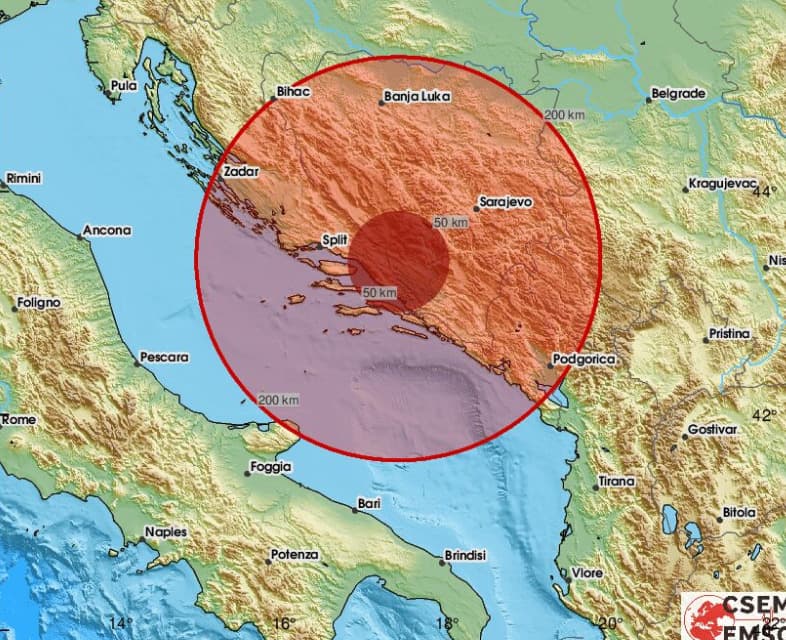
A magnitude 2.5 earthquake on the Richter scale was recorded in the Grude area of Herzegovina, Bosnia and Herzegovina, in the morning.
Financial expert Grant Cardone argues that the wealthy achieve success by going 'all in' on a single venture rather than diversifying, citing examples like Henry Ford and Elon Musk.

Anthony Chen's film 'We Are All Strangers' is reviewed as a marvellously addictive family drama that navigates romantic crises and Singapore’s infatuation with the rich.
A review of the book 'Why Democracy Needs the Rich' explores its arguments and ideas regarding the role of wealth in democratic systems.
A review of 'Why Democracy Needs the Rich' discusses the book's ideas on the role of wealth in democratic systems.
A review of the book 'Why Democracy Needs the Rich' delves into its arguments about the role of wealth in democratic societies.
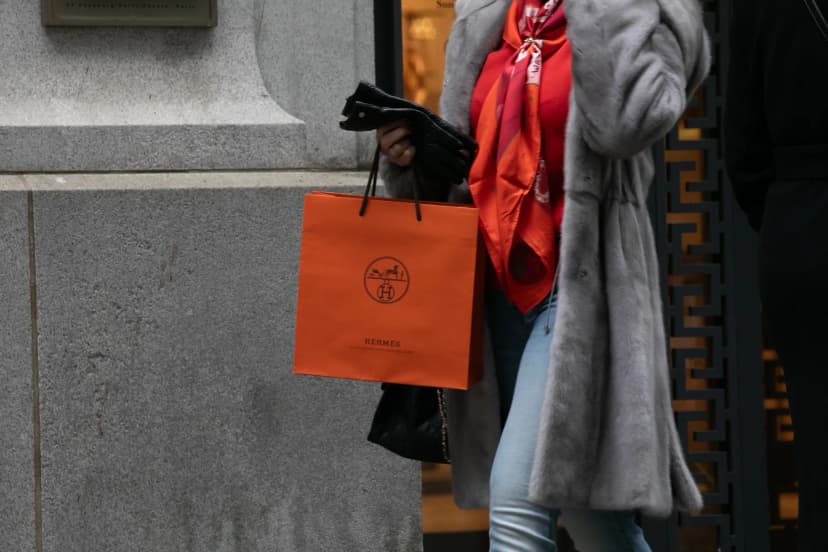
An analysis explores the potential consequences if New York City Mayor Mamdani proceeds with increasing income and corporate taxes on the wealthiest residents, examining whether such a move would drive them away.

From The West Wing to The Simpsons, House and now Industry, TV baddies have made a tongue-in-cheek Gilbert and Sullivan show tune their own Warning: this article contains spoilers for Industry season four, episode six. If you’re up to date with Industry (if you’re not, proceed with caution) then you’ll know that Kit Harington’s character Henry Muck has spent season four being even more of a nightmare than usual. He has been depressed, intoxicated, suicidal and horny in equal measure, all of which was topped off in the most recent episode with a sweaty bunk-up with a guy in a club. Continue reading...
This article explores methods for the wealthy to transfer their assets and provides advice on how others can also manage wealth transfer.

A new wave of 'neo-rural noir' films, exemplified by 'The Shepherd and the Bear', is gaining traction, offering a fresh perspective on country matters distinct from traditional folk-horror.
Developed countries are cautioned against "Brazilification," a scenario where high interest rates wreak havoc when governments are heavily indebted.
A wealthy individual has stated that the public's anger towards the rich is 'mind-boggling,' asserting that they are not involved in oppressing or grinding down the poor.

A 2.5-magnitude earthquake on the Richter scale was recorded in the Grude area of Herzegovina, Bosnia and Herzegovina, in the morning.
Two of the Detroit Lions' top offseason needs are ranked by ESPN among the richest position groups this NFL offseason.
The Green Bay Packers are actively searching for a new special teams coordinator, with names from the Rich Bisaccia coaching tree emerging as candidates.
An article in The Economist argues that attempting to fix broken national budgets by targeting the wealthy is both ineffective and wrong in principle.
A review of 'Why Democracy Needs the Rich' explores the book's ideas on the role of wealth in democratic systems.
A review of 'Why Democracy Needs the Rich' delves into the arguments presented in the book regarding the influence and necessity of wealthy individuals in a democratic society.
Samir Hussein/Getty Images Billionaire rapper Jay-Z loves luxury watches; the rarer and harder to get, the better. His collection includes timepieces from Audemars Piguet, Richard Mille, and Patek Philippe. He's even worn watches valued at $1 million to attend events like the Grammy Awards. Jay-Z, born Shawn Carter, has long mentioned his love of luxury timepieces in his songs. You can find references to Rolex, Audemars Piguet, and Hublot throughout his decades-long music catalog. He doesn't only flash watches in his lyrics, though. The billionaire rapper, who has a $2.5 billion net worth, has amassed quite a collection of statement timepieces. The $1,075,652 Patek Philippe Grand Complication 5304-301R he wore at the 2025 Grammys was just one of them. Here's a look at that watch and other items included in his watch collection. Jay-Z has a Patek Philippe Grand Complication 5304-301R that retails for more than $1 million. Jay-Z wears a Patek Philippe to the Grammys in 2025. Kevin Mazur/Getty Images for The Recording Academy ; Patek Philippe Jay-Z is a big fan of Patek Philippe watches. He wore one with a rose-gold case and dozens of diamonds for the 2025 Grammys. Its face includes several functions, such as days of the week and moon phases, that help keep a perpetual calendar for tracking the date. The calendar automatically adjusts for leap years and accurately counts the days until 2100, according to GQ. The hand-stitched strap is made of alligator leather. Beyoncé reportedly gifted him a Hublot Big Bang. Hublot Jay-Z quite literally announced his love of Hublot in the 2011 song "Otis," where he pronounced, "New watch alert: Hublot." Perhaps it was prophetic. In 2012, his wife and fellow artist Beyoncé gifted Jay-Z a $5 million Hublot Big Bang in 18-karat white-gold for his 43rd birthday, according to jewelry blogs. The watch was encrusted with 1,282 diamonds, and it took more than 14 months to assemble, the Grand Prix d'Horlogerie de Genève, a foundation that highlights contemporary watches with awards and exhibitions, reported. It also took more than a year to source all the diamonds. A year later, the Swiss watchmaker collaborated with the rapper to design a timepiece under his name. Jay-Z wore his own Hublot watch onstage in 2013. Hublot/Adam Bettcher/Getty Images Hublot released the Shawn Carter Hublot Classic Fusion in yellow gold and black ceramic in 2013. The former watch was priced at $33,900, and the latter at $17,900. The collection was limited to just 350 total pieces, according to GQ. You can't miss his Richard Mille 56 Blueprint watch. Gotham/GC Images via Getty Images/Richard Mille Jay-Z's custom Blueprint Richard Mille 56 watch required more than 3,000 hours to produce, GQ said in 2019. No wonder it cost $2.5 million. During a 2019 show in his hometown of Brooklyn, the rapper freestyled a tribute to the timepiece: "Blueprint on my wrist cost 2.5/Only thing that flips the script between you and I." The rapper later purchased another one-of-a-kind Richard Mille piece — this time in green. Rich Schultz/Getty Images What was the price of that Richard Mille 56 watch? $3 million, according to Complex. Or at least, that was its retail value. Alex Todd, who customized the watch, told the outlet that its monetary value is higher. It was custom-made for Jay-Z and featured rare green sapphire crystals. Jay-Z eventually expanded his collection of Richard Mille watches. The Richard Mille RM011 Felipe Massa watch. Richard Mille He did so with an RM011 Felipe Massa Chronograph in rose gold. The watch was originally released in 2007 and was designed with its namesake, F1 driver Felipe Massa, the brand said on its website. The timepiece is meant to invoke a racing aesthetic and the sport's history of tech innovation. Its crown "resembles a smooth tyre encircling a spoked wheel rim," the maker said. Mille is no longer making this model, but you can get a used one for $215,000. He's worn Richard Mille pieces to attend major sporting events, like the US Open. Richard Mille/Matthew Stockman/Getty Images Jay-Z wore the Richard Mille RM027 Rafael Nadal to watch its namesake take on Novak Djokovic at the 2011 US Open championships. It was designed to be as lightweight as possible and take on all the wear and tear a tennis superstar like Nadal might put it through, Richard Mille said. Nadal referred to it as his "second skin" timepiece. There were only 50 of these watches made at the time, according to Mille. You can buy one on the secondary market for $1.95 million. Nadal collaborated with Richard Mille on several additional versions of this timepiece that the rapper later acquired. Jay-Z has also worn the Richard Mille Rafael Nadal 27-01, which has an anthracite casing. His collection also includes Audemars Piguet watches. Audemars Piguet Royal Oak Audemars Piguet Jay-Z shouted out Audemars Piguet in his 2011 "Watch the Throne" track "N—s in Paris," saying: "Ball so hard, got a broken clock / rollies that don't tick-tock / Audemars that's losing time / hidden behind all these big rocks." He's also worn the brand. Included in his collection is the Audemars Piguet Royal Oak Perpetual Calendar Openworked 26585CE. It has an openwork sapphire dial, rose gold dial markers, a black ceramic band and case, and a titanium clasp. You can buy one from the watchmaker, but it's "price upon request" — or, in other words, wildly expensive. To get it on the secondary market, you'll need to shell out over $375,000. Patek Philippe watches can be tough to buy, but not for Jay-Z. The Patek Philippe Sky Moon Tourbillon 6002R watch. Patek Philippe When describing the Patek Philippe 6002 Sky Moon Tourbillon watch on its website, the brand notes the extensive detail that went into creating the timepiece. Some of the highlights include handmade engravings, a double-face design, a retrograde perpetual calendar, a sky chart, and more. It's one of the most technically complicated Patek Philippe watches, and its price is only available "on request." However, used versions of the watch can be found on the secondhand market for prices between $4 million and $6 million. Jay-Z wore his model to Lebron James' 39th birthday party. Jay-Z picked up a Tiffany and Co. x Patek Philippe collab in 2021. The Patek Philippe Tiffany watch. Tiffany & Co. The Patek Philippe Nautilus 5711 in Tiffany Blue initially retailed for $52,635, but since only 170 were made, the price skyrocketed on the secondary market. Days after the watches sold out, one was auctioned off for $6.5 million, CNBC reported in 2021. Jay-Z and Beyoncé were named Tiffany ambassadors that year. In 2023, the musician wore one of the rarest Audemars Piguet pieces. An Audemars Piguet Royal Oak 25594ST "Yves Klein" watch. Audemars Piguet The "Yves Klein" version of the Audemars Piguet Royal Oak 25594ST watch is an ode to the French artist. He's widely known for developing his own vibrant shade of blue — international Klein blue 191. The Royal Oak design features a perpetual calendar, which keeps track of everything from the time and date to the moon's phases. It's a popular style in its own right, but the Yves Klein version is especially rare. Few are rarely found on the resale market. He also sported a unique Patek Philippe that year. A Patek Philippe Perpetual Calendar Split Seconds Chronograph 5004P watch. Patek Philippe Jay-Z sported the Perpetual Calendar Split Seconds Chronograph 5004P watch during a decadent, seafood tower-filled lunch meeting with DJ Khaled in 2023. The watch is modeled on Patek Philippe's first perpetual calendar watch, released in 1996. The particular watch that Jay-Z has, the 5004P model with a silver link band, is nearly impossible to find, but it was valued at $600,000 in 2022, according to IFL Watches. The most intricate Patek Philippe watch belongs to Jay-Z. Jay-Z wearing the Patek Phillipe Grandmaster Chime Reference 6300G in 2019. Patek Philippe/Kevin Mazur/Getty Images for Sean Combs The Grandmaster Chime is considered Patek Philippe's most complicated watch, with more than 1,500 individual components. The company made the watch in 2014 to commemorate its 175th anniversary, and only seven were produced. Six went to the watchmaker's most dedicated collectors (who apparently had to apply for the privilege of buying one), while the seventh went to the company's museum in Geneva. Patek Philippe then went on to make the Grandmaster Chime in other fabrications. Jay-Z has the white gold version, which runs around $2.5 million, according to reports. He acquired the Patek Philippe 2499 in a tight-lipped deal. A Patek Philippe 2499 went up for auction in 2011. Harold Cunningham/Getty Images Patek Philippe produced this watch in limited quantities from 1950 to 1985. Only 349 were made. Jay-Z's Patek Philippe 2499 was previously owned by Swedish watch collector and dealer Tony Kavak, who had a yellow-gold band specially made for the piece. As Kavak tells it, the watch wasn't initially for sale. "The watch is so exclusive that I often chose not to wear it in public, and I always wear my watches, that's my philosophy," Kavak told watch site Bezl. But he knew Jay-Z was the right person to own the watch, he added. "You should have seen his happiness," Kavak said in an interview with watch blog Hodinkee. "It just reminded me of how happy I get when I find something rare myself." Neither Kavak nor Jay-Z would reveal the deal's cost, but in 2022, a similar watch sold at auction for $7.68 million. He wore two different F.P. Journe pieces to the 2026 Super Bowl. Jay-Z photographs his daughter at the 2026 Super Bowl. Carlos Avila Gonzalez/Getty Images His first FP Journe Tourbillon Souverain was set with 93 baguette diamonds circling it and even more across its face, according to Celeb Watch Spotter. Jay-Z wore the piece for a meeting with Tom Brady. His wife Beyoncé later shared photos from Super Bowl weekend on her website. They included a close-up shot of another FP Journe Tourbillon Souverain watch, this one in green, on Jay-Z's wrist. Read the original article on Business Insider
Governments are increasingly implementing progressive tax systems that disproportionately tax wealthier individuals, making tax systems more progressive than commonly perceived.
Articles cover diverse personal finance topics, including wealth transfer, avoiding financial mistakes, student loan repayment, and how different generations approach investing and home selling.

Eat The Rich: California Democrats Trigger Reverse Gold Rush With Wealth Tax Authored by Jonathan Turley, This month, the anniversary of the California Gold Rush came and passed with little mention … for good reason. When James W. Marshall found gold at Sutter’s Mill, millions traveled great distances to seek their fortune in the “Golden State.” Now, 178 years later, California has engineered an inverse Gold Rush, virtually chasing wealth from the state. Rather than covered wagons going West, there is a line of U-Hauls going anywhere other than California. From boondoggle projects to reparations, California politicians continue to rack up new spending projects despite a soaring deficit and shrinking tax base. Rather than exercise a modicum of fiscal restraint, Democrats are pushing through a tax that takes five percent of the wealth of any billionaires left in the state. I have long criticized the tax as perfectly moronic for a state with the highest tax burden and one of the highest flight rates of top taxpayers. In my new book, “Rage and the Republic: The Unfinished Story of the American Revolution,” I discuss the reversal of fortunes in California and other blue states as politicians unleash new “eat the rich” campaigns before the midterm elections. The problem, of course, is that billionaires are mobile, as is their wealth. Liberals expect billionaires to stay put in a type of voluntary canned hunt. They are not. Billionaires are joining the growing exodus from the state, taking their companies, investments, and jobs with them. The latest billionaire to be chased off may be Meta CEO Mark Zuckerberg, who is reportedly heading for Florida. The growing departures have triggered outrage among many on the left, who are in disbelief that billionaires will just not stand still to be fleeced. Former New York Magazine editor Kara Swisher captured that rage in a recent posting, declaring “you made…all your money in California, you ungrateful piece of s***, you could figure out a way to pay more taxes, and we deserve the taxes from you, given you made your wealth here . . . so why don’t we just do shock and awe at this point, because you don’t seem to be availing yourself to thinking that you owe your state something more.” By some estimates, California has already cost over a trillion dollars in lost investments and business. That is no small achievement. Here’s a mind teaser: How can you burn a trillion dollars (which would create a stack some 67,866 miles high) without taking years and destroying the environment? California politicians have a solution: Have people take it out of the state in a reverse gold rush. In addition to saying that they want to grab 5 percent of the wealth of these billionaires, California Democrats are planning to base wealth calculations on the voting shares of corporate executives. Often, particularly with start-ups, entrepreneurs have greater voting shares than actual ownership. However, they will be taxed as if voting shares amounted to actual wealth. In other words, California is moving to nuke the entrepreneurs who created the Silicon Valley boom. Emmanuel Saez, the U.C. Berkeley economist who helped design the tax, insists that they may not want to stay, but they will still be tapped. They are planning to trap the wealthy fleeing the state retroactively: “The tax is based on residence as of Jan. 1, 2026, sharply limiting their ability to flee the state to avoid paying. Despite billionaires’ threats to leave, I think extremely few will have been able to change residence by Jan. 1, given the complexity of doing so.” The effort to retroactively impose such a tax is legally controversial and will face years of challenges. In my view, this is unconstitutional, but admittedly it is a murky area. Regardless of the outcome, a wealth tax will affect a wide range of other wealthy taxpayers. If Democrats can get a retroactive wealth tax to be upheld, it is doubtful that they will stop with billionaires. Why should other top taxpayers stick around to find out where the next cull will fall in the tax brackets? Recently, Gavin Newsom boasted, “California isn’t just keeping pace with the world — we’re setting the pace.” That is undeniably true if the measure is the record number of U-Hauls fleeing the state — more than any other state. Indeed, the only thing harder to find than a wealthy taxpayer in California appears to be a U-Haul. According to U-Haul’s data, the state is again leading blue states in the exodus. The Washington Post noted recently that “California came in last. Massachusetts, New York, Illinois, and New Jersey rounded out the bottom five. Of the bottom 10, seven voted blue in the last election.” Conversely, “nine of the top 10 growth states voted red in the last presidential election,” with Texas again leading the growth states. The Post put it succinctly, “People want to live in pro-growth, low-tax states, while the biggest losers tend to be places with big governments and high taxes.” The problem is that, while the economics are horrific, the politics remain irresistible. Democratic Rep. Ro Khanna, who represents part of Silicon Valley, recently mocked billionaires rushing to escape the state. Laughing at his own constituents, Khanna quipped, “I will miss them very much.” You will not be alone as California becomes known as the La Brea Tar Pit of taxation. They are on the verge of converting the state motto from “Eureka” to “Welcome to Hotel California, you can check out any time you like, but you can never leave.” Jonathan Turley is a law professor and the best-selling author of “Rage and the Republic: The Unfinished Story of the American Revolution.” Tyler Durden Sat, 02/14/2026 - 20:15
A small lexicon opens up the rich Arabic culture, which is credited with contributing significantly to language and concepts, even influencing figures like Trump.
The US economy experienced strong growth in 2025, but job creation remained stagnant, leading to concerns about a widening wealth gap and a potentially frozen labor market.
A woman from Nottingham temporarily appeared to be a 'quadrillionaire' on paper, briefly surpassing Elon Musk as the world's richest person due to a financial anomaly.
Ben Goertzel had dozens of email exchanges with Jeffrey Epstein. Horacio Villalobos#Corbis/Getty Images Ben Goertzel, a computer scientist who popularized the term AGI, courted Jeffrey Epstein for research funding, emails show. DoJ files show that Goertzel was aware of Epstein's criminal charges, and their correspondence continued until at least 2018. Goertzel told Business Insider he "made a mistake" in accepting Epstein's money and regretted not doing due diligence. In January 2013, Jeffrey Epstein sent a blunt email to the computer scientist Ben Goertzel. Epstein had funded Goertzel's research in artificial intelligence and was frustrated with a lack of progress. However, on this day, the disgraced financier wasn't writing to discuss algorithms or neural networks — he wanted to discuss Goertzel's hair. "I think it is now time for you to drop the hippie look," Epstein wrote, warning Goertzel that his "disheveled 80s appearance" was an "unnecessary hindrance" to securing the capital that might one day help the two men achieve AGI — artificial general intelligence, a hypothetical level of computer intelligence that could surpass that of humans. Epstein compared the scientist's ponytail to "spinach in the teeth of a friend." "I would be willing to cut my hair for a lot of AGI money," Goertzel replied. Ben Goerzel (right) with Kelly Larson (co-curator of TEDx Hong Kong and Asia Consciousness Festival) and Jeffrey Martin (visiting assistant professor at Polytechnic University) Chris Ip/South China Morning Post via Getty Images The exchange was among dozens between Epstein and Goertzel in files released by the Department of Justice, chronicling Epstein's fascination with the potential of AI. Goertzel, a researcher who helped popularize the term AGI and develop the humanoid robot Sophia, courted Epstein for money over several years, promising he could build the "Sputnik of AI," the emails show. In an online résumé that has since been removed, Goertzel said Epstein gave him a $100,000 research grant in 2001. Emails reviewed by Business Insider show Epstein agreed to give Goertzel at least another $100,000 between 2008 and 2018, spread out across multiple transfers. It could not be learned how much of the money Goertzel ultimately received. The emails show Goertzel was aware of Epstein's criminal charges. In a 2010 email, Goertzel congratulated Epstein on his release from the Palm Beach County Jail. In 2008, Epstein had pleaded guilty to two sex charges, including solicitation of a minor. In 2015, several days after Prince Andrew was named in a lawsuit over underage sex claims related to Epstein, Goertzel wrote about "utterly idiotic negative publicity in the news" and said he was sorry Epstein's camp had to deal with it. "Maybe some variation of what is alleged did happen, but if so it was surely an occurrence among reasonably mature people who mutually consented at the time, so why is it anybody else's business?" Goertzel wrote, before asking for $25,000 for a "corporate contribution" to one of his companies. In a statement to Business Insider, Goertzel said he "made a mistake" in accepting Epstein's money. He said he regretted not doing due diligence on Epstein's crimes and that he had "basically zero knowledge of Epstein's sexual peculiarities and exploitative practices." He added: "I deeply regret being social-engineered by this terrible human being and not doing more research into him decades ago. I won't make this sort of mistake again." 'The Sputnik of AI' Goertzel is currently the CEO of SingularityNET, an AI and blockchain company. He is also chair of The AGI Society, a nonprofit that holds an annual AI conference. His correspondence with Epstein was among millions of documents released by the Justice Department. The files have reverberated through the business world, revealing emails between Epstein and Tesla CEO Elon Musk, Virgin founder Richard Branson, LinkedIn founder Reid Hoffman, among others. The fallout for some people named in the files has been swift. Goldman Sachs' top lawyer, Kathryn Ruemmler, resigned in mid-February, and Brad Karp resigned as chairman of the law firm Paul Weiss, among others. Appearing in the files does not necessarily suggest that a person has engaged in wrongdoing. In one of the emails released by the Justice Department, Goertzel said he had known Epstein since 2001. Epstein took an interest in what labs like MIT and Google were doing in the AI field. Goertzel, who some consider one of the "godfathers of AGI," coauthored a 2006 book on the topic, and in 2008, he created OpenCog, an open-source project to try to architect human intelligence. Goertzel told Business Insider that he met Epstein through "mutual friends" in New York City. Epstein was well-connected with the rich and the powerful. Martin BUREAU / AFP via Getty Images Epstein appeared concerned in some emails by the lack of support for Goertzel's AGI theories among mainstream experts. "i believe in you. i can't figure out why i am in the minority," he told Goertzel in 2010. In a 2011 email, Goertzel asked if Epstein would fund half of a $3 million grant over four years to fund a "full speed ahead toward AGI" plan, which included building AI that could control a video game character and a humanoid robot. "Of course, US$3M is a lot of money. However, this would be the 'Sputnik of AGI' -- it would set the development of AGI on a whole new course," Goertzel wrote. In his statement to Business Insider, Goertzel said, "I had basically zero knowledge of Epstein's sexual peculiarities and exploitative practices and have no orientation toward that sort of thing and little understanding of it -- it was all about being overly desperate at that stage for any source of $$ to fund innovative frontier science, which Epstein did recognize as valuable but mainstream science at the time did not." Epstein sometimes pushed Goertzel for more tangible proof of breakthroughs and tried to influence some research directions, the emails show. In February 2013, he emailed Goertzel and suggested that having an AI system pass "iq tests for children" would provide a concrete research milestone. Goertzel agreed to pursue the idea. "Epstein was very smart and fairly technically savvy and had a lot of ideas about AI, which were not terribly stupid nor terribly brilliant," Goertzel told Business Insider. "I did not pay much attention to them nor did they influence my work in any way." Ben Goertzel, gives a press conference with Hanson Robotics at Web Summit, 2019 Henrique Casinhas/SOPA Images/LightRocket via Getty Images Epstein used corporate and foundation vehicles to send money to Goertzel, including his Southern Trust Company, registered in the US Virgin Islands, the emails show. "As before, we can do this as a tax-deductible donation to a nonprofit, assuming that's still your preference," Goertzel said in a September 2010 email to Epstein. Depending on the circumstances, Goertzel, who spent some of his time in Hong Kong, requested that the money be sent to different nonprofits' accounts, the emails show. In 2014, Goertzel requested that Epstein send the money to Humanity+, a nonprofit focused on transhumanism that he was vice president of. Goertzel said it would act as a fiscal "pass-through" so the money could be diverted to himself and other researchers. "Yes all this was totally legit, the funding was going to open-source AGI R&D for the good of humanity and its future, which was very much within the mandate of Humanity+ as a 501-3c nonprofit," Goertzel told Business Insider. 'Moronic media shitstorm' Goertzel told Business Insider he "reconnected" with Epstein in 2008 after several years of no contact, and that Epstein told him about his legal situation. "He framed it as a politically motivated prosecution for involvement with a consenting adult. I believed him. I should not have," Goertzel told Business Insider. Several emails show Goertzel and Epstein arranging to meet in person. Goertzel told Business Insider they met on several occasions at Epstein's New York and Florida offices. "I never hung out with him in a social setting, never went to the island or flew in the jet or saw him partying with girlfriends or anything like that," he said. In 2015, Goertzel was following up on a payment he hoped to receive from Epstein. Richard Kahn, Epstein's accountant, responded that it had to be put on hold due to "bad press." The Guardian had reported days earlier that Prince Andrew was named in a US lawsuit involving Epstein. "I don't want to push you guys at a difficult time, but given my own situation I do feel moved to ask if Jeffrey might still be able to help with $25K for my 'corporate contribution' to the OpenCog Hong Kong project," Goertzel wrote. "He has helped in this way every year since 2010, usually via a donation to Humanity+." The South China Morning Post reported earlier on some of the payments Epstein made to Goertzel to help him secure Hong Kong grants. Epstein responded, "yes 25," and Goertzel thanked him and said he hoped to resume conversations "once this current moronic media shitstorm blows over." Emails between the men continued for several years. In December 2018, a few days after the Miami Herald published an investigation into Epstein that contributed to his arrest on federal sex-trafficking charges the next year, Goertzel sent an email inviting Epstein to an AI and blockchain event in New York. Alternatively, he said, they could find another time to meet in the city. "let me know if you're in town and might spare a few moments," Goertzel wrote. "it's been a while!" Have something to share? Contact this reporter via email at hlangley@businessinsider.com or Signal at 628-228-1836. Use a personal email address and a non-work device; here's our guide to sharing information securely. Read the original article on Business Insider
A review of 'Why Democracy Needs the Rich' delves into the arguments presented in the book regarding the role of wealth in democratic societies.
A review of the book 'Why Democracy Needs the Rich' explores its arguments and ideas regarding the role of wealth in democratic societies.

Panics, Politics, & Power: America's 3 Experiments With Central Banks Authored by Andrew Moran via The Epoch Times, The Federal Reserve, established more than a century ago, is the United States’ third experiment with central banking. For much of its existence, the institution maintained a low public profile. Only after the 2008 global financial crisis did the Fed begin communicating more openly, introducing post-meeting press conferences and allowing monetary policymakers to engage more frequently with the media. Greater transparency, however, has brought greater scrutiny. Public sentiment toward the Fed and its leadership has fluctuated over the years. Today, YouGov polling suggests the central bank is viewed favorably by 44 percent of Americans and unfavorably by 18 percent. If the Fed pursues a series of reforms, it will have “another great 100 years,” said Kevin Warsh, who was nominated by President Donald Trump to serve as the institution’s next chair. Comparable to past central banks, Warsh said, the current Federal Reserve System is beginning to lose the consent of the governed. “You can think about the Jacksonians of prior times say that the central bank seems like they’re trying to focus and they’re all preoccupied with those special interests on the East Coast, and they’ve lost track of what’s happening to us in the center of the country,” Warsh said in a July 2025 interview with the Hoover Institution’s Peter Robinson. “It’s a version of what worries me today.” What happened in the past, and why is it relevant to today’s central bank? The First Bank of the United States In the aftermath of the American Revolution, the United States faced a series of immense economic disruptions, forcing the nation’s architects to rebuild the economy. The objective was to lower inflation, restore the value of the nation’s currency, repay war debt, and revive the economy. Alexander Hamilton, the first secretary of the Treasury under the new Constitution, proposed establishing a national bank modeled on the Bank of England. Hamilton stated that a U.S. version would perform various duties, including issuing paper money, serving as the government’s fiscal agent, and protecting public funds. Not everyone shared Hamilton’s ebullience over a central bank. Thomas Jefferson, for example, feared that such an institution would not serve the nation’s best interests. Additionally, Jefferson and other critics argued that the Constitution did not grant the government the authority to create these entities. Nevertheless, Congress enacted legislation to establish the Bank of the United States. President George Washington then signed the bill in February 1791. Two of America's founding fathers: Thomas Jefferson (L) and Alexander Hamilton. The White House While bank officials did not conduct monetary policy as modern central banks do, they did influence the supply of money and credit, as well as interest rates. The entity managed the money supply by controlling when to redeem or retain state‑bank notes. If it sought to tighten credit, it would require payment in gold or silver, thereby draining state banks’ reserves and limiting their ability to issue new notes. If it wanted to expand credit, it simply held on to those notes, boosting state‑bank reserves and enabling them to lend more. By 1811, the national bank’s charter expired. While there had been discussions of allowing it to continue maintaining operations, Congress—both chambers—voted against renewing its mandate by a single vote. Its closure came shortly before the War of 1812, which fueled inflation and weakened the currency. Second Bank of the United States Lawmakers believed another central bank was critical at a time of fiscal, inflationary, and trade pressures. Congress used a similar 20-year model to produce the Second Bank of the United States, headed by Nicholas Biddle. The second incarnation had a federal charter, was privately owned, and was tasked with regulating state banks (with gold and silver for note redemption). President James Madison, who opposed the first central bank on constitutional grounds, supported the new institution out of financial necessity. Its creation stabilized credit and brought down inflation. However, by the 1830s, the bank faced strong opposition, particularly from President Andrew Jackson. Labeled the Bank War, Jackson engaged in a years-long initiative to dissolve the central bank. Jackson claimed the national bank was a tool for the wealthy eastern elite and a threat to self-government. “The Jacksonians described themselves as conscious hard-money men who supported the rigid discipline of the gold standard, yet they opposed the newly powerful national Bank because it restrained the expansion of credit and, thus, thwarted robust economic expansion,” author William Greider wrote in “Secrets of the Temple.” In 1832, Jackson vetoed legislation to recharter the bank four years early, delivering a fiery message that historians say was one of the most important vetoes in the nation’s history. “It is to be regretted that the rich and powerful too often bend the acts of government to their selfish purposes. Distinctions in society will always exist under every just government,” Jackson wrote. “There are no necessary evils in government. Its evils exist only in its abuses. If it would confine itself to equal protection, and, as Heaven does its rains, shower its favors alike on the high and the low, the rich and the poor, it would be an unqualified blessing. In the act before me, there seems to be a wide and unnecessary departure from these just principles.” The charter expired in 1836, leading to the panic of 1837. An economic crisis unfolded, leading to bank failures, business bankruptcies, rising unemployment, and contracting credit. While the collapse of the central bank is often considered a leading cause, the British also urged London banks to reduce credit to American merchants, causing a sharp drop in global trade. As the smoke cleared and dust settled, it was not until the 1840s that the United States embarked on a historic economic recovery, now known as the Free Banking Era. Banking was decentralized, and finance was largely unregulated. Despite an erratic financial system, the U.S. economy grew rapidly: agricultural production accelerated, railroads were built, and the country expanded westward. Additionally, deflation was paramount throughout most of the economic expansion. The Federal Reserve System The panic of 1907 led to the creation of the Federal Reserve System. Following years of heavy borrowing, speculative commodities investments (mainly copper), and enormous stock market gains, a financial crisis was brewing. The event nearly brought down the U.S. banking system. J.P. Morgan, a financier, intervened and emulated the actions of modern central banks. He met with the nation’s top bankers, facilitated emergency loans to financial institutions, and backed stockbrokers. The damage had been done as the United States fell into a year-long recession, marked by high unemployment and widespread bank failures. The Federal Reserve Board of Governors seal in Washington on Oct. 29, 2025. Madalina Kilroy/The Epoch Times Washington realized that it could not rely on private bailouts to prevent sharp downturns. Sen. Nelson Aldrich (R-R.I.) is widely regarded as one of the chief architects of the modern Federal Reserve System. In 1910, Aldrich hosted the famous Jekyll Island meetings, a gathering of U.S. officials and bankers, to discuss the blueprint of a new central bank. While the initial draft laid the foundation for the institution, the official Federal Reserve Act was drafted by President Woodrow Wilson, Rep. Carter Glass (D-Va.), and H. Parker Willis, an economist on the House Banking Committee. The new system was a public-private hybrid, with the federal government firmly in charge, and bankers running the regional reserve banks. “It was Wilson’s great compromise,” wrote Greider, “creating a hybrid institution that mixed private and public control, an approach without precedent at the time.” The legislation triggered a contentious political debate over the extent of its independence from the Treasury and the degree of authority delegated to policymakers over currency issuance. Days before Christmas, the bill cleared both chambers and was signed into law by Wilson on Dec. 23. “Wilson’s conviction that he had struck the right moderate balance seemed confirmed, however, by the reactions to his legislation,” Greider noted. “It was attacked by both extremes—the ‘radicals’ from the Populist states and the bankers in Wall Street and elsewhere.” Since its inception in 1913, the modern Federal Reserve has undergone numerous changes and has gained greater power. The New Deal, for instance, allowed the Fed to become the lender of last resort as Washington learned the central bank could not prevent bank failures. In 1951, the Treasury-Fed Accord restored central bank independence after the Federal Reserve had been forced to keep interest rates artificially low throughout the Second World War. Congress then enacted the Federal Reserve Reform Act in 1977, establishing the dual mandate of promoting maximum employment and maintaining price stability. 2026 and Beyond Over the past 50 years, the Fed has undergone modest changes, including the issuance of forward guidance and the disclosure of emergency lending facilities. But while each new regime has nibbled around the edges, Warsh has suggested he could effect substantial reforms at the central bank. “Until there’s regime change at the Fed and new people running the Fed, a new operating framework, they’re stuck with their old mistakes,” Warsh told Fox Business Network in October 2025. “Bygones aren’t just bygones.” Tyler Durden Wed, 02/18/2026 - 16:20

Italy is increasingly becoming a destination for global millionaires, drawn by its flat tax policies and appealing lifestyle.

The Shepherd and the Bear is part of a new breed of films with a sympathy for country matters that has moved on from othering folk-horror
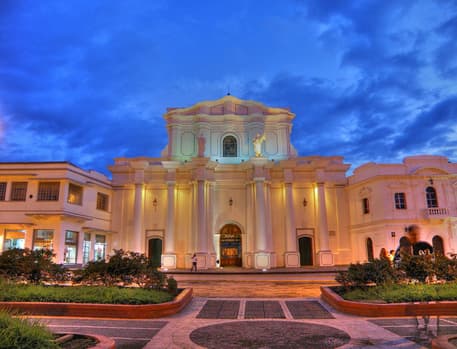
A seminar in Rome focuses on the rich architectural heritage of Popayán, Colombia, one of America's oldest colonial cities known for its historical significance.

Jamie Bell and Elle Fanning lead a starry cast in this clumsy satire that provides little fascination in a wealthy family’s suffocating lives Since Jesse Armstrong’s Succession and Emerald Fennell’s Saltburn, wealthy, spoilt, dysfunctional siblings are the new rock’n’roll, and now here is a film from Greek screenwriter Efthimis Filippou (co-author of Yorgos Lanthimos’s Alps and Dogtooth) and directed by Karim Aïnouz. It is a weird-wave contrivance concerning a messed-up US plutocrat clan living in Spain, freely remade from Marco Bellocchio’s 1965 film Fists in the Pocket. Their bizarre and cartoony secrets, involving sex abuse, manipulation and self-harm, are satirically symptomatic of capitalism and the patriarchy, and how the rich, however entrepreneurial and smart, create a next-gen class of useless drones, on whose behalf all this wealth has supposedly been accumulated. I have to admit to finding it heavy-handed and clumsy more often than not, although there are some good performances, notably from Jamie Bell and Elle Fanning. A strange extended family lives in a luxurious modernist house; the father (Tracy Letts) is a blind widower haunted by the memories of his late wife (Pamela Anderson) who was savaged by wolves in a nearby forest. His grownup children, infantilised by wealth, all live there: highly strung Robert (Lukas Gage) has epilepsy, and is entrusted with supervising his father’s horse riding; Anna (Riley Keough) is a talentless singer-songwriter; and Ed (Callum Turner) is a would-be fashionista. First among equals is Jack (Jamie Bell), who has the intimate honour of helping his father with his nightly teeth-cleaning; their mother’s teeth were always dazzlingly white. Continue reading...