
Eli Lilly launches program to help boost employer coverage of obesity drugs in U.S.
Employers can use Lilly's platform to connect with different third-party program administrators that help manage obesity treatment benefits and costs.
180 stories found
Employers can use Lilly's platform to connect with different third-party program administrators that help manage obesity treatment benefits and costs.

The Nigeria Employers' Consultative Association (NECA) has commended President Tinubu's nomination of Taiwo Oyedele as Minister of State for Finance, highlighting his expertise in fiscal policy and tax reforms.
The introduction of remote work necessitates precise regulations for properly accounting for costs, benefits, and taxes, requiring employers to correctly apply tax and contribution laws.

Boehringer Ingelheim, recognized as a top employer, details its integrated strategy for developing and supporting a diverse workforce and creating leadership opportunities.

President Gitanas Nausėda proposes a temporary work permit system for migrants, under which foreigners working for a single employer in Lithuania would be required to leave the country after a certain period.

Employers in the European Economic Area are offering 121 job vacancies through the EURES Romania network, according to data published by the National Agency for Employment (ANOFM).
Alex Levin, CEO of Regal Courtesy of Regal A few years ago, Alex Levin said he misspent $800,000 on an ad campaign for a former employer. Now a startup CEO, he credits the experience for teaching him how to react when a team member flubs. Punishing workers for making a mistake can discourage them from taking risks, Levin said. This as-told-to essay is based on a conversation with Alex Levin, cofounder and CEO of Regal, a New York-based maker of AI agents for customer experience. Previously,...

Kyle Peters, son-in-law of South Dakota Governor Kristi Noem, is being sued by his former employer, A1 Development, in a legal dispute.

In 2021, during a wide-ranging interview with the Guardian, Flamengo’s veteran defender Filipe Luís described his employers as “probably the most demanding club on earth”.
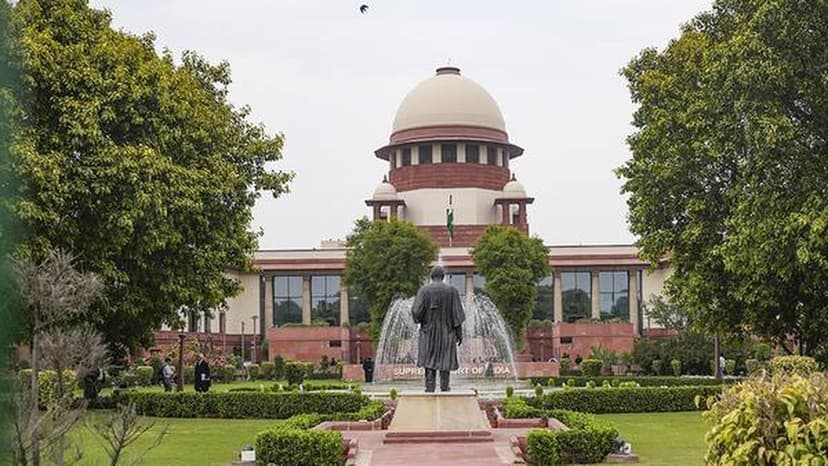
The Bench delivered its verdict on an appeal filed by an insurance firm, challenging a May 2025 order of the Delhi High Court

Research indicates that couples can lose an average of $14,000 in retirement wealth due to poor coordination, specifically by not prioritizing the highest employer match on retirement savings.

The Coordination of Free Trade Unions of Bosnia and Herzegovina has strongly condemned renewed attempts to further reduce the duration of sick leave covered by employers.
Latvian company 'Virši' has been recognized as the best employer in Latvia for the year 2025, according to a recent article by LSM.

The company Virši-A has been recognized as the best employer of 2025 in Latvia, based on a survey where participants expressed the most desire to work there. Latvijas Mobilais telefons and Swedbank also made the top three.

Stubborn gender pay gaps between men and women in senior levels at work are being highlighted as data from more than 10,000 employers is published.

An employer reflects on a troubling pattern observed over two decades at Ghana's Social Security and National Insurance Trust (SSNIT), calling for national reflection on its institutional vitality.

Workplace Gender Equality Agency report shows a slight increase in number of women in highly paid roles, which are still dominated by men Get our breaking news email, free app or daily news podcast Men are nearly twice as likely as women to be making $220,000 a year, with minimal progress made on closing Australia’s gender pay gap in the past 12 months. The federal government’s Workplace Gender Equality Agency (WGEA) published its gender pay gap results for 10,500 employers on Tuesday. It r...
The Union of Journalists and Media Workers of Serbia (SINOS) has called on Minister of Information and Telecommunications Boris Bratina to organize a dialogue between unions and employers to sign a branch collective agreement in the media sector.

In Serbia, employers are reportedly withholding 100% of employees' salaries to cover damages, despite laws stipulating that no more than half of a salary can be legally withheld.
A new tax relief aims to incentivize employers to view employees who are soldiers as an asset rather than a logistical challenge, addressing concerns about their military duties.

Gen Z job seekers are prompting employers to revise hiring strategies, as traditional job postings are being overlooked in favor of casual workplace videos on platforms like TikTok, which generate significant interest.

The Performing Musicians Employers' Association of Nigeria (PMAN) has formally petitioned the Attorney-General of the Federation, alleging an 'institutional ambush' of the country's Copyright Levy disbursement framework.
NZ Super is proportional to the average wage - but which figure exactly is that based on? Does my employer have to raise their KiwiSaver contribution? How to survive on superannuation?

The Norwegian trade union Parat accuses employer organizations NHO and Virke of encouraging illegal practices by advising members against using part-time employees for extra shifts or additional work.
Employers are increasingly opting for Old Mutual to manage their NSSF Tier II contributions, highlighting a trend in pension management choices.
A new report indicates that employee retention is a primary concern for employers, reflecting current trends in the labor market.
Montenegro is implementing a new 'permanent seasonal worker' legal framework, which mandates insurance and financial assistance between seasons for these workers, with penalties up to 10,000 euros for non-compliant employers.
A domestic help orchestrated a fake Enforcement Directorate raid on her elderly employer's home in Delhi, enlisting relatives and associates. The plan unraveled when the victim's grandson, an ED lawyer, confronted the imposters by phone, leading to their escape with a portion of the stolen cash. The maid and her sister-in-law have been arrested.
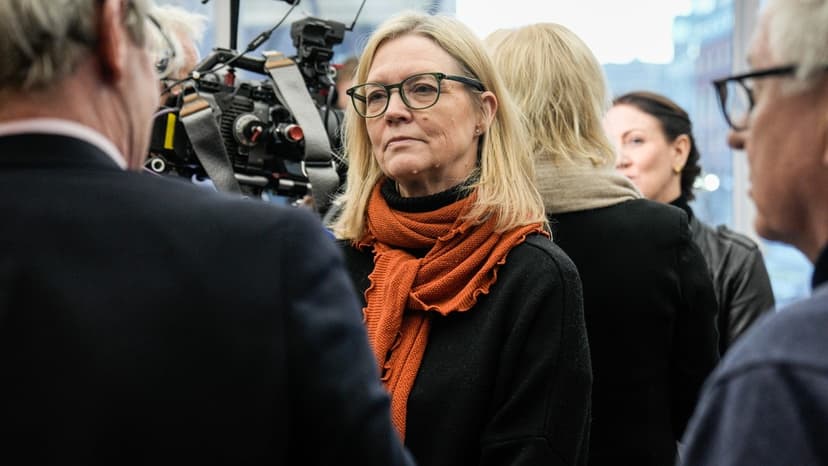
NHO (Confederation of Norwegian Enterprise) is advising its members to avoid using part-time employees for extra shifts or overtime, following a recent court ruling on overtime pay that has caused uncertainty among businesses.

Serbia's Office for Information Technologies and Electronic Government announced that the 'e-Sick Leave - Employer' software solution allows access to data exclusively by authorized employer users, ensuring state bodies do not have access to this information.

Following a wave of public outcry, the proposal to cut higher pensions in order to fund increases for those on the lowest payouts appears to have been quietly dropped. During discussions at the Labour Advisory Body, all social partners — both employers and trade unions — made clear they would not accept such a solution, […]

Bulgaria's Employment Agency received 63 notifications for mass layoffs affecting 3934 people last year, a decrease compared to 2024 when 76 employers warned of 5773 worker reductions, with clothing and IT sectors being mentioned.

According to 'Sodra' data, the Emergency Medical Services (GMP) paid the highest salaries among the largest employers in January, with a median salary of 3.53 thousand euros.

Former President Trump has announced a new retirement plan for private sector workers without employer-sponsored plans, similar to the federal employee plan and including savings incentives.

Employer organizations, CFDT, and CFTC in France have reached an agreement to reduce unemployment benefits following conventional employment terminations, aiming for up to 900 million euros in savings.
An article provides guidance on whether employees should contribute to their company's 401(k) plan even if there is no employer match, offering financial advice for retirement planning.

Subsidized schools in Catalonia, supported by employers, unions, and families, are launching a campaign to collect signatures and modify a proposed law on education funding, aiming to secure 6% of GDP for education.

Dynamic Staffing Services (DSS), an international recruitment and workforce solutions company with nearly five decades of experience, has officially launched its operations in Cyprus to help employers address workforce shortages.
President Donald Trump could use his State of the Union address on Tuesday night to unveil the plan.

The Government of the Federation of Bosnia and Herzegovina has extended its price freeze measures for an additional two months, following a meeting between Federal Minister of Trade Amir Hasičević and representatives of employer associations.
A significant number of work permits have been granted to employers deemed disreputable, with some accused of falsifying trade union statements.
Marc Wagener is leaving his position as director of the Luxembourg employers' association UEL after nearly two years to join the Red Cross, with no successor yet announced.

Employers are increasingly finding that financial benefits alone are not enough to secure employee loyalty; workers are seeking more, including flexible work schedules and meaningful roles, especially during periods like school holidays which pose a quiet risk to employers.
Employer branding is becoming a crucial test for public institutions to attract and retain engaged employees, moving beyond being just a buzzword.
U.S. employers added 130,000 jobs in January as the unemployment rate dipped to 4.3% from 4.4% in December. Annual revisions show that job growth last year was far weaker than initially reported.

After hitting the streets earlier this month for a series of walkouts against their employer, unionized staffers at Hearst Magazines have managed to reach a deal with management. The Writers Guild of

Pori City Manager Lauri Inna's election to a leadership position in a municipal employers' organization as a representative of the National Coalition Party has led to discussions and a perceived lack of trust within the city board.
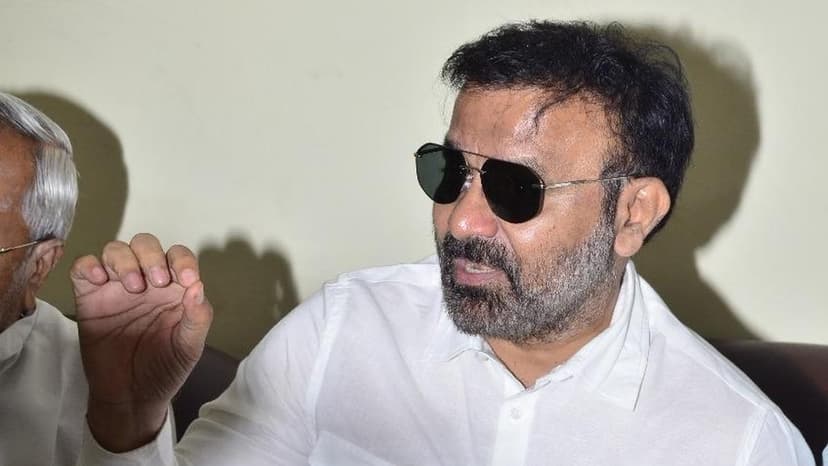
While the State had previously formed committees, they comprised only labour department officials. The latest development follows a meeting held by Labour Minister Santosh Lad with employer and employee representatives on February 11.

The top 20 clothing and footwear chains in Bulgaria recorded an 11% increase in revenues, reaching 1.14 billion euros in 2024, surpassing global market growth. Pepco and ITX Bulgaria are the largest employers, while New Yorker leads in profitability.

A discussion is ongoing in Spain regarding salary increases, with the government advocating for higher wages while employers express concerns about social contributions burdening businesses, despite recent recovery in purchasing power.
New legislation could potentially force employers to allow their employees to work from home.

Sanju*, a foreign domestic helper of Nepalese ethnicity, never imagined her Hong Kong dream would turn into a nightmare. The 34-year-old arrived in Hong Kong in 2023, driven by a simple wish to work in the city of her dreams. However, her first employer paid her 30 per cent below the statutory minimum wage, allowed her only two hours of sleep a day, and gave her just three rest days over six months, during which she was only paid two months’ salary. After six months, she was dismissed and thr...
A bookkeeper has been sentenced for embezzling more than half a million dollars from an employer in Ventura County.
Employers Holdings has declared a dividend of $0.32 per share for its shareholders.
The Indian Labour Ministry has released a comprehensive compliance checklist for employers, consolidating nearly two dozen requirements under new labour codes covering aspects from layoff guidelines to timely wages.

Scabby the Rat appeared in an unusual place on Wednesday. With dozens of union staff picketing, the inflatable rodent — a near-universal symbol used by trade unions across the U.S. to call out employers for union-busting practices — was swaying in the wind on the corner of 3rd St. and Fairfax Ave. in L.A., right outside […]
A judge on Tuesday granted a request for a hearing to learn more about the investigation that led to charges against former University of Michigan football coach Sherrone Moore, who was arrested soon after he was fired due to his relationship with his executive assistant. Judge J. Cedric Simpson set the date of the hearing to March 2. Simpson expressed concerns that a police detective didn’t disclose Moore had a employer-employee relationship with the woman when a magistrate authorized a warrant for his arrest in December.

Over 600 individuals who were fired or punished for posting about a false report of Charlie Kirk's death are now suing, claiming their right to free speech was violated after far-right activists urged their employers to terminate them.
Six employers from southwest Indiana have been recognized on the list of Indiana's best places to work.
Campaigners claimed the guidance for employers, such as hospitals, shops and restaurants, was "legally flawed" and "overly simplistic".

FL Technics Lithuania and FL Technics Indonesia, part of the Avia Solutions Group, have been awarded 'Top Employer' certification, recognizing their commitment to high HR standards in the context of their growing international development.

Due to the misuse of sick leave, representatives of the Bosnian business community are proposing changes to legal solutions that would shift the financial burden of prolonged sick leave from employers to the state.

A recent exchange has highlighted delicate relations between the Federation of Employers and Industrialists (Oev) and the Cyprus Chamber of Commerce and Industry (Keve), following a social media post by Oev general director Michalis Antoniou. The post described Oev as the largest and truly independent employers’ organisation in the country, a statement that has unsettled […]

A survey by the National Association of Colleges and Employers (NACE) predicts that finance and mechanical engineering graduates will be in the highest demand among US employers by 2026.

Private companies in the US added 63,000 jobs in February, according to ADP, while the January figure was significantly revised down to just 11,000 additions.

Vox has presented 23 demands to María Guardiola for her investiture as president of Extremadura, Spain, including the elimination of subsidies for unions and employers, and opposition to the distribution of 'illegal immigrants.'

Japan is stepping up its efforts against workplace harassment, marking 40 years since the equal employment opportunity law and 20 years since employers were required to prevent sexual harassment.
Discussions on labor reform in Portugal are ongoing, with employers optimistic about a quick agreement, while the UGT union indicates significant unresolved issues remain. The government aims to finalize the reform soon.
A new study reveals that 77% of Poles spent their vacation at home at least once last year, with 44% doing so multiple times, signaling an important trend for employers.
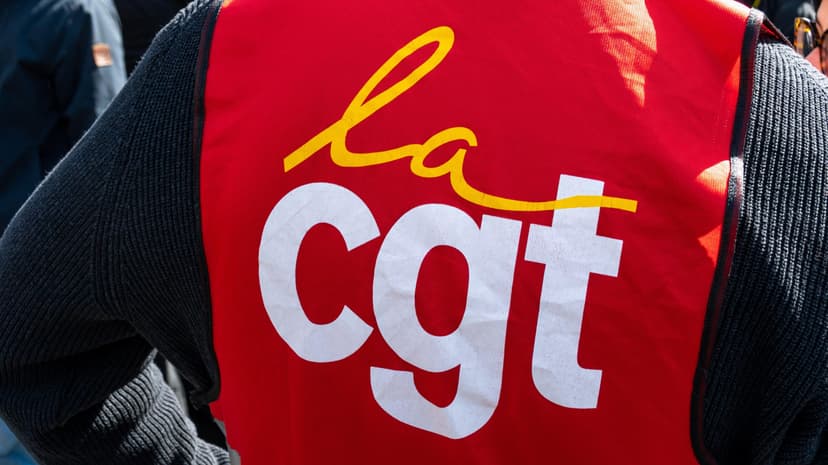
Around thirty undocumented workers, supported by the CGT union, occupied a Parisian hair salon to protest what they describe as exploitative working conditions, including 69-hour work weeks and the use of false pay slips by their employer.
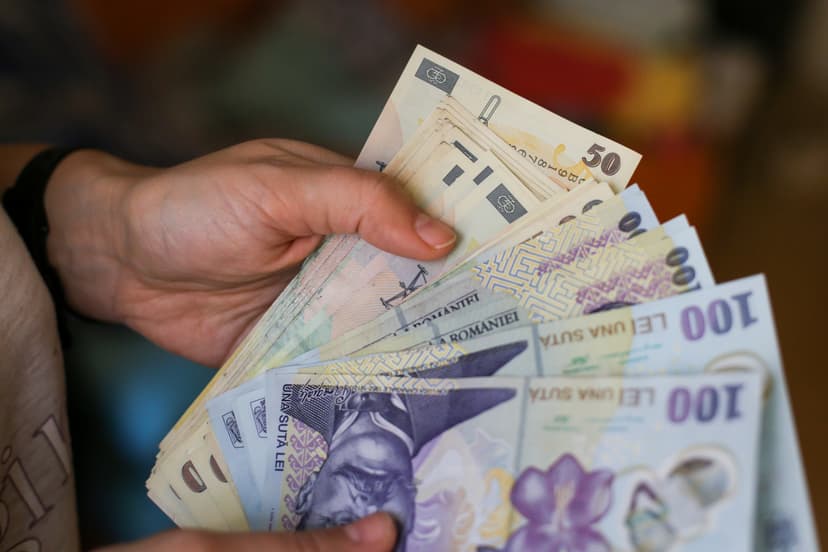
An employer based in Târgu Jiu, Romania, has been fined 90,000 lei for delaying salary payments to employees by over a month.

The Coordination of Free Trade Unions of Bosnia and Herzegovina condemns attempts to reduce the duration of employer-paid sick leave, currently set at 42 days.

A German economic report highlights that sick days cost employers an average of 400 euros per day, totaling around 82 billion euros in 2024, and discusses strategies to reduce these costs.
India's Supreme Court has ruled that employers are personally liable to pay penalties from their own funds for delays in employee wage payments.

The Victorian government plans to legislate a new work-from-home law that would allow employees to work offsite two days a week, affecting all businesses, including small employers.

A journalistic director dismissed from Hilla Group received 35,000 euros in compensation, after having sought more than three times that amount. The payment does not imply an admission of wrongdoing by the employer.
The Employees' State Insurance Corporation (ESIC) is scheduled to organize a 'Suvidha Samagam' event for employers in Coimbatore on March 5.

Croatian employers are actively seeking seasonal workers, offering attractive opportunities. Last year, 32,000 work permits were issued to workers from Bosnia and Herzegovina, indicating a high demand for labor.

As technology rapidly evolves, employers are increasingly prioritizing practical skills and the ability to learn quickly over traditional university degrees for careers in the tech sector.

China's parliament is under scrutiny for its progress on economic reforms, particularly a ruling making it illegal for workers and employers to avoid social insurance payments, with economists noting partial compliance.
Millions of workers don’t have employer-sponsored retirement accounts. But the president’s proposal in the State of the Union speech may not answer their needs.

The Croatian Employers' Association (HUP) is advocating for a reform of the sickness leave system in the country.

A Lithuanian court has clarified that an employee's silence regarding receiving a lower wage for several months can be interpreted as consent, potentially complicating future claims against the employer.
“I can officially retire from my employer at age 55, but I’m not sure I can gut it out.”

Current and former SME employees are leaving their jobs due to a lack of structure, professionalism, and inadequate channels for raising complaints within small and medium-sized enterprises.

The Bombay High Court has ordered a compensation of ₹50 lakh to the widow of an MSRTC employee who died of COVID-19, stating that the employer cannot avoid responsibility.
Progyny has provided its 2026 revenue guidance, projecting $1.355 billion to $1.405 billion, alongside the launch of its new 'Select' product aimed at small employers.
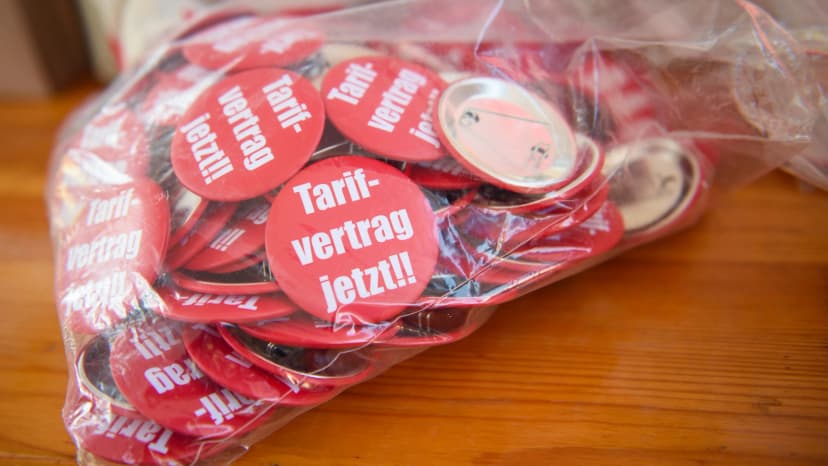
Germany's 'Tariftreuegesetz' (wage loyalty law) has been passed, drawing praise from unions but strong criticism from employers, who are urging the Bundesrat to block the 'botched law'.

French unions and employers have reached an agreement to better regulate mutual termination contracts, with a key measure being a reduction in the duration of unemployment benefits.

Pilots at Lufthansa's regional subsidiary Cityline have voted by 99 percent in favor of strikes, as their union deems the employer's offer insufficient. The tariff conflict also remains unresolved for the core Lufthansa brand.
Jurgen Klopp has been linked as a potential target for Real Madrid’s bench ever since Xabi Alonso left the post, and was even publicly asked about the possibility on several occasions.The former…

The Italian social security agency (INPS) is discontinuing the mailing of contribution slips for domestic workers, transitioning to an online service, with an exception for employers aged 76 or older
Transfer talk has been heating up around Anthony Gordon and Liverpool. The 25-year-old came close to joining his boyhood club back in summer 2024 - when current employers Newcastle were suffering from
An article by Katarzyna Wójcik argues that employers should not apply sanctions at their own discretion, implying a need for clear rules and fairness in disciplinary actions.
Leading employers share their insights and strategies for developing robust early-talent programs.
A Bhayandar man was deported from Singapore after his work visa and job offer were found to be fake, costing him INR 3.6 lakh. Immigration authorities discovered the company didn't exist and the visa was forged. Police are investigating the suspected job scam. Experts urge job seekers to verify employers and visa procedures independently to avoid such fraudulent schemes.

A recent survey by the Lithuanian Employment Service reveals that companies have faced the same labor market challenges for three years, with 50.1% of employers struggling to find qualified workers last year.
A new salary strategy is emerging where employers are opting to reward their top-performing employees with significantly larger pay raises, potentially leaving others with smaller or no increases.

The Federal Minister of Trade, Amir Hasičević, announced the extension of the 'locked prices' measure in the Federation of Bosnia and Herzegovina for another 60 days after a meeting with employer representatives.

Latvia's State Employment Agency (NVA) has begun accepting applications from employers for summer student vacancies, with increased funding allocated to involve more young people in employment this summer.

During an armed robbery involving an assault rifle and a knife, a Migrolino employee refused to disclose the safe code despite threats. Police and the employer emphasized that self-protection takes precedence.
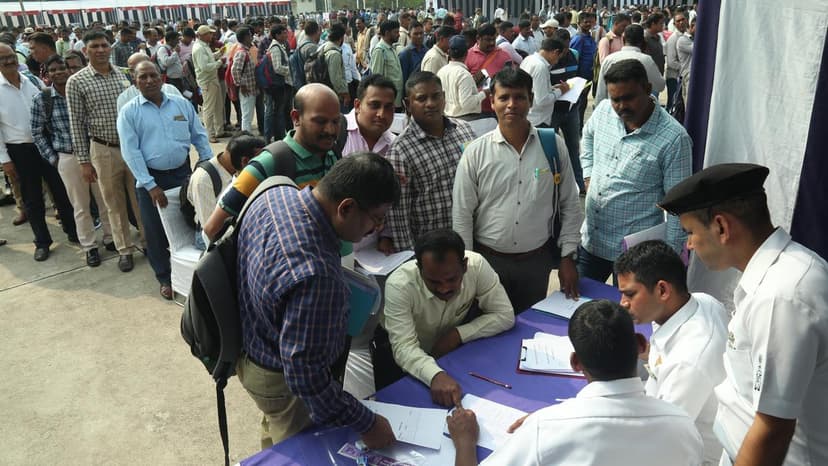
A job fair specifically for ex-servicemen will take place in Bengaluru on February 27, with free registration open for both ex-servicemen and potential employers.

Some 20,000 employees were surveyed by the FT and Statista for the second edition of this annual list
An article addresses the common query about whether one can commence a new job in the UAE before their previous employer cancels their visa.

This article provides advice on how employees should react when an employer changes working conditions, particularly regarding wages, which are a fundamental part of an employment contract.
The employee and employer sides of the Social Dialogue Council jointly expressed 'deep opposition' to the proposed reform of the State Labor Inspectorate and are appealing for additional consultations.

The State Labor Inspectorate in Lithuania has issued guidance on overtime regulations, detailing when it is permissible and what employees and employers need to know about additional working hours.

A worker was injured after falling several meters from the roof of a bakery in Oupeye. The employer was found guilty of not conducting a risk analysis and involuntary assault and battery.
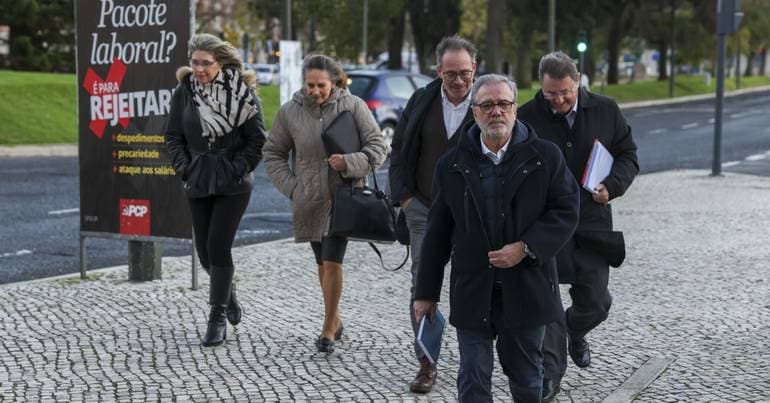
The Portuguese government is meeting with employers and the UGT union to discuss changes to labor law, following a previous meeting that was boycotted by union representatives.
Despite over half of Polish employees identifying strongly with their employers, there's been the largest increase in years of unengaged and unhappy workers, signaling a warning decline in company engagement.
A report from The Times suggests that new legislation could compel employers to permit their employees to work from home.
As the US population ages, a growing number of employees are seeking caregiver benefits from their workplaces, reflecting a national trend.
Employers is targeting a 10% premium growth for its new excess workers' compensation product while also advancing AI-driven efficiency across its operations.

Argentina's lower house of Congress approved President Javier Milei's labor reform bill, which grants employers greater flexibility in matters of hiring, firing, severance and collective bargaining.
Employers Holdings reported a Non-GAAP EPS of $0.66, surpassing estimates by $0.16, but its revenue of $170.5 million missed expectations by $45.99 million.
Forbes has recognized a Fort Worth company as the best large employer in North Texas.
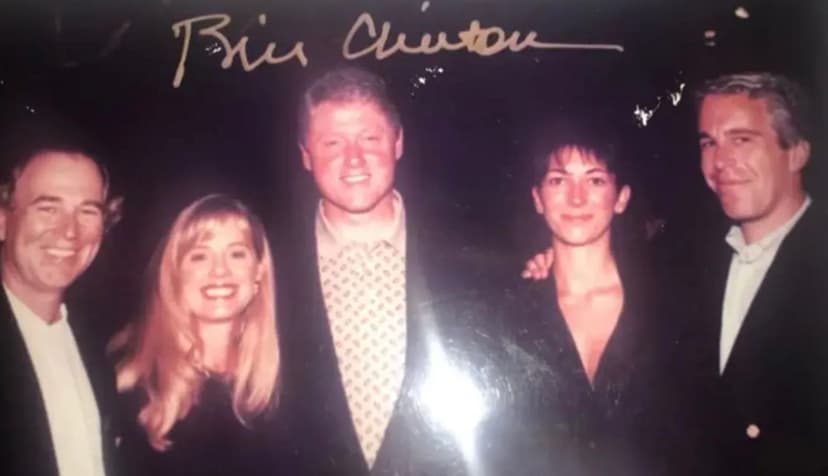
When Both Sides Go Quiet Submitted by QTR's Fringe Finance There is a political instinct that I’ve developed over the last few decade or so: when both parties are shouting, it’s business as usual. When both parties go quiet, pay attention, because something ugly is probably getting passed or covered up, and the American taxpayer is likely footing the bill of consequences. Few public controversies in recent memory have generated as much bipartisan distrust as the handling of the Epstein files. Republicans accused Democrats of failing to pursue full transparency while President Biden was in office. Now Democrats accuse Republicans of withholding or slow-walking the release of the complete records. The blame shifts with political control, but the underlying fact pattern remains the same: both parties have figures of influence whose names have surfaced in connection with Epstein’s orbit. That reality complicates the politics of accountability and fuels public suspicion that neither side is entirely comfortable with full disclosure. What should have been a straightforward matter of transparency, identifying networks of power, influence, and possible criminal complicity, has instead unfolded as a slow humiliating drip of redactions, procedural delays, partial disclosures and cagey congressional testimony. Each release seems to raise more questions than it resolves. These questions revolve around sex trafficking, exploitation, abuse of minors, coercion and manipulation, elite complicity, obstruction of justice, etc. But the deeper damage taking place now is not only about the crimes associated with Jeffrey Epstein. It is about institutional response. If only one political party had meaningful exposure to the scandal, the other would likely have been far more relentless in demanding transparency. But this is different. Despite Democrats harping on the files now, they were quiet in the years prior to Trump’s second term and, because Epstein’s connections span media, finance, academia, and politics, the discomfort still appears bipartisan. And that is precisely what unsettles me. When both political parties fail to press aggressively on something meaningful, especially something morally explosive, it often suggests that the issue cuts deeper than surface narratives allow. Bipartisan hesitation can signal overlapping vulnerability. Silence across the aisle is rarely accidental. The horror here is not just what may have occurred in private circles of power, but the perception that the institutions tasked with accountability are reluctant to fully illuminate it. Justice delayed in cases involving elites feels less like procedural caution and more like reputational risk management. Whether or not that perception is entirely fair, it is corrosive. Meanwhile, Goldman Sachs’ chief legal officer Kathryn Ruemmler announced her resignation after new emails with Epstein came to light, prompting internal pressure at the firm. British political figure Peter Mandelson resigned from the House of Lords and the Labour Party, and Scotland Yard has opened a criminal investigation into his ties with Epstein. In Norway, parliament has launched an external inquiry into prominent diplomats for their connections to Epstein, and police are investigating corruption allegations against former prime minister Thorbjørn Jagland and others. 🔥 50% OFF FOR LIFE: Using this coupon entitles you to 50% off an annual subscription to Fringe Finance for life: Get 50% off forever Across Europe, these disclosures have triggered formal probes, resignations, and institutional reviews that contrast sharply with the relative lack of accountability for high-profile figures in the United States, where calls for investigations and resignations have largely stalled. I mean, is Les Wexner really allowed to just walk around free at this point? How can that be possible? How are Kimbal Musk and Elon Musk allowed to remain on Tesla’s board? Why isn’t Bill Gates being hauled in front of congress? I have long argued that Americans should apply the same “when both parties agree, the American public is getting screwed” scrutiny to monetary policy for a similar reason. It is one of the few areas where both major political parties display remarkable convergence. While they wage visible battles over cultural issues and tax rates, they tend to align on central banking frameworks, large scale liquidity interventions, and deficit tolerance. Like other cover-ups, that alignment deserves examination. Monetary policy operates largely outside daily partisan warfare, yet it shapes purchasing power, asset prices, debt burdens, and wealth distribution. When balance sheets expand aggressively and markets are repeatedly stabilized during downturns, the effects are uneven. Asset holders often benefit first and most. Meanwhile, wage earners experience the lagging side effects such as inflationary pressure, higher living costs, and diminished purchasing power. Supporters of Modern Monetary Theory argue that sovereign currency systems provide more fiscal flexibility than traditionally assumed. Critics counter that, in practice, repeated interventions risk entrenching a cycle in which gains are privatized and losses are socialized. When markets rise, the wealth effect accrues to those with substantial exposure. When markets falter, public backstops prevent collapse. The middle class absorbs the inflationary residue. And the wealth gap widens: The structural similarity matters. When both parties avoid aggressive debate on a policy that materially burdens the average American, it raises the same instinctive question of what incentives are being protected. Monetary policy may not carry the visceral grotesqueness of the Epstein scandal, but it carries long term economic consequences that most Americans don’t know they are bearing, and don’t understand that they are being lied to about. The comparison is not moral equivalence. It is structural parallel. In one case, alleged networks of power may be shielded by mutual hesitation. In the other, a financial architecture persists with limited democratic scrutiny because challenging it would destabilize shared political comfort. In both cases, bipartisan alignment dampens confrontation. Two forms of silence. Two different domains. Both revealing. Foreign policy, particularly the authorization and funding of wars, has often followed a similar pattern. While domestic issues produce loud partisan divides, military interventions abroad frequently pass with overwhelming support from leadership in both parties. Public debate may flare at the margins, but institutional consensus tends to solidify quickly once action begins. History shows that major military engagements, from post 9/11 authorizations to prolonged overseas conflicts, have often been backed by broad congressional majorities. The initial votes are decisive. The funding continues year after year. Only later, when costs mount and public opinion shifts, does meaningful dissent emerge. By then, strategic commitments and financial obligations are deeply entrenched. Again, the pattern is not about moral equivalence between policy domains. It is about incentives. When both political parties converge quickly on matters involving immense money, immense power, or immense liability, scrutiny tends to narrow rather than widen. And when scrutiny narrows at the highest levels, the public’s role shifts from participant to spectator. When both political parties fail to address something meaningful, when they close ranks instead of competing for exposure, the public should not assume the issue is trivial. More often, it suggests the truth behind the surface may be larger and more consequential than advertised. Democracies depend not just on disagreement, but on adversarial pressure. When that pressure disappears, citizens are right to lean in, not tune out. When both sides go quiet, the story is rarely over. As the Epstein files are showing, it may simply run far deeper than we are being shown. Now read: Today's Epstein’s Records Destroy Official Narratives Our Liquidity Addiction Continues Do DOJ Docs Show Epstein Death Notice A Day Early? The Hijacking Of Bitcoin: Epstein’s Hidden Network Why America’s Two-Party System Will Never Threaten the True Political Elites QTR’s Disclaimer: Please read my full legal disclaimer on my About page here. This post represents my opinions only. In addition, please understand I am an idiot and often get things wrong and lose money. I may own or transact in any names mentioned in this piece at any time without warning. Contributor posts and aggregated posts have been hand selected by me, have not been fact checked and are the opinions of their authors. They are either submitted to QTR by their author, reprinted under a Creative Commons license with my best effort to uphold what the license asks, or with the permission of the author. This is not a recommendation to buy or sell any stocks or securities, just my opinions. I often lose money on positions I trade/invest in. I may add any name mentioned in this article and sell any name mentioned in this piece at any time, without further warning. None of this is a solicitation to buy or sell securities. I may or may not own names I write about and are watching. Sometimes I’m bullish without owning things, sometimes I’m bearish and do own things. Just assume my positions could be exactly the opposite of what you think they are just in case. If I’m long I could quickly be short and vice versa. I won’t update my positions. All positions can change immediately as soon as I publish this, with or without notice and at any point I can be long, short or neutral on any position. You are on your own. Do not make decisions based on my blog. I exist on the fringe. If you see numbers and calculations of any sort, assume they are wrong and double check them. I failed Algebra in 8th grade and topped off my high school math accolades by getting a D- in remedial Calculus my senior year, before becoming an English major in college so I could bullshit my way through things easier. I am an investor in Mark’s fund. The publisher does not guarantee the accuracy or completeness of the information provided in this page. These are not the opinions of any of my employers, partners, or associates. I did my best to be honest about my disclosures but can’t guarantee I am right; I write these posts after a couple beers sometimes. I edit after my posts are published because I’m impatient and lazy, so if you see a typo, check back in a half hour. Also, I just straight up get shit wrong a lot. I mention it twice because it’s that important. Tyler Durden Tue, 02/17/2026 - 14:00
Saudi Arabia has launched a new digital service on Musaned to manage domestic worker contract terminations, allowing employers to legally process situations where workers stop showing up.
Instacart hired software engineers and data scientists on H-1B visas last year. illustration by Cheng Xin/Getty Images Instacart is growing beyond its traditional grocery delivery business. The company's advertising and retail tech businesses are expanding. Here's what the company paid some of its corporate employees in 2025. Delivery service Instacart is moving further into new areas, such as advertising and retail tech. The company's roughly 600,000 gig workers, who shop and deliver groceries and other retail goods, are its most visible face for many people. But Instacart's business is growing in many directions, CEO Chris Rogers said on a November earnings call. "We have the leading online grocery marketplace, a best-in-class suite of enterprise technologies for retailers, and a growing advertising ecosystem," Rogers said on the call, his first as CEO after assuming the position in August. Instacart needs people to make good on its growth plans. The company had about 170 open roles on its careers website as of early February. "We're hiring selectively, with priority on roles that support our core marketplace, Instacart Enterprise solutions for retailers globally, and our ads and data platform," an Instacart spokesperson told Business Insider. "We regularly review compensation to ensure it's competitive and aligned with market benchmarks, location, and role," the spokesperson said. That hiring can include some employees from outside the US on H-1B work visas. Business Insider analyzed how much money companies from Apple to Walmart are paying for tech jobs and other roles. Explore salary data from America's biggest employers. Business Insider analyzed 157 H-1B visa applications submitted by Instacart and certified by the Department of Labor in the year ending September 30, 2025. These applications provide insight into how much employees in certain roles make. Many of the salaries were for tech roles, including data science, engineering, and product management positions. The Trump administration has initiated changes to the H-1B visa system. In September, Trump imposed a $100,000 fee on new applications. He's also proposed changes to work visa rules that could tilt the already competitive visa lottery in favor of the highest-paid applicants, lawyers told Business Insider. However, these changes were largely initiated after this reporting period. Here's a look at some of the jobs for which Instacart has disclosed salaries in the work visa data. Data Scientist: $125,000 to $210,000 Director of Engineering, Machine Learning: $320,000 to $380,000 Engineering Manager, Software: $220,000 to $290,000 Manager, Machine Learning Engineering: $260,000 to $280,000 Principal Software Engineer: $350,000 to $380,000 Senior Computer Vision/AI Engineer: $180,000 to $290,000 Senior Data Scientist: $170,000 to $265,000 Senior Engagement Manager: $235,000 to $285,000 Senior Engineering Manager: $275,000 to $305,000 Senior Engineering Manager, Software: $275,000 to $305,000 Senior Machine Learning Engineer: $185,000 to $300,000 Senior Machine Learning Engineer: $190,000 to $298,000 Senior Product Manager: $185,000 to $280,000 Senior Software Engineer: $176,000 to $285,000 Software Engineer: $165,000 to $215,000 Staff Software Engineer: $250,000 to $310,000 Have a tip? Contact this reporter at abitter@businessinsider.com or via encrypted messaging app Signal at 808-854-4501. Use a personal email address, a nonwork WiFi network, and a nonwork device; here's our guide to sharing information securely. Read the original article on Business Insider

Campaigners claimed the guidance for employers, such as hospitals, shops and restaurants, was "legally flawed" and "overly simplistic".

Romanian employers are still actively seeking a large number of unskilled workers, indicating a persistent demand in the labor market for this category of employees.

Spanish courts have issued conflicting rulings on whether employers can compel employees to show the contents of their bags. One ruling favored an employee against Mediamarkt, while another upheld a dismissal for refusing a bag check.
While a work permit and legal residency are generally required for employing foreigners in Poland, regulations include additional complexities and requirements that employers must meet.

While the plans are not compulsory, the aim is to make them mandatory from spring 2027
Private employers in the US added 63,000 jobs in February, marking the best monthly performance since July, according to ADP.

A new law in preparation offers benefits for permanent seasonal workers in Montenegro, but loyalty depends on market conditions and employers' willingness to adjust wages and working conditions.

A Circle K store manager in the United States bought leftover lottery tickets from his own store the morning after one won a US$12.8 million jackpot, but his employer is suing to get the ticket back.
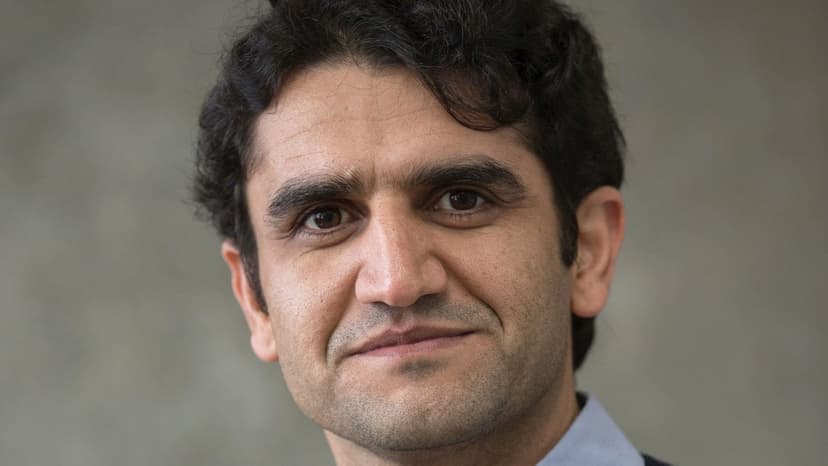
Hamid Amini, a Norwegian-Iranian man, was killed in an air attack in Iran while on parental leave, according to his employer DNV.
Forbes releases its list of America's best startup employers for the year 2026.

How many Montenegrin citizens are awaiting evacuation from the Middle East?
SC fastens liability of paying penalty on employer for delay in depositing compensation
The phenomenon of 'ghost growth' describes an apparent promotion where employees take on more responsibilities without a change in job title or salary. This article explores how it typically unfolds and why it's sometimes perceived as recognition by employers.

Latvian company Virši-A has been selected as the best employer for 2025 based on a survey, with Latvijas Mobilais Telefons and Swedbank also ranking in the top three.

HARPERSFIELD TOWNSHIP — A $6 million, multi-year partnership, was recently announced by SPIRE Academy and Vensure Employer Solutions, said SPIRE Academy Chief Executive Officer Steve Sanders. “The partnership connects youth athlete development with workforce innovations, a growing trend as brands look to engage families in trusted high-attention environments,” a press release from SPIRE ...

A British product manager is facing charges of illegal business practices and money laundering for allegedly selling medical products through his employer for a personal profit of 430,429 Swiss Francs.

The planned strike in care homes has been cancelled after the last remaining trade union, JHL, reached a negotiation agreement with employers in the private social services sector.

Croatian employers are actively recruiting seasonal workers, with a significant demand expected from Bosnia and Herzegovina. Over 32,000 work permits have already been issued to BiH citizens for the 2025 season.
Serbia introduced an e-sick leave system on January 1st, resulting in over 230,000 electronic referrals. The next phase, starting April 1st, will involve communication between employers and the Republican Health Insurance Fund (RFZO).

A trusted cafe manager was caught stealing from the till six times in a series of 'planned-out' and 'cunning' thefts from her employers.

Employees say they have heard little from major defense contractor V2X Inc about safety and evacuation protocols Employees of major defense contractor V2X Inc on US military bases in Kuwait say they lack adequate bunker facilities and have had their pay reduced amid Iranian missile attacks across the Persian Gulf region, while receiving limited communication from their employer about safety and evacuation procedures. The Guardian interviewed three V2X employees on the US bases Camp Arifjan a...
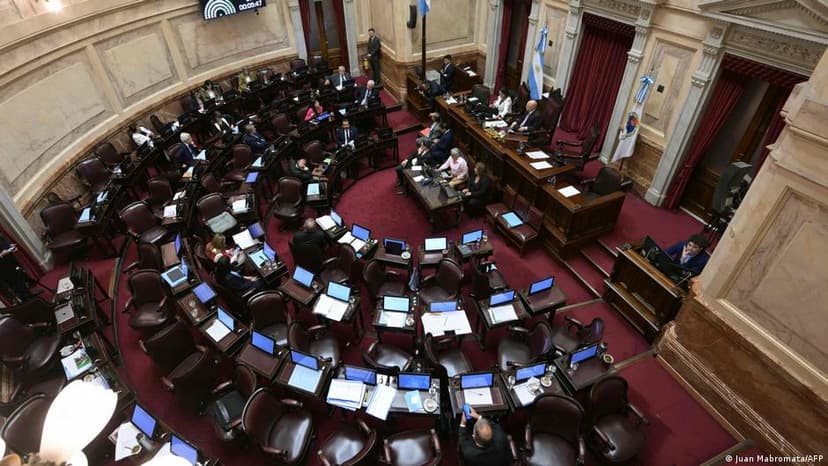
Argentina's sweeping new reform is meant to create more formal jobs by reducing the burden on employers. Recent polls had shown that the nation was split on it.

A financial manager from a Rotterdam maritime company, who was fired after embezzling nearly one million euros from his employer, has requested the court to award him severance pay, claiming a gambling addiction.

The Norwegian trade union Parat strongly criticizes employer organizations NHO and Spekter for advising members to avoid using part-time employees as extra staff following a recent court ruling.

Cyprus's Labour Minister Marinos Mousiouttas revealed that half of all companies in the country are not paying the mandatory employers' liability insurance.

Fast food workers in California are demanding employers sign a pledge to protect their rights, citing fear and walkouts fueled by immigration raids.

Diyan Stamatov, director of the 119th 'Mihail Arnaudov' secondary school and chairman of the Union of Employers in the National Education System, expressed concerns on Facebook about the decision to open schoolyards in Sofia.
A domestic helper has been arrested after orchestrating a fake 'ED raid' to rob their employer of ₹4 lakh, a scheme that ultimately unraveled.

A proposal to generalize supplementary pensions for all employees, with a 3% employer contribution, is estimated to cost Belgian employers 1.9 billion euros annually, according to PensioPlus.
Saudi Arabia has announced a SR10,000 fine for employers who hire non-Saudi individuals without the required work permits, aiming to regulate the labor market.

Employers in Bulgaria have until March 2nd to submit statements for incomes paid to individuals in 2025, which will be used for automatically pre-filled tax declarations.
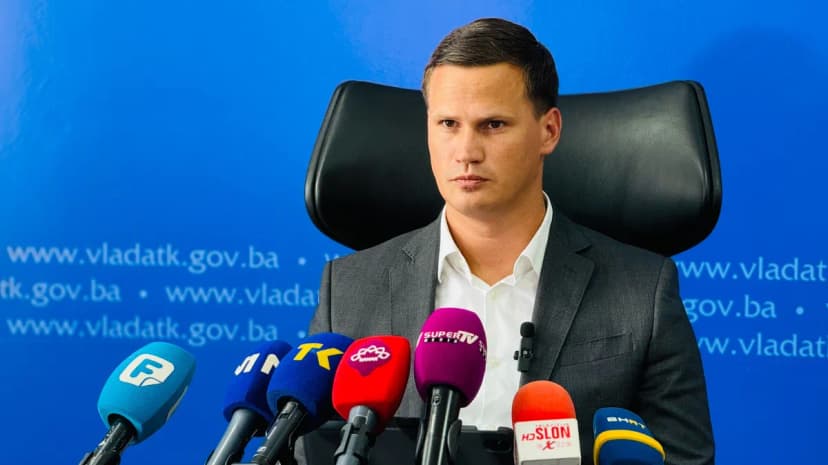
The shutdown of the Koksara Lukavac furnaces also extinguished about 800 direct jobs. Another former industrial giant is now just physical assets on a...
The EU Pay Transparency Directive is slated for transposition into Irish law by June 7, 2026, marking one of the most significant changes to pay governance for employers in decades.
In Poland, employers are restricted from inventing their own disciplinary penalties, with a limited catalog of permissible sanctions for workplace infractions such as non-compliance with work order or safety regulations.
An agreement is reportedly in sight between French unions and employers regarding 'ruptures conventionnelles,' which would not include a degressivity of unemployment benefits but would shorten the maximum compensation period from 18 to 15 months.

A job fair for the hospitality industry was held in Riga on February 25, aiming to connect employers with job seekers amidst increasing difficulty in finding staff for hotels and restaurants.

Cyprus moved a step closer this week to adopting a long-delayed EU directive on adequate minimum wages, as the updated draft law was presented to social partners, with key disagreements between employers and unions still unresolved. The proposed Adequate Minimum Wages Law of 2025 aims to improve living and working conditions by ensuring that statutory […]

Employer organizations in France have put forward new proposals regarding unemployment insurance, including changes to conventional terminations and compensation duration, which have drawn strong criticism from unions ahead of crucial negotiations.
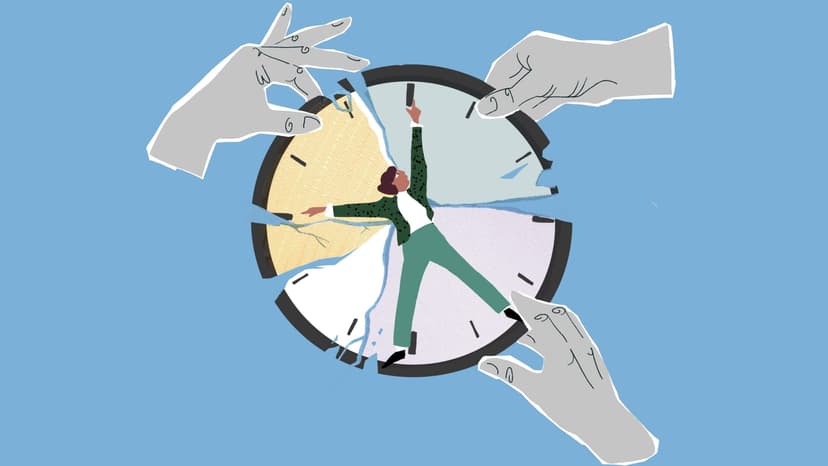
Part-time work in Luxembourg is seen as a necessity, with unions demanding more rights while employers warn against rigid solutions, amidst skilled labor shortages and work-life balance concerns.

Non-wage labor costs for employers in Austria have shown a slight decrease over several years, according to a recent report.
Employers are moving away from uniform 'peanut-butter' pay distribution, instead opting to provide substantial raises to top-performing talent.

Nikolas Elomaa, a lawyer with a background in the SAK trade union confederation, is reportedly set to become Finland's new national conciliator, with consensus from both employee and employer sides.
Polish labor law specifies conditions, often based on employee count, under which employers are required to establish an Occupational Health and Safety (OHS) service.

Lithuania's vocational schools have seen a record number of new students during the winter admission period, with experts noting the unique aspects of this intake and employers welcoming the increase in craft professionals.

Employers in Greece have until Friday, January 27, to submit income certificates to the Independent Authority for Public Revenue (AADE) to facilitate the pre-filling process for tax declarations, with the platform expected to open shortly after.
Employers and workers need a stable, predictable U.S. trade policy.

Illa increases pressure on ERC and adds the support of the country's main unions and employers' associations to this year's accounts
Confindustria, the Italian employers' federation, has released its 'Congiuntura Flash' analysis, indicating a deteriorating economic scenario for early 2026, with exports and consumption negatively impacting the industry.
Q: I recently took a redundancy package, and I am now job hunting. I’ve been told that LinkedIn is the place where I am most likely to find prospective employers, and have dutifully changed my avatar
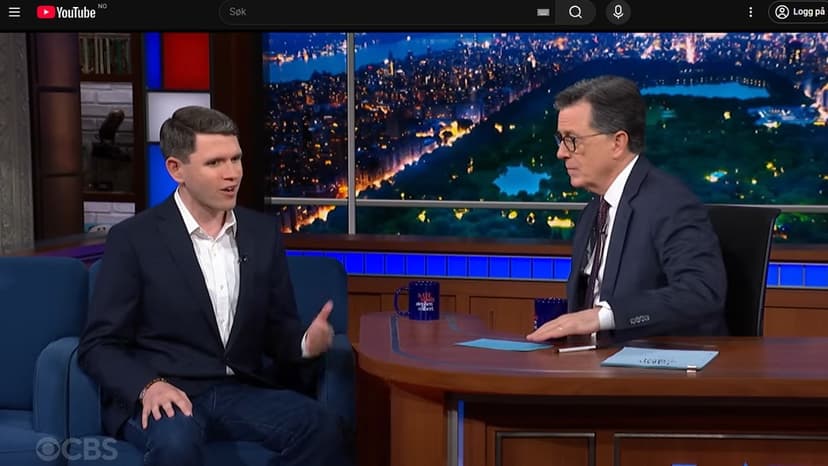
Talk show host Stephen Colbert claims he was censored by his employer, an incident that media researchers suggest highlights growing pressure on press freedom in the United States.
New legislation is being considered that could legally mandate employers to offer remote work options to their employees.

Specialists in Romania identify jobs that are resistant to automation by AI, while also discussing the changing demands of employers and the impact of AI on the workforce.
The earnings call transcript for Employers (EIG) for the fourth quarter of 2025 has been released, providing details on its financial performance.

The youth minimum wage is set to rise over this parliament, but it’s putting off employers from hiring people into their first roles When Keir Starmer was 14 years old, he got a part-time job clearing stones from a local farmer’s field. At 16, Kemi Badenoch was flipping burgers and cleaning toilets in McDonald’s. Me, I waitressed at weekends from the age of 15 in an Essex pub owned by an ex-paratrooper with two formidable rottweilers roaming behind the bar, which was a life lesson all of its own. But whatever your first job may have been, there’s a reasonable chance it combined the thrill of hard cash with several mortifying mistakes and a crash course in handling stroppy customers, taking criticism more or less gracefully and moaning about it only out of earshot. Though teenage starter jobs have been in decline for decades – for reasons varying from academic pressures on sixth-formers to the rise of side hustles on Vinted that don’t show up in official statistics – everyone still has to start somewhere, even if it’s now more likely at 18 than 14. But getting that start is becoming harder than it was. Continue reading...

Teacher Loses Career Over Two-Word Facebook Post Supporting ICE James Heidorn, who taught at Gary Elementary School in West Chicago, found himself at the center of a community firestorm that cost him not just his teaching position but his identity as an educator, all for posting two words on Facebook: "Go ICE." The incident began in late January when Heidorn, a 14-year physical education teacher, responded to a news story about a local police department pledging cooperation with Immigration and Customs Enforcement. His personal Facebook post sparked immediate backlash in the heavily Hispanic district, with local activists circulating screenshots and demanding action against him. School officials quickly notified Heidorn on Jan. 22 about growing social media chatter. After meeting with HR staff that same day, he resigned briefly, then rescinded his decision hours later. He was set to return on Monday pending an investigation. The investigation never got that chance. "This process has been professionally and personally devastating and surreal," former West Chicago teacher James Heidorn told Fox News Digital. "I’ve spent 14 years building my career, pouring my heart into teaching kids, building relationships and being a positive role model. To see it all upended over two simple words, ‘Go ICE,’ where I expressed my personal support for law enforcement felt like a severe blow to my career." Indeed, the outcry was relentless. Illinois state Sen. Karina Villa, a Democrat, publicly condemned the post. "I stand in unwavering solidarity with families upset about the disturbing comments reportedly made by an educator," Villa said. West Chicago Mayor Daniel Bovey joined the pile-on before any investigation concluded. In a Saturday Facebook video, he explained why Heidorn's comments were "hurtful" and "offensive" to the community. "So to have someone cavalierly rooting on—as if it's a football game or something, yeah go—events which have traumatized these children… that is the issue," Bovey said. Meanwhile, parents organized online, planning a boycott by keeping their kids from school, and the city held a “listening session” on Jan. 26 at Bovey’s request, complete with a Spanish translator. Attendees described the post as "cruel" and said "kids do not feel safe." Heidorn maintained that his post meant nothing beyond supporting law enforcement. "This started with a two-word comment on my personal Facebook page supporting law enforcement—nothing more," Heidorn said. "It wasn't directed at any student, family or school community." The distinction made no difference to the community or to the school administrators. "I was placed on leave and faced intense pressure before any full investigation or fair process could play out, with this it led to my resignation," Heidorn said. He resigned a second time rather than face termination after a hearing with school officials. A West Chicago Elementary School District 33 spokesperson called the post "disruptive" and said it "raised concerns and caused disruption for students, families and staff." The district declined to specify which rule Heidorn violated or whether teachers who publicly disrupt in favor of opposing immigration enforcement would face similar consequences. In fact, teachers across the country have protested President Trump's immigration policies without repercussions. In Chicago specifically, teachers even stormed a Target and harassed employees over the same policies without losing their jobs. But expressing support for law enforcement in Chicago is apparently controversial. "It does feel like a double standard—due to my viewpoint being different from others within the community that I taught in," Heidorn said. "Fairness should apply equally, regardless of those viewpoints. If personal political speech is grounds for punishment, it should be consistent—not selective based on what side you're on." The fallout extended beyond his teaching position. Heidorn lost his coaching job at a nearby private school. He must now inform future employers that he resigned and explain why. "I really don't know what is next for me, as the teaching profession has been, up to this point in time, all that I ever wanted to do," Heidorn said. He earned a master's degree in educational leadership to become the best teacher possible. Now he spends time healing. "I lost my career, my income and the chance to close out my time with my students properly—no farewell, no goodbyes," Heidorn said. Despite the loud outcry, Heidorn has received some local support, including a GoFundMe being set up for him. “James Heidorn, a beloved physical education teacher at Gary Elementary School, resigned after a single social media comment ignited outrage and a one-sided account that quickly spiraled beyond control,” the GoFundMe page reads. “What followed was not reflection or fairness, but permanent consequences that have changed the course of his life.” As for his future, he’s not sure what’s going to happen. "I really don’t know what is next for me, as the teaching profession has been, up to this point in time, all that I ever wanted to do," he said. "It is all I have ever studied for and teaching is what has defined me. Even advancing my education with a master's degree in educational leadership because I wanted to become the best teacher I can be." Heidorn said he’s exploring other options in education or related fields. “I want people to know I’m grateful for the outpouring of support from those who reached out, donated or shared my story,” he said. “It reminds me that most people value fairness and second chances. I’m determined to move forward positively and keep contributing to kids’ lives in whatever way I can.” Tyler Durden Wed, 02/18/2026 - 16:40
Kevin Dietsch/Getty Images; Getty Images; Rebecca Zisser/BI Tech's elite are taking their talents to South Beach — again. In January, David Sacks, the venture capitalist and crypto and AI czar, proclaimed that Miami will soon replace New York City as America's financial capital. Stripe's Patrick Collison has been marveling at the city's "boomtown" vibes. With California flirting with a one-time tax on billionaires, said billionaires like Larry Page, Sergey Brin, and Mark Zuckerberg are buying oceanfront mansions. And on Tuesday, Palantir announced that it's moving its headquarters from Denver to Miami. Is Miami the next Silicon Valley? We've been here before. The pandemic sent waves of coastal workers to the city, turning it into a Zoomtown full of online venture capitalists like Keith Rabois and Delian Asparouhov, bitcoin bull runners, and purveyors of the finest NFTs. Billboards went up in San Francisco featuring a mock tweet from then-Miami mayor Francis Suarez: "Thinking about moving to Miami? DM me." Here's the thing: It's easy to fall for Miami when a big chunk of the workforce is stuck at home and online. Five years later, it's a lot harder to build companies there. "Miami is great three months out of the year," says one prominent venture capitalist who moved to the city during the pandemic but is now returning to an established hub. While the Floridian tax benefits are real, the investor has found that the social scene hollows out in the summer as residents leave, making it "hard to build roots or have reliable friends." More critically for the startup ecosystem, the scene lacked the "hustle" of San Francisco or New York. Silicon Valley practically runs on a conveyor belt from Stanford and Caltech to Y Combinator's Dogpatch offices. The machine turns students into founders, builders into companies, and companies into the next wave of founders. Miami, meanwhile, lacks a major university to pipe in tech talent. Instead, the investor says, the city tends to attract people who have already "made it." Miami and Fort Lauderdale-based startups raised $3 billion in 2025. Bay Area-based startups raised $177 billion. The Miami market, while busy, significantly lags behind the major hubs. Startups in the Miami-Fort Lauderdale metro raised about $3 billion in 2025, per PitchBook, down from $8.6 billion in 2022, when money and crypto sloshed about. The Bay Area, by contrast, still grabs 52% of the nation's venture funding, with $177 billion in capital pouring in last year. Alligators may be all around in Miami, but unicorns are hard to find. In January, Cast AI, a startup that helps companies cut cloud costs, crossed the $1 billion valuation mark, becoming the region's first homegrown unicorn in years. Before that, Adam Neumann, the ousted WeWork cofounder, debuted his Miami residential real-estate venture, Flow, at a $1 billion valuation in 2022. Even Garry Tan, the Y Combinator president and gadfly who's usually first in line to dunk on San Francisco's politics, has been blunt about where the breeding grounds are best. Tan recently said on X that the accelerator still hasn't opened offices outside the Bay Area because founders are simply more likely to build unicorns there. According to a Business Insider analysis of Crunchbase data, of the at least 97 new unicorns that investors minted in 2025, 43 of them were based in the Bay Area. But those who dismiss the city entirely miss the point. Miami isn't the next San Francisco. It's establishing itself as something else. Patrick Murphy, a former Florida congressman and entrepreneur, says that Miami's tech scene is growing, it's just being built in "reverse order." Silicon Valley, he says, emerged from an if you build it, they will come approach: Engineers built great companies first, which eventually created fortunes that cycled back into the community to fund the next generation of companies. Miami, however, has a more if you come, they will build it tact. It's attracted the "wealth achievers" first — the family offices, private equity names, and already-successful founders who emigrated for lifestyle reasons. Finance heavyweights like Citadel and Thoma Bravo arrived early. Vanguard, one of the world's largest asset managers, is eyeing an expansion in Miami as it targets more Latin American wealth. The city is now importing the machinery that follows them. Legal, accounting, and consulting firms are opening local offices to stay close to clients — and scoop up star talent that no longer needs to live near HQ. This dynamic has established Miami as a "control center" for decision-makers, Murphy argues, but not yet the "factory floor" where the actual work gets done. Murphy says that despite running a successful construction-tech startup, Togal.AI, his engineering team has been offshore from the beginning because the local talent pool simply "didn't exist" when he started in 2019. "If you go to Miami, you're not going to see dozens of engineers at a Starbucks cranking away," he says. "That's not here yet." Still, Miami's flood of wealth is creating demand for startups built on the city's local economy, especially in property tech and fintech, Murphy says. Togal.AI's annual recurring revenue has grown 1,000% over the past two years, Murphy says, and is now raising fresh venture funding in order to hire dozens of new employees this year. Palantir's move immediately became a kind of Rorschach test for Miami's future. "Florida is the new crypto," one user wrote on X. Maya Bakhai, a Fort Lauderdale resident and founder of the early-stage venture firm Spice Capital, tells me that the city will flourish alongside "net new" industries that are still taking shape and where the center of gravity isn't locked in yet. Crypto firms like MoonPay and QuickNode still treat South Florida as a home base, she notes. A new space-tech accelerator backed by the state is trying to persuade founders to stick around by pairing them with funders. Bakhai's bigger bet is that just as New York became the hub for e-commerce, Miami could become the place where creator businesses get built. Research out of the University of Hong Kong found Miami has more top influencers per capita than New York or Los Angeles. And then there's Palantir, the strongest signal flare yet that tech is taking America's Playground seriously. It's hard to know what the data giant's HQ move will mean in practice — Palantir hasn't said how many employees it plans to relocate, or whether it will offer moving packages to lure talent south. The company did not respond to an email request for comment. If Palantir does move a meaningful slice of its workforce, it would give Miami something it's been short on: a marquee tech employer that can recruit and keep technical workers on the ground year-round. On X, Palantir's move immediately became a kind of Rorschach test for Miami's future. ""Florida is the future," cheered Andreessen Horowitz investor Katherine Boyle. Others were less convinced. "Florida is the new crypto," one user wrote. "For the next 20 years, nothing will change, but they will always tell you 'big things are happening in Florida.'" Turning Miami into Silicon Beach is a long game, Bakhai argues. It won't be built by the billionaires buying houses to snowbird in today, she argues, but by the young strivers arriving for their first serious jobs — the entry-level analysts heading to Citadel and the junior lawyers starting at firms like Orrick. For the first time, she says, ambitious graduates can launch careers in Miami instead of treating New York or San Francisco as the default. The payoff, she says, comes years later, when they eventually spin off to start their own companies. Until then, Miami remains largely a playground for the "made it" crowd, waiting in the sun for the builders to come. Melia Russell is a reporter with Business Insider, covering the intersection of law and technology. Read the original article on Business Insider
Brands like Toteme are becoming more popular as investment dressing resurges. Edward Berthelot/Getty Images Workwear is recalibrating to styles that balance comfort with a more polished look. The tightening job market and return-to-office mandates have chipped away at pandemic casualness. Employees may also be using more polished workwear to create a boundary between work and home. Dress for the job you want to… keep? In a job market where power has shifted toward employers, at least one thing remains within an employee's control: how they choose to show up to work. With layoffs and slow hiring shaping the labor market and RTO mandates pulling employees back into offices, experts say workers are dressing more carefully to project competence. In periods of uncertainty, clothing is less about comfort and self-expression, and more about job security, Lizzy Bowring, a creative strategist and trend forecaster, told Business Insider. "Dressing smarter serves as career risk management," she said. The business casual era gave way to full-on casual Business casual had an era — a long one. Over the past 30 years, suits and ties have given way to blazers and sweaters in many white-collar industries. By the early 2000s, the casual look was ubiquitous in tech. Think Mark Zuckerberg's signature gray T-shirt, hoodie, and jeans. Facebook founder and CEO Mark Zuckerberg delivers the opening keynote address at the f8 Developer Conference April 21, 2010 Justin Sullivan/Getty Images When the pandemic hit, casual dressing went from trend to default. There was no need to dress up for your living room. But times are different now. Workers are being called back into the office, and the franzied "Great Resignation" period post-pandemic, when employers were scrambling to retain staff and thrust into bidding wars to scoop up talent, is well behind us. The balance of power has shifted from employee to employer. US businesses are hiring at one of the slowest rates since 2013, and the early impact of AI is beginning to show up. Last month saw more layoffs than any January since 2009, as big companies like Amazon and Citi announced plans to cut thousands of jobs. Because of this, "employees are becoming more conscious of how they present themselves, not because they're being told to, but because uncertainty changes behaviour," Frances Li, founder and director of Biscuit Recruitment, a boutique recruitment agency based in London and New York, told Business Insider. Recalibration, not return An example of a more tailored silhouette is the oversized blazer, pictured here on content creator and writer Alba Garavito Torre. Edward Berthelot/Getty Images Still, experts say we aren't seeing a full return to suits and straight-cut dresses. Trend forecaster Lizzy Bowring describes this as an "'intentional recalibration' — blending comfort with sharper silhouettes, structured tailoring and more deliberate styling." The jacket you once wore over a T-shirt to look smarter for a Zoom meeting is now shifting to a more tailored look, said Bowring. Think oversized blazers and fitted dresses. Fashion's messaging is reflecting this. There's a focus on tailoring and silhouette-forming pieces across luxury brands like Prada, Saint Laurent, and Bottega Veneta, she said. A model walks the runway at Bottega Veneta's Spring/Summer 2026 fashion show at Milan Fashion Week in September. Victor VIRGILE/Gamma-Rapho via Getty Images Economic uncertainty has also revived interest in investment dressing: wardrobe staples that work in the office and beyond, cut with precision and built to last. Brands like The Row and Toteme have gained cultural relevance by positioning their pieces as investments, reinforcing the appeal of clothing "that communicates stability, longevity and professional credibility," Bowring added. TikTok content about what to wear to the office and why it matters has also grown in popularity. Younger members of Gen Z, entering office settings for the first time, are questioning how to balance their personal style with work-appropriate attire. Grace McCarrick, a content creator who delivers soft skills training to companies such as Uber and Spotify, said her TikTok videos on being intentional with your appearance at work have been some of her most viral — garnering hundreds of thousands of views. @graceforpersonalityhires The cheat no one is telling you about- you don’t have to look super polished if you look rich. In the north east, the look tends to be a bit dull lol but do what feels right for you ♬ original sound - grace mccarrick "It is so complicated to move up and get noticed in the workforce today," she said. The idea of 'dressing for success' is one of the only levers you can control to help you progress at work, she added. "People who put in the effort stand out like neon signs. They've upped their charisma factor by simply not being as schlubby as everyone else. They could be the most awkward person, but because they look good in a sea of wrinkled khakis with black sneaker 'dress shoes,' they're magnetic," she said. Setting boundaries Formal dress is also a way for employees to clearly distinguish between work and home life. "Work wear cues a performance state, whereas home wear signals a relaxation state," Hajo Adam, an organizational psychologist and professor at the University of Bath, told Business Insider. This separation might help people to actually switch off when work finishes. So, once the clock strikes 5 p.m. — go ahead, loosen up, and hang up your blazer, whether your desk is in the office or in your living room. Read the original article on Business Insider
Sylendran Arunagiri Sylendran Arunagiri Sylendran Arunagiri wanted to work at Nvidia, his "dream company." He said the US job market felt far more challenging than what he'd experienced in India. After being rejected for an internship, he reflected on what went wrong — and made a plan. As Sylendran Arunagiri considered moving from India to the US to pursue a master's degree, some friends and mentors advised him to delay his move. They warned that the US tech job market had become too challenging. Arunagiri's goal was to move to the US in late 2023, begin a master's program in product management at Carnegie Mellon University, and land a Big Tech internship for the summer of 2024. He hoped this would be a stepping stone toward landing an AI-related role, ideally at Nvidia, his "dream company" because of its central role in the AI technologies he'd long wanted to work on. However, there were several things working against him. For one, the US tech hiring landscape was already creating headaches for job seekers. Openings had plummeted from highs reached a year earlier, and industry layoffs were increasing competition for available roles. Additionally, Arunagiri had grown accustomed to the job market in India, where he earned a bachelor's degree and an MBA from top institutions that he said relied on structured campus placement programs to funnel many students directly into jobs. But from what he'd heard, the US was very different. Job fairs were often more like networking events than recruiting opportunities. "You're completely on your own," said the 30-year-old, who now lives in San Jose. Arunagiri is among the many job seekers who have struggled to navigate a US hiring landscape that's become more challenging in recent years. Amid economic uncertainty, the early effects of generative AI adoption, and a broader push to streamline operations, US businesses are now hiring at one of the slowest rates since 2013. window.addEventListener("message",function(a){if(void 0!==a.data["datawrapper-height"]){var e=document.querySelectorAll("iframe");for(var t in a.data["datawrapper-height"])for(var r,i=0;r=e[i];i++)if(r.contentWindow===a.source){var d=a.data["datawrapper-height"][t]+"px";r.style.height=d}}}); Still, some people have managed to break through in a challenging market. Arunagiri shared how he pursued his goal of working at Nvidia — a company he described as his dream employer — and offered his top advice for other job seekers. Striking out on Nvidia Many of the tech companies Arunagiri was targeting had conducted summer internship interviews the previous fall, so he began applying before moving to the US. After sending out many applications, he landed an interview with Nvidia in November 2023. Arunagiri said the interview process went so well that he stopped applying to other internships. But after moving to the US and completing his final interview in February, he learned that he wouldn't be getting the role — which left him scrambling to find another internship. "I had to start from scratch, but by then many of the applications had dried out," he said Arunagiri was able to land an AI product manager internship based in India at the tech company Informatica. However, that summer, he found it difficult to stop thinking about what went wrong during his interview process with Nvidia — and began setting his sights on eventually landing a full-time role with the company. Business Insider is speaking with workers who've found themselves at a corporate crossroads — whether due to a layoff, resignation, job search, or shifting workplace expectations. Share your story by filling out this form, contacting this reporter via email at jzinkula@businessinsider.com, or via Signal at jzinkula.29. A second chance at Nvidia Upon reflection, Arunagiri suspected that his final Nvidia interview may have doomed him. He said he was lower energy than usual because he was feeling sick that day, and that he'd been hesitant to postpone it out of fear that the opportunity would be filled in the meantime. In hindsight, he said that decision was likely a mistake. "I came off as a dull candidate, but I'm usually energetic and conversational," he said. "I should have probably postponed it to a day that I was feeling better." Arunagiri decided to reach out to an HR professional from Nvidia to get insight into where he fell short, and they agreed to jump on a call with him. While they didn't provide specific insights into his candidacy, he said they recommended he try to connect with people at Nvidia in current roles, including hiring managers and interns, to get insight into the kinds of projects they were working on and how he could better align his profile. He eventually connected with about five Nvidia interns, who he said provided valuable insights. Those conversations helped shape the personal AI-related projects he began pursuing and sharing on LinkedIn in hopes of standing out. After the summer, Arunagiri dove back into the job search, eager to land a role before he graduated in December 2024. He knew that if he didn't land a job within 90 days after graduation, his F-1 visa restrictions would force him to return to India. In September 2024, he submitted a cold application for a technical product marketing role in agentic AI at Nvidia —a role he described as his "dream AI role" at his dream company. He was asked to interview starting in October, and around the same time, he was also invited to interview for a more junior product management role at Microsoft. Advice for other job seekers In December, with his graduation looming later that month, Arunagiri received offers from Nvidia and Microsoft within days of each other. Given that Nvidia was his dream employer, the role checked a lot of his boxes, and the pay was higher than Microsoft's, he said the decision was fairly easy — and he accepted Nvidia's offer. He said that so far, working at Nvidia has been "everything that I've dreamed of." Arunagiri believes that his LinkedIn presence helped him stand out. During the interview process, he said, the hiring manager told him that he'd reviewed his LinkedIn profile and noticed the projects he'd been working on, including small experiments with new generative AI tools and models he'd shared publicly. He has a few pieces of advice for job seekers. First, he said, time management is key, particularly because applying for jobs and connecting with people can be time-consuming. Second, he said, never compare your job search journey to anyone else's, since a variety of factors can influence how it plays out. Rather than quietly applying and networking, he recommends sharing tangible projects publicly — such as posting about AI tools you've explored and linking to projects on LinkedIn or a personal website — so hiring managers can see your work. "You need to find something that sets you apart from others," he said. Read the original article on Business Insider
The UAE has clarified new annual leave regulations, allowing employees to carry over up to 15 unused days to the next year with employer approval.
Sanju Pal won an employment appeal tribunal after being sacked following endometriosis surgery, a ruling that could influence how employers treat staff with the condition.