China Strengthens Legal Protection for Finance Sector
China is implementing measures to provide a stronger legal framework and protection for its finance sector, aiming to enhance stability and regulatory oversight.
197 stories found
China is implementing measures to provide a stronger legal framework and protection for its finance sector, aiming to enhance stability and regulatory oversight.
Prime Minister Narendra Modi has urged his cabinet colleagues to identify and propose reforms focused on ease of living and ease of doing business. This directive follows the adoption of the 'Seva Sankalp Resolution' at Seva Teerth, emphasizing citizen-centric governance and nation-building. Ministries are expected to detail both ongoing and planned changes, with a particular focus on non-financial regulatory reforms.

The Nigerian Upstream Petroleum Regulatory Commission (NUPRC) and the Nigeria Extractive Industries Transparency Initiative (NEITI) have reiterated their commitment to enhancing transparency and accountability in the ongoing 2025 oil licensing round. The post NUPRC, NEITI strengthen push for transparency in 2025 oil licensing round appeared first on Vanguard News.

Streaming giants will be subject to same Ofcom scrutiny as traditional broadcasters such as the BBC Netflix, Amazon’s Prime Video and Disney+ are to come under “enhanced regulation” by the UK media
The civil aviation regulator DGCA announced a series of safety measures for non-scheduled operators (NSOPs) following a high-level meeting to address a recent surge in aviation incidents.
The hotels association in Andhra Pradesh is advocating for relaxed pollution compliance rules, aiming to ease regulatory burdens on businesses in the state.
The Financial Conduct Authority (FCA) has extended its regulatory perimeter to include deferred payment credit.
Crypto.com is reportedly one step away from becoming a US National Trust Bank, a significant regulatory milestone for the cryptocurrency platform.
Reddit has been fined $20 million in the UK for failing to adequately protect children's data, highlighting regulatory scrutiny over user privacy.

BIMCO, representing global shipping companies, is examining new clauses to clarify the regulatory framework for biofuels and the application of the European Emissions Trading System (ETS).
When you hear "AI" attached to a business function, ask: what happens when it's wrong? If the answer involves customers, regulators, or reputations, progress will be slower than vendor PPTs claim.

Harold Rogers, interim CEO of e-commerce giant Coupang Corp., attended a closed-door House hearing in Washington on Monday, as the US-listed firm has been under investigation in South Korea over a massive data leak. Rogers did not respond when asked by reporters if he had anything to say to South Korean consumers, as he appeared for the hearing, which was hosted by the Administrative State, Regulatory Reform and Antitrust Subcommittee of the House Judiciary Committee. His appearance came after R

The move follows an application in January filed by Petronas, the energy firm owned by Malaysia's federal government, seeking clarity about the legal and regulatory framework governing its operations in Sarawak.

WhatsApp has informed the Supreme Court of India that it will comply with the Competition Commission of India's (CCI) directions regarding data sharing with its parent company, Meta.
Crypto.com has secured conditional approval from US regulators for a national trust bank charter, marking a significant step for the cryptocurrency platform.

PJM Board Approves $11.8BN Transmission Expansion Plan By Ethan Howland Of UtilityDive The PJM Interconnection’s board last week approved $11.8 billion in baseline transmission projects, with Dominion Energy’s Virginia utility landing roughly $4.8 billion in those projects. The projects are part of PJM’s 2025 Regional Transmission Expansion Plan Window 1, which is designed to bolster grid reliability that is strained by accelerated load growth in multiple areas across its Mid-Atlantic and Midwest footprint. The projects are also needed to handle new generation in southern Virginia, future generation in western PJM, delays to New Jersey offshore wind projects and increased regional flows toward the eastern parts of PJM’s footprint, the grid operator said Friday. PJM will monitor load and generation in its footprint to make sure needed transmission development is progressing in a timely manner, the grid operator said in its board-approved plan. DataBank’s IAD4 data center under construction in Ashburn, Va “PJM also clarified that siting, routing and regulatory processes, as well as construction, take a long time, and PJM needs the plan to be ready and advanced for the forecasted conditions proactively rather than bringing needed development late, which introduces impediments to development and reliability risks to stakeholders,” the grid operator said. Meanwhile, transmission costs are making up a growing share of the price of wholesale electricity in PJM. In 2024, transmission contributed $17.71/MWh to the cost of wholesale power in PJM, up 23%, or 5.8% a year, from $14.40/MWh in 2022, according to reports from Monitoring Analytics, PJM’s market monitor. Transmission costs totaled $13.9 billion, or 32% of total wholesale costs of $43.6 billion, in 2024, the last full year of Monitoring Analytics’ reporting. Energy costs made up nearly 59% of the cost of wholesale power that year and capacity accounted for 6.6% of the total. As part of PJM’s transmission expansion plan, Dominion Energy Virginia intends to build a $2.3-billion, 525-kV underground “backbone” transmission line in Virginia. The project, set to be online by June 2032, also calls for building two high-voltage direct current converter stations at each end of the 185-mile line for about $1.5 billion. The project is designed to deliver 3,000 MW into Loudoun County in northern Virginia, the area with the most data center capacity in the world. Like other multi-zone projects in the RTEP, the costs of the project will be shared across PJM’s footprint. The just-approved plan also includes a $1.7-billion transmission line across central Pennsylvania proposed by NextEra Energy Transmission and Exelon. The project was opposed by Pennsylvania’s Office of Consumer Advocate, which argued that there were less expensive alternatives to the project. The project addresses system-wide, structural reliability needs in PJM’s northeastern region that cannot be met with incremental upgrades or “terminal-only” solutions, NextEra and Exelon said in a Jan. 29 letter to PJM’s board. “PJM’s own analyses and the convergence of independent developer proposals, demonstrates that new high-voltage backbone infrastructure is required to maintain reliable service under plausible future conditions,” the companies said. The project is slated to be operating by June 2031. The transmission plan includes a $1.1 billion project in central Ohio proposed by Grid Growth Ventures, a joint venture between Transource Energy — a partnership between American Electric Power and Evergy — and FirstEnergy Transmission. The project includes 300 miles of 765-kV lines. Under the plan, PPL Electric will build transmission projects totaling about $580 million, while Exelon subsidiaries Commonwealth Edison and Potomac Electric Power Co. will build projects totaling about $276 million and $292 million, respectively. PJM’s RTEPs for 2024 and 2023 included $5.9 billion and $6.6 billion in baseline projects. Tyler Durden Thu, 02/19/2026 - 09:50
The Sustainable Industry Lab 2026 conference, held on February 18, explored strategies for accelerating systemic economic transformation amidst increasing regulatory, cost, and geopolitical pressures, with a focus on energy and digital revolutions.
Savet Agencije za audiovizuelne medijske usluge (SAMU) privremeno je zabranio emitovanje jutarnjeg programa TV Pink - “Novo jutro / Novo jutro – Jutro sa dušom” voditeljke Jovane Jeremić u Crnoj Gori

The Real Estate Regulatory Authority (RERA) has ruled in favor of the Delhi Development Authority (DDA) concerning allegations of substandard construction by homebuyers in a luxury housing complex in Dwarka.

The agency is under pressure to tighten oversight of the $42 billion pharma industry, dominated by small manufacturers, after India-made cough syrups have been tied to the deaths of more than 140 children in Africa and Central Asia since 2022, denting its reputation as the “pharmacy of the world”

Stéphane Layani, head of Rungis, discusses the challenges to France's food sovereignty and the impact of excessive regulations on agriculture, proposing solutions to maintain profitability and diversity.
The UK media regulator Ofcom has imposed a record fine of £1.35 million on pornographic company 8579 LLC for failing to implement adequate age verification controls. An additional £50,000 fine was issued for non-compliance with an information request.

The UK regulator Ofcom has fined 8579 LLC £1.35 million for failing to implement proper age verification measures on its pornographic content.

Portugal's energy regulator ERSE has approved a mandate requiring electricity and gas suppliers to offer fractional payment plans to customers affected by Storm Kristin.

The Pensions Regulator is considering issuing a Financial Support Direction against Smiths News in connection with the collapsed Tuffnells pension scheme.

As artificial intelligence becomes more integrated into healthcare, doctors and regulators are grappling with significant concerns regarding its safety and the need for proper oversight.

Pakistan's Oil and Gas Regulatory Authority (Ogra) is seeking public input on dollarized returns for the $432 million Pak-Azerbaijan oil pipeline project, which includes SOCAR, FWO, and PSO. A public hearing is scheduled for March 2 to discuss payback and transport-cost impacts, following earlier objections from ministries to dollar-based returns despite the ECC clearing the project at $300 million.
California's home insurance market continues to face challenges, with ongoing strain reported despite recent rate hikes and regulatory reforms aimed at stabilization.
The Bangladesh Energy Regulatory Commission (BERC) has announced an 18% reduction in the price of furnace oil, bringing it down to Tk 70.1 per liter.

Hong Kong and the United Arab Emirates are strengthening their financial ties through deeper regulatory cooperation and a focus on digital assets, aiming to boost cross-border investment flows.
TXNM Energy has secured regulatory clearance from the Federal Energy Regulatory Commission (FERC) for its significant $11.5 billion deal with Blackstone.
TXNM Energy has obtained approval from the Federal Energy Regulatory Commission (FERC) for its $11.5 billion deal with Blackstone.
The FDA is set to review Savara's resubmitted Biologics License Application (BLA) for Molbreevi, indicating a new phase in the drug's regulatory process.

Fast-fashion giant Shein is facing increasing challenges, including regulatory probes and the potential end of customs loopholes, despite its resilient business model.
Crypto and fintech companies are increasingly looking to acquire existing banks as a faster route to obtaining banking licenses and navigating regulatory hurdles.
Crypto and fintech companies are reportedly seeking to acquire existing banks as a quicker route to obtaining banking licenses and navigating regulatory hurdles.
Crypto and fintech companies are increasingly buying existing banks to bypass lengthy regulatory approval processes and gain banking licenses more quickly.

Press freedom in Turkey worsened in 2025 as authorities increased control over media through prosecutions, regulatory penalties, and online censorship, with pressure escalating during a political crisis.

Instead of wresting power from a banking oligopoly, the UK’s payments regulator ended up strengthening a duopoly
The R8 billion Cape Winelands Airport project is approaching its final regulatory hurdle before construction can commence.
Kenya plans to establish a new regulator for non-Sacco cooperatives, as the current Sasra is overwhelmed by the number of cooperatives.
The European Union has approved Universal Music Group's $775 million acquisition of Downtown, clearing a major regulatory hurdle.
The UK's competition regulator has identified potential competition issues regarding the proposed merger between Getty Images and Shutterstock.

MPs are expressing deep concern and calling for a halt to Drax's substantial daily subsidy, alleging the power plant may have misled ministers and regulators regarding the sustainable sourcing of its wood pellets.

A dispute has erupted between Motor Oil and DESFA regarding a 400 million euro FSRU investment project in Corinth, now under investigation by the Energy Regulatory Authority.
An article argues that if millions of American consumers were affected by a data issue, US regulators would treat it as a governance failure requiring transparent accountability, rather than a diplomatic issue.

ISLAMABAD: The Pakistan Telecommunication Authority (PTA) said on Wednesday that 5G spectrum auction would be held on March 10 and no changes were likely to be made in the schedule, saying that the sale was likely to fetch between $300-$700 million. The authority is offering 597 megahertz (MHz) in several bands in the upcoming auction and three existing telecom operators have been mandated to obtain a minimum of 100 MHz in the auction process. “With the prescribed rate, even if 300 MHz is obtained by the telecommunication operators without any competitive bidding, the government will get $300 million,” PTA Director General Licensing retired brigadier Aamir Shahzad told a media briefing. “And if all the 597 MHz is sold at auction at a slightly competitive rate, $700 million will be available for the government, but this scenario is less likely to happen,” he added. Shahzad said that the auction would be conducted using a multi-round electronic clock auction format, with the main allocation stage starting on March 10. He said the 2600 MHz and 3500 MHz bands would be offered during the first round. He added that after the auction process, the rollout of 5G services would take between three and six months as certain infrastructure was needed for the fresh spectrum. Meanwhile, Chairman PTA Hafeezur Rehman said that the auction would lead to improved quality of service and data speed. “Around 50 million new users have been added in the system during the last five years, but only 10MHz was increased in the 2021 spectrum auction,” PTA Chairman said. “Improved data service and enhanced coverage will also increase average revenue per user (ARPU) for telecommunication operators,” he said. The ARPU is a key performance indicator that measures the average revenue generated by a company from each consumer within a specific timeframe, monthly or annually. “We started with $0.7 and now the ARPU has reached $1.3. Therefore, it is likely to increase as more data is consumed by the subscribers,” Rehman said. “The authority expects mobile broadband speeds to improve by around 25 per cent following the auction,” he said. He said that the government had offered many incentives to telecom companies in the new spectrum auction, but obligations to improve the quality of service as well as coverage area had been increased. “This will help the country to embrace further upgradations like 6G and not like 5G, where we have been delayed,” the PTA Chairman said. He added the government had also eliminated the right-of-way fee that used to be around Rs36,000 per kilometre annually; this, he said, would encourage fiberisation projects. The chairman also said that telecom operators had already placed orders for 5G equipment, while local manufacturing of 5G-enabled smartphones had commenced, with 500,000 to 600,000 units produced so far. He said the other measures being taken to facilitate the faster rollout of services after the auction were options for spectrum sharing, relaxation of certain regulatory terms and incentives for network expansion. “Operators have been given one year to make the necessary capital investments without upfront spectrum payments, allowing them to focus on improving service quality,” Rehman added. However, the operators will have to expand 5G coverage to additional cities apart from Islamabad, Karachi, Lahore, Peshawar and Quetta, while fiber-to-the-site ratios will increase from 20 per cent to 35pc by 2035. Besides, the minimum download speeds for 4G service have been increased from four megabytes per second (Mbps) to 20Mbps in 2026–27 and to 50Mbps by 2030–35. For 5G, minimum download speeds will rise from 50Mbps initially to 100Mbps by 2030–35, with latency targets reduced to 35 milliseconds. Upload speeds are benchmarked at 20pc of download speeds across both technologies.

The Horseracing Integrity and Safety Authority has filed a complaint against Churchill Downs Inc., alleging that the Kentucky Derby operator is not paying its fair share for inspections and support.

The ongoing battle for Warner Bros. Discovery is noted to have unique complexities that would be simpler to navigate under the regulatory framework in the United Kingdom.

Regulatory hurdle brings halt to 'chicken of the trees' pizza topping

Regulator’s planned climbdown follows lobbying by banks and car groups with in-house lenders

xAI's embattled Grok chatbot is coming to Tesla EVs in the UK and Europe.

Regulatory panel says teacher's conduct fell "significantly short of the standards expected".

Trump Calls In FEMA To Respond To Sewage Disaster In Potomac River Authored by Jill McLaughlin via The Epoch Times, President Donald Trump is directing federal emergency teams to respond to a sewage spill on the Potomac River, calling it a “massive ecological disaster” and blaming local leaders for not handling the crisis, which began nearly a month ago. “There is a massive Ecological Disaster unfolding in the Potomac River as a result of the Gross Mismanagement of Local Democrat Leaders, particularly, Governor Wes Moore, of Maryland,” Trump posted on Truth Social on Feb. 16. Moore’s office didn’t immediately return a request for comment on Trump’s statement. On Jan. 19, a section of the Potomac Interceptor sewer line collapsed, causing the failure of a 60-year-old, 72-inch concrete pipeline along the Clara Barton Parkway in Montgomery County, Maryland. Over 250 million gallons of sewage poured into the Potomac River in one of the largest spills in U.S. history, according to University of Maryland researchers. Water samples collected at the site show high levels of E. coli and Staphylococcus aureus, the bacteria that causes staph infections, researchers reported. “People coming into contact with the impacted water or land are at risk of becoming infected with these bacteria, which can lead to serious health conditions,” said Dr. Rachel Rosenberg Goldstein, a microbiologist and assistant professor at the university. Trump said the spill was the “result of incompetent local and state management of essential waste management systems.” “It is clear local authorities cannot adequately handle this calamity,” Trump stated. “Therefore, I am directing federal authorities to immediately provide all necessary management, direction, and coordination to protect the Potomac, the water supply in the Capital region, and our treasured National Resources in our Nation’s Capital City.” Despite state and local leaders not asking for federal assistance, Trump said he “cannot allow incompetent local ‘leadership’ to turn the river in the heart of Washington into a disaster zone.” The Federal Emergency Management Agency (FEMA), part of the Department of Homeland Security (DHS), will play a key role in coordinating the response, the president stated. FEMA and DHS are facing a partial funding lapse as Democrats in the U.S. Senate demand changes to immigration enforcement. Crews work to keep raw sewage from flowing into the Potomac River after a pipeline rupture, in Glen Echo, Md., on Jan. 23, 2026. Cliff Owen/AP Photo According to Virginia’s health department, the utility DC Water is handling repairs to the pipe, while Maryland has regulatory authority over the Potomac River for recreational advisories, water quality monitoring, and issuing bans on shellfish harvesting. The Virginia Health Department was working with the Maryland departments of Health and the Environment during the crisis. DC Water has stated that drinking water is not affected by the incident. The nearest Virginia location using the Potomac River as a primary source of water is the city of Fairfax, with an intake located several miles upstream of where the sewage spill entered the river, according to Virginia. Tyler Durden Tue, 02/17/2026 - 10:40

This latest investigation, on behalf of the EU, will look into whether X violated the bloc's data protection rules. Violations can lead to hefty fines.
Multiple biotech and pharmaceutical companies, including Legend Biotech, Corcept Therapeutics, and Ultragenyx, have released updates on their drug pipelines, clinical trial data, and regulatory interactions, impacting market outlook.
California Governor Gavin Newsom has announced a mortgage relief plan for victims of the LA wildfires, over a year after the disaster, as residents report difficulties rebuilding due to regulatory issues.

An Australian resident has been cleared by a Thai court after a defamation case brought by Malaysia's telecoms regulator was formally withdrawn.
Itron (ITRI) experienced setbacks in its fourth-quarter performance due to slower-than-anticipated regulatory approval processes.
Blockchain gaming firm Animoca Brands has been granted a license in Dubai, a move that comes as regulatory oversight in the cryptocurrency sector becomes increasingly stringent.

The UK competition regulator has previously urged all supermarkets to expand their loyalty schemes
Texas Attorney General Ken Paxton has publicly supported an ivermectin advocate in their legal challenge against the Texas Medical Board, highlighting an ongoing controversy over medical treatments and regulatory authority.
China has increased regulatory scrutiny on its domestic systemically important banks (D-SIBs) as authorities address risks in the property sector.
Chinese regulators have summoned Alibaba and other major online platforms to address concerns regarding their pricing practices.

A contentious debate over stablecoin regulations is creating a rift within Trump's political base, as it fundamentally questions the future of deposits within major financial institutions.
The UK's markets regulator announced that Apple and Google have agreed to implement changes to their app stores, a move expected to boost the country's app economy after concerns about an 'effective duopoly'.
Move aimed at enforcing zero-tolerance policy: DGCA

Streaming platforms in the UK will soon be subject to "increased regulation" by the media regulator Ofcom, which already oversees television and radio broadcasting in the country.

Nigeria's Advertising Regulatory Council of Nigeria (ARCON) states that reforms in the advertising industry are yielding positive results and growth, contrary to claims of decline and regulatory overreach.

The civil aviation regulator has ordered the grounding of four aircraft operated by VSR Ventures Pvt Ltd, a non-scheduled aircraft operator, following a special safety audit conducted after the Learje

Canadian regulators have approved Gulfstream G700 and G800 business jets in a move that comes weeks after new tariff threats from U.S. President Donald Trump over the planes’ status in Canada

The Land Transportation Franchising and Regulatory Board (LTFRB) in the Philippines has not yet decided on petitions for a jeepney fare hike, despite ongoing increases in oil prices.

The personal data commissioner on Tuesday moved to halt the operation of the Agora app created by MEP Fidias Panayiotou, citing failures to comply with the general data protection regulation (GDPR). Commissioner Maria Christofidou said the authority had formally requested the suspension of the Agora app until a mandatory assessment was completed. Speaking on both […]

Relatives of nine Camp Mystic flood victims are suing Texas health officials, alleging that regulators failed to enforce mandatory evacuation plan requirements.

A pending court complaint alleges bias against an advertising regulator, funded by the food and beverage industry, for blocking radio advertisements about the dangers of sugar.

An article discusses the critical role of executive search in the shipping industry, highlighting the need for discretion, speed, and responsibility in a sector characterized by daily technical, operational, geopolitical, and regulatory risks.

Spanish energy company Endesa announced an 18% increase in profits and stated that its record investment of 5.5 billion euros in networks is contingent on regulatory changes.

A dispute has emerged over proposed price hikes for Spanish airport charges, with the International Air Transport Association (IATA) and the Spanish Airline Association (ALA) advocating for an annual 4.9 per cent reduction, excluding inflation, for the 2027-2031 regulatory period.
A family in Kansas reported losing $20,000 in a crypto ATM scam, leading to regulatory intervention.
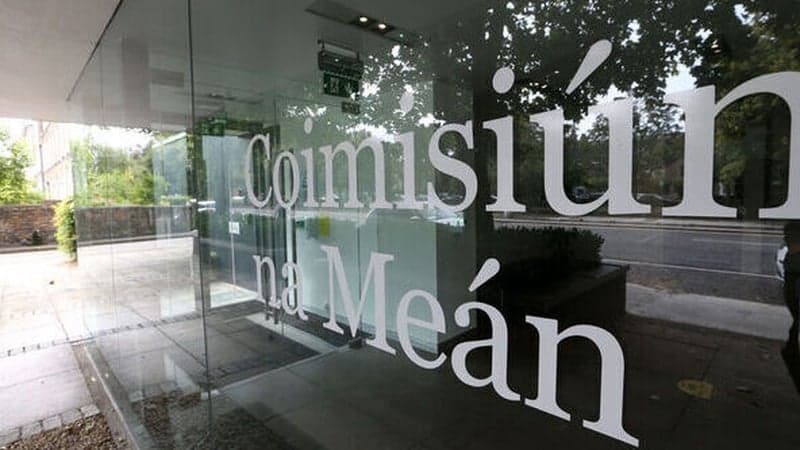
Ireland's media regulator, Coimisiún na Meán, is set to inform the Oireachtas Committee on Artificial Intelligence that stricter laws regarding AI-generated deepfake sexual imagery could be beneficial.
Separately, message board 4chan says it will refuse to pay an expected £520,000 fine from the media regulator.
A psychedelic medicine has performed well in a late-stage trial for depression, with regulators now reviewing the results for potential approval.

A Wall Street regulator has given approval for the intraday trading of WisdomTree's tokenized money market fund.

An air ambulance carrying seven people crashed in Jharkhand's Chatra district today, the aviation regulator DGCA said today.

The Forum for People's Collective Efforts (FPCE) states that high disposal rates by the Real Estate Regulatory Authority (RERA) do not reflect effective recovery for homebuyers.

Karachi blast exposes deadly cost of illegal gas compressors, chronic regulatory failure

The Council for Electronic Media (CEM) unanimously approved the composition of the Management Board of Bulgarian National Television (BNT), as proposed by the new Director General Milena Milotinova. The decision was made with five votes in favor.

Energy regulatory commissions from North Macedonia and Greece are holding a workshop focused on connecting their electricity markets. This initiative follows North Macedonia's new Energy Law, with teams working to align domestic legislation with European standards.

The Nigerian Electricity Regulatory Commission (NERC) has issued a critical public safety warning, advising against touching victims of electrical shock to prevent further harm.
The Federal Energy Regulatory Commission (FERC) has approved Blackstone's acquisition of TXNM Energy.

The Czech Energy Regulatory Office (ERÚ) imposed a record 18.5 million CZK in fines last year on energy traders for practices harmful to consumers, marking the highest amount in the office's over twenty-year history.

Mark Pollard has been appointed as the new Communications Regulator for the Falkland Islands, set to fully take on the role in April after the current incumbent steps down.

Letovi su obustavljeni u tri zračne luke u Moskvi u nedjelju navečer, izvijestila je zrakoplovna regulatorna agencija Rosaviatsia vezano uz napade dronom za koje je gradonačelnik Moskve rekao da su od

Donald Trump has warned Netflix to remove Democratic foreign policy expert Susan Rice from its board or 'face the consequences,' as the streaming platform pursues a takeover of Warner Bros Discovery and faces regulatory scrutiny.

Türkiye is implementing flexible pricing for electric vehicle charging services, a move expected to lower costs for users. This change follows recent regulatory approvals by the Energy Market Regulatory Authority.

India's insurance regulator unveiled a facility in late 2011 allowing individuals to port their health insurance policies from one insurer to another, providing options for better terms.
A Dutch regulator has issued an order for Polymarket, a prediction market platform, to cease its unlicensed betting operations within the Netherlands.

The medicines regulator is suggesting the minimum age limit for trial should be raised to 14.
Paramount Claims Regulatory Win In Warner Bros. Bid—But That’s Not Entirely Clear Forbes
Netskope has launched Netskope One Data Lineage, a new feature designed to improve data tracking and ensure regulatory compliance for businesses.
Crypto and fintech companies are increasingly looking to acquire existing banks as a faster route to obtaining banking licenses and navigating regulatory hurdles.
Crypto and fintech companies are reportedly seeking to purchase existing banks as a strategy to bypass traditional regulatory hurdles and gain quicker access to banking licenses.

The state regulator claimed the messaging app failed to crack down on third-party services that gather and sell the personal data of Russians.

Axel Springer is supporting a new £500 million bid for the Telegraph from New York Sun owner Dovid Efune, promising more upfront cash if DMGT faces regulatory hurdles.

ISLAMABAD: To salvage government credibility, Power Minister Awais Leghari on Thursday decided to honour all applicants of net-metering solar connections till the change of regulations on Feb 8 and directed electricity distribution companies (Discos), including K-Electric, for its implementation. At a meeting of the Power Division’s attached entities, the minister was informed that 5,165 consumers had applied for net-metered connections by the cut-off date of Feb 8 — the day the National Electric Power Regulatory Authority (Nepra) notified the Prosumers Regulations 2026, replacing the net-metering framework with net billing and negatively affecting rooftop solar economics for households and industry. All these applications entailed a net-metering capacity addition of about 250.8 megawatts. “All net metering applications minister on commerce and industry. He was later sworn in as the provincial minister for agriculture and cooperatives. Meanwhile, Sardar Bhootani continued his legal fight and filed a petition against the ECP’s decision in the FCC. The court, after prolonged hearings, accepted the petition of Sardar Bhootani and reserved its verdict. A day before the FCC was set to announce its verdict, Mr Zehri tendered his resignation. The next day, the FCC suspended Mr Zehri’s notification as the returned candidate from the Balochistan Assembly PB-21 constituency. Later, the ECP issued a notification de-seating him as an MPA. As a minister, he had differences with CM Bugti and, after resigning, accused the chief minister of interfering in his constituency. Published in Dawn, February 20th, 2026
ONE Gas (OGS) has released the transcript of its fourth-quarter 2025 earnings call, providing insights into its financial performance.
Denison Mines has received the final regulatory approval required to proceed with the construction of its Phoenix uranium mine.

Despite existing laws, Nigeria continues to struggle with widespread gas flaring, indicating a need for stronger regulatory enforcement rather than new legislation to address the issue.

The competition for ownership of Warner Bros. Discovery is drawing the attention of EU regulators, who may play a crucial role in the outcome of the acquisition.
A roundup of market discussions and insights concerning the automotive and transport industries.

Two exchange-traded funds have built exposure to Elon Musk's SpaceX that surpasses the 15% limit set by the SEC, pushing regulatory boundaries in their rush to acquire private stocks and debt.
David Solomon spoke weeks after a Senate panel advanced a cryptocurrency market bill to create a national regulatory structure for crypto.

Trump Coal Regulator to Boost State Role in Mining Oversight Bloomberg
The Financial Reporting Council (FRC) has updated its framework for adapted formats in annual report accounts, indicating changes in regulatory guidelines for financial reporting.

Gabonese authorities have imposed an indefinite social media blackout, suspending Facebook and TikTok, citing risks to social cohesion and national stability.

Gabon's media regulator has suspended social media platforms indefinitely, stating the ban is due to the 'spreading of false information'.

A trio of recent court cases is providing rulings on the extent to which accountants are held responsible for detecting fraud and errors in financial reporting.
Kalshi, a prediction market platform, faced a significant legal setback in its court battle to maintain its operations in Nevada, impacting its regulatory standing.
Regulatory panel says teacher's conduct fell "significantly short of the standards expected".
Despite ongoing regulatory uncertainty, companies are increasingly prioritizing disclosures related to Scope 3 emissions.

Global financial regulators are expressing concerns over the increasing use of credit risk transfers by banks, with Barclays identified as a major participant in these transactions that introduce new risks to the financial system.
Ivan Leong, like many other millennials and Gen Z in Singapore, has ditched the corporate grind and opened small F&B businesses. Aditi Bharade "We're the same age," I told Ernest Ang, a 24-year-old who opened an eatery two years ago with his grandmother's recipes. And yet, it feels like we live in different worlds. Every day, he whips up large batches of fried chicken and beef rendang in Singapore's 90-degree tropical heat. On the other side of the island, in the glitzy financial district, I write about the Trump administration and the general chaos of the world. I started my first job in a newsroom after graduating from college in 2024, diving headfirst into the corporate grind. I sign off at 5:30 p.m. and value the work-life balance my writing job offers. Last year, I started collecting stories of Singaporean Gen Zers and millennials shunning the comfort and stability of the 9-5 in favor of starting their own food businesses — ventures that come with backbreaking long hours. I was humbled. Au Hui Her, a millennial bakery owner, starts prepping loaves of sourdough bread at 4 a.m. Aditi Bharade Hawker centers, like where Ang set up shop, are the go-to for budget meals in Singapore. They're cheap, hearty, and convenient, and I've eaten from them as long as I can remember. There are 123 hawker centers in the country, managed by the National Environment Agency. On average, each center has about seven to 10 individual stalls. Traditionally, they sell dishes like Hainanese chicken rice, bak kut teh, a peppery and flavorful pork soup, or nasi lemak, aromatic rice served with dishes. The stalls are typically run by middle-aged to senior hawkers. Hawker centers in Singapore are typically run by older business owners who sell traditional fare. Aditi Bharade But as younger hawkers join the business, there's been an increase in specialty stalls selling matcha, craft beer, baked goods, and fusion dishes. Success is an uphill battle, with a massive failure rate due to rising store rents and a frugal consumer base. In 2025, 3,074 food and beverage businesses in Singapore closed their doors, per statistics from the Accounting and Corporate Regulatory Authority of Singapore. This has not deterred hopeful entrepreneurs — 4,103 new food businesses opened last year. Ernest Ang, 24, opened a restaurant featuring his grandmother's recipes, and said he prefers the life to working in an office. Aditi Bharade Most of the young chefs I interviewed work six to seven days a week, getting up well before the sun rises to prep ingredients for the day and retiring late into the night after feeding hungry dinner crowds. I spoke with eight Gen Z and millennial F&B owners across the country about what makes them tick, what fears give them chills at night, and if they regret choosing a risky career path. Spoiler: They don't. Credits Reporter: Aditi Bharade Editors: Cheryl Teh, Meghan Morris Read the original article on Business Insider
This cluster includes news on analyst ratings, significant investment filings, regulatory compliance, proposed rights issues, and new business orders for individual companies.
Nexo plans its US return after an SEC settlement, while a new report highlights cryptocurrency's increasing role in human trafficking networks.
The Bangladesh Telecommunication Regulatory Commission (BTRC) is seeking government approval to allow Starlink to export bandwidth, potentially expanding internet access.
A homebuyer advocacy group has alleged that several state regulators have failed to publish the annual reports mandated under the law. Has RERA improved project delivery? What are RERA reports and why are they important for protecting homebuyers? We take a look:

Lenders’ rising profits make international mergers more attractive despite regulatory hurdles

In South Carolina and 16 other predominantly Republican states, legislators are actively working to limit the power and scope of state regulatory agencies.
Water companies in England and Wales are facing criticism for rising bills, deteriorating river health, and lack of investment, posing a challenge for regulators.

Economists at the European Central Bank are questioning the dominance of Ireland and Luxembourg in asset management, warning that fragmented national regulation could create supervisory blind spots.

Prediction platforms like Polymarket and Kalshi are experiencing rapid growth, prompting confusion and concern due to their less regulated nature compared to traditional betting sites.
A prominent Czech businessman expresses concerns about Europe's pragmatism, as the continent struggles with an overwhelming amount of EU red tape and regulations.

India’s aviation regulator issued a sweeping safety warning to charter flight operators on Tuesday

Financier Odey has been granted permission to argue the Financial Conduct Authority's 'animus' in his upcoming March trial, after the regulator attempted to block parts of his legal arguments.
The British data protection regulator on Tuesday fined the internet forum Reddit nearly $20 million for failures in handling children's personal data.

Bernard Arnault and his five children have informed the stock market regulator that they now hold over 50% of the global luxury group LVMH, crossing a new ownership threshold.
Hemp-derived intoxicating drinks are on the verge of vanishing due to regulatory changes, prompting a CEO to lead efforts to save the industry.

The head of the Data Protection Commission said it is “up against very well-resourced legal teams” when big tech companies challenge the fines it levies.

The information comes as Meta is facing a wave of litigation and regulatory threats globally linked to the welfare of young users on its platforms

The Department of Political Science at the University for Development Studies (UDS) recently concluded its national competition on international trade law, policy, and regulatory governance.

Air India is facing increased scrutiny from regulators after technical incidents, including fuel leaks, reached a 14-month high, following a major crash last year.

Italian energy company Eni is expected to reach a final investment decision for its gas projects in Indonesia next month, according to the country's energy regulator.
INDIA-HEALTH-REGULATORY:India's drug regulator inspected 90% of cough syrup makers, found lapses in some, official says (Feb 23)
Hemp-derived drinks that produce a high are on the verge of vanishing from the market, prompting a CEO to advocate for their preservation amidst regulatory changes.
Investors are reportedly worried about Hims & Hers' profitability due to its aggressive expansion plans, a recent Super Bowl ad, and increased legal and regulatory scrutiny over its weight-loss drug business.
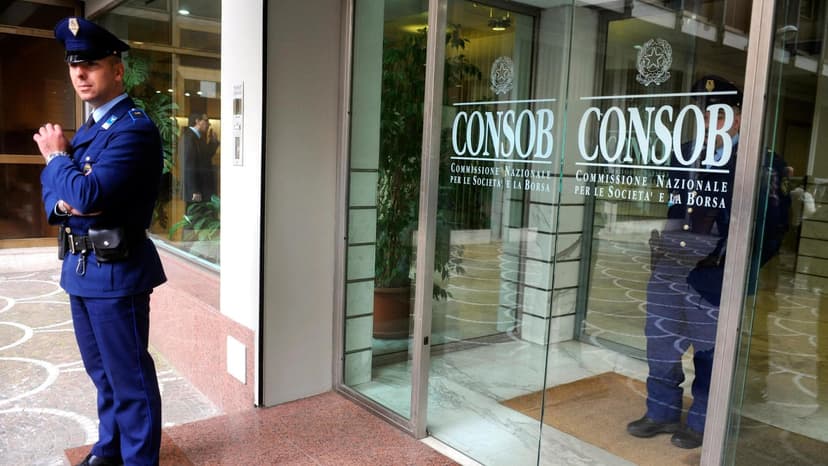
Several investment funds, including Amber Capital, Decagon Am, and Sand Grove Capital, which collectively hold 20% of Tinexta, are contesting the price of a takeover bid at 15 euros per share and have written to the Italian market regulator Consob.
A US ocean regulator is facing criticism for making changes to a rule designed to protect right whales, sparking concerns among environmental groups and conservationists.

Ofgem says about 140 proposed projects, driven by AI use, could require more power than current peak demand
Montenegro's Agency for Audiovisual Media Services has temporarily banned the broadcasting of TV Pink's morning program, 'Novo jutro,' hosted by Jovana Jeremić, due to hate speech and discrimination.
An article outlines five critical factors for individuals planning to buy property in India, emphasizing the importance of verifying legal titles, regulatory compliance, and understanding total costs.

Ofgem says about 140 proposed projects, driven by AI use, could require more power than current peak demand The amount of power being sought by new datacentre projects in the UK would exceed the country’s current peak electricity consumption, according to an industry watchdog. Ofgem said about 140 proposed datacentre schemes, driven by use of artificial intelligence, could require 50 gigawatts of electricity – 5GW more than the country’s current peak demand. Continue reading...

Short-term rental providers in Slovenia are warning of chaos caused by a 'harmful and dysfunctional law' for which even basic regulations have not been prepared.

Gabriel Andronache, Vice-President of the National Energy Regulatory Authority (ANRE), stated that price increases on store shelves cannot be attributed to energy costs, as companies paid 1.16 lei in 2025.
The UK regulator Ofcom has fined 8579 LLC £1.35 million for failing to implement proper age verification measures on its pornographic content.
Bret Taylor, OpenAI's board chair, is a huge name in the AI world. He doesn't want his employees to use the tech for his meetings. YouTube/@uncappedpod Bret Taylor, OpenAI's board chair, prefers his board members to write their meeting prep the old-fashioned way, without AI. Taylor told the Uncapped podcast that elegantly writing material in a concise way demonstrates strategic thinking. He also predicted regulators will seek out AI agents in order to minimize the risk of human-only oversigh...
Doug Gurr, a former Amazon executive, has been named the permanent chair of the United Kingdom's antitrust regulatory body.

By Udeme Akpan, Energy Editor Dangote Refinery has resumed the sale of Premium Motor Spirit (PMS), also known as petrol, to major marketers and depot owners under a revised distribution framework endorsed by the Nigerian Midstream and Downstream Petroleum Regulatory Authority (NMDPRA). The move represents a significant shift from the previous arrangement in which products were […] The post Dangote Refinery targets depot owners, major marketers in new marketing model appeared first on Vanguard...

China Is Cracking Down On "Stock Market Influencers" As AI Surge Overheats Market Chinese regulators are tightening oversight of aggressive influencer promotions for investment products, worried that an AI-driven tech surge — encouraged by state policy — is overheating the market, according to Nikkei. In late January, media reports said the China Securities Regulatory Commission (CSRC) penalized a fund firm, identified as Fund D, for paying unqualified online influencers to mark...
The Bangladesh Energy Regulatory Commission (BERC) has announced an 18% reduction in the price of furnace oil, bringing it down to Tk 70.1 per litre.

Donald Trump is pressuring Netflix to remove former U.S. Ambassador and National Security Advisor Susan Rice from its board, threatening 'appropriate consequences' after her statements angered the White House.
Türkiye is implementing flexible pricing for electric vehicle charging services, following new regulatory changes, with the aim of lowering costs for users.

The vapes used to be obvious. Bright displays of flavoured liquid, a shop just down the road, a transaction as unremarkable as buying shampoo. Batrisyia, 28, remembers how easy it was. Those days are gone. Or rather, in Malaysia at least, the trade has moved under the table. “It’s definitely less open now,” said Batrisyia, a Johor native who asked to be identified by a pseudonym for fear of backlash. “You don’t see big vape displays like before, and we can’t buy online any more. But it hasn’t...
A Dutch regulator has issued an order for Polymarket to cease its unlicensed betting operations.

A clinical trial in the UK for puberty blockers has been paused after the medicines regulator raised concerns, particularly regarding the minimum age for participants.
Mexico's antitrust regulator has rejected Visa's proposed deal with Prosa, a major payment processor in the country.
Exclusive | Elizabeth Warren Has Questions About the Shake-Up Inside the Fed’s Banking Regulator The Wall Street Journal
Crypto and fintech companies are increasingly buying existing banks as a strategy to bypass lengthy regulatory processes and gain banking licenses.
Crypto and fintech companies are looking to buy existing banks as a faster route to obtaining banking licenses and navigating regulatory hurdles.
Press freedom in Turkey further deteriorated in 2025, with authorities tightening control over media through prosecutions, regulatory penalties, and online censorship, especially during a political crisis.

A Loblaw-owned Superstore has been fined $10,000 by Canada’s food regulator for falsely promoting imported food as a 'Product of Canada.'
Two commonly used medications, doxycycline and carbimazole, are being issued stronger safety warnings by regulators due to identified potential mental health side effects.
Kenya's market regulator has extended the Kenya Pipeline IPO as the company struggles to reach its sale target, with only 20% sold by Tuesday.

The Administration for Children and Families has purged thousands of obsolete guidance documents to streamline operations and reduce confusion for programs like Head Start.
Senator Elizabeth Warren is raising concerns and asking questions about recent changes within the Federal Reserve's banking regulatory body.
A recent court ruling mandates that businesses operating bars with guest rooms must obtain valid licenses from the Tourism Regulatory Authority.

President Lee Jae Myung has urged regulators to consider permanently expelling repeat cartel offenders who abuse market dominance, aiming to implement stronger measures against anti-trust violations.

NYU Langone Health is ending its transgender youth program, citing federal funding threats and a changing regulatory landscape in healthcare.
CFTC Chairman Michael Selig is siding with prediction markets in their ongoing legal battles with state regulators, intensifying the political debate.
A US startup wants to lure customers with lucrative cargo space unavailable on today's narrowbodies. Natlius US startup Natlius unveiled plans for a dual-deck blended-wing jet with a level for passengers and another for cargo. It's a familiar setup, but the ultra-wide jet would hold more freight than existing narrowbodies. The smaller, cargo-heavy plane could be built as a designated freighter and replace the Boeing 757. Airbus' CEO recently said the future of flying is a B2-bomber-shaped "blended-wing body" plane with passengers housed inside the plane's one giant wing for maximum efficiency. Aleksey Matyushev, the CEO of the US aerospace startup Natilus, told Business Insider that his company has taken that vision one step further by redesigning its proposed blended-wing plane, Horizon, with plans to offer more lucrative cargo space while still delivering the 50% lower operating costs and up to 250 seats previously promised. Instead of the single-deck seating layout originally planned, the newly unveiled Horizon Evo — which the company expects to enter service as soon as the early 2030s — reimagines what cargo-heavy passenger jets can look like by adding a "dual-deck" layout. So far, Natilus' blended-wing vision is just a sketch on paper, and a mini-sized prototype it's been flying; actually developing and certifying the new plane type and getting it into the air is a much longer road. The dual deck design would have cargo sitting below the passengers, as is the case with traditional airplanes. Natilus Still, the dual-deck idea should be familiar to regulators and airlines, as it is the configuration of traditional tube-and-wing jets where passengers sit in a single level above the cargo hold. When installed on an ultra-wide blended-body, it results in a very cargo-heavy plane. Evo is expected to boast 2,600 cubic feet of dedicated cargo space on the lower level. For context, most Boeing 737s or Airbus A320s, which are at least 10 feet longer but have a cabin roughly half as wide despite similar wingspans, offer between roughly 1,300 and 1,800 cubic feet of belly cargo space. This cargo focus comes at a time when belly freight has become one of the most reliable money-makers in aviation (e-commerce helped keep airlines afloat during the pandemic). The lure could help break the Airbus-Boeing duopoly while also addressing a projected shortfall of roughly 15,000 narrow-body aircraft over the next two decades. "The market has gravitated toward a single-deck [blended-wing] layout because it's simpler to design and build in many ways, but I just don't see it as operationally better," Matyushev said. Natilus said its futuristic Evo jet will fit into existing airport infrastructure. Natilus California-based competitor JetZero, for example, is developing a single-deck version. Company leaders have previously said there is a lower deck for the landing gear and some cargo containers, but it could move that floor up to create more space. Making a dual-deck layout in a blended-wing aircraft is challenging. Unlike conventional jets, the design spreads volume horizontally rather than vertically, and stacking passengers above a cargo deck in this uniquely triangular-shaped airframe requires careful structural and engineering solutions. Evo's cargo economics could shake up the market for freight-reliant carriers. With roughly 11,000 cubic feet of cargo space across its two levels, Matyushev said Evo could serve as a dedicated freighter — potentially replacing planes like the Boeing 757. "There's a huge product gap left behind by the 757; companies like UPS and FedEx heavily rely on that configuration," Matyushev said. "Evo has the same volumetric capacity as a 757 but in a smaller airframe." Beyond cargo, Matyushev said the plane's unique geometry would similarly enhance the customer experience: airlines could fit the wide upper level with unique living spaces, such as a playroom or mini-offices. Natlius envisions a 12-abreast economy cabin with the potential to also install unique spaces that are not practical on traditional jetliners. Natilus He added that the economy cabin would feature more overhead bins and three aisles for better comfort, door access, and safety during evacuations: "It'd have four sets of three seats across, which is close to the A380," Matyushev said, referring to the superjumbo's possible 11-abreast seats." We're thinking about it like a widebody layout in a narrow-body type of footprint." Matyushev also said that Evo would have windows — something Airbus' top executive warned could be absent from some blended-wing designs. A windowless passenger jet could create a claustrophobic environment, and flight attendants may struggle to see outside as easily during an emergency. Natilus doesn't have a prototype of Evo, but a subscale model of its blended-wing cargo plane, called Kona, has been test-flying since 2023. Kona has secured orders from companies like US-based Ameriflight and Canada-based Norlinor, while Indian carrier SpiceJet has signed a conditional deal for 100 Evos. The above rendering shows Natilus' proposed "privacy pods" onboard the wide BWB jetliner. Natilus Natilus has raised $28 million in Series A financing to support its first full-scale Kona prototype and further development of Evo. It typically costs billions of dollars to develop passenger-ready commercial jetliners, and Natilus has a long way to go. The 737 Max cost around $2 billion to develop (before safety issues and the subsequent global grounding forced Boeing to redesign the plane). It was built on an older airframe that cost around $1.1 billion, in inflation-adjusted dollars, to develop. Meanwhile, the Airbus A320neo cost just over $1 billion to develop; it was also built on an older airframe, that originally cost around $3 billion to develop. Natilus isn't the only company betting on a Jetsons-like blended-wing aircraft. United Airlines has tentatively committed to buying up to 200 of JetZero's "Z4," which it previously described to Business Insider as a "living room in the sky." Airbus has also been developing a commercial flying wing since 2017 as part of its ZEROe program, which aims to build zero-emission airlines powered by hydrogen rather than traditional jet fuel. That project flew a demonstrator in 2019 but has since been delayed at least a decade from its initial 2035 timeline. Read the original article on Business Insider

Nevada state regulators have filed a lawsuit against Kalshi, seeking to prevent the company from offering event contracts that would allow residents to bet on sports.
The White House asserts that the Consumer Financial Protection Bureau's 'regulatory burden' has cost consumers billions of dollars.

Elon Musk's social media platform X faces a European Union privacy investigation after its Grok AI chatbot started spitting out nonconsensual deepfake images, Ireland's data privacy regulator said Tuesday. Ireland's Data Protection Commission said it notified X on Monday that it was opening the inquiry under the 27-nation EU's strict data privacy regulations, adding to the scrutiny X is facing in Europe and other parts of the world over Grok’s behavior.
Tesla avoids suspension by California regulator after corrective marketing changes Reuters
Kalshi's website Thomas Fuller/NurPhoto via Getty Images Nevada regulators sued Kalshi, saying its markets are actually illegal sports gambling. The suit was filed just as the Trump administration sided with prediction markets. Other states have also sued Kalshi, and many legal observers expect the Supreme Court to weigh in. Nevada gambling regulators sued the prediction markets company Kalshi on Tuesday, saying the platform's rapid growth forced their hand. The Nevada Gaming Control Board and the state attorney general sued in Carson City District Court shortly after a federal appeals court rejected a request by Kalshi to stop the state from taking action. The state is seeking an order to stop Kalshi, the country's largest prediction market, from operating what it sees as an unlicensed sports betting operation. "Kalshi has continued to dramatically expand its business, rather than attempting to maintain any kind of status quo," Nevada authorities said in a letter earlier this month. The regulators emphasized that Kalshi has grown rapidly, doing 27 times as much business on Super Bowl Sunday this year compared to the year before. Meanwhile, regulated Nevada gambling operations saw their business shrink, the state said. A Kalshi spokesperson declined to comment on Tuesday afternoon, but the company swiftly asked a federal court to take over the new state case. They argued that only federal law applies to prediction markets, and that the new state enforcement action turns on the same questions that federal courts are already considering. Kalshi has said that its markets are "event contracts," a financial instrument regulated by the Commodities Futures Trading Commission. The CFTC on Tuesday sided with another events-contracts company that is fighting with Nevada regulators, and its chairman, Michael Selig, filmed a video statement defending the new platforms. "Today, the CFTC is taking an important step to ensure that these markets have a place here in America," Selig said. "To those who seek to challenge our authority in this space, let me be clear: we will see you in court." Economists and political scientists have long been fascinated by prediction markets as a way to channel the so-called wisdom of the crowds. They were generally a niche activity until the 2024 US presidential election, when people wagered millions of dollars on sites like Polymarket. Since the election, sports and cryptocurrency speculation have become the dominant markets. Today, more than 90% of the money that flows through Kalshi's platform is staked on sports-related events, and the growth of platforms like Kalshi has spurred traditional sportsbooks like FanDuel and DraftKings to create their prediction markets to take advantage of the light-touch regulation and lower taxes they offer. Legal battles are pending on the East Coast as well, with regulators in Maryland and New Jersey having clashed with prediction markets. Attorneys and other industry commentators have said they expect the Supreme Court to eventually weigh in on the legality of sports contracts on prediction markets. Read the original article on Business Insider

White House Council of Economic Advisers report estimates regulatory burden has cost consumers more than $237bn

At least 20 federal suits filed against companies like Kalshi and Polymarket as lawmakers call it ‘loophole’ for gambling State lawmakers and gaming regulators across the US are escalating their fight against prediction markets, arguing that the fast-growing platforms are “basically gambling but with another name”. At least 20 federal lawsuits have been filed nationwide, disputing whether companies such as Kalshi and Polymarket should be treated as federally regulated financial exchanges, as they maintain, or as gambling operations that should be regulated like state-licensed sportsbooks. Continue reading...

Artificial intelligence is unlikely to replace traditional feng shui masters in Hong Kong despite a growing trend of people using chatbots for fortune-telling.
Lufthansa's new Allegris business class has faced certification issues on the Boeing 787. It appears to have fixed the problem. MICHAELA STACHE/AFP via Getty Images Lufthansa's Boeing 787 business class debacle is almost over after a yearslong certification delay. The airline has been flying some Dreamliners with only four of the 28 high-dollar seats sold. Lufthansa expects to boost the number of sellable 787 business-class seats to 25 by mid-April. Lufthansa can finally start making money on its Boeing 787 Dreamliners after a certification debacle left one of its most lucrative cabins largely empty for months. The German flag carrier said on Monday that it will begin selling tickets for its Allegris business class on the 787. Allegris, Lufthansa's signature cabin concept, spans economy, premium economy, business, and first class, but the business class rollout has been particularly tricky. The program first launched on the Airbus A350 in May 2024, with the cabin spanning the entire plane. The first Allegris-equipped 787 followed in October 2025, but certification of business class dragged on due to the cabin's complexity: there are five staggered seat configurations in a single airplane cabin — some with doors or more legroom, others with extra-long beds. The middle front-row suite can be combined into a double bed. The first-row window seats have extra workspace. Lufthansa This is because the Dreamliner's geometry — including a slightly tighter usable footprint and different fuselage contouring compared to the A350 — made it harder to demonstrate to regulators that passengers could evacuate quickly from every seat, whether staggered, partially enclosed, or fully cocooned, in an emergency. The result? For months, only four of the 28 business class seats could be sold — the front-row Business Class Suites — leaving the remaining 24 empty. Business class is a cash cow for airlines, and by flying most of the cabin empty as competitors pour investments into their own premium seats, Lufthansa was essentially leaving money on the table. It has been a particularly costly headache for a carrier in the midst of a multi-year turnaround plan to restore profitability after years of financial pressure from frequent maintenance, aircraft shortages, rising operating costs, and labor strikes. Lufthansa even opted for an already-certified business-class seat to retrofit onto its Airbus A380s rather than risk another prolonged and costly certification process. But the saga is nearing the finish line. Beginning April 15, Lufthansa plans to carry passengers in 25 business-class seats on its 787s, with three remaining blocked in the second row of the cabin. Bookings are open, though it's unclear whether the news indicates the seats have been fully certified or if that's just Lufthansa's expected timeline. Lufthansa said "Classic" seats — one of the Allegris categories available — are free to secure with the premium fare. The others require an extra fee: this includes the first-row suites, the "Privacy" seat next to the window, the "Extra Space" seat with more legroom, and the "Extra Long Bed" with an over seven-foot sleeping surface. The three second-row seats that are blocked — and not yet available for booking — are two privacy seats and an extra-legroom seat. Some Allegris seats can be fully enclosed with extra workspace; others can combine into a double bed. LUKAS BARTH/AFP via Getty Images Lufthansa flies eight Allegris-equipped Dreamliners and expects to have 29 by the end of 2027. They are set to first fly from Frankfurt to Rio de Janeiro, Bogota, Cape Town, Shanghai, Hyderabad, Hong Kong, and Austin; New York-JFK and Los Angeles join the roster in June, followed by Delhi in July. As part of Lufthansa's greater multibillion-dollar fleet overhaul plan, Allegris is also being fit onto the airline's existing A350s and Boeing 747-8s, as well as its future, yet-to-be-certified Boeing 777Xs. A similar spacing issue on the 747 double-deckers' upper level means it will have a split business class: the lower deck will have Allegris, while upstairs will feature the plane's original cabin. Read the original article on Business Insider
U.S. crypto funds have seen substantial outflows, shedding $403 million, as the cryptocurrency market experiences price weakness, according to CoinShares.

Futures, Global Markets Rise With US Markets Closed For President's Day Stocks gained, bitcoin tumbled and bonds steadied after Friday's cool CPI data reinforced expectations that the Fed will cut interest rates on multiple occasions this year. With US markets closed for the Presidents’ Day holiday and mainland China’s markets closed for Lunar New Year holidays, trading was muted on Monday. As of 9:00am ET, futures on the S&P 500 added 0.4% and Europe’s Stoxx 600 index rose 0.4% as banking shares rebounded from a sharp decline last week. German bunds and Treasury futures were steady after US yields touched the lowest since December on Friday. The path of US interest rates remains in focus following Friday’s slower-than-expected US inflation print as traders fully price a Fed cut in July and the strong chance of a move in June. “The backdrop for equities is positive post CPI,” said Andrea Gabellone, head of global equities at KBC Securities. At the same time, there could be “more dispersion ahead as sentiment around key AI-exposed sectors is still very critical,” he added. That sentiment was echoed by other strategists seeking to distinguish between AI losers and winners. A JPMorgan Chase & Co. team led by Mislav Matejka urged caution on stocks at risk of AI-driven “cannibalization,” including software, business services and media companies. Meanwhile, banks are developing baskets to capitalize on the divergence: as we first reported last Thursday, Goldman launched a new basket of software stocks that goes long firms that will benefit from AI adoption, while shorting the companies whose workflows could be replaced. With AI disruption rippling through markets, a lot will come down to earnings resilience, in particular in the US. “When you look at the current earnings season, the companies are showing 13% of growth,” Nataliia Lipikhina, head of EMEA equity strategy at JPMorgan, told Bloomberg TV. “Overall, this is the reason why we continue to be positive on the S&P.” Later this week, traders will be watching for ADP private payrolls numbers on Tuesday and the minutes from the Fed’s January meeting on Wednesday for a fresh read on the economy. European stocks gained with bank shares rebounding, after posting their biggest weekly decline since April on worries about disruption from artificial intelligence. The basic resources sector lags, with Norsk Hydro among Europe’s worst performers as both Goldman Sachs and RBC downgrade the stock. Stoxx 600 rises 0.4% to 620.26 with 253 members down, 336 up, and 11 unchanged. Here are some of the biggest movers on Monday: NatWest shares rise as much as 4%, the most since October, as Citi analyst Andrew Coombs raises his price target on the UK bank to a Street-high. Seraphim Space shares rise as much as 9.2%, briefly hitting a new all-time high, after the space tech investment firm said the valuations of its four largest holdings increased over the final months of 2025. AECI shares rally as much as 6.1%, the most since July, after the South African commercial-explosives maker shared improved 2025 headline earnings per share guidance. Orsted shares rise as much as 3.8% after analysts at Kepler raise the recommendation to buy from hold over the Danish renewable energy firm’s outlook, despite ongoing uncertainty for the industry in the US. Norsk Hydro shares fall as much as 4.4%, extending Friday’s 5.9% earnings-triggered drop, after being downgraded at Goldman Sachs and RBC over disappointments and pricing pressures in the Norwegian aluminum company’s downstream business. Galderma shares slip as much as 2.2% after naming Luigi La Corte as its new chief financial officer following the news back in July that Thomas Dittrich was departing. Pinewood Technologies shares tumble as much as 32%, the most since April 2024, after Apax Partners said on Friday it will not proceed with a possible cash offer for the car dealership software provider. FlatexDEGIRO shares drop as much as 7.2% after BNP Paribas downgraded the online brokerage firm to neutral from outperform, saying the price reflects too much optimism about its market position in Germany. Maurel & Prom shares slump as much as 12%, pulling back after ending last week at a 2015-high, after announcing it is not currently authorized to resume oil and gas operations in Venezuela. Barratt Redrow shares fall as much as 3.7%, leading a drop in British homebuilders after Rightmove said house prices are stalling. Asian stocks slipped for a second day, led by declines in Japan as traders booked profits after last week’s post-election rally. Several markets were closed or held shortened trading sessions for the Lunar New Year holiday. The MSCI Asia Pacific Index was down 0.1%. Japan’s Topix Index fell 0.8%, with Mizuho Financial Group Inc. and Toyota Motor Corp. among the companies contributing to the index’s losses.In Hong Kong, AI model developer Minimax Group Inc. surged as much as 30% to more than four times its original listing price, while competitor Knowledge Atlas JSC Ltd. ended 4.7% higher. The market will be closed until Thursday. As investors across the region begin to reevaluate their bets on its artificial-intelligence-driven rally, traders in Japan cashed in gains driven by expectations of Prime Minister Sanae Takaichi’s proactive spending policies last week.Trading in Singapore ended early Monday and will be shut until Wednesday. Equity markets in mainland China, South Korea, Indonesia and Vietnam were closed. In FX, the yen is the notable mover in currencies, weakening 0.5% against the dollar and pushing USD/JPY back above 153. The offshore yuan is one of the better performers against the greenback. The Bloomberg Dollar Spot Index rises 0.1%. There is no cash trading in Treasuries due to the Presidents’ Day holiday. European government bonds are little changed In commdities, gold dipped below $5,000 an ounce, as traders booked profits from a gain in the previous session. Bitcoin tried anf ailed to stage a modest rebound; it last traded around $68,275 after posting its fourth consecutive weekly loss, with the cryptocurrency struggling to find clear direction as a weekend rally fizzled once the momentum ignition algos emerged. WTI crude futures tread water near $62.90 a barrel. Top Headlines President Trump said there will be voter ID rules in the mid-term elections this year, whether Congress approves it or not, and they will present a legal argument in an Executive Order. Furthermore, Trump said he has searched the depths of legal arguments not yet articulated nor vetted on this subject, and they will be presenting an irrefutable one in the very near future. Iran says potential energy, mining and aircraft deals on table in talks with US: RTRS Pentagon threatened to cut its ties with Anthropic over the company’s insistence that some limitations are kept on how the military uses its AI models: RTRS UK eyes rapid ban on social media for under 16s, curbs to AI chatbots: RTRS Rampant AI Demand for Memory Is Fueling a Growing Chip Crisis: BBG Warner Bros. Weighs Reopening Sale Negotiations With Paramount: BBG Companies Are Replacing CEOs in Record Numbers—and They’re Getting Younger: WSJ Europe aims to rely less on US defence after Trump's Greenland push: RTRS DOJ Tells Lawmakers Epstein File Redactions Complied With LawL BBG For College Applicants, Pressure to Make Summers Count Has Gotten Even Worse: WSJ Fed's Goolsbee (2027 voter) said on Friday that they are still seeing pretty high services inflation, and he hopes they have seen the peak impact of tariffs, while he added that the job market has been steady, with only modest cooling. The Break Is Over. Companies Are Jacking Up Prices Again: WSJ Trade/Tariffs USTR Greer said the US and Ecuador expect to sign a trade agreement in the coming weeks. China will waive import value-added taxes on selected seeds, genetic resources, and police dogs through to 2030 to increase agricultural competitiveness and breeding capacity. It was also reported that China will grant zero-tariff access to 53 African nations from May 1st, according to Bloomberg. Chinese Foreign Minister Wang Yi told his French and German counterparts that China and the EU are partners, not rivals, while he added that China and the EU should manage differences, deepen practical cooperation and work together on global challenges. A more detailed look at global markets courtesy of Newsquawk APAC stocks began the week in the green but with gains limited following a lack of major fresh catalysts from over the weekend and amid thinned conditions owing to holiday closures in the region and North America. ASX 200 traded marginally higher with upside led by tech, although gains are capped by underperformance in the utilities, mining, materials and resources sectors, while participants also digested a slew of earnings releases. Nikkei 225 traded indecisively with the index constrained by disappointing Japanese preliminary Q4 GDP data, which showed the economy returned to growth but failed to meet expectations with GDP Q/Q at 0.1% (exp. 0.4%), and annualised GDP at 0.2% (exp. 1.6%). Hang Seng finished higher in a shortened trading session on Chinese New Year's Eve but with upside limited by tech weakness amid some confusion after the Pentagon added several companies including Baidu, Cosco, BYD, Huawei, Nio, SMIC, Tencent, and more to a list of Chinese firms aiding the military on Friday, but then withdrew the updated list shortly after it was posted. Furthermore, price action was also restricted by the closure of mainland markets and the absence of stock connect flows, which will remain shut for more than a week. US equity futures kept afloat in quiet trade amid the absence of drivers and participants. European equity futures indicate a mildly positive cash market open with Euro Stoxx 50 futures up 0.1% after the cash market closed with losses of 0.4% on Friday. Asian Headlines Chinese President Xi called for the anchoring of economic growth around domestic demand as its main driver, in a speech during a key policy meeting late last year that was released on Sunday. China is to establish a permanent financial support framework to promote rural revitalisation and prevent a slide back into poverty, which represents a shift from transitional aid to long-term support. China’s market regulator summoned major online platform companies on Friday, including Alibaba, Douyin and Meituan, while it directed them to comply with laws and regulations, and rein in promotional practices, according to Bloomberg. US Secretary of State Rubio and Japanese Foreign Minister Motegi reaffirmed their commitment to deepen bilateral ties. Disney (DIS) sent a ‘cease and desist’ letter to ByteDance over Seedance 2.0 and alleged that ByteDance has been infringing on its IP to train and develop an AI video generation model without compensation, according to Axios. It was later reported that ByteDance said it would curb its AI video app following Disney's legal threats, according to the BBC. RBI tightened rules for loans provided to brokers and proprietary firms in an effort to reduce market speculation FX DXY eked slight gains in rangebound trade after a lack of major catalysts and with US participants away on Monday. EUR/USD was little changed amid the absence of any major macro catalysts and with light newsflow from the bloc, while comments from ECB President Lagarde and news that the ECB is to make its repo backstop available to other central banks across the world, did little to spur price action. GBP/USD held on to most of Friday's spoils but with price action contained by resistance around 1.3650 and following comments from BoE's Mann that the UK economy is sluggish and tepid, with consumers spending less due to being scarred by high inflation. USD/JPY edged higher and returned to above the 153.00 level in the aftermath of the weaker-than-expected preliminary Q4 GDP data for Japan. Antipodeans were mixed with little fresh macro drivers and a lack of tier-1 data from either side of the Tasman. Fixed Income 10yr UST futures traded little changed and held on to last week's spoils after returning above the 113.00 level in the aftermath of the softer US inflation data, while price action was contained to start the week by the closure of US cash markets for Washington's Birthday. Bund futures lacked demand in the absence of any major catalysts and with light newsflow from the bloc. 10yr JGB futures were marginally higher following disappointing preliminary GDP data for Q4, but with gains limited after failing to sustain a brief reclaim of the 132.00 level. Commodities Crude futures were rangebound amid light energy-specific newsflow from over the weekend and after last Friday's indecisive performance, where attention was on a source report that noted OPEC+ is leaning towards resuming oil output hikes from April, but with no decision made. Slovak PM Fico said he has information that the Druzhba pipeline has been fixed after damage in Ukraine, although he believes that supplies to Hungary and Slovakia have become a part of political blackmail. Spot gold took a breather after edging higher in the aftermath of the recent softer-than-expected US inflation data, with price action also contained by the holiday closures across Asia and North America. Copper futures were subdued, with their largest buyer away for more than a week due to the Chinese New Year/Spring Festival holiday. Texas venture-backed startup Hertha Metal vowed mass production of steel with 25% cost savings, which could reduce US reliance on imports. Geopolitics: Middle East US military is preparing for potential operations against Iran that could last for weeks if US President Trump orders an attack and the US fully expects Iran to retaliate, according to sources cited by Reuters. US President Trump told Israeli PM Netanyahu during a meeting in December that he would support Israel striking Iran’s ballistic missile program if the US and Iran are not able to reach a deal, according to CBS. Iran confirmed that indirect talks between the US and Iran will resume in Geneva on Tuesday under the mediation of Oman, while Iranian Foreign Minister Araghchi left for Geneva on Sunday. Iranian diplomat said Iran is open to nuclear deal compromises if the US discusses lifting sanctions, while it was also reported that Iran said potential energy, mining and aircraft deals are on the table in talks with the US. Israel’s cabinet approved the proposal to register West Bank lands as ‘state property’, while Palestinians condemned the ‘de facto annexation’ which Peace Now said likely amounts to a ‘mega land grab’. Geopolitics: Ukraine US President Trump said on Friday that Ukrainian President Zelensky is going to have to get moving and that Russia wants to get a deal. US Secretary of State Rubio said they don’t know if Russia is serious about finding an end to the war in Ukraine and will continue to test it, while it was reported that he met with Ukrainian President Zelensky on security and deepening defence and economic partnerships. Ukrainian drones targeted Russia’s Taman seaport and fuel tanks in the Black Sea region. UK and European allies were reported on Friday to be weighing seizing Russian shadow fleet ships and tightening curbs on Russia's economy. French Foreign Minister Barrot said some G7 nations have expressed a willingness to proceed with a maritime services ban on Russian oil, which they hope to include in the 20th sanctions package that they are actively preparing. Geopolitics: Other European Commission President von der Leyen said that they face the very distinct threat of outside forces trying to weaken their union, while she added that mutual defence is not an optional task for the European Union; it is an obligation within their own treaty, and it is their collective commitment to stand by each other in case of aggression. Pentagon said the US military struck an alleged drug cartel boat in the Caribbean, which killed three people. DB's Jim Reid concludes the overnigt wrap I hope you all had a good weekend. To stay in Winter Olympics mood the family watched "Cool Runnings" last night. I haven't seen it for 32 years. Please don't tell anyone but I had a few tears in my eyes at the end. I blamed it on the hay fever that has now started. There will be a lot of tears out there in markets for other reasons at the moment. Just two weeks ago, the idea of AI-driven disruption still felt like an abstract, almost academic thought experiment—something we could safely revisit once we had clearer evidence of how AI would be deployed and integrated across the economy. Fast forward 14 days, and markets have wiped out well over a trillion dollars of global equity value on the fear that AI could fundamentally reshape business models and compress profitability across a wide range of industries, including software, legal services, IT consulting, wealth management, logistics, insurance, real estate brokerage and commercial real estate. Some of the sell off in “old economy” sectors feels overdone to me. But as I argued in our 2026 World Outlook back in November, the real challenge is that even by the end of this year we still won’t have enough evidence to identify the structural winners and losers with confidence. That leaves plenty of room for investors’ imaginations—both optimistic and pessimistic—to run wild. As such big sentiment swings will continue to be the order of the day. My instinct is that the reaction in things like commercial real estate, for example, has been particularly exaggerated. Markets seem to be extrapolating a scenario in which vast numbers of white collar workers are made redundant almost overnight, leading to a dramatic collapse in office demand. If that view turns out to be correct, we’ll be facing societal challenges far larger than anything currently being priced into equities. While trying to catch a falling knife may be too risky for many, beginning to cushion the descent could be sensible in many old economy sectors. Markets can’t sustain a disruption narrative across multiple sectors for months or quarters without concrete evidence — and that evidence is likely to take much longer to emerge. Fascinating times. As for this week, today is a US holiday but inflation will remain in the spotlight at a global level after Friday's slightly softer US CPI which helped contribute to a decent rates rally to end the week. Prints are due in the US (PCE - Friday), the UK (Wednesday), Canada (Tuesday) and Japan (Friday). Other economic highlights will include the FOMC minutes (Wednesday), Q4 GDP in the US (Friday), as well as the global flash PMIs (Friday). Earnings reports will feature Walmart (Thursday), Nestlé (Thursday) and BHP (today). It's the earnings calm before next week's Nvidia storm. In the US, this holiday shortened week (President's Day today) features a data calendar dominated by releases that were pushed back by last year’s government shutdown. The most consequential updates will land on Friday, when the advance estimate of Q4 GDP arrives alongside December’s personal income and consumption figures—key inputs for shaping expectations for the early part of this year. For markets assessing the underlying pulse of demand heading into 2026, private final sales to domestic purchasers (PFDP) will carry more weight than the headline GDP print. This indicator—closely monitored by Fed Chair Powell—is expected by our economists to slow to 2.0% from 2.9% in Q3, though risks appear tilted upward. One swing factor: Wednesday’s durable goods report, where modest gains outside of transportation could soften the deceleration. On the consumer front, real PCE growth is expected to cool to 2.5% after two quarters of outsized strength but should still signal ample momentum heading into the new year. Friday’s income and spending report will also offer the latest reading on core PCE, the Fed’s preferred inflation gauge. Our economists expect another 0.4% monthly increase for December, lifting the year over year rate to 2.9%. Updated seasonal factors from last week’s CPI release suggest some mild downward pressure on inflation trends in the second half of 2025. Still, January’s CPI data, although softer than we anticipated, do not translate into equivalent relief for core PCE—in fact, our team currently sees another 0.4% gain for January's release (delayed until March 13th). Depending on the strength of medical services, airfare, and portfolio management components in the upcoming PPI report, a 0.5% monthly rise cannot be ruled out, which would push the year over year rate toward 3.1%. So don't get too excited about the softer CPI last week and the huge rates rally. Additional releases this week will help clarify whether recent severe winter weather has disrupted factory sector activity. January industrial production, due Wednesday, should benefit from a jump in utility output, while weather effects may weigh on the Empire State Survey tomorrow and the Philadelphia Fed survey on Thursday. Labor market data will also be in focus, particularly Thursday’s jobless claims, which line up with the survey week for the February employment report. As our economists have pointed out, private nonfarm job gains have averaged 103k over the past three months, slightly above the pace at this point in 2025 and matching the start of 2024. See their latest US employment chartbook here. This week will also feature a dense lineup of Federal Reserve speakers which you can see alongside all the key global data in the day-by-day week ahead calendar at the end as usual. Moving away from the US, inflation will also be in focus in Japan (Friday) and Canada (tomorrow). For the former, our Chief Japan Economist sees the January nationwide CPI showing a slowdown in both core CPI inflation ex. fresh food to 2.1% YoY (+2.4% in December) and core-core CPI inflation ex. fresh food and energy to 2.7% (+2.9%). Also important will be the global flash PMIs due on Friday as a health check on global growth. In Europe, the spotlight will be on UK inflation (Wednesday), with labour market data due tomorrow and retail sales on Friday. Our UK economist expects headline CPI inflation to drop to 3.0% YoY (3.4% in December) and core CPI also landing at 3.0% YoY (3.2% YoY). See more in his full preview here. In terms of key rate decisions, the RBNZ are expected to remain on hold on Wednesday. Finally, the Munich Security Conference wrapped up over the weekend, where key topics included Ukraine, Russia, and the fate of Greenland. And while US Secretary of State Marco Rubio’s speech was nothing like Vice President JD Vance’s at last year’s conference, which triggered a “wake-up” call for European leaders, Rubio reiterated the administration’s view that Europe needed to leave behind its focus on energy policies, trade and mass migration. Recapping last week now, the tech volatility that has dogged markets since the start of the month broadened into a far more indiscriminate sell-off. The trough came on Thursday, marked by a sharp drop in software stocks, but the weakness extended well beyond tech. Companies across wealth management, real estate and financials suffered double digit declines, underscoring how widespread the pullback has become. Market breadth confirmed this shift as the equal weighted S&P 500 fell -1.37% on Thursday, though it managed to finish the week up +0.29% (+1.04% on Friday). Ultimately, the sell-off left the major US indices on the back foot: the S&P 500 slipped -1.39% (+0.05% on Friday), the Nasdaq lost -2.10% (-0.22% on Friday), and the Magnificent 7 slid -3.24% (-1.11% on Friday). Although the AI scare dominated sentiment, a heavy slate of US data also shaped the market narrative. Early in the week, softer prints—including flat December retail sales, a dovish Q4 Employment Cost Index, and slower Q4 growth expectations from the Atlanta Fed—pushed Treasury yields lower across the curve. That picture shifted midweek after a stronger than expected January jobs report, which delivered the largest gain in nonfarm payrolls (+130k vs. +65k expected) since December 2024 and reinforced confidence that the US economy carried solid momentum into 2026. Then on Friday, January CPI came in below expectations, adding another dovish note. Although the data offered mixed signals at times, the overall takeaway was sufficiently dovish for traders to increase the number of expected rate cuts by December 2026 to 63.4bps (+7.7bps on the week). This helped drive the largest weekly drop in the 10 year Treasury yield since August 2025, down -15.8bps (-5.0bps on Friday) to 4.05%. The 2 year yield also moved sharply lower, falling -8.9bps to 3.41% (-4.8bps on Friday), its lowest level since 2022. European markets, meanwhile, delivered a comparatively resilient performance. The STOXX 600 (+0.09%, -0.13% Friday), DAX (+0.78%, +0.25% Friday) and FTSE 100 (+0.74%, +0.42% Friday) all posted modest gains for the week. European sovereign bonds rallied as well, with the 10 year bund yield dropping -8.7bps—its steepest weekly decline since April 2025. That move was outpaced by gilts, which fell -9.8bps (-3.6bps on Friday) despite a sharp early week sell-off triggered by renewed questions surrounding Prime Minister Keir Starmer’s position. Elsewhere, performance was mixed. Brent crude edged down -0.44% (+0.34% on Friday), while gold extended its upward run, rising +1.56% (+2.43% on Friday). Will London’s half term week finally give us a quiet week in 2026? You’d probably have to guess at ‘unlikely’. Tyler Durden Mon, 02/16/2026 - 09:40

They also highlighted the need for clearer regulatory frameworks, institutional collaboration and locally relevant digital currency solutions to improve trade settlement and payments across the continent. The post Africa Tech Summit: Fintech leaders, Busha make case for stablecoins in cross-border trade appeared first on Premium Times Nigeria.
Rajesh Nambiar, President of Nasscom, addressed concerns about AI displacing tech jobs, stating that complex business demands and regulatory frameworks will mitigate job losses.
The field development plan for oil in Turkana by Gulf Energy is facing continuous review by regulators to ensure compliance and profitability.

The weight-loss drug market is rapidly expanding globally, with a shift from injections to pills and intense competition between pharmaceutical giants like Novo Nordisk and Eli Lilly. Regulatory scrutiny is also impacting new product offerings in this lucrative sector.
China's market regulator has summoned leading tech companies, urging them to curb 'involutionary' competition amidst an AI giveaway war.

Bankers are pushing to prevent a US regulator, potentially Michael Hsu, from taking charge of the Bank of England's Prudential Regulation Authority, highlighting concerns over leadership.
Russia's state media regulator, Roskomnadzor, has tightened restrictions on the messaging app Telegram, accusing it of failing to combat fraud and protect user data, as users report service disruptions.