Lebanon County's Athletes of the Week Poll for Feb. 15-21 Now Open
Nominations for Lebanon County's Athletes of the Week for February 15-21 have been released, and voting is now open for the public to make their choice.
130 stories found
Nominations for Lebanon County's Athletes of the Week for February 15-21 have been released, and voting is now open for the public to make their choice.
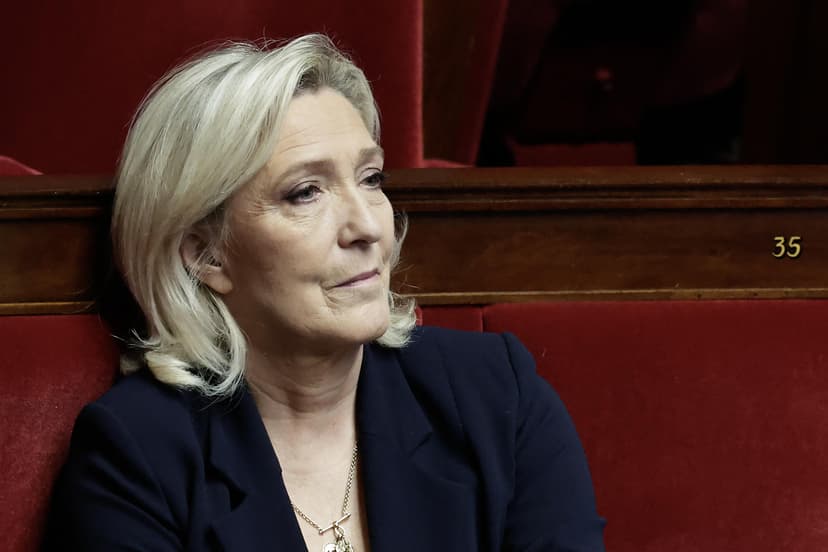
France's National Rally (RN) party has filed a motion of censure to protest the publication of a decree on the multi-year energy programming (PPE), following Marine Le Pen's call for opposition deputies to act.
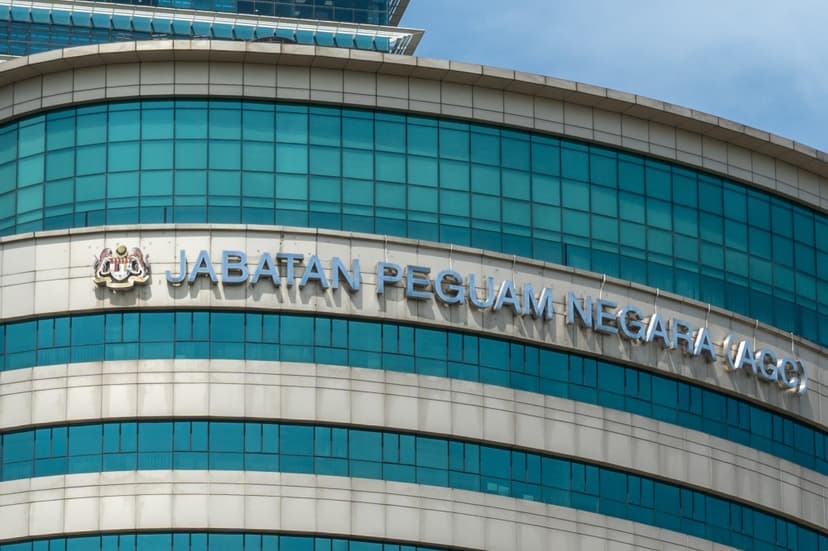
The Malaysian government has tabled a historic Constitution (Amendment) (No. 2) Bill 2026, aimed at separating the roles of the Public Prosecutor and the Attorney General to ensure greater independence.
The remains of the Catholic Saint Francis of Assisi are being shown for the first time to the public until March 22nd at the Papal Basilica of San Francesco in Assisi, Central Italy.
The reconstruction of the historic Børsen building in Copenhagen has been completed and is now open to the public.

An article provides guidance on how to calculate unemployment benefits (paro) after being dismissed, explaining that the public system offers various economic aids for involuntary job cessation, with durations up to 720 days based on contributions.

The Orbán government in Hungary reportedly concealed over 500 government decisions from the public in 2025, with nearly every published resolution matched by another that was deliberately hidden.
Rhode Island has enacted a travel ban, with details of its exact wording being clarified for the public.
The public in Fiji has been advised to avoid the Colo-i-Suva forest park due to an elevated risk of leptospirosis, a bacterial disease.
A wealthy individual has stated that the public's anger towards the rich is 'mind-boggling,' asserting that they are not involved in oppressing or grinding down the poor.

Following major protests in Sarajevo, the public awaits answers regarding video footage and the investigation into a tram accident, while new information emerges about the health of those injured.

A celebrity doctor warns the public after his image was used in an AI-generated video promoting dangerous advice for diabetics to stop taking insulin.

The "Solidaritatea Sanitară" Federation in Romania has announced the public consultation process for its national strategy aimed at protecting healthcare professionals from aggression.
Kuwait's Bar Association is cracking down on unlicensed legal advice shared online, filing complaints against expatriates offering consultations via social media. This move, alongside deregistering lawyers and suspending firms, aims to protect the public and uphold professional standards. Only registered legal professionals can legally offer advice, ensuring accuracy and accountability in Kuwait's legal system.

The article revisits the controversial 1968 execution of Aristides Pagratidis, known as 'the Dragon of Seich Sou,' and the public's lingering doubts about his guilt.

After a slow start, when the hosts began to pick up medals in the second week the public’s imagination was captured With the atmosphere in Rome subdued as the Winter Olympics unfolded across northern

The passing of public figure Aivaras Motuzas has been announced, with his family providing details on when and where the public can pay their last respects.

Iceland’s Chief Epidemiologist, Guðrún Aspelund, has reassured the public that there is no reason to be concerned about the recent rise in tuberculosis (TB) cases. The expert stated that while the number of infections has slightly increased, the overall incidence of TB remains low across the country. What’s the Story? Iceland’s Chief Epidemiologist reassures the […] The post Iceland’s Chief Epidemiologist Calms Fears Over Tuberculosis Cases appeared first on Iceland Review.
After a slow start, when the hosts began to pick up medals in the second week the public’s imagination was captured With the atmosphere in Rome subdued as the Winter Olympics unfolded across northern

The Ministry clarified that its recent advisory on the misuse of criminal justice mechanisms was directed at members of the public and not the Police. The post Ogun Justice Ministry clarifies advisory, warns against criminalising civil disputes appeared first on Premium Times Nigeria.

The report comes as police widen investigations into former prince, including questioning his close protection teams.
JFK Jr. and Carolyn Bessette in New York City, and Paul Kelly and Sarah Pidgeon are seen on the set of "Love Story." Mitchell Gerber/Corbis/VCG via Getty Images; Jose Perez/Bauer-Griffin/GC Images/Getty Images "Love Story" follows the doomed love story of JFK Jr. and Carolyn Bessette-Kennedy. The show recreates several of Bessette-Kennedy's iconic looks and timeless style. The show's costume designer was replaced after initial backlash to how star Sarah Pidgeon was styled. The iconic style of Carolyn Bessette-Kennedy has been often imitated but never replicated — until now. "Love Story," which is produced by Ryan Murphy for FX, chronicles the fated relationship between John F. Kennedy Jr. and Carolyn Bessette-Kennedy, who died in a plane crash off the coast of Martha's Vineyard in July 1999. The series has drawn praise for its striking casting — with Sarah Pidgeon bearing an uncanny resemblance to Carolyn Bessette-Kennedy and Paul Anthony Kelly closely capturing the look of John F. Kennedy Jr. — as well as for its thoughtful costume design, which carefully recreates and honors Bessette-Kennedy's real-life style. Here's a look at how the show recreated and paid homage to Carolyn Bessette-Kennedy's style. The series recreated an early Carolyn Bessette-Kennedy look down to the leather loafers. Jenny Landy and Carolyn Bessette Kennedy in New York City in 1995; Sarah Pidgeon is seen filming "Love Story" in New York City. Patrick McMullan/Patrick McMullan/Getty Images; TheStewartofNY/GC Images In this scene, before she meets John F. Kennedy Jr. for the first time, Carolyn (played by Sarah Pidgeon) wears a simple black turtleneck, flared black capri pants, and black leather loafers. In both the show and real life, Bessette-Kennedy worked as a showroom assistant for Calvin Klein before rising the ranks to become head of publicity for the fashion house. Despite marrying into American royalty, Bessette-Kennedy knew how to perfect a casual look. JFK Jr. and Carolyn Bessette in New York City, and Paul Kelly and Sarah Pidgeon are seen on the set of "Love Story." Mitchell Gerber/Corbis/VCG via Getty Images; Jose Perez/Bauer-Griffin/GC Images/Getty Images She was often seen wearing loose Levi's 517 jeans, her hair slicked back into a bun, with a simple monochromatic coat over the top. When it came to recreating the New York City icon's style, the series didn't always nail it. Early leaked images from the set were criticized online for being too modern, fast-fashion-looking, and different from Kennedy-Bessette's more upscale style. In response to the backlash, the show brought in a new costume designer, Rudy Mance, who dedicated himself to making the costumes as accurate as possible. "I get it. I'm protective of [John and Carolyn] as well. We all just wanted to be as precise and accurate as possible," Mance told Variety. Mance said he and his team studied for months throughout filming, comparing old paparazzi photos of the couple with the new looks he was creating for the show and pulling in as many archival and vintage pieces as possible to accurately recreate the look. Part of Bessette-Kennedy's enduring appeal was her dedication to a minimalist, understated style that felt polished yet effortlessly cool. Lawrence Schwartzwald/Sygma/Getty Images; Jose Perez/Bauer-Griffin/GC Images/Getty Images "There's so much mystery about Carolyn. My familiarity with her was through paparazzi images," lead actor Sarah Pidgeon told Vogue. Mance said that recreating Kennedy's style before she was thrust into the public eye was the most challenging. "Everybody knows what they wore from 1996 to 1999, but we were telling the story of how they met," he said, according to Glamour. Her formal looks remained simple but added a sexy edge, a balance "Love Story" tried to recreate. Carolyn Bessette-Kennedy and JFK Jr. in 1998; Sarah Pidgeon in "Love Story." Steve Eichner/Penske Media/Getty Images; FX Networks Bessette-Kennedy often looked effortlessly sexy when she stepped out on red carpets, like in the strapless black Yohji Yamamoto gown photographed above. Pidgeon wears a similar dress for her meet-cute with Kelly in episode one of the series. It was delicate work for Pidgeon to strike the same balance, especially when fans reacted strongly to early images of her in the role. However, the actor told Vogue she was ultimately grateful for the public feedback about her portrayal. "The online conversations at the beginning of the process served as a reminder of how important it was to get our portrayal of Carolyn correct. She grew even more important to me," Pidgeon told Vogue. "People really, really love Carolyn, and my priority every single day on set was doing justice to her legacy." And even when they were recreating simple outfits, the "Love Story" team ensured the fit was similar to what Carolyn would have worn. Carolyn Bessette Kennedy poses for a picture at a gala in 1999; Sarah Pidgeon in "Love Story." Evan Agostini/Liaison/Getty Images; FX Networks Although Bessette-Kennedy's simple outfits could be recreated with off-brand designers — like the white blouse and floor-length black skirt by Yohji Yamamoto that she wore in 1999 — Mance was dedicated to finding archival pieces. Pidgeon was wearing true recreations of Bessette-Kennedy's looks whenever possible. He also ensured the pieces would fit Pidgeon similarly to how they fit Bessette-Kennedy, as Pidgeon told Vogue. "We found her Prada and Valentino coats, and fitted some Levi's so that they looked exactly how they fit Carolyn," Pidgeon told Vogue. By recreating the magic of Bessette-Kennedy's wardrobe, the "Love Story" team offered a window into her world. Carolyn Bessette Kennedy in 1999; Sarah Pidgeon on the set of "Love Story." Justin Ide/Getty Images; Jose Perez/Bauer-Griffin/GC Images/Getty Images Kennedy's clothes were always going to play a central part in her on-screen portrayal since style was so critical to her identity. However, Pidgeon said she hoped the clothes she wears offer a jumping-off point for the total woman she hopes to portray. "She is known as this minimalist fashion icon, but I learned that she was also vivacious, funny, and had a wildness about her," she told Vogue. Read the original article on Business Insider

Matt Taibbi: Epstein Files Are "Uniquely Destructive" To Both Political Parties Submitted by QTR's Fringe Finance This week I interviewed Matt Taibbi at a moment when, as he put it, “this is a pretty weird time.” He had just learned that his outlet, Racket News, had been investigated by the British government using what he described as “human intelligence sources and all kinds of crazy stuff.” “It’s been pretty weird,” he told me. What struck him most was how normalized this kind of pressure has become. Governments, he said, now routinely “hire out private intelligence firms and private PR firms to devise strategies to undermine negative press.” If you’re doing adversarial reporting, he added, “you’ll get swept up in this. So you probably have been, you just don’t know it.” From there, we moved into the Epstein story, which has become a political third rail. I asked him whether bipartisan silence around certain issues should worry people. Taibbi said most of what happens in Washington is already bipartisan; the public just doesn’t see it. “The thing that we call the news,” he said, is “a sliver of disagreement” between parties. The rest—“98% of the business that’s done there”—happens with quiet agreement. On the Epstein files, he argued that both parties miscalculated. The Trump camp, he said, built expectations around full transparency and then stumbled. “Dumping tons of stuff out without any context tends to have a lot of unintended consequences,” he said. The result has been politically damaging across the board. He also pushed back on some of the public narrative. The fascination with Epstein, he said, rests on three assumptions: that Epstein worked for intelligence, that he ran a vast trafficking ring, and that the two were connected through political blackmail. “There’s an abundance of evidence” of serious sexual crimes, he acknowledged. But on the intelligence-blackmail theory, “there’s nothing that puts it all together and says that’s what was happening. It could, but it’s just not there yet.” What he does see is a slow-burn release strategy. “You’ll notice that they never fully release everything,” he told me. “It’s like Zeno’s paradox. We’re never going to get all the way to the wall with this.” Each new tranche fuels public demand and media frenzy, with the promise that the next batch might contain the “kill shot” that takes down someone powerful. We then shifted to New York politics and the rise of Zohran Mamdani. Taibbi sees his early proposals—like raising property taxes—as predictable. If state-level backing doesn’t materialize, he suggested, the Democratic Party may distance itself. “The Democratic Party has decided not to back this horse,” he said. In his view, the party faces a structural dilemma: a base that is moving left out of economic frustration, and a national electoral map that may not tolerate that shift. He connected that frustration to student debt and monetary policy. When I brought up inflation and deficit spending, he traced the arc back to post-2008 policies and the explosion of quantitative easing. “All you’re doing is accelerating inequality on the one hand,” he said, “and you’re raising the debt burden for everybody else.” The result, he argued, is a generation that feels locked out of homeownership and upward mobility. On immigration and recent ICE enforcement actions, Taibbi resisted simple partisanship. He said he found neighborhood sweeps and masked agents “scary,” comparing aspects of the approach to “an enhanced federal version of stop and frisk.” At the same time, he criticized the ideological shift that made even basic border enforcement seem taboo. “It’s not like having borders is inherently xenophobic,” he said. “It’s just a part of governance. Part of being a nation.” At the end of the conversation, Taibbi outlined changes at Racket News. He said he had “basically fired” himself as editor-in-chief and brought in new leadership to refocus on document-based investigations. The site, he told me, is doubling down on FOIA-driven reporting and digging into stories like expansive FBI investigations and the British controversy now touching his own outlet. The through line of our discussion was less about left versus right than about institutions under strain—media, parties, law enforcement, and financial systems alike. Taibbi’s core warning was that much of what truly matters happens in the bipartisan shadows, while the public argues over the sliver that makes it onto cable news. (WATCH THE FULL VIDEO INTERVIEW WITH MATT HERE). Tyler Durden Fri, 02/20/2026 - 10:00
A former candidate for the Democratic Party for the People in Japan was arrested on suspicion of violating the Public Offices Election Act by allegedly paying cash to university students for election campaign activities.
The stolen phones are refurbished and sold to unsuspecting members of the public.

Hong Kong residents are anticipating a 'blood moon' lunar eclipse scheduled for March 3, an astronomical event that has been made freely available to the public.

The Duke and Duchess of Cambridge and the Duke and Duchess of Sussex. CTR/ Star Max/ AP Images King Edward VIII rejected the crown in 1936 so he could marry a divorced American woman. In 1995, Diana sat down for a tell-all solo interview and talked about Charles' affair. Andrew Mountbatten-Windsor was arrested on Thursday on suspicion of misconduct in public office. For centuries, the British royal family has cultivated an image of duty and decorum. As public figures, they've also had their share of scandals. Forbidden romances, tabloid firestorms, and allegations of misconduct have rocked the House of Windsor over the years. Here's a look at some of the biggest scandals involving royal family members. King Edward VIII rejected the crown in 1936 so he could marry a divorced American woman. Wallis Simpson and Edward VIII. Len Putnam/AP Directly after his father died in 1936, Edward VIII took the throne. Less than a year later, he renounced it. That's because he had fallen hard for Wallis Simpson, an American socialite who'd already been divorced once and was working through her second. His proposal of marriage caused social and political uproar, since the Church of England technically forbade Edward from marrying someone who'd been divorced. Eventually, Edward was forced to abdicate. "I have found it impossible to carry the heavy burden of responsibility and to discharge my duties as King [...] without the help and support of the woman I love," he said in a radio address to the nation in December 1936. Edward and Simpson married in 1937 and stayed together until Edward's death in 1972. (And she wasn't the only commoner who married into royalty.) Princess Margaret fell in love with a married man. Captain Peter Townsend and Princess Margaret. AP Captain Peter Townsend was a Royal Air Force officer who served as an equerry — essentially an attendant to the royal family. He spent a great deal of time with Margaret, and before long, the two fell in love. The only problem was that he was married. Things got even more scandalous in 1953 when Townsend divorced his wife and proposed to Margaret, but the rules of the Church of England forbade such a marriage. (After all, Margaret's uncle Edward VIII had to relinquish the throne in order to marry a divorcee.) The relationship came to a heartbreaking close in 1955 when they called off the engagement. There was simply no way for Captain Townsend and Princess Margaret to have a happy ending. Her eventual marriage to a different man ended in a high-profile divorce. Princess Margaret and Anthony Armstrong Jones. AP Not long after calling things off with Townsend, Margaret married photographer Anthony Armstrong Jones. It was the first royal wedding to ever be televised. A few years later, their union became a source of "growing public ridicule," The New York Times reported. They fought in public, Margaret took long vacations without her husband, and rumors swirled around her close friendship with a man 17 years her junior. In 1976, the couple announced their separation, and two years later, they were officially divorced. Margaret became the first royal to divorce since Henry VIII, who reigned way back in the 1500s. Princess Diana and an alleged lover were secretly recorded on the phone. Princess Diana and James Gilbey. Kimimasa Mayama/Reuters; David Jones/AP In 1992 — while then-Prince Charles and Princess Diana were still married — media outlets published the transcript of a conversation between Diana and an alleged lover named James Gilbey. In the conversation, Gilbey told Diana that he loved her and called her by the pet name "Squidgy" 53 times. That's how the scandal earned the memorable moniker "Squidgygate." Later, in an interview, Diana confirmed that the conversation was real, but denied that it was adulterous in nature. The same thing happened to Diana's husband, Charles. Camilla Parker Bowles and Prince Charles. Alistair Grant/AP Not long after Diana's leaked phone call, Charles, Queen Elizabeth's oldest son, had one of his own. An Australian magazine published the transcript of a call between Charles and Camilla Parker Bowles — a longtime married friend. The transcript all but confirmed what many rumors had postulated: That Charles and Camilla were romantically involved. In one of the more confounding parts of the conversation, the couple joked about Charles turning into a tampon in order to "live inside" Camilla's trousers. Later that year, Charles and Diana announced their separation. Then Diana gave a bombshell TV interview, and the marriage collapsed for good. Prince Charles and Princess Diana in 1992. AP In 1995, Diana sat down for a tell-all solo interview with journalist Martin Bashir to talk about the immense pressures of public life and her struggles with self-harm, postpartum depression, and bulimia. She also revealed that she knew about Charles' affair with Camilla. ("There were three of us in this marriage, so it was a bit crowded," she famously quipped.) And Diana even admitted that she'd been unfaithful to Charles, saying that she had been "in love" with James Hewitt, her riding instructor. The BBC interview itself has since come under scrutiny. An article in the Sunday Times in 2020 alleged that Bashir manipulated Diana into doing the interview by showing her brother, Charles Spencer, fake bank statements that purported to show the media had been paying royal associates for information about her. A 2021 inquiry concluded that Bashir acted in a "deceitful" way, and the BBC and Bashir apologized. A few weeks after the interview, the Queen herself urged her son and daughter-in-law to divorce, and the following year, they made it official. Charles and Camilla, on the other hand, wed in 2005 and are still together. Princess Anne divorced her husband and married a member of the royal staff. Mark Phillips and Princess Anne in 1976. AP Princess Anne, the only daughter of Queen Elizabeth II, married Olympic equestrian Mark Phillips in 1973. The couple spent large swaths of time apart and didn't appear to be happy — People magazine described the marriage as a "joyless sham." Then, in spring 1989, a British newspaper obtained stolen copies of letters written to Anne by one of her equerries, a British naval officer named Timothy Laurence. Though the content of the letters wasn't made public, tabloids described them as "extremely intimate" and "too hot to handle." In 1992, Anne announced that she was divorcing Phillips, and that she planned to marry Laurence. The two have been together ever since. Paparazzi caught Sarah Ferguson in a compromising "toe-licking" incident. Sarah Ferguson. John Redman/AP Sarah Ferguson (popularly known as "Fergie") married Queen Elizabeth's son, Andrew Mountbatten-Windsor, in 1986. Six years later, scandal erupted: Paparazzi photographers captured Fergie vacationing with an American financial advisor named John Bryan. In one photo — an image quickly plastered on the front page of The Sun — Bryan appeared to be licking Fergie's foot. Things didn't go very well after that. Fergie and Andrew separated in 1992, the same year as Charles and Diana, and divorced in 1996. Later, Fergie was accused of taking a $633,000 bribe. Sarah Ferguson and Prince Andrew on their wedding day in 1986. AP Fergie's marital drama didn't end after the divorce. In 2010, a News of the World journalist posed as a businessman and said he got Fergie to accept a £500,00 (about $633,000) bribe in exchange for access to her ex-husband, The Guardian reported. A video recording of their meeting was released to the media, and Fergie later apologized, saying she'd made a "serious lapse in judgment," Reuters reported. Prince Harry spent a day (yes, a single day) in rehab. The clinic where Prince Harry spent a single day in 2002. Sion Touhig/Getty Images After admitting to his father that he'd tried marijuana, a 17-year-old Prince Harry spent a day at the Featherstone Lodge rehabilitation center in London, The Telegraph reported. A statement from the royal family said Harry had agreed to visit the clinic "to learn about the possible consequences of starting to take cannabis." He was also photographed wearing a Nazi costume. Prince Harry's Nazi costume made headlines around the world. Adam Butler/AP In January 2005, British paper The Sun published a front-page photo of Harry wearing a Nazi armband, apparently at a costume party. The prince, who was 20 at the time, quickly released a statement of apology that read: "Prince Harry has apologised for any offence or embarrassment he has caused. He realises it was a poor choice of costume." In 2012, Harry got naked at a private party in Las Vegas, and someone leaked the photos to The Sun. Prince Harry in 2012. Sang Tan/AP The British tabloid published the naked photos of the prince in 2012, which were taken by another party-goer during a game of strip billiards in his hotel suite. According to an anonymous source who was in attendance, the prince's security team appeared to be aware that people were taking photos. "No one asked for our phones or anything about us when we arrived at the party," the source told The Sun. "It was obvious people were taking pictures." That same year, Closer Magazine published a photo of Kate Middleton sunbathing topless on its cover. Kate Middleton. WPA Pool/Getty Images At the time the pictures were taken, Prince William and Kate Middleton were staying in a private holiday home owned by the Queen's nephew, Viscount Linley. After the couple won a lawsuit against the company, Closer was ordered to pay $118,000 in damages to William and Kate in 2017. Meghan Markle walked herself down the aisle after her father was caught staging paparazzi photos in the lead-up to her wedding to Harry. Meghan Markle walks herself down the aisle. WPA Pool/Getty Images Thomas Markle's no-show at the royal wedding was thought to be due to his poor health, as he suffered a heart attack just days before Harry and Meghan Markle tied the knot in Windsor back in May 2018. However, in the year that followed, Thomas and the duchess appeared to have a strained relationship, with Thomas even speaking out against his daughter in several interviews with British tabloids. In 2011, Andrew resigned from his job because of his ties to Jeffrey Epstein. Prince Andrew. Sang Tan/AP Andrew served as the UK's trade envoy from 2001 through 2011, when he stepped down due to mounting criticism over some of his personal relationships, the BBC reported. Namely, he was close friends with American sex offender Jeffrey Epstein. This would not be the end of the matter, however. He stepped back from his royal duties altogether in 2019 after new allegations surfaced regarding his relationship with Epstein, culminating in a disastrous BBC interview. Prince Andrew and Virginia Giuffre, then known as Virginia Roberts, along with Ghislaine Maxwell. This photo was included in an affidavit where Giuffre claimed Prince Andrew directed her to have sex with him. Florida Southern District Court Virginia Giuffre, pictured with Andrew above, accused Epstein of forcing her to have sex with the prince when she was just 17 years old in 2001. The allegations from a 2015 defamation case resurfaced in the media as the case became unsealed. Andrew denied the claims, and a spokesperson for Buckingham Palace "emphatically denied" the allegations in an August 2019 statement provided to Business Insider. Four days after a catastrophic interview with "BBC Newsnight" where he spoke about his friendship with Epstein, Andrew announced he would step down from his royal duties. Epstein was found dead in his prison cell in August 2019 while awaiting trial on sex-trafficking charges. Giuffre died by suicide in 2025. Meghan Markle launched a lawsuit against British newspaper the Mail on Sunday after it published a private letter she wrote to her father. LONDON, ENGLAND - NOVEMBER 11: Meghan, Duchess of Sussex, attends the annual Remembrance Sunday memorial on November 11, 2018, in London, England. (Photo by Samir Hussein/Samir Hussein/WireImage) Samir Hussein/WireImage Markle sued the publication over the misuse of private information, infringement of copyright, and breach of the Data Protection Act 2018 after it published excerpts from the letter earlier this year. She won the lawsuit in 2021. "I share this victory with each of you — because we all deserve justice and truth, and we all deserve better," Markle said in a statement. A judge later rejected the publisher's application for permission to appeal but said it can take the application to the Court of Appeals. The publisher, Associated Newspapers, said it would. After months of rumors, Harry and Markle announced they were taking a "step back" from royal life in 2020. Prince Harry and Meghan Markle are stepping back from their roles as senior royals. Star Max/AP The announcement said they "intend to step back as 'senior' members of the Royal Family and work to become financially independent, while continuing to fully support Her Majesty The Queen." They also wrote that they would split their time between North America and the UK. The royal communications office followed up with a statement of their own. "Discussions with The Duke and Duchess of Sussex are at an early stage," the Queen's statement read. "We understand their desire to take a different approach, but these are complicated issues that will take time to work through." The couple carried out their last official royal engagement at the annual Commonwealth Day service in London in March 2020. They later bought a home in California. In March 2021, Markle and Harry gave a tell-all interview to Oprah Winfrey about their rift with the royal family, revealing one bombshell after another. Prince Harry and Meghan Markle in their interview with Oprah Winfrey. Getty Images The two-hour primetime special was full of stunning revelations. Markle told Winfrey that Kate Middleton made her cry the week of her wedding over a flower girl dress and not the other way around, as had been reported in tabloids. She also said members of the royal family had "concerns and conversations" about how dark Archie's skin would be before he was born, and The Firm told them that Archie wouldn't receive a title or security, breaking from protocol. She also opened up about having suicidal thoughts amid constant tabloid criticism and racism, and said a senior member of the royal institution wouldn't let her seek help. Harry revealed that his family cut him off financially in the first quarter of 2020, and that Charles stopped taking his phone calls before they announced they were stepping back from the royal family. He also said that it hurts that the royal family never acknowledged tabloids' racist treatment of Markle, and that none of the royal family members have reached out to apologize for the reasons he felt he had to leave. Following the interview, Buckingham Palace released a statement on behalf of the Queen. "The whole family is saddened to learn the full extent of how challenging the last few years have been for Harry and Meghan," the statement read. "The issues raised, particularly that of race, are concerning. Whilst some recollections may vary, they are taken very seriously and will be addressed by the family privately. "Harry, Meghan, and Archie will always be much loved family members." Before the interview aired, Buckingham Palace announced they were investigating claims that Markle bullied members of the royal staff — but no such investigations had been publicly made into Andrew's involvement with Epstein. Meghan Markle (second from right), Prince Harry (right), and Andrew Mountbatten-Windsor (back row, right) with royal family members on Christmas Day in 2017. Chris Jackson/Getty Images The Times of London reported that Markle bullied two senior staff members during her time with the royal family. Buckingham Palace released a statement days before Markle and Harry's tell-all interview, saying that they were "very concerned" about the allegations, and that their HR team was investigating the claims. A spokesperson for the Duke and Duchess of Sussex denied the claims to The Times, saying that the allegations were intended to undermine Prince Harry and Markle's interview with Oprah, calling it a "calculated smear campaign." While the palace launched an investigation into allegations that Markle bullied royal staff, no such investigations were publicly made by the palace when Andrew faced scrutiny over his involvement with convicted sex offender Jeffrey Epstein. Royal biographers accused the palace of having double standards. Andrew was stripped of his royal patronages and military titles and faced a lawsuit as a private citizen instead of a royal. MANCHESTER, ENGLAND - JULY 01: Prince Andrew, Duke of York, attends a commemoration service at Manchester Cathedral marking the 100th anniversary since the start of the Battle of the Somme. July 1, 2016 in Manchester, England. Services are being held across Britain and the world to remember those who died in the Battle of the Somme which began 100 years ago on July 1st 1916. Armies of British and French soldiers fought against the German Empire leading to over one million lives being lost. Christopher Furlong - WPA Pool/Getty Images In August 2021, Virginia Giuffre filed a lawsuit against Andrew, accusing him of sexual assault. She alleged that Epstein forced her to have sex with Andrew in his New York mansion, in London, and on Epstein's private island in the US Virgin Islands in 2001 when she was 17. The day after US District Judge Lewis A. Kaplan said the duke's motion to dismiss Giuffre's lawsuit was "denied in all respects," Buckingham Palace released a statement announcing that Andrew would no longer hold his royal patronages and military titles. "With The Queen's approval and agreement, The Duke of York's military affiliations and Royal patronages have been returned to The Queen," a spokesperson for Buckingham Palace said in a statement sent to Business Insider in 2022. "The Duke of York will continue not to undertake any public duties and is defending this case as a private citizen." In 2022, Andrew and Giuffre reached a settlement for an undisclosed amount. Andrew was arrested on suspicion of misconduct in public office as police opened an investigation into his ties to Epstein. Police officers at the gates at Royal Lodge, the former home of Andrew Mountbatten-Windsor in Windsor, Berkshire. Andrew Mountbatten-Windsor has been arrested on suspicion of misconduct in public office and is in police custody. Picture date: Thursday February 19, 2026. Jonathan Brady - PA Images/PA Images via Getty Images Andrew was arrested at his home in Sandringham, Norfolk, on February 19 and was released from police custody several hours later. An investigation is ongoing. The Justice Department's Epstein files revealed additional communications between Andrew and Epstein when the former prince was a UK trade envoy. Police conducted searches of his Sandringham home and at his former home in Windsor, Berkshire. "I have learned with the deepest concern the news about Andrew Mountbatten-Windsor and suspicion of misconduct in public office," Charles said in a statement. "What now follows is the full, fair and proper process by which this issue is investigated in the appropriate manner and by the appropriate authorities." The king's statement continued: "In this, as I have said before, they have our full and wholehearted support and co-operation. Let me state clearly: the law must take its course. As this process continues, it would not be right for me to comment further on this matter. Meanwhile, my family and I will continue in our duty and service to you all." Read the original article on Business Insider

How A Water War Is Brewing Over A Drying Lake In Nevada Authored by John Haughey via The Epoch Times, A Nevada lawsuit trickling toward trial could determine how the nation’s most arid state balances the legal rights of upstream landowners to divert water from rivers for agricultural irrigation with the impacts those withdrawals have on downstream ecologies and economies. Water rights exceed water supply across much of the western United States. With many watersheds failing to deliver enough water for local needs, the suit is being watched by attorneys, state water managers, and federal agencies. It could potentially set a precedent in revising how states across the West regulate access to water. The Nevada case, filed by the Walker River Paiute Tribe and Mineral County, may also present an opportunity for a win-win solution, in which nonprofits and government entities purchase private water rights from willing upstream sellers and dedicate them to downstream public benefit. Without public-private intervention and the changes in state water law that the suit seeks, geologists and environmental experts agree the future is bleak for Walker Lake, a 13-mile long terminal lake about 75 miles southeast of Reno near the California state line in rural, sparsely populated Mineral County. The lake is completely dependent on diminishing Sierra Nevada snowmelt runoff into the Walker River—runoff that, for decades now, has been almost entirely diverted for irrigation by upstream farmers and ranchers. As a result, a desert oasis that once generated more than half of Mineral County’s economic activity through recreational pursuits such as fishing, migratory bird-watching, boating, and camping is now a lifeless “sludge pond,” while the town of Walker Lake faces an accelerating prospect of extinction. “The last fish was caught in 2013 or 2015, I believe. When the fish died, the fishing died; boating, recreation, that all just disappeared,” Mineral County Commissioner Tony Ruse said. “There were restaurants here. There were hotels here. There were businesses here. Now? All gone, just 300 residents struggling.” A Mineral County native, Ruse returned in 2020 after working 34 years as a Switzerland-trained chef in Europe and Asia, including 20 years in South Korea, to open The Big Horn Crossing, a restaurant and convenience store in a shuttered bait shop. It’s now Walker Lake’s only remaining retail business. “It was dead. There was nothing,” he told The Epoch Times. “We should be selling bait here. We should be selling fishing supplies. There should be boats parked in our driveway right now.” (Top) Mineral County Commissioner Tony Ruse fields a phone call at The Big Horn Crossing, a restaurant and convenience store that is the only remaining retail business in Walker Lake, Nev., in January 2026. (Bottom) Walker Lake, a town of fewer than 400 people, is anchored on the slopes of Mount Grant, but no longer supports a fishery, boat races, or the waterfront restaurants and hotels that once made it a desert oasis for tourists, anglers, and campers, in Mineral County, Nev., in January 2026. John Haughey/The Epoch Times Marlene Bunch and her husband Glenn lead the Walker Lake Working Group, created in 1991 to ensure water reaches the lake to sustain its recreational economy. “Upstream diversions have been our nemesis, and that’s what our legal case is for,” Bunch, a former Mineral County clerk and treasurer, told The Epoch Times. Bunch.has lived in Walker Lake since the 1960s. She recalls a 1991 discussion with Nevada Department of Wildlife fisheries biologist Mike Sevon about what would happen if water levels continued to drop. Diminishing Returns Walker Lake retains water flowing east 100 miles from California’s Bridgeport and Topaz reservoirs through Nevada’s Smith and Mason valleys and the Walker River Paiute Tribe’s reservation. According to the U.S. Geological Survey, its water levels have declined more than 160 feet since 1882. Nearly 30 miles long in 1850, the lake is only 12 miles long today. The runoff provided hydrological pressure that sustained area water wells, especially in Walker Lake, where Ruse said residents are seeing “very brackish” water coming from taps, a potential death knell for the town. “It’s getting harder and harder to keep the federal standards for potable water,” he said. “So there’s going to be a day—and I’m waiting for the call—that we need to put a reverse-osmosis system in, which we couldn’t afford to do.” Walker Lake and nearby Hawthorne, the Mineral County seat, struggle in the desert—Hawthorne has seen its population decline 60 percent from 10,000 in 1980 to just over 3,000 in 2020. Meanwhile, agriculture in the Smith and Mason valleys has thrived. (Top) Walker Lake has receded well beyond the sign on U.S. Route 95, in Mineral County, Nev., in January 2026. Decades ago, anglers could shorecast for fish that can no longer survive in the shrinking lake. (Bottom) Nevada’s Walker Lake, a 13-mile-long lake about 75 miles southeast of Reno near the California state line in rural Mineral County, was once more than 30 miles long and 160 feet higher than it is now, in Mineral County, Nev., in January 2026. John Haughey/The Epoch Times But with mountain runoff unreliable for decades now, when upstream users divert their share, little to no water makes it to Walker Lake, leaving once-bustling waterfront businesses marooned as hulking shells far from a distant, receding shore. The case, United States and Walker River Paiute Tribe v. Walker River Irrigation District, is not a new case, but ongoing litigation arising from a lawsuit filed in 1924. It’s part of a flood of litigation stemming from Walker River allocations, going back to 1902, when rancher Henry Miller sued Thomas Rickey over water rights on the river. A 1936 Walker River Decree issued by the Nevada U.S. District Court finalized water rights for more than 500 private landowners, primarily farmers and ranchers, within the Walker River Basin, including those in the Walker River Irrigation District, under a “first in time, first in right” policy that remains the standard almost a century later. Like Nevada, most western states allocate water by the policy, known as prior appropriation. Therefore, under the 1936 decree, upstream users have legal priority to Walker River water. But in 2015, Mineral County filed a lawsuit citing the public trust doctrine, the legal principle that certain natural and cultural resources be preserved for public use. The lawsuit claimed that under the public trust doctrine, it is the state’s duty to maintain minimum inflows into public waters, such as Walker Lake, to sustain environmental, wildlife, recreational, and economic resources. The U.S. District Court ruled in the county’s favor. The irrigation district appealed. The U.S. Ninth Circuit Court overturned the ruling; the public trust doctrine, it held, was a state law issue that had not been decided in Nevada. That kicked the case back to the Nevada Supreme Court, which in 2020 determined all Nevada waters will now be allocated under the public trust doctrine—but that already-issued water rights would not be, and can never be, reallocated. The Supreme Court of Nevada building in Carson City, Nev., in this file photo. In 2020, the court determined that all Nevada waters will now be allocated under the public trust doctrine. Steven Frame/Shutterstock The court directed Mineral County to recommend ways to restore the lake without reallocating water rights, and to work with the Walker Basin Conservancy, a nonprofit created in 2014 with federal funding initially secured by Sen. Harry Reid (D-Nev.) and the National Fish and Wildlife Foundation’s Walker Basin Restoration Program. In 2021, Mineral County amended its 2015 complaint to intervene in the decades’-long parallel suit by the Walker River Paiute Tribe seeking to boost Walker River flows into a reservation reservoir and secure water rights for 167,460 acres added to the reservation since 1936. The county’s complaint includes 24 “actions … necessary to restore and maintain Walker Lake’s public trust values.” After years of procedural delays, including a requirement to individually serve more than 1,000 watershed landowners across the country, the case is set to proceed into discovery. A potential trial looms. But an alternate “win-win” solution orchestrated by the Walker Basin Conservancy is gaining traction and could, perhaps, mitigate the need for a court-ordered resolution. ‘The Only Solution’ Since its creation, the conservancy has restored public access to 33 miles along the Walker River and purchased more than 13,700 acres of water rights, enough to restore about 60 percent of the river inflow biologists maintain is needed to restore the lake’s fishery. Conservancy CEO Peter Stanton and Water Program Director Carlie Henneman did not return emails and repeated phone requests for comment about the program from The Epoch Times. Nor did the Nevada Department of Conservation and Natural Resources, Walker River Irrigation District attorney Gordon DePaoli, or Walker Basin Working Group’s Oregon-based legal advisers, Jamie Saul of the Wild & Scenic Law Center and Kevin Cassidy of Lewis & Clark Law School’s Earthrise Law Center. Several attorneys representing different parties would only speak off-the-record, underscoring the contentious complexities of the case. A sign of the Walker River Paiute Tribe in Shurz, Nev., on Oct. 16, 2024. Walker Lake retains water flowing east 100 miles from California’s Bridgeport and Topaz reservoirs through Nevada’s Smith and Mason valleys and the Walker River Paiute Tribe's reservation. Frederic J. Brown/AFP via Getty Images Roderick E. Walston, an attorney with Best Best & Krieger in Walnut Creek, Calif., told The Epoch Times his clients above the Bridgeport Reservoir in California are apprehensive about Mineral County’s suit, which he said essentially demands the federal court to reallocate existing water rights under the public trust doctrine. “Our response is basically that the Nevada Supreme Court resolved that issue four years ago,” he said. Walston was a California deputy attorney general in 1983 and argued the Mono Lake case before the California Supreme Court. In that case, the state’s public trust doctrine was used to thwart Los Angeles from purchasing Mono Lake water rights that would have devastated the lake’s ecology and Sierra Nevada economies. “So I argued both the case in California Supreme Court 40-something years ago and then also argued the case in the Nevada Supreme Court about four years ago,” he said. Walston said the case could have “great impact” on water disputes in states that uphold the prior allocation doctrine. “This is an absolutely large case,” he said. Meanwhile, Mineral County District Attorney Ryan McCormick, who assumed his post seven weeks ago, told The Epoch Times he’s playing catch-up in reading filings “from decades and decades of litigation.” A sign is pictured at Walker Lake in Hawthorne, Nev., on Oct. 16, 2024. According to the U.S. Geological Survey, Walker Lake’s water levels have declined more than 160 feet since 1882. Nearly 30 miles long in 1850, the lake is only 12 miles long today. Frederic J. Brown/AFP via Getty Images “In a perfect world, if we get some specific performance and find a way to divert water back into the lake and have the levels rising again, that would be absolutely ideal,” he said, adding he isn’t privy to the reasoning behind all of the 24 actions assembled by the Walker Lake Working Group. It’s a complicated case in a long-litigated watershed but the best resolution is simple, McCormick said. “With the best interests of Mineral County, Hawthorne, and Walker Lake in mind here, we would like the lake to be receiving fresh water again. It would be nice to see some economic development right now, right?” But Walston said odds are slim the court will cast aside the state’s Supreme Court determination that existing water rights cannot be reallocated. Working with the conservancy and other groups to purchase water rights from willing landowners at $3,000 to $4,000 per acre foot—an acre of one-foot deep water—is a win-win for all involved, he said. “It’s the only solution, really. The Nevada Supreme Court has said you can’t just take water rights that have been adjudicated and take that water and put it into Walker Lake,” Walston said. “But you can go to various water users and negotiate with them and buy their water rights. In that case, then you could reallocate.” Tyler Durden Wed, 02/18/2026 - 22:35

This is the moment that Rachel Reeves was heckled by a member of the public during a visit to Sainsbury’s.

Oil Surges On Report Warning US-Iran War Is Far Closer Than Americans Realize Axios' Barak Ravid, a journalist very close to the Israeli government, writes Wednesday that the Trump White House is now "closer to a major war in the Middle East than most Americans realize. It could begin very soon." The sources he spoke to, which could be American or Israeli, say that such an operation would be a "massive" campaign at least weeks in sustained length. If it the campaign goes the way of Iraq or Afghanistan, or Syria, the conflict could eventually be measured in years and not just months. Further, "The sources noted it would likely be a joint U.S.-Israeli campaign that's much broader in scope — and more existential for the regime — than the Israeli-led 12-day war last June, which the U.S. eventually joined to take out Iran's underground nuclear facilities." USAF/CNN All of this looks to be going down with no public or Congressional debate whatsoever: "With the attention of Congress and the public otherwise occupied, there is little public debate about what could be the most consequential U.S. military intervention in the Middle East in at least a decade," notes Axios. Both sides are citing 'progress' in the two rounds of indirect negotiations (in Oman and then Geneva) which have taken place thus far, however, there's been nothing yet in the way of specific agreement. Washington's commitment to see talks through even for weeks at this point is highly in quesiton. The following was the initial Iranian assessment of how the talks led by Witkoff and Kushner in Geneva went this week: Iran has said it has reached an understanding with the US on the main "guiding principles" to resolve their dispute over Tehran's nuclear programme. Speaking after indirect talks in Geneva, Iranian Foreign Minister Abbas Araghchi added that work still needed to be done. The US said "progress was made". Badr Albusaidi, foreign minister of mediator Oman, said the negotiations "concluded with good progress towards identifying common goals and relevant technical issues". The Iranians have asked for two weeks to hammer out a detailed proposal, with an American official stating, "Progress was made, but there are still a lot of details to discuss. The Iranians said they would come back in the next two weeks with detailed proposals to address some of the open gaps in our positions." Given President Trump has ordered a second US carrier group to the region, along with a huge number of support aircraft, does Iran really have two weeks to spare? Oil reaches HOD Wednesday soon on heels of Axios report, with WTI kissing $64/barrel... To some degree, the Iranians are likely buying time, knowing that a surprise, unprovoked attack could be imminent. This would be similar to the June war, but unlike that scenario this would indeed be much bigger. There's reason to believe Trump may stay restrained, however, and give negotiations time. Fear of higher oil prices could ultimately be the deciding factor here, pushing Trump to settle with Iran and not spark another completely unpredictable, likely disastrous war in the Middle East. Tyler Durden Wed, 02/18/2026 - 08:36
As the 2025-26 NBA season progresses, fans are closely monitoring betting markets and odds for various teams.
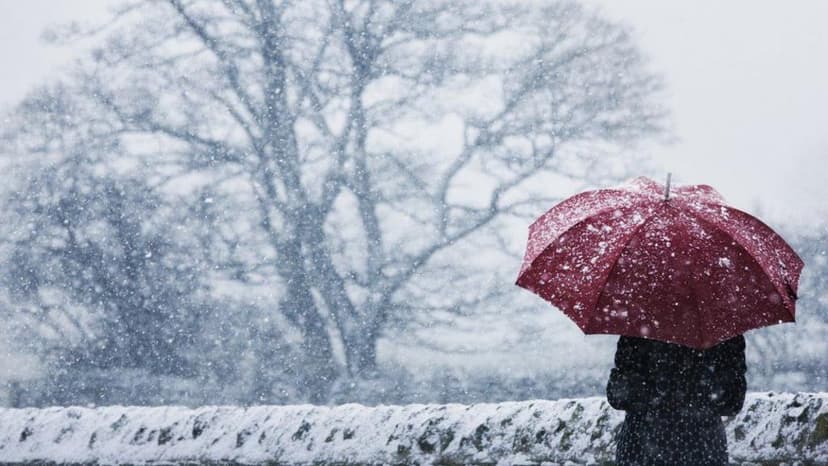
The weather alert service issues warnings to the public when high or low temperatures could pose health risks.

A man accused of having placed secret cameras in Altach’s changing room is appearing in court next week A man who has been accused of having videos from secret cameras in the changing room and showers of the Altach women’s team is appearing in court next week in a case that has shaken football in Austria. About 30 women have been identified on the recordings, according to the Public Prosecutor’s Office in Feldkirch, and some are considering a civil lawsuit against the accused. The team play in the top division in Austria. This is an extract from our free email about women’s football, Moving the Goalposts. To get the full edition, visit this page and follow the instructions. Moving the Goalposts is delivered to your inboxes every Tuesday and Thursday. Continue reading...

Police are working on the theory that the mother of the NBC host has been kidnapped. The erratic investigation and Trump’s statements are fueling the morbid fascination with the story
Japan's Liberal Democratic Party held a training session for over 60 newly elected House of Representatives members, where Secretary-General Suzuki urged them to remember humility and be careful with their statements and actions, given the public's scrutiny after their significant increase in seats.

The Public Accounts Committee warned that non-compliance with its directive, which is in line with Section 85(6) of the Constitution, would attract legislative sanctions. The post Reps give OAGF, AuGF October deadline to submit outstanding financial statements appeared first on Premium Times Nigeria.

Pakistan's PPP central spokesperson criticized the federal government for increasing petrol prices just before Ramazan, labeling it a 'petrol bomb' on the public.

Punjab Chief Minister Maryam Nawaz on Monday said that the PTI-led Khyber Pakhtunkhwa was living in the stone age, critising the province’s government for not taking steps for development in the age of technology. Addressing a laptop distribution scheme at a Gujrat university, CM Maryam highlighted that students in Punjab had access to Honhaar scholarships, laptop schemes, Parwaz Card, green buses and technical training programmes. “So there is Honhaar here, and incitement there, but this is nothing to rejoice about,” she said, adding that she was extremely upset that the “people of KP were still living in the stone age”. Maryam stated: “They do not know what development is. They do not realise that Honhaar scholarships also exist if one does not have the resources for their child’s studies. “They do not know that you must have a gadget or a laptop or an iPad or a computer in your hands if you are to meet global standards in today’s age.” Indirectly noting that the PTI had been in power in KP for the past “13 years”, she said the public there “does not even know what development is”. The chief minister quipped that the KP government’s response to every need was that it was providing them “awareness”. Maryam emphasised that blocking major roads in KP did not affect the businesses in Punjab but rather the economic activity of KP itself. During her address, Maryam also recalled the time when her mother Kulsoom Nawaz was hospitalised due to cancer in 2017 and 2018, as well as when her father and ex-premier Nawaz Sharif was ill during his imprisonment in 2019. Noting that Nawaz was in his 70s when he was jailed, the Punjab CM said, “He got sick after multiple heart attacks and his platelets dropped. He had cardiac pain [but] such a joke was made out of his ailment.” She continued: “When my father and I were in jail, my mother was diagnosed with cancer and her disease was ridiculed so much; it was even said that she was not sick and it is all a drama.” Maryam then recalled that Kulsoom was on a ventilator in a London hospital when certain individuals “entered the ICU through deception by wearing doctors’ uniforms to verify whether it was true or false”. “When my mother passed away, my father said, ‘One has to die to prove their innocence here’,” she said, adding that she was in a jail cell when Nawaz informed her about Kulsoom’s death. The PML-N leader then played some old video clips of ex-premier Imran Khan from when he was in power. In the clips, the PTI founder threatened to get the TV and air conditioner removed from the prisons of the PML-N leadership. Maryam asserted: “I am swearing by God that till today, neither I nor Nawaz Sharif or Shehbaz Sharif even thought of removing his AC or shutting off his food and TV. “In fact, Nawaz Sharif said one day that he (Imran) has one AC, give him two ACs as he should not face any problems.” She further said she was the “first woman” to be locked in the National Accountability Bureau’s (NAB) jail and a cell had to be vacated for her as they did not have a dedicated women’s prison. The Punjab CM then played another video of ex-PM Imran, wherein he commented on the “long list” of health issues Nawaz was facing. “You can have differences on policies and policies, but you cannot turn political disagreements into personal enmities,” Maryam emphasised. “My children, you must never do this,” she told the audience, referring to the actions taken by the PTI government of jailing PML-N leadership and “making fun” of the ailments. “The time circles back, but my father was telling me at dinner the other day to never wish bad for even one’s political opponents,” she said. “You all must not do what he or his party is doing,” the politician stressed. “Those who are ill, we pray that God may give them recovery soon,” she added. Speaking on Imran’s current health issues, Maryam said, “The kind of facilities and the doctors he needs are being provided to him, and I am telling you this on oath that no one wishes ill for him.” She called for lies, accusations, incitement, vandalism and fitna to be “thrown out” of politics.

A collision between a car and a trailer on Monday claimed six lives on the National Highway in Sindh’s Naushahro Feroze District, officials said. Naushahro Feroze Senior Superintendent of Police Mir Rohal Khoso told Dawn that all six people who died were travelling in the car, while the trailer’s driver was injured. He said the accident took place between 5am and 6am, adding that “ostensibly, speeding and brake failure were probable reasons,” but the matter was being probed further. SSP Khoso elaborated that one side of the National Highway in the district was under construction, which was a “contributory factor behind increasing accidents”. He stated that, in collaboration with the motorway police, it has been decided to set up five points for checking the speed and fitness of vehicles to control the rise in accidents. Sindh Inspector General (IG) Javed Alam Odho, in a statement, ordered the Naushahro Feroze SSP to probe the accident and register a case. Expressing his grief over the loss of lives, IG Odho ordered that legal action be taken against those responsible after determining the causes behind the accident. Fatal road accidents on highways occur frequently in Pakistan, with the main reasons including speeding, hazardous overtaking, and disregard for traffic rules. On Sunday, at least 11 people were killed and eight were injured after a bus collided with a trailer on the National Highway near Tando Masti in Sindh’s Khairpur district. A day before that, 13 people died in a traffic accident involving an oil tanker and a passenger bus on the M9 Motorway near Karachi. Crackdown against overloading and speeding ordered In his statement, Sindh Chief Minister Murad Ali Shah expressed his grief over the loss of lives in the accident and conveyed his condolences to the bereaved families. “We share the grief of the bereaved families,” he was quoted as saying in the statement issued by his spokesperson, Abdul Rasheed Channa. The statement said that the car involved in the incident was heading from Larkana Division’s Nasirabad taluka to Karachi. CM Murad also issued directives for the strict implementation of traffic rules and regulations. He ordered the Sindh IG to carry out a “crackdown against overloading and speeding”. He further directed that monitoring and fitness checks of vehicles be made more stringent across the province. “The protection of the public’s life and property is the government’s top responsibility,” the chief minister noted.
The article informs the public about the closure of banks and government offices in the United States on Presidents Day, a federal holiday observed on February 16, 2026.
A ruling in the NFLPA's grievance over its 2025 report cards has brought to light new criticisms regarding 11 NFL teams. The NFL had filed the grievance to prevent the public release of these team evaluations.

An opinion piece discusses how a racist post by Donald Trump about the Obamas served as a 'wake-up call' for some, questioning why it took so long for the public to acknowledge his racism.
The Nigerian Defence Academy has issued a warning about fake admission letters circulating online, advising the public to verify information through official channels.
An explanation of how cold weather health alerts function, detailing their role in warning the public about potential health risks associated with extreme temperatures.
Medical professionals are cautioning the public about the increasing risk of infections associated with the use of earbuds, advising users to take preventative measures.

The earthly remains of Saint Francis of Assisi will be displayed to the public, with an estimated 400,000 visitors expected to mark the 800th anniversary of his death.
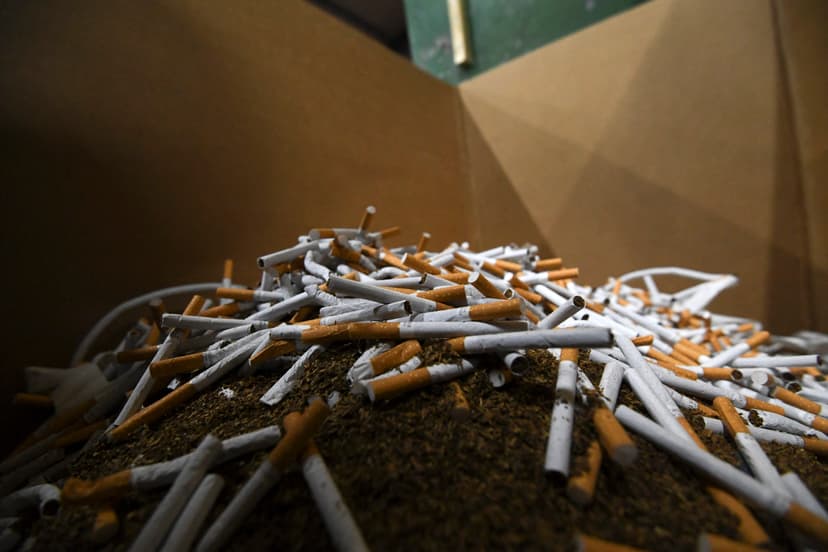
MANILA, Philippines — Philippine National Police (PNP) chief Gen. Jose Melencio Nartatez Jr. urged the public to report the sale of illegal cigarettes retail outlets across the country. “As part of the nationwide crackdown, the PNP is calling on citizens to act as the ‘eyes and ears’ of the police,” Nartatez said in a statement
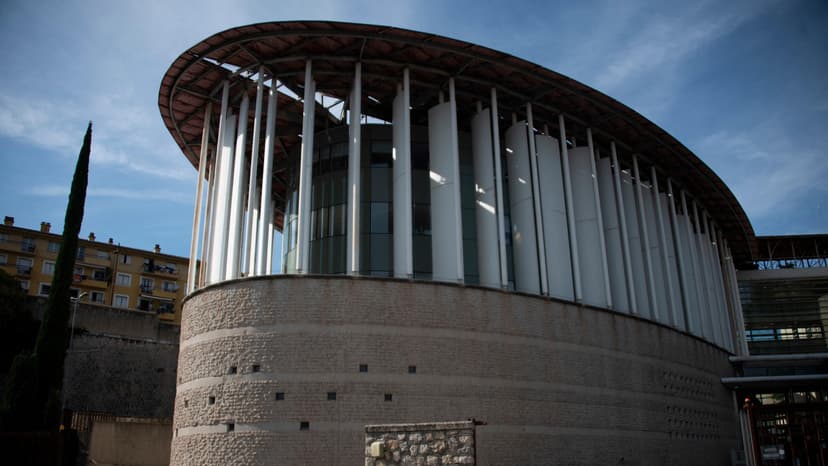
Police in Grasse, France, are divided over a new policy implemented in October by the public prosecutor, which no longer requires custody for minor traffic offenses like driving under the influence or without a license.

The Philharmonic Orchestra of the municipality of Athens will welcome the public with its melodies from the morning and there will be free Lenten delicacies, while the municipality has organized a tra
Health NZ is facing criticism from the Public Service Association (PSA) over redundancy payouts to non-clinical staff, which the union describes as a 'disgraceful waste of money' that will burden the health system for years.
KUALA LUMPUR, Feb 23 — Police officers who refuse to assist members of the public filing a report for an emergency...
CS Ruku has assured the public that the state possesses sufficient relief food to ensure no lives are lost due to hunger.
A visitor center has opened at the Børsen construction site in Copenhagen, allowing the public to observe the ongoing reconstruction of the historic building after it was damaged by fire.
The relics of Saint Francis of Assisi are being shown to the public for the first time in Assisi, Italy, drawing long queues of visitors.
A brushfire ignited in Heiðmörk near Elliðavatn, Iceland, quickly spreading and intensifying, prompting the fire department to deploy all available personnel and resources to combat it. Authorities are urging the public to stay away from the affected area in Kópavogur.

Milorad Dodik, leader of the SNSD, surprised the public by posting a video of himself doing squats outdoors on the social media platform 'X'.

Strong activity in non-residential building projects in Romania is compensating for a correction observed in the public works segment of the construction sector.
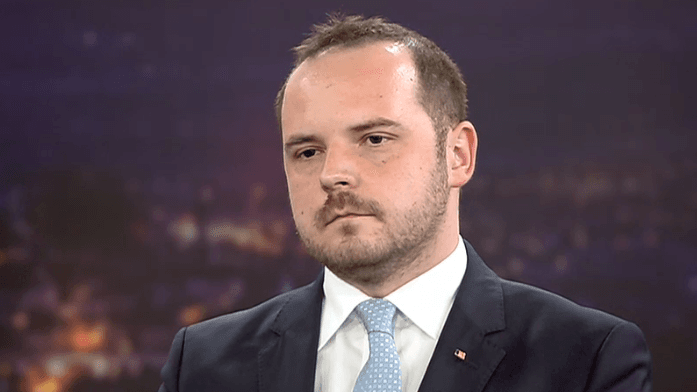
Romania's Health Minister commented on the issue of state-employed doctors also working in the private sector, stating that it creates a 'minus' for the public system and efforts are being made to reduce the problem.
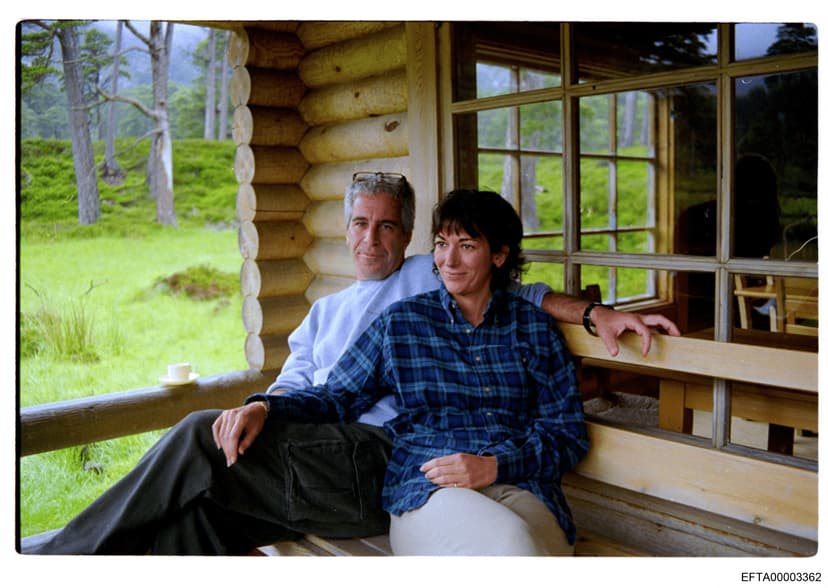
Lawyers for Ghislaine Maxwell are challenging the publication of 90,000 pages of documents related to her and Jeffrey Epstein, arguing a new law mandating their disclosure is unconstitutional.
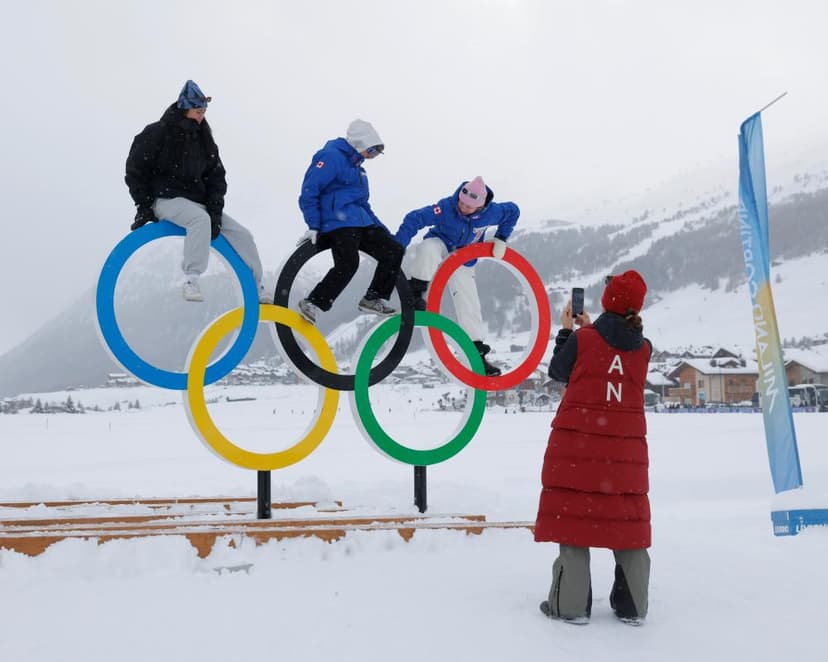
After a slow start, when the hosts began to pick up medals in the second week the public’s imagination was captured

The relics of Saint Francis have been fully exposed to the public for the first time in Assisi, Umbria, to mark the 800th anniversary of the saint's death.

The public prosecutor has demanded a community service order and a one-year driving license suspension for a waste lorry driver, stating he had 27 seconds to prevent a fatal accident.
The public is invited to cast their votes for the Monroe County Region Athlete of the Week for the period of February 16-22.

As Malaysians flock to Ramadan bazaars and breaking fast gatherings, the health ministry is reminding the public to observe tuberculosis (TB) precautions, especially in crowded and enclosed spaces. In a statement issued on Saturday, the ministry said a total of 596 new TB cases were reported nationwide during the sixth epidemiological week. The statement said the latest detections brought the cumulative number of tuberculosis cases to 3,161 across Malaysia. “Crowded, enclosed and poorly...
Oncologists are cautioning the public about a common habit that they say significantly increases cancer risk, often more than people realize.
Police are warning the public about a second planned 'takeover' event at the Northshore Mall, urging caution and preparedness.
A compilation of various news and updates related to Texas A&M, gathered from sources not directly written by the publication.
The USS Lionfish docked at Battleship Cove in Fall River, Massachusetts. Talia Lakritz/Business Insider The USS Lionfish was commissioned in 1944 and earned one battle star for service in World War II. It sank a Japanese submarine, rescued the crew of a B-29 bomber, and served as a training submarine. The Balao-class submarine is now a museum docked at Battleship Cove in Fall River, Massachusetts. The World War II submarine USS Lionfish was part of America's "Silent Service." Despite comprising less than 2% of all US Navy vessels during World War II, submarines like the USS Lionfish sank 55% of Japanese vessels in battle. This once-fearsome vessel is now a 311-foot-long museum exhibit, allowing the public to learn about its top-secret wartime operations. Take a look inside the USS Lionfish. Commissioned in 1944, the USS Lionfish earned one battle star for service during World War II. The USS Lionfish at sea in an undated photo. Arkivi/Getty Images Over the Balao-class submarine's two war patrols, she sank a Japanese submarine, destroyed a schooner, and rescued the crew of a downed American B-29 bomber. The USS Lionfish was recommissioned for the Korean War, serving from 1951 to 1953. From 1960 to 1971, the USS Lionfish served as a reserve training submarine, teaching crew members to operate similar vessels. Since 1973, the USS Lionfish has been on display at Battleship Cove, a maritime museum in Fall River, Massachusetts. The USS Lionfish. Talia Lakritz/Business Insider Tickets to Battleship Cove cost $25 per adult. I visited the museum in January to take a closer look at the retired submarine. The first stop on my self-guided tour was the forward torpedo room, where 16 torpedomen slept and worked. The forward torpedo room. Talia Lakritz/Business Insider The forward torpedo room featured six torpedo tubes, each storing a torpedo, and 10 reloads. The 16 crew members slept alongside the torpedoes on pull-out bunks, remaining ready to fire at all times. Behind the torpedo room was officers' country, which included the officers' pantry. The officers' pantry. Talia Lakritz/Business Insider In the officers' pantry, meals for the higher-ranking crew members were reheated and plated on Navy china. They ate the same food as the rest of the sailors, but in a fancier setting. Officers used the wardroom for dining, working, and relaxing. The wardroom on board the USS Lionfish. Talia Lakritz/Business Insider It could also serve as an operating room in medical emergencies. Junior officers slept in a room with four bunks. The junior officers' quarters. Talia Lakritz/Business Insider Officers enjoyed more privacy on board than enlisted men. Senior officers had even more privacy in a room with a triple bunk. The senior officers' quarters. Talia Lakritz/Business Insider The submarine's second-in-command, known as the executive officer, slept in this room. The commanding officer slept in the only private room on board the submarine. The commanding officer's stateroom. Talia Lakritz/Business Insider The commanding officer's stateroom featured a small desk that functioned as a private workspace. Chief petty officers slept five to a room in their quarters. The chief petty officers' quarters. Talia Lakritz/Business Insider Chief petty officers served as liaisons between the officers and the crew. This room was also colloquially known as the "goat locker" since the more experienced officers were affectionately nicknamed "old goats." In the ship's office, an administrator known as the yeoman handled all of the ship's paperwork. The ship's office. Talia Lakritz/Business Insider Personnel files, orders of supplies, and other administrative tasks were the yeoman's domain. Equipment in the control room managed the submarine's depth, speed, steering, and navigation. The control room. Talia Lakritz/Business Insider The commanding officer issued orders from the control center or the conning tower located directly above. The USS Lionfish's conning tower wasn't open to the public, but I did get to look inside one while touring another Balao-class submarine, the USS Becuna. Communications and covert operations were handled in the radio room. The radio room. Talia Lakritz/Business Insider The USS Lionfish was equipped with sonar, or "sound navigation and ranging," to listen for enemy ships in the surrounding waters. Chefs prepared meals for the submarine's 80 crew members in the main galley. The main galley. Talia Lakritz/Business Insider The galley prepared four meals a day: breakfast, lunch, dinner, and midnight rations known as "mid-rats." The crew's mess was an all-purpose room where sailors ate, lounged, and played games. The crew's mess. Talia Lakritz/Business Insider Frozen and refrigerated food was stored in compartments underneath the floor. The bunks have been removed from the crew's berthing during ongoing restoration work. The crew's berthing. Talia Lakritz/Business Insider Other Balao-class submarines held 35 or 36 bunks in this space. The USS Lionfish featured two engine rooms, each containing two diesel engines. The forward engine room. Talia Lakritz/Business Insider Each engine room was responsible for half of the ship's electric and propulsion power. In the maneuvering room, switches controlled the flow of electricity to the submarine's generators. The maneuvering room. Talia Lakritz/Business Insider While surfaced, the submarine's four diesel engines powered its generators, which in turn powered the ship's motors. While submerged, storage batteries powered the motors. My tour ended with the after torpedo room at the back of the submarine. The after torpedo room. Talia Lakritz/Business Insider Around 13 enlisted men worked and slept in the after torpedo room, which featured four torpedo tubes. The USS Lionfish remains unique among World War II submarines. The USS Lionfish docked at Battleship Cove in Fall River, Massachusetts. Talia Lakritz/Business Insider Over 50 submarines underwent a Greater Underwater Propulsive Power 1-A, or "GUPPY," modernization after World War II. However, the USS Lionfish remained as it was. Museum staff and volunteers are working to restore the USS Lionfish and preserve its original configuration. Even in frigid temperatures, I saw volunteers holding tools and walking carefully around the deck's open panels, revealing the complex mechanics beneath. Read the original article on Business Insider
John F. Kennedy Jr. and his wife, Carolyn Bessette Kennedy, attended the Municipal Art Society Gala in 1998. Richard Corkery/NY Daily News Archive/Getty Images John F. Kennedy Jr., his wife, and her sister died in a 1999 plane crash near Martha's Vineyard. Rumors of a "Kennedy curse" were fueled by multiple family tragedies over the decades. JFK Jr. and Carolyn Bessette's relationship is now the topic of an FX series, "Love Story." The Kennedy family has been subjected to many tragedies over the years, including two assassinations and a plane crash that took the lives of John F. Kennedy Jr. and two other passengers. Nearly 27 years ago, on July 16, 1999, John F. Kennedy Jr., his wife Carolyn Bessette-Kennedy, and her older sister Lauren Bessette were killed in a plane crash off the coast of Martha's Vineyard in Massachusetts. There were no survivors from the accident. The relationship between John F. Kennedy Jr. and Carolyn Bessette-Kennedy is now the topic of an FX series executive-produced by Ryan Murphy, "Love Story." Their deaths became a major news story and perpetuated rumors of a "Kennedy curse." JFK Jr.'s father, former President John F. Kennedy, was assassinated in 1963. His uncle, Robert "Bobby" Kennedy, was assassinated five years later in 1968. And two years before JFK Jr.'s death, his cousin Michael Kennedy also died after hitting a tree while skiing in Aspen, Colorado. Here's what we know about the plane crash that killed John F. Kennedy Jr. and two others. John F. Kennedy Jr. frequently made headlines throughout the 1990s. John F. Kennedy, Jr. at the Democratic National Convention in 1988. Bettmann/Getty Images As the son of a president and a member of one of America's most prominent political dynasties, John F. Kennedy Jr. was destined for the spotlight. JFK Jr. was born on November 25, 1960, just two weeks after his father was elected president. His father was assassinated on November 22, 1963, just three days shy of JFK Jr.'s third birthday. JFK Jr., affectionately nicknamed "John-John" by the public, attended the funeral on his birthday and was famously photographed saluting his father's casket. Throughout much of his adolescence and adulthood, he mostly remained out of the public eye. However, his public image began to change after he introduced his uncle, Ted Kennedy, at the Democratic National Convention in 1988. In September 1988, People named Kennedy, who was then a 27-year-old third-year law student at NYU, the "Sexiest Man Alive." JFK Jr. also dated a few celebrities throughout the 1990s, including "Sex and the City" star Sarah Jessica Parker, Cindy Crawford, and Daryl Hannah. John F. Kennedy Jr. began dating Carolyn Bessette, a publicist for Calvin Klein, in 1994. John F. Kennedy Jr. and Carolyn Bessette-Kennedy in 1995. Rose Hartman/Getty Images They met in the fitting room at Calvin Klein, where Bessette helped JFK Jr. pick out wardrobe items, Elizabeth Beller wrote in "Once Upon a Time: The Captivating Life of Carolyn Bessette-Kennedy," cited by People. Tall, sophisticated, and beautiful, JFK Jr.'s new girlfriend captivated the public. After two years of dating, the pair married in an intimate ceremony on Cumberland Island, Georgia, People reported. While their wedding ceremony was private, their relationship was anything but, thanks to the prying eyes of the paparazzi. Evan Agostini/Getty Images; NY Daily News Archive/Getty Images The media attention may have even inspired Kennedy to get his pilot's license in 1998. "That was some of the happiest times he ever had. Floating around with the buzzards in his Buckeye [plane]. It was the freedom," his close friend Robbie Littell told "JFK Jr: An Intimate Oral Biography" author RoseMarie Terenzio, according to People. "He said, 'It's the only place I can go where no one is bothering me. I have complete silence, and no one can get to me except the air traffic controllers.' Maybe that gives you insight into what he was really dealing with on the ground," his college friend Gary Ginsberg said, People reported. John F. Kennedy Jr. was traveling to Martha's Vineyard with his wife and her older sister when their plane was reported missing. The hangar where John Kennedy Jr. kept his Piper Saratoga airplane. Ron Galella/Ron Galella Collection/Getty Images The Washington Post reported that Kennedy departed Essex County Airport near Fairfield, New Jersey, at around 8:38 p.m. on Friday, July 16, 1999. The sun was already beginning to set and "hazy conditions," which had been reported earlier in the evening, were getting worse, People reported. Kennedy planned to drop his sister-in-law Lauren Bessette on Martha's Vineyard before traveling to his family's compound in Hyannis Port with Carolyn. The couple was due to attend his cousin Rory Kennedy's wedding the following day, according to People. However, the plane never landed in Martha's Vineyard. An unidentified driver reported the plane had failed to arrive at Martha's Vineyard Airport as expected, according to the Post, citing an NBC report. It kicked off a search for the missing aircraft in the early hours of July 17. The Kennedy family notified the Cape Cod Coast Guard that the couple had not made it back to Hyannis. A Coast Guard helicopter searching for debris from John Kennedy Jr.'s plane. Daniel Goodrich/Newsday RM/Getty Images The Washington Post reported that the Coast Guard then began investigating whether the plane had landed at another airport. By 4 a.m., the Coast Guard began searching for the missing plane, and by 7:30 a.m., the Air Force and Coast Guard had launched 20 aircraft vehicles and two boats to search the area between Long Island and Martha's Vineyard, according to the Post's timeline. On Sunday afternoon, what was presumed to be debris from the plane was found on Philbin Beach on Martha's Vineyard. Among the debris was a headrest that was later concluded to be from the missing aircraft and a black suitcase that contained Lauren Bessette's business card. Rory Kennedy's wedding, scheduled for 6 p.m. that night, was put on hold as the family awaited more news. The Washington Post reported that after more debris was found in the days to follow, the search-and-rescue mission became a search-and-recovery mission. All three of the plane's passengers were now presumed dead. John F. Kennedy Jr. was 38 years old. Carolyn Bessette-Kennedy was 33, and her sister Lauren Bessette was 34. Five days after the crash, the bodies of John F. Kennedy Jr., Carolyn Bessette-Kennedy, and Lauren Bessette were recovered. Massachusetts State Police divers left Menemsha on Martha's Vineyard on July 19, 1999. DON EMMERT/AFP/Getty Images The debris field was identified off the coast of Martha's Vineyard, relatively near the estate once owned by Jacqueline Kennedy Onassis, Kennedy's mother, The New York Times reported. (Kennedy Onassis died in 1994.) The bodies of John F. Kennedy Jr., Carolyn Bessette-Kennedy, and Lauren Bessette were discovered by Navy divers on July 22, 1999, after an extensive search approved by President Bill Clinton. The bodies of the crash victims, which were ''near and under'' the main body of the aircraft, were still strapped in, according to the Times. Details began to emerge about what led to the crash. A television technician holds up the official handout map of the search and rescue area off Martha's Vineyard. JOHN MOTTERN/AFP/Getty Images Kennedy had only flown about 72 hours without a flight instructor, and had only about 300 total hours of flying experience, The New York Times reported in July 2000. He had reportedly rejected an offer to have a flight instructor accompany the group on their journey. As a newly trained pilot, Kennedy was not licensed to fly and navigate the air using flying instruments. Instead, he had only trained to fly using sight alone, which would have been extremely difficult in dark or hazy conditions such as those on the night of July 16. Warren Morningstar, a spokesman for the Aircraft Owners and Pilots Association, told the Times that "flying at night over featureless terrain or water, and particularly in haze or in overcast, is a prime setup for spatial disorientation." About an hour into the trip, the plane's flight path became irregular as it began its descent into Martha's Vineyard, indicating that the pilot may have become disoriented by the darkness of the sky and the water, the National Transportation Safety Board concluded. "His flight path into the water is consistent with what is known as a graveyard spiral," Jeff Guzzetti, an NTSB investigator in the accident, told Terenzio, according to People. "The airplane makes a spiral nose down … kind of like going down a drain. The plane went into one final turn and it stayed in that turn pretty much all the way down to the ocean." The aircraft went down in the water about 7 miles from its intended destination of Martha's Vineyard. Mourners pay respects at the floral shrine outside of the building where John F. Kennedy Jr. and Carolyn lived in 1999. Allan Tannenbaum/Getty Images The Washington Post reported that the plane did not send out a distress call. Instead, it made its final descent and crashed into the Atlantic Ocean in under 30 seconds. Kennedy, Kennedy-Bessette, and Bessette's bodies were cremated and buried at sea off the coast of Martha's Vineyard on July 22, 1999. "We are filled with unspeakable grief and sadness by the loss of John and Carolyn and Lauren Bessette," Ted Kennedy said in a statement on behalf of the Kennedy family. "John was a shining light in all our lives and in the lives of the nation and the world that first came to know him as a little boy." As the country mourned the loss, rumors of a "Kennedy curse" were reignited. John F. Kennedy, Jr. and Carolyn Bessette-Kennedy attended the White House Correspondents dinner in 1999. Tyler Mallory/Liaison/Getty Images The extensive search captured the nation's attention, as did the tragedy of the three young passengers' deaths. Yet another tragic accident for the Kennedy family, the plane crash only added to rumors of a Kennedy family curse. "I've looked high and low and cannot find another family since the ancient Greek House of Atreus that has suffered more calamities and misfortunes than the Kennedys," Edward Klein, the author of "The Kennedy Curse: Why Tragedy Has Haunted America's First Family for 150 Years," said, according to The Washington Post. While there are many logical reasons for the fateful plane crash, it's nevertheless poignant that the Kennedy family, one of the wealthiest and most influential political families in the world, has suffered so much tragedy throughout the last 100 years. "The humanity of their story is what keeps us engaged," Kennedy family biographer J. Randy Taraborrelli told NBC News in 2019. "We peer behind the scenes of their wealthy lifestyle, and we see, for all the advantages they have, tragedy can still happen." Read the original article on Business Insider
Brazil's government is reportedly considering measures to make it easier for airlines to access the public aviation fund.

Albania is experimenting with artificial intelligence to combat corruption, with a virtual minister set to oversee public contracts, though the Public Prosecutor’s Office is investigating its creation.
Following the public-school sectional championships, the matchups for the public and non-public state semifinals of the New Jersey wrestling team tournament have been set.

(ANSA) - OSLO, 18 FEB - The "Looking Beyond" photo exhibition was inaugurated today at the University of Bergen (UiB) by the Italian Ambassador to Norway, Stefano Nicoletti, the Vice Rector of UiB Sigrunn Eliassen, and the Dean of the Faculty of Science and Technology Gunn Mangerud, in the presence of professors, researchers, and students from the university—Norway's third largest academic center—as well as members of the local Italian community. The exhibition, promoted by the Ministry of Foreign Affairs and International Cooperation (MAECI) and produced in collaboration with the Italian Space Agency (ASI) and Telespazio/e Geos, was organized in Bergen by the Italian Embassy in Oslo and Dr. Andrea Magugliani, Honorary Vice Consul in Bergen, with the support of Vår Energi of the ENI group. Bergen is the third Norwegian stop for 'Looking Beyond', which has already been successfully hosted at the Science Museum (Vitenfabrikken) in Sandnes, near Stavanger, and at the Arctic University of Tromsø, where it was greatly appreciated by the public and teachers alike. The aim of the exhibition, consisting of 25 stunning high-resolution satellite images acquired by the COSMO-SkyMed constellation and sourced from the archives of Telespazio/e-Geos and ASI, is to stimulate reflection on the impact of human activities on the environment and the role of satellite technology in addressing global challenges such as deforestation, desertification, and pollution. But that's not all: divided into six thematic sections—agriculture, water, urban centers, climate change, natural disasters, and deforestation—Looking Beyond also aims to showcase the beauty of Earth as seen from space through spectacular images of glaciers, lava flows, megacities, cultivated fields, and waterways from different areas of the world. Italian Earth observation technology, in particular through the COSMO-SkyMed satellite constellation, plays a fundamental role in environmental monitoring and risk management. The satellites support early warning systems for landslides and floods, the coordination of relief efforts in the event of natural disasters, and the monitoring of crisis areas. In Norway, COSMO-SkyMed data is used thanks to a collaboration agreement between e-Geos and Kongsberg Satellite Services (KSAT). In his speech at the inauguration, Ambassador Nicoletti highlighted how "Italian Earth observation technology, developed by ASI and Telespazio, is now widely used in crucial sectors, and the COSMO-SkyMed constellation also supports monitoring activities in Norway, thanks to collaboration with local partners. We are very pleased to have been able to inaugurate a third stage of 'Looking Beyond' in Norway, which confirms the great attention and sensitivity of local institutions and the public towards issues such as scientific research and environmental protection." On the sidelines of the inauguration, Ambassador Nicoletti visited some of the university's leading research centers in the fields of aquaculture and marine biology and met with a group of Italian professors and researchers residing in Bergen. During the meeting, the Ambassador pointed out that "the more than 80 Italian scholars working in Bergen today represent one of the largest communities of researchers from our country in Norway, which now numbers almost 680 people. The social events we organize every year, such as Italian Research Day in the World or the Scienza Senza Confini (Science Without Borders) project by Comites in Oslo, are important opportunities for dialogue that aim to raise the level of interaction within the community of Italian researchers in Norway, who in turn represent an invaluable resource for promoting bilateral scientific and technological relations." Read article...

An Ask Me Anything session will be held with ICC spokesperson Oriane Maillet to address questions regarding ex-president Rodrigo Duterte's International Criminal Court hearings.

When Both Sides Go Quiet Submitted by QTR's Fringe Finance There is a political instinct that I’ve developed over the last few decade or so: when both parties are shouting, it’s business as usual. When both parties go quiet, pay attention, because something ugly is probably getting passed or covered up, and the American taxpayer is likely footing the bill of consequences. Few public controversies in recent memory have generated as much bipartisan distrust as the handling of the Epstein files. Republicans accused Democrats of failing to pursue full transparency while President Biden was in office. Now Democrats accuse Republicans of withholding or slow-walking the release of the complete records. The blame shifts with political control, but the underlying fact pattern remains the same: both parties have figures of influence whose names have surfaced in connection with Epstein’s orbit. That reality complicates the politics of accountability and fuels public suspicion that neither side is entirely comfortable with full disclosure. What should have been a straightforward matter of transparency, identifying networks of power, influence, and possible criminal complicity, has instead unfolded as a slow humiliating drip of redactions, procedural delays, partial disclosures and cagey congressional testimony. Each release seems to raise more questions than it resolves. These questions revolve around sex trafficking, exploitation, abuse of minors, coercion and manipulation, elite complicity, obstruction of justice, etc. But the deeper damage taking place now is not only about the crimes associated with Jeffrey Epstein. It is about institutional response. If only one political party had meaningful exposure to the scandal, the other would likely have been far more relentless in demanding transparency. But this is different. Despite Democrats harping on the files now, they were quiet in the years prior to Trump’s second term and, because Epstein’s connections span media, finance, academia, and politics, the discomfort still appears bipartisan. And that is precisely what unsettles me. When both political parties fail to press aggressively on something meaningful, especially something morally explosive, it often suggests that the issue cuts deeper than surface narratives allow. Bipartisan hesitation can signal overlapping vulnerability. Silence across the aisle is rarely accidental. The horror here is not just what may have occurred in private circles of power, but the perception that the institutions tasked with accountability are reluctant to fully illuminate it. Justice delayed in cases involving elites feels less like procedural caution and more like reputational risk management. Whether or not that perception is entirely fair, it is corrosive. Meanwhile, Goldman Sachs’ chief legal officer Kathryn Ruemmler announced her resignation after new emails with Epstein came to light, prompting internal pressure at the firm. British political figure Peter Mandelson resigned from the House of Lords and the Labour Party, and Scotland Yard has opened a criminal investigation into his ties with Epstein. In Norway, parliament has launched an external inquiry into prominent diplomats for their connections to Epstein, and police are investigating corruption allegations against former prime minister Thorbjørn Jagland and others. 🔥 50% OFF FOR LIFE: Using this coupon entitles you to 50% off an annual subscription to Fringe Finance for life: Get 50% off forever Across Europe, these disclosures have triggered formal probes, resignations, and institutional reviews that contrast sharply with the relative lack of accountability for high-profile figures in the United States, where calls for investigations and resignations have largely stalled. I mean, is Les Wexner really allowed to just walk around free at this point? How can that be possible? How are Kimbal Musk and Elon Musk allowed to remain on Tesla’s board? Why isn’t Bill Gates being hauled in front of congress? I have long argued that Americans should apply the same “when both parties agree, the American public is getting screwed” scrutiny to monetary policy for a similar reason. It is one of the few areas where both major political parties display remarkable convergence. While they wage visible battles over cultural issues and tax rates, they tend to align on central banking frameworks, large scale liquidity interventions, and deficit tolerance. Like other cover-ups, that alignment deserves examination. Monetary policy operates largely outside daily partisan warfare, yet it shapes purchasing power, asset prices, debt burdens, and wealth distribution. When balance sheets expand aggressively and markets are repeatedly stabilized during downturns, the effects are uneven. Asset holders often benefit first and most. Meanwhile, wage earners experience the lagging side effects such as inflationary pressure, higher living costs, and diminished purchasing power. Supporters of Modern Monetary Theory argue that sovereign currency systems provide more fiscal flexibility than traditionally assumed. Critics counter that, in practice, repeated interventions risk entrenching a cycle in which gains are privatized and losses are socialized. When markets rise, the wealth effect accrues to those with substantial exposure. When markets falter, public backstops prevent collapse. The middle class absorbs the inflationary residue. And the wealth gap widens: The structural similarity matters. When both parties avoid aggressive debate on a policy that materially burdens the average American, it raises the same instinctive question of what incentives are being protected. Monetary policy may not carry the visceral grotesqueness of the Epstein scandal, but it carries long term economic consequences that most Americans don’t know they are bearing, and don’t understand that they are being lied to about. The comparison is not moral equivalence. It is structural parallel. In one case, alleged networks of power may be shielded by mutual hesitation. In the other, a financial architecture persists with limited democratic scrutiny because challenging it would destabilize shared political comfort. In both cases, bipartisan alignment dampens confrontation. Two forms of silence. Two different domains. Both revealing. Foreign policy, particularly the authorization and funding of wars, has often followed a similar pattern. While domestic issues produce loud partisan divides, military interventions abroad frequently pass with overwhelming support from leadership in both parties. Public debate may flare at the margins, but institutional consensus tends to solidify quickly once action begins. History shows that major military engagements, from post 9/11 authorizations to prolonged overseas conflicts, have often been backed by broad congressional majorities. The initial votes are decisive. The funding continues year after year. Only later, when costs mount and public opinion shifts, does meaningful dissent emerge. By then, strategic commitments and financial obligations are deeply entrenched. Again, the pattern is not about moral equivalence between policy domains. It is about incentives. When both political parties converge quickly on matters involving immense money, immense power, or immense liability, scrutiny tends to narrow rather than widen. And when scrutiny narrows at the highest levels, the public’s role shifts from participant to spectator. When both political parties fail to address something meaningful, when they close ranks instead of competing for exposure, the public should not assume the issue is trivial. More often, it suggests the truth behind the surface may be larger and more consequential than advertised. Democracies depend not just on disagreement, but on adversarial pressure. When that pressure disappears, citizens are right to lean in, not tune out. When both sides go quiet, the story is rarely over. As the Epstein files are showing, it may simply run far deeper than we are being shown. Now read: Today's Epstein’s Records Destroy Official Narratives Our Liquidity Addiction Continues Do DOJ Docs Show Epstein Death Notice A Day Early? The Hijacking Of Bitcoin: Epstein’s Hidden Network Why America’s Two-Party System Will Never Threaten the True Political Elites QTR’s Disclaimer: Please read my full legal disclaimer on my About page here. This post represents my opinions only. In addition, please understand I am an idiot and often get things wrong and lose money. I may own or transact in any names mentioned in this piece at any time without warning. Contributor posts and aggregated posts have been hand selected by me, have not been fact checked and are the opinions of their authors. They are either submitted to QTR by their author, reprinted under a Creative Commons license with my best effort to uphold what the license asks, or with the permission of the author. This is not a recommendation to buy or sell any stocks or securities, just my opinions. I often lose money on positions I trade/invest in. I may add any name mentioned in this article and sell any name mentioned in this piece at any time, without further warning. None of this is a solicitation to buy or sell securities. I may or may not own names I write about and are watching. Sometimes I’m bullish without owning things, sometimes I’m bearish and do own things. Just assume my positions could be exactly the opposite of what you think they are just in case. If I’m long I could quickly be short and vice versa. I won’t update my positions. All positions can change immediately as soon as I publish this, with or without notice and at any point I can be long, short or neutral on any position. You are on your own. Do not make decisions based on my blog. I exist on the fringe. If you see numbers and calculations of any sort, assume they are wrong and double check them. I failed Algebra in 8th grade and topped off my high school math accolades by getting a D- in remedial Calculus my senior year, before becoming an English major in college so I could bullshit my way through things easier. I am an investor in Mark’s fund. The publisher does not guarantee the accuracy or completeness of the information provided in this page. These are not the opinions of any of my employers, partners, or associates. I did my best to be honest about my disclosures but can’t guarantee I am right; I write these posts after a couple beers sometimes. I edit after my posts are published because I’m impatient and lazy, so if you see a typo, check back in a half hour. Also, I just straight up get shit wrong a lot. I mention it twice because it’s that important. Tyler Durden Tue, 02/17/2026 - 14:00

The Ramazan moon was sighted in Saudi Arabia and the United Arab Emirates on Tuesday night, according to Gulf News. In separate reports, the publication said that Wednesday (Feb 18) would be the first day of the holy month in both countries. Meanwhile, the official Saudi Press Agency also said on X that Wednesday would be the first day of the holy month. More to follow
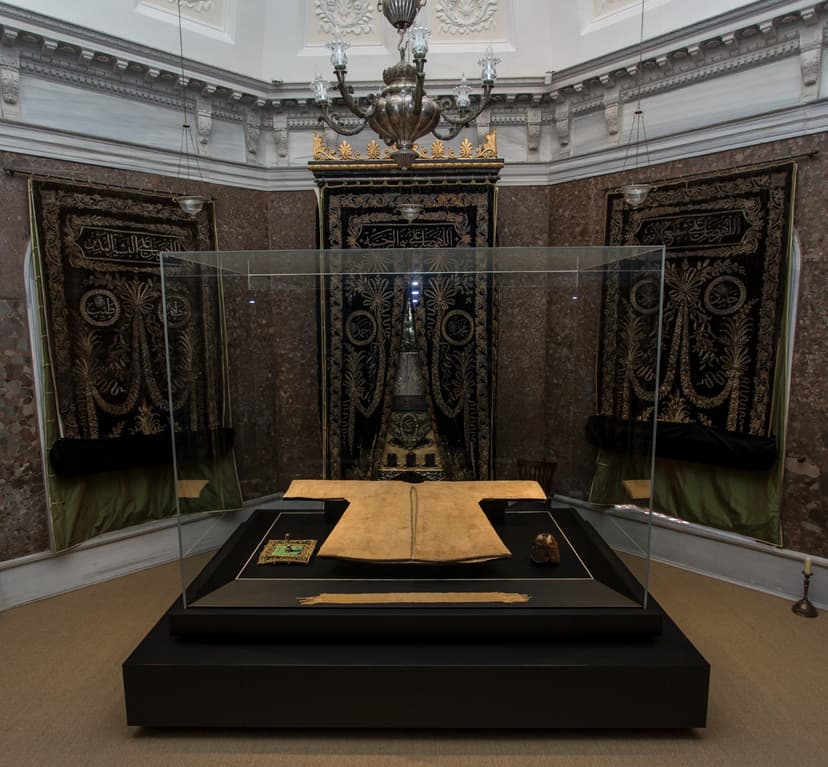
One of the sacred relics gifted to Veysel Karani by the Prophet Muhammad, the Hırka-i Şerif – the cloak that was worn by the Prophet Muhammad – will be open to the public starting...

Russia Flexing Arctic Nuclear Muscle Along Finnish Border, Defense Minister Warns Arctic security is now central to Europe’s stability, Finland’s defense minister has said, warning that Russia is rebuilding Cold War–style military infrastructure along Finland’s border while fortifying its nuclear stronghold in the High North. He also made clear his view that United States military might is very much needed, at least in the short term. Defense Minister Antti Häkkänen said Moscow is doubling down on its Arctic posture: "Russia has most of their biggest strategic capabilities in nuclear, submarines, long-range bombers in the Kola Peninsula area," he stated in a fresh interview. Arctic rivals Washington & Moscow: The Los Angeles-class fast-attack submarine USS Pasadena "They are building new military facilities along our border, same as the Cold War. It would be wise to watch the Arctic and build Arctic capabilities" for deterrence, Häkkänen continued. According to the publication he spoke to: The Kola Peninsula - a 100,000 square kilometer region in far northwestern Russia - hosts the majority of the country’s sea-based strategic nuclear arsenal, such as submarines, as well as long-range aviation assets. As for ongoing discussions within Europe to find an eventual alternative to the US nuclear umbrella, the Finnish defense chief explained his view that "In the longer term, it would be better that the Europeans have their strong capabilities." He added: "But in the short, and even mid-term, we need the US. It's crucial to European security." France and the UK offering to extend their nuclear deterrent across the continent is "good news" - Häkkänen conceded, but added that ultimately "That’s not the question now." Lately, Russia’s Foreign Ministry has sought to made clear that the Kremlin believes the Arctic should remain "a region of peace, dialogue and equal cooperation." The prior comment was issued related to the United States eyeing control over Greenland. A key part of the Trump administration's argument is that Russia and China threaten waters off Greenland - a view firmly rejected by both Moscow and Beijing. 🇷🇺🇬🇱🇺🇸 Lavrov: If Greenland is militarized against Russia, we will respond with appropriate countermeasures, including military-technical ones. The Arctic must remain a zone of peace. pic.twitter.com/2JtnrGS3fS February 11, 2026 President Trump has also claimed on the subject of Greenland that the large island is "vital" to his proposed Golden Dome air and missile defense system. But again, Russia is vowing it would respond if such significant assets were placed on Greenland. Tyler Durden Tue, 02/17/2026 - 02:45
China's Debt Model Creates Danger Of Stagnation Authored by Daniel Lacalle, The latest social financing figures from China show an economy that is increasingly relying on government debt while private demand for credit remains weak. The strength of the Chinese technology sector and its exporting companies gives enough room for leverage. However, behind the weak private sector credit demand lies an evident economic slowdown that the Chinese government acknowledges, challenging consumption patterns, a significant overcapacity problem, and the depth of the housing crisis. The current economic model, focused on delivering 5% real economic growth, requires larger doses of debt to achieve smaller increments of growth, especially productive sector growth. The government has focused on reducing debt and overcapacity imbalances while reorienting its exports and financial system to lessen dependence on the US dollar; however, the main challenge for the Chinese economy remains boosting consumer demand, despite rate cuts and easing financial conditions. To understand the intensity of debt of the Chinese model, we must go to the year 2000 and see the acceleration in the flow of debt, not just the current stock. At that time, real GDP growth was around 8–9%, so each percentage point of growth came with roughly 13–16 points of debt‑to‑GDP. Government debt was very low, at around 25% of GDP, and most leverage sat in the state-owned corporate sector with modest household debt. China was able to deliver near‑double‑digit growth with a total non‑financial debt ratio barely above 120% of GDP. By 2023, non‑financial sector debt had risen to about 285% of GDP, more than doubling its level of 2000. Chinese think‑tanks and official commentators put the “macro leverage ratio” closer to 300% of GDP by 2025, according to the Chinese Academy of Social Sciences. The macro leverage ratio rose by 11.8 percentage points to 302.3 percent in 2025, exceeding the 10.1-point increase reported in 2024. Over the same period, the trend of real GDP growth has slowed to roughly 4–5%, so each percentage point of growth now requires around 60–75 points of debt‑to‑GDP, more than three times the debt per point of growth required in 2000. Furthermore, it comes mostly from government debt. In January 2026, aggregate social financing jumped by 7.22 trillion yuan, significantly higher than in the same month of 2025 and above market expectations, consistent with 5% annual GDP growth and a larger composition of the public sector in the mix. Outstanding social financing reached 449.11 trillion yuan at the end of January, rising 8.2% year‑on‑year, while money supply (M2) rose by 9%. New yuan bank loans were 4.7 trillion yuan, about 420 billion less than a year earlier and significantly below consensus, showing the weak private‑sector credit demand and the prudent approach of Chinese customers and businesses to debt addition. RMB loans outstanding stood at 276.62 trillion yuan, up only 6.1% year‑on‑year, clearly below the pace of overall financing and money growth. The driver of credit growth in China is no longer households and private firms but the government and state-owned companies. The real estate problem has impacted Chinese families in numerous ways. Not only did most of them see the value of their homes decline, but many families invested in the attractive yields of real estate developers’ commercial paper, which led to large losses and even the wipe-out of savings for many. Additionally, despite the excess in supply of houses, prices have not fallen enough to warrant enough appetite for new mortgages, as affordability remains an issue and the traditional prudence of Chinese citizens when it comes to consuming and borrowing adds to the challenge. Beijing plans to issue 4.4 trillion yuan in local government special‑purpose bonds in 2025, 500 billion more than in 2024, looking to boost government investment and a “proactive fiscal policy,” knowing that raising taxes would be exceedingly negative for growth and consumption. Local governments are expected to issue more than 10 trillion yuan in bonds in 2025, including refinancing, general bonds, and new special bonds. The Chinese government knows that it can manage more debt but also sees the weak investment and household spending and acknowledges that large tax increases would be counterproductive. However, to prevent future debt-driven stagnation, a focus on productivity is necessary. The official budget sets a deficit of 4% for 2025. However, once all budget items are consolidated, including government funds, special bonds, and off‑budget vehicles, this true fiscal deficit in 2025 is closer to 9%, up from 7.7% in 2024, according to Rhodium Group and JP Morgan. China increasingly relies on hidden or almost fiscal borrowing to support growth. With outstanding social financing now around 449 trillion yuan and real growth around 4–5%, each incremental point of GDP is increasingly linked with a much larger stock of debt than a decade ago. This rising credit intensity of growth may prevent a significant slowdown but may create a significant fiscal challenge in the future. The Chinese model demands high growth and low taxes; any change to the fiscal system will be negative. For years, local governments relied on the sale of land for property development to collect tax receipts. Thus, the drag from real estate is evident in the economy and in fiscal sustainability. Real estate development investment fell 13.9% year‑on‑year in the first three quarters of 2025, with residential investment down 12.9%, the steepest drop since 2021, according to official figures. Property investment and sales both posted double‑digit declines in 2024, and forecasters expect real estate investment to fall another 11% and sales to drop 7.5% in 2025, according to Reuters, with further declines in 2026 before stabilizing only in 2027… if it happens as fast as consensus estimates. The property sector, once a key engine for economic growth and tax receipts, absorbs new credit to stabilize its accounts without boosting growth or creating a multiplier effect. Additionally, China’s industrial capacity utilization remained at 74.9% at the end of 2025, well below the 78.4% peak reached in 2021. Overcapacity is clear in steel, autos, legacy chips, and parts of sectors like green tech, where expansion has surpassed domestic and external demand. Thus, the purchasing managers’ indices show weak new orders and foreign demand, while bankruptcies and insolvencies have risen, although not to levels that would indicate a financial crisis. The Chinese economy needs to reopen, improve investor and legal security and allow the housing slump to materialize fully to see the type of productive economic growth it needs to avoid much larger increases in debt. Otherwise, the risk of stagnation will likely be elevated as population growth stalls, overcapacity remains, and the stock of unsold property becomes a larger liability. Tyler Durden Mon, 02/16/2026 - 22:25
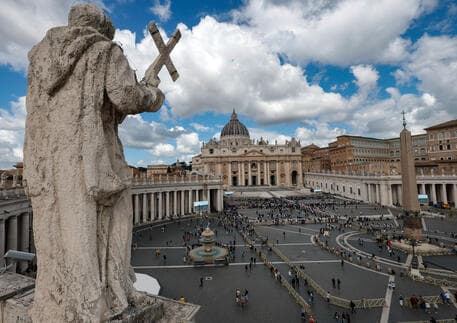
St. Peter's Basilica in Rome is set to introduce new booking applications, expanded terrace bar services, and a fresh font inspired by Michelangelo's work to mark its 400th anniversary.
The Presidential Complex in Ankara is hosting a comprehensive program of Ramadan events, which are open to the public as part of this year's initiative.

Tens of thousands of residents and visitors flooded Nguyen Hue Flower Street on Sunday night, turning the heart of Ho Chi Minh City into a sea of lights, flowers and phone cameras as the annual Tet display officially opened to the public.
Donald Trump publicly stated his intention to make the life of the Tennessee Valley Authority (TVA) CEO 'miserable,' signaling potential pressure on the public utility's leadership.
The National Football League has succeeded in blocking the public release of the NFL Players Association’s annual team report cards, but the ruling has still revealed key criticisms about how players view their teams. The league filed a grievance against the NFL Players Association, arguing that the report cards violated Collective Bargaining Agreement rules limiting public criticism of clubs and owners.

Thailand's Pheu Thai Party has decided to form a coalition government with the Bhumjaithai Party, with a senior party figure stating the public must benefit from the alliance.
Fast-food chain Wendy's is reportedly making a major operational change that has gone largely unnoticed by the public.
Following a series of food poisoning incidents, Hong Kong restaurant operators are calling on authorities to clearly inform the public about the sources of problematic raw oysters.
TMRO is calling for the annulment of the public prosecutor election announcement, citing the discriminatory composition of the Council where only one of ten members is ethnic Macedonian, questioning the country's capacity for an independent prosecutor.

MANILA, Philippines — Will the public expect more close encounters between President Ferdinand R.Marcos Jr. and former Vice President Leni Robredo as the 2028 election season draws closer, or is everything just pure coincidence? Robredo, the incumbent mayor of Naga City, reciprocated Marcos’s gesture by visiting him at Malacañang in Manila on Monday. A pool photo

A survey in Lithuania, initiated by the Special Investigation Service, reveals that the public perceives the use of personal and political connections as the most common form of corruption.
The public in Taiwan is being urged to transition to electric cars as part of efforts to promote sustainable transportation.
Gardaí are renewing their appeal to the public for help in the case of missing person Esra Uyrunn, 15 years on from her disappearance.

Desislava Zhelyazkova, Deputy Mayor for Education in Sofia, announced plans to open schoolyards to the public and is considering a program to hire more psychologists to work with children and youth outside of school.
Manet states that Thai ordnance continues to pose a threat from unexploded ordnance (UXO) to the public in Cambodia.

A Spanish article explores why 17th-century libertarian ideas, when combined with modern thought, continue to fascinate the public.
A visitor center has opened at the construction site of the Old Stock Exchange (Børsen) in Copenhagen, allowing the public to observe the ongoing reconstruction of the historic building that was damaged by fire.

The publication of Dr. Péter Kende's first book on Orbán led to repercussions including tax audits, canceled TV shows, and disrupted readings, which he details in his third Orbán volume.

Stoil Tsitselkov, who resigned as Vice President for Fair Elections, has stated he will not resign from the Public Council of the Central Election Commission (CEC), defiantly saying he will 'surf on the tears of the disappointed.'
Taiwan's President and Sports Minister have encouraged the public to engage in exercises following the holiday period.

While tech leaders are fully invested in artificial intelligence, public sentiment remains more cautious and less enthusiastic about its widespread adoption.
The Attorney General's Chambers (AGC) announced plans for the long-discussed separation of powers between the Attorney General and the Public Prosecutor, aiming to create a new prosecution department.

A list of pharmacies on duty for today has been released to inform the public of available services.
Kostas Tsoukalas, spokesperson for the PASOK party, has accused the Greek Prime Minister of making 'lies and inaccuracies' in a recent Sunday post, suggesting the Prime Minister is constantly misleading the public.

The M-1 and M.A.M.A. music awards drew significant attention for celebrity appearances and their fashion choices, with an invitation for the public to vote on their favorite looks.
The government is moving forward with plans to separate the powers of the Attorney General and the Public Prosecutor, which will lead to the creation of a new prosecution department.
NFL wide receiver Rondale Moore, who played most recently for the Minnesota Vikings, was found dead Saturday night in Indiana, authorities said. Floyd County Coroner Matthew Tomlin did not share additional details on the circumstances of Moore's death but said there was no threat to the public and an autopsy would be conducted Sunday. Moore, a receiver and return specialist drafted in the second round out of Purdue University, spent his first three years in the NFL with the Arizona Cardinals.

Tech leaders are beginning to worry about the public’s underwhelming enthusiasm for their plans to remake the world with artificial intelligence. Will that burst the bubble?

The publication 'The Week' has released an article titled 'All you need to know about everything that matters,' aiming to provide comprehensive coverage of important topics.

A new initiative between the Greek Ministry of Interior and Google aims to boost practical AI and digital work skills within the public sector starting in 2026.

UK budget surplus hits record in January and retail sales rose, while private sector activity is strengthening in February UK reports record-breaking budget surplus of £30.4bn in surprise boost for Rachel Reeves Art and antiques help lift retail sales in Great Britain to biggest monthly rise since 2024 The jump in tax receipts last month may show that UK government receipts are starting to get the boost from inflation and wage growth earlier in the year. Nick Ridpath, research economist at the Institute for Fiscal Studies, says: Today’s data on the public finances is particularly important, given the outsized impact of January’s self-assessment returns on revenues and borrowing for the year as a whole. Income tax receipts had been a little disappointing over 2025, lagging behind forecasts even as inflation and wage growth exceeded expectations. But today’s data shows that self-assessment revenues in January were almost £2bn (6%) higher than forecast. Mail order retailers, which are predominantly online, experienced a boost from retailers selling sports supplements, as well as continued strong sales volumes by online jewellers. Comments from jewellers reported that demand had hit unprecedented levels. Continue reading...
Jared Isaacman. Anna Moneymaker/Getty Images NASA Administrator Jared Isaacman blasted the "troubling" failures of the Boeing Starliner mission. In a letter to NASA staff, he said it wasn't initially deemed a mishap due to reputational concerns. A report into the mission found "unprofessional behavior," including yelling in meetings. The head of NASA sent a scathing letter to employees on Thursday, outlining the failures of the botched Boeing Starliner mission that left a pair of astronauts stuck in space. Jared Isaacman slammed "design and engineering deficiencies" but said the "most troubling failure" was decision-making and leadership. "If left unchecked, [it] could create a culture incompatible with human spaceflight," he added. The mission took place in June 2024, flying two NASA astronauts to the International Space Station. However, helium leaks saw Starliner's thrusters malfunction. The mission was supposed to last eight days, but the pair ultimately spent over 90 days in space before returning to Earth on a SpaceX flight. "We returned the crew safely, but the path we took did not reflect NASA at its best," Isaacman told staff. Also on Thursday, the incident was formally designated as a "Type A mishap" — the most severe level, on par with the Columbia and Challenger Space Shuttle disasters. NASA defines such mishaps as those causing more than $2 million in failure costs, the loss of a vehicle or its control, or deaths. However, a mishap was not initially declared for Starliner, despite a loss of control and, according to Isaacman, "cost thresholds exceeding a Type A mishap by a factor of one hundred," implying a loss of at least $200 million. This decision was influenced by "concern for the Starliner program's reputation," he added. Suni Williams and Butch Wilmore, before boarding Starliner in June 2024. MIGUEL J. RODRIGUEZ CARRILLO/AFP via Getty Images Isaacman's letter wasn't entirely gloomy. He praised the "extraordinary professionalism" of controllers and crew who recovered control of the spacecraft and achieved docking with the International Space Station. "At that moment, had different decisions been made, had thrusters not been recovered, or had docking been unsuccessful, the outcome of this mission could have been very different," he added. 'Unprofessional behavior' included 'yelling in meetings' The letter coincided with the publication of the report into the Starliner mission. It's over 300 pages long and details the engineering and cultural problems. Investigators said there were "times of unprofessional behavior" as NASA and Boeing butted heads on how to bring the astronauts home. "There was yelling in meetings," one interviewee said. "It was emotionally charged and unproductive." Another said they heard safety engineers being berated "off muted mics." "It was probably the ugliest environment that I've been in," said another. The report listed three root causes for the debacle. Firstly, it said NASA had a "hands-off approach" to setting up the contract, leading to insufficient oversight of Boeing's design and testing. Then, Boeing didn't verify the propulsion system across all environments and use cases during the design phase, leaving Starliner exposed to conditions for which it wasn't properly certified, the report said. Lastly, it said the culture at NASA's Commercial Crew Program led to greater acceptance of technical risk and a reluctance to fully challenge Boeing's analyses. Isaacman said that NASA will continue working with Boeing. "But to be clear: NASA will not fly another crew on Starliner until technical causes are understood and corrected, the propulsion system is fully qualified, and appropriate investigation recommendations are implemented," he added. In a statement, Boeing said it was "grateful" to NASA for its "thorough investigation." "In the 18 months since our test flight, Boeing has made substantial progress on corrective actions for technical challenges we encountered and driven significant cultural changes across the team that directly align with the findings in the report." Read the original article on Business Insider
George Mitchell, a former Senate majority leader credited with bringing peace to Northern Ireland, is under renewed scrutiny over his association with Jeffrey Epstein.
The public feud between Micah Parsons and Skip Bayless has taken another turn after the veteran broadcaster issued a direct and personal challenge. Parsons had launched into an expletive-filled attack, accusing Bayless of ragebaiting and questioning his credibility.
Pension payments for the self-employed will begin on February 20, ahead of the public holiday on February 23, 2026, for Clean Monday.
James Deering's 1916 winter home is located less than 10 minutes away from the heart of Miami. Robin Hill/Courtesy of Vizcaya Museums and Gardens Vizcaya, built by James Deering more than a century ago, might be Miami's most valuable real estate. The 45,000-square-foot mansion has a total of 54 rooms, with the main house open to the public. Citadel CEO Ken Griffin began assembling a waterfront compound next to the historic mansion in 2022. The exorbitant price tags on Miami's luxury real estate are not a secret to anyone, least of all the flock of billionaires moving to the city. But unlike the high-rise apartments in the financial center of Brickell or exclusive mansions in Indian Creek — where you might be neighbors with Jeff Bezos or Ivanka Trump — the city's potentially most valuable piece of real estate is decorated with limestone, mangroves, and tiles salvaged from Cuban estates. Built between 1914 and 1922 by International Harvester heir and Gilded Age millionaire James Deering as a winter home, Villa Vizcaya sits fewer than 10 minutes from downtown Miami, in a waterfront neighborhood that's quickly becoming a magnet for the city's new billionaire residents. While built in the years following the Gilded Age, it is notable for its Gilded Age-era extravagance, technologies, and collection of fine art. Vizcaya Museum & Gardens estimates the mansion cost $26 million to build, which is more than $800 million in today's money, per the Bureau of Labor Statistics. Florida International University estimates that the mansion is worth over $1 billion today. In 1962, Miami-Dade County bought the property for $1 million, and today, the 45,000-square-foot mansion and its surrounding gardens operate as a museum open to the public. Shortly after announcing that Citadel would move its headquarters from Chicago to Miami, CEO Ken Griffin bought up a waterfront compound less than a half-mile from Vizcaya, in the neighborhood of Coconut Grove. The $106.9 million sale set a country record for the most expensive residential property purchase at the time. Since then, the hedge fund magnate has proposed relocating the historic Villa Serena mansion, located on his estate, to Vizcaya's campus after he donated $20 million to Vizcaya Museum and Gardens. Take a look inside James Deering's historic mansion and see how its new neighbor could alter the surrounding landscape. Vizcaya was James Deering's winter home from 1916 until his death in 1925. Robin Hill Photography/Courtesy of Vizcaya Museum & Gardens Struggling with illness toward the end of his life, James Deering came to Miami, then a small city surrounded by mangrove forests and wetlands, looking for tropical warmth, which was believed to help improve health. By the turn of the century, the Deering family had begun to develop estates around South Florida, with patriarch William Deering purchasing a home in Coconut Grove in 1900. By the time James Deering began building Vizcaya, his brother, Charles Deering, was also developing a winter home in the south of Miami. The property, known today as Deering Estate, also operates as a museum and is open to the public. The main house features 54 rooms, including 34 rooms decorated with their original furniture. Kristine Villarroel/Business Insider Spanning over 45,225 square feet, Vizcaya's main house features the living spaces of James Deering himself, his guests, and the house staff. Envisioned by interior designer Paul Chalfin, Vizcaya drew inspiration from the Italian Renaissance, adapted to South Florida's subtropical climate, and showcases furniture, artworks, and artifacts purchased by Chalfin and Deering on their travels to Europe. Although Miami's population was estimated to be only 10,000 in 1916, the construction of the Vizcaya estate employed an estimated 1,000 workers, many of whom were Black immigrants from the Bahamas. Apart from the main house, Vizcaya is also home to the Vizcaya Village, the historic quarters of the mansion's workers and farmers that allowed Vizcaya to serve as a self-sufficient farm-to-table estate. The Village expands over 12 acres and includes 11 "architecturally significant" buildings, according to the museum's website. The tour begins in the courtyard, which is adorned with tropical plants. Kristine Villarroel/Business Insider Lined with tropical plants such as palms and philodendrons, the courtyard highlights South Florida's natural beauty while reflecting the mansion's European inspirations. While today the courtyard is covered by a glass canopy that allows for the estate's air conditioning, it was originally open to the elements, allowing the tropical climate to seep into the main house. Meant to be used as Vizcaya's main entrance, the East Loggia opens up to the Biscayne Bay. Kristine Villarroel/Business Insider Featuring marble floors and columns and decorated ceilings, the East Loggia was meant to serve as Vizcaya's main entrance for guests arriving by sea, which was Deering's intended — and preferred — way of entering the mansion. It was used as an entrance for guests who arrived by boat, while the current main entrance of the museum was used as a back entrance for guests arriving by car. The room also features a model boat hanging from its ceiling in honor of the explorers who inspired Deering's interpretation of Vizcaya. Although he began living in Vizcaya during his retirement, Deering included multiple working spaces in the property. Kristine Villarroel/Business Insider James Deering was heir to the International Harvester manufacturing firm, which produced tractors and other agricultural machinery, and he worked as its vice president from 1902 until 1909. Deering might have been one of the first prominent Florida "snowbirds," retirees who travel South during the colder months. His downstairs library, located in the northwest corner of the main house, is steps from the entrance hall that welcomes guests. It features Deering's personal book collection, desks for him and a secretary, and seats for business guests. When closed, the door leading to the next room — a reception room meant for entertaining guests — is concealed within the book-lined walls. The reception room features a ceiling imported from Venice, which had to be resized to fit. Kristine Villarroel/Business Insider The reception room is lined with tropical-inspired silk panels showing palm trees. Our tour guide brought our attention to the ceiling, which is decorated with sculpted panels that extend to the sides of the room. The ceiling was imported from Venice and purchased before construction on the property was finished. By the time workers were putting up the decorations in the mansion, they realized that the ceiling panel did not fit the room dimensions, leading to the restructuring of the panel, which curved into the walls. "We should remember that this house was built during the First World War," curator Flaminia Gennari said in the audio tour. "So to import large quantities from Italy in the middle of the war was very complicated." Vizcaya's telephone line was one of the first in Miami. Kristine Villarroel/Business Insider Wired throughout the house, Vizcaya features a highly innovative telephone system for the time. Only 17 years before the start of Vizcaya's construction, the Miami Telephone Company began providing telephone service to the city. Vizcaya's telephones also featured automatic electric exchange, allowing users to connect directly to the number they dialed without going through a human operator. The telephone room, located between two of Vizcaya's main entertainment rooms, was meant for guests to communicate privately without disturbing the flow of the entertainment. The living room showcased Deering's most impressive collections. Kristine Villarroel/Business Insider The living room, with its 1600s limestone fireplace, features some of Vizcaya's most impressive items, including an "admiral carpet" originally commissioned in the 1450s by the grandfather of King Ferdinand II of Spain, the Spanish king who sponsored Christopher Columbus' exploration of the Americas. The room also features throne-like armchairs where US President Ronald Reagan and Pope John Paul II sat in 1987 during the Pope's visit to America. A centerpiece of the room is the Welte Philharmonic Organ, designed to fill the house with music through elaborate sound systems. Designed for guests rather than full-time professional players, the organ uses perforated paper rolls to aid the musicians' performance by adjusting notes and volume. Concealing the organ pipes is an oil painting, which was cut in half to cover wooden doors. "Chalfin had the idea of cutting it in half and using it as the doors of the organs, which is not a very respectful thing to do for a representation of the Virgin Mary, the child, and the saints, but it somehow testifies to the freedom and positive carelessness that they had around old objects," Gennari said in the audio tour. The mansion's formal dining room features the house's oldest artifacts, although it was rarely used. Robin Hill Photography/Courtesy of Vizcaya Museum & Gardens While Deering himself didn't often eat in the formal dining room, he made sure it was impressively decorated for his guests. Sitting to the side is the room's most awe-inspiring feature: a marble tabletop on carved bases resembling mythical creatures, historical artifacts unearthed near Pompeii, dating back to the times before Mount Vesuvius' eruption. Next to the dining room, on the south side of the mansion, the enclosed loggia gave guests a view of the gardens. Kristine Villarroel/Business Insider The colorful glass panels, designed for Vizcaya, feature the estate's main symbols: the seahorse and the caravan. Providing a view of the garden through the glass panels and double doors, the enclosed loggia allowed guests to take in the garden views while staying cool from the Florida sun. The loggia also connects the gardens to the main house through sculpted iron gates. Kristine Villarroel/Business Insider Aside from giving guests an inside view of the gardens from the ground level, the room also connects the outdoors to the rest of the mansion. Downstairs, the kitchen worked as a serving space for staff to plate food and bring it to guests. Kristine Villarroel/Business Insider When designing Vizcaya, Deering asked for the main kitchen to be built upstairs as he didn't want the smell of food to flood the main entertaining rooms on the first floor. To facilitate the transportation of meals and the serving of guests to the dining room, the entertaining rooms, and the loggia, he built a downstairs serving pantry. Today, the serving pantry cabinets display one set of Deering's fine dining china, the one designated for his 80-foot-long luxury yacht, Nepenthe. Commissioned in 1912 to be shipped from Europe, the original set of china purchased by Deering was transported to America as cargo aboard the Titanic. After the ship sank, a replacement set was ordered and is now displayed. The kitchens feature state-of-the-art Gilded Age technology. Kristine Villarroel/Business Insider Throughout the house, Deering incorporated cutting-edge technology, including annunciators with bells connected throughout the house that Deering or guests could ring at any time to get the house staff's attention. Another then-advanced feature of the serving kitchen were its refrigerators, which were rare at the time. The kitchen also featured a warming oven that helped keep food warm while guests were served. Connecting to the upstairs kitchen, which serves as the house's main cooking area, was a dumbwaiter: a food elevator meant to carry the food cooked upstairs to the downstairs plating area, where staff would then take it to the main entertaining rooms, like the dining and sitting rooms. Upstairs, 24 rooms housed guests, staff, and Deering himself. Kristine Villarroel/Business Insider Nine of the bedrooms were dedicated to guests and each was given a name and decorated uniquely, showcasing the artifacts and furniture purchased by Deering and Chalfin on trips to Europe. While not open to the public, an additional 14 rooms housed staff. Another then-advanced technological feature of Vizcaya was its elevator. Kristine Villarroel/Business Insider Deering was motivated to move to South Florida because of his illness, so accessibility features were built throughout the house, including an elevator he would use when using a wheelchair or to avoid walking upstairs. Today, the elevator isn't open to the public, and the museum's second floor is not wheelchair accessible. Deering's main office was inspired by the Napoleonic era. Kristine Villarroel/Business Insider Connected to Deering's bedroom and bathroom, the sitting room was his office where he would tend to business and personal matters, such as sorting his mail. The decoration style was inspired by Napoleonic France. Deering's bedroom was modest compared to some of his guest bedrooms. Robin Hill/Courtesy of Vizcaya Museum and Gardens Unmarried all his life, Deering's room features a single bed rather than a larger size, and his room is furnished for practicality rather than aesthetics. His personal bathroom has one of the most breathtaking views of the property. Kristine Villarroel/Business Insider Opening onto a balcony, Deering's bathroom overlooks Biscayne Bay and offers one of the best views of the house, although it is not accessible to the public today. The closed-off balcony also leads to a secret door to the Espagnolette, the guest bedroom located next to his, usually reserved for Deering's dearest guests. Spiral staircases lead to the South tower. Kristine Villarroel/Business Insider A set of spiral staircases leads up to the South tower, one of the two guest suites overlooking the estate. The tower bedroom has views of the bay and the gardens. Kristine Villarroel/Business Insider The corner room atop the North tower was designed to transport guests to Europe. "Water reflects upwards to the ceiling and the sound of waves is audible in this room, precisely as upon the quay of this great canal of Venice," noted Chalfin about the room, according to the mansion's website. A central piece in the room is a large wardrobe assembled with 1700s Venetian panels, as well as antique painted closet doors. The breakfast room was Deering's preferred dining space. Robin Hill Photography/Courtesy of Vizcaya Museum & Gardens Back on the second floor, the breakfast room was the central entertaining spot. The room is lined with oil paintings depicting ocean scenes, and the windows slide into pocket doors, revealing views of the garden. It also features a sound system, with a piano hidden in a room off the spiral staircase next door and connected to the breakfast room through floor vents that allow sound to travel into the space. Most of the time, Deering opted to dine in this room rather than the formal dining space. Tucked next to the breakfast room is the main kitchen. Kristine Villarroel/Business Insider Designed to maximize staff efficiency, the main kitchen upstairs has different areas for different tasks, including separate sinks for washing dishes and produce. It also features ice boxes, or refrigerators of the time, powered by salt water. During Deering's time at the estate, Vizcaya employed two French chefs dedicated to food and pastries. Food served at the mansion was sourced from the staff village built across the street, where a farm provided vegetables, dairy, chicken, herbs, and citrus. "You and I could come down and drive into the farm area, stop and buy a dozen Deering eggs and take them home and have them for breakfast, and I think that was probably particularly important during World War I," historian Arva Moore Parks said in the audio tour. "He was able to supply not only himself but his workers also." Inspired by European designs, the gardens feature mazes, terraces, fountains, and more. Kristine Villarroel/Business Insider Inspired by 17th- and 18th-century Italian and French villas, the Vizcaya gardens feature a variety of scenes, from a garden theater to multiple paths and mazes, intended to highlight and enhance the native South Florida flora surrounding the estate. The original layout of Vizcaya featured over 180 acres of subtropical forests. Today, that number has gone down to 50 acres. In 1987, President Ronald Reagan hosted Pope John Paul II at the estate. Diana Walker/Getty Images On September 10, 1987, President Ronald Reagan welcomed Pope John Paul II at Vizcaya, where the two conversed while exploring the gardens and the estate. Atop a garden mount is the Casino, a focal point of the gardens. Robin Hill/Courtesy of Vizcaya Museums and Gardens Located at the top of garden mounds designed to block the reflection of water ponds into the main house, the garden casino — Italian for "little house" — was a space where Deering and his guests could take in the garden views or enjoy the subtropical weather without being in direct contact with the sun. Inside the building, a painted ceiling depicts heavenly images. Underneath, bathrooms and other now closed-off areas hide under decorated ceilings. Originally, the casino overlooked a water park part of the estate, where gondolas would be launched, a crucial part of Deering's vision for Vizcaya. Today, the water park no longer exists, and the land is instead taken up by a Catholic church, hospital, and schools after the Deering family sold part of the property to the Catholic Diocese of St. Augustine in 1946. The opposite side of the estate was once used for clandestine entertainment; now, it is a café. Kristine Villarroel/Business Insider While today a café sits underneath the mansion, the space served as a leisure center during Deering's stay. The rooms were filled with billiard tables, bowling alleys, and leather chairs. Hidden underneath the billiards table was also a roulette table, which Deering often used when his college friends visited the estate. The mansion, which opened at the peak of the Prohibition era, also had a decent supply of liquor, which Deering smuggled into the estate and hid in secret bars and cellars. The swimming pool is half-covered, providing relief from South Florida's relentless sun. Robin Hill/Courtesy of Vizcaya Museum and Gardens Tucked next to the leisure rooms underneath the main house is the half-indoor swimming pool, in which Deering is said to have only swum once. Designed as the main entry point to the mansion, the east side of the mansion opens up to a stone barge in the Biscayne Bay. Kristine Villarroel/Business Insider When he first moved into his winter home in December 1916, Deering arrived by sea on what he intended was the front entrance to Vizcaya. Opening up to the Biscayne Bay, the waterfront side of the property features a stone barge, a sculpted structure that acts as a breakwater and protects the main house from changing tides and waves. Today, the mansion hosts private events and has become a local staple for Quinceañera pictures. The mansion is often used for private events. Kristine Villarroel/Business Insider Purchased from the Deering family by Miami-Dade County for $1 million in 1962, Vizcaya today operates as a museum open to the public and for private reservations. The estate often serves as the backdrop for Quinceañera pictures among Miami's large Hispanic population. Walking around the gardens, I saw multiple young women dressed in extravagant gowns posing in the many stunning locations of the estate. Along with being a photographic hot spot, Vizcaya also hosts private events, from Miami Swim Week runway shows to floral-decorated weddings in the gardens. Today, the estate remains an icon of Miami, a city that many would often relate to modern luxury rather than the old and classic wealth on display in Gilded Age-style mansions like Vizcaya. The Vizcaya Village could be the future home of Ken Griffin's Villa Serena. Robin Hil Photography/Courtesy of Vizcaya Museum and Gardens After purchasing the historic Villa Serena estate in Coconut Grove in 2022, Citadel CEO Ken Griffin proposed relocating the 1913 Mediterranean Revival mansion to Vizcaya's Village campus. The home, designed by architect August Geiger for William Jennings Bryan, a three-time Democratic presidential candidate and former US secretary of state, is considered one of Miami's earliest grand waterfront residences. The proposal would move the century-old home from Griffin's property to Vizcaya's Village grounds, where it would be open to the public for the first time in its history and would benefit from an additional $5 million endowment provided by Griffin for its preservation. Any relocation would require extensive planning and government approvals, which have not yet been cleared. Skeptics have said that moving the structure would be an ambitious undertaking that wouldn't align with preservation goals. "Moving a historic structure is absolutely a last resort solution, to be done only if (there) is no other way possible to save a structure… It is not a preservation-minded alternative just because someone bought it and now doesn't want it," Kathleen Slesnick Kauffman, Miami's former historic preservation officer, told the Chicago Tribune in 2023. The Village originally served as Vizcaya's self-sufficient farm and the servants' quarters. Robin Hil Photography/Courtesy of Vizcaya Museum and Gardens The Vizcaya Village, which covers about 12 acres of agricultural fields and includes nearly a dozen buildings, was originally built as the quarters for the mansion's servants and farmers. Today, the campus houses a café and hosts a weekly farmers market, and is undergoing construction and expansions to transform the grounds into a cultural and community space. The Citadel CEO's $20 million donation will expand the village's role in the community. Robin Hil Photography/Courtesy of Vizcaya Museum and Gardens In November 2025, Vizcaya Museum and Gardens announced a $20 million capital donation from Griffin and said that the funds would be used toward building a brand new Center for Learning and Discovery in the village grounds. Once open, the center will offer educational programming like "hands-on artmaking and urban-agriculture experiences," the museum organization wrote in the announcement. The expansion will seek to expand Vizcaya's role in its community. Read the original article on Business Insider
Mississippi officials have issued a warning for the public to stay out of the water at two specific Mississippi Coast beaches.

US Military Blows Up 3 Alleged Drug Boats, Killing 11, After Lull Since January The Pentagon's whole anti-narco boat operations fell relatively silent for the past more than a month in the wake of the January 3rd US military raid on Venezuela to overthrow the Maduro government. Surely there was still drug trafficking off Latin America, but with 'mission accomplished' in Caracas the public PR 'anti-drug' pretext was no longer needed, apparently. But suddenly, this week, the US military has begun its strikes on alleged drug boats again, with US Southern Command (SOUTHCOM) on Tuesday having announced its forces launched drone assaults on three alleged drug smuggling boats in the eastern Pacific and the Caribbean on Monday. In total eleven people were killed in the renewed operation. "Intelligence confirmed the vessels were transiting along known narco-trafficking routes and were engaged in narco-trafficking operations," SOUTHCOM said Tuesday in a post to X. Illustrative narco-boats file, via X. The military statements said the three boats were allegedly "operated by Designated Terrorist Organizations." The post further referred to those killed as "male narco-terrorists," detailing that eight were killed on two boats in the eastern Pacific - or the Western side of Latin America - and three were killed on a boat in the Caribbean. No American forces were harmed, the post said, in the assault conducted at the direction of Marine Corps Gen. Francis Donovan, who serves as the commander of Southern Command. War (Defense) Secretary Pete Hegseth celebrated the fresh strikes in a post on X, writing, "Turns out President’s Day — under President Trump — is not a good day to run drugs." For all the momentary celebrations at the Pentagon, the supposed 'war on drugs' will be circular and never-ending, as it's been over the past many decades, spanning presidencies. But this is really about American influence and 'ownership' of the region and total dominance of the Western hemisphere. From Vietnam to Iraq to Libya to Syria to Iran, Washington is always looking for some kind of casus belli - even if it has to be manufactured - to sell war to the American people. Turns out President’s Day — under President Trump — is not a good day to run drugs. https://t.co/8c5wMmQbQ2 February 17, 2026 Going back several years, the single biggest sources of the world's fentanyl trade have been consistently identified as China and Mexico. At this point it's impossible to know, and hasn't been disclosed, whether any of the well over 25 boats blown up by US military action off Latin America since September were actually loaded with fentanyl, or in what quantities. Tyler Durden Tue, 02/17/2026 - 19:40
Sportsbooks in the Northeast mauled the public as New York, New Jersey, and Pennsylvania operators had collective 30% holds

Politicians have not prepared the public for a dangerous new era

His maximal studies of US institutions such as welfare bureaucracy and an intensive care unit were packed with human detail and free from explicit commentary • Frederick Wiseman, prolific documentary film-maker, dies aged 96 The documentary form is often thought to be governed by a manageable feature-length high concept: the story of a person, an institution, an historical episode. The subject itself and the film’s attitude towards it, its editorial slant, are habitually plain enough and the procedure is metonymic: the camera focuses on a part, and the whole is illuminated by implication. Often they have a sexed-up, quirky story to tell, which might mean a selective and sneakily tendentious approach to editing the material. But that is not quite the case with the films of Frederick Wiseman. His colossal, immersive movies about ordinary people and ordinary lives enclosed in some kind of institution, and characterised by the absence of voiceovers, intertitles or the off-camera directorial presence of the interviewing voice, are not amenable to the elevator pitch; they are the entire elevator shaft itself, and the whole building that houses it. Whereas epic-length films might be generally held to be appropriate for big and distinctively historical subjects, such as Claude Lanzmann’s Shoah or Marcel Ophüls’s The Sorrow and the Pity, Wiseman applies the maximal approach to static cross-section studies of sometimes less obviously momentous topics such as Paris’s Crazy Horse nightclub or the French restaurant Le Bois Sans Feuilles. However his greatest works are top-to-bottom body-politic pictures of public institutions, huge, intricate constructions of unglamour; his movies themselves were virtual institutions, movie-edifices mirroring their subjects in architectural form and indeed almost always funded by one particular public institution: PBS, the Public Broadcasting System. Continue reading...
The public inquiry into 2,000 mental health deaths in Essex continues, with bereaved families sharing their testimonies.
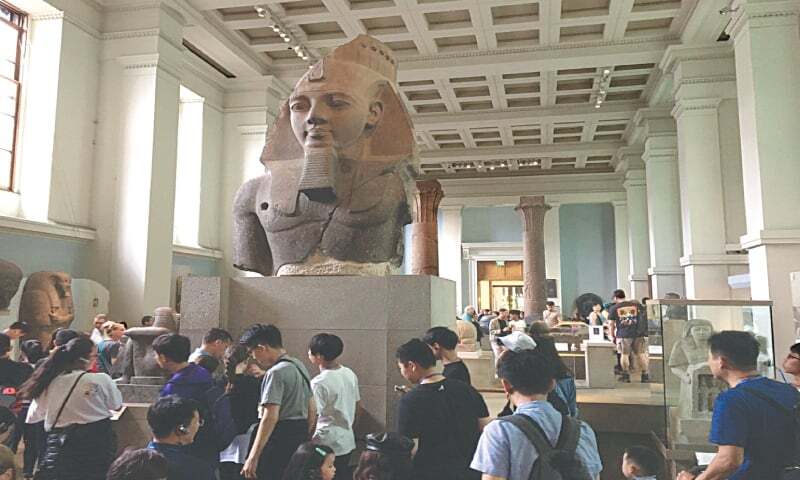
• Historian William Dalrymple criticises move, later says museum has not ‘cancelled’ the term wholesale • Legal challenges instituted against campaign by UK Lawyers for Israel LONDON: The British Museum has removed the word ‘Palestine’ from some of its gallery displays, revising maps and information panels in its ancient Middle East collections on the grounds that the term was used inaccurately and is no longer historically neutral. Reports in leading British papers, including The Guardian, said the changes affect displays in the museum’s ancient Levant and Egypt galleries, where parts of the eastern Mediterranean coast had previously been labelled as ‘Palestine’, and some individuals described as being of “Palestinian descent”. At least one panel in the Egypt galleries was amended to replace “Palestinian descent” with “Canaanite descent”. The revisions followed representations from UK Lawyers for Israel (LFI), a voluntary group of solicitors, which wrote to the museum’s director arguing that the retrospective application of the term ‘Palestine’ across thousands of years obscured historical change and erased the emergence of the kingdoms of Israel and Judah from around the first millennium BCE. In its response, the museum said that while ‘Palestine’ had been widely used in Western and Middle Eastern scholarship since the late nineteenth century as a geographical designation, it no longer carried a neutral meaning and is now often understood as referring to a modern political territory. The museum said it uses ‘Canaan’ for the southern Levant in the later second millennium BCE, UN terminology for modern political boundaries, and ‘Palestinian’ as a cultural or ethnographic identifier where appropriate. The decision has prompted criticism from historians and members of the public, with more than 5,000 people signing a petition calling for the museum to reverse the changes and arguing that they contribute to the erasure of Palestinian presence from public memory. The Guardian also noted that while several displays have been updated, the museum claims these changes were made last year after feedback and audience research. Historian and author William Dalrymple criticised the move, calling it ridiculous to remove the word ‘Palestine’, when it has a greater antiquity than the word ‘British’. “The first reference to Palestine is on the Egyptian monument of Medinet Habu in 1186 BCE. The first reference to Britain is the 4th century BC when it appears in the work of the Greek traveller Pytheas of Massalia,” he wrote on X. In a subsequent post, Dalrymple said that after speaking with the museum’s director, Nicholas Cullinan, he had learned that reports about the museum cancelling the name ‘Palestine’ altogether were inaccurate. Quoting Cullinan, Dalrymple wrote: “To reassure you we are not removing mention of Palestine from our labels. Indeed, we have a display on at the moment about Palestine and Gaza.” According to the historian, the director of the British Museum had said that only two panels in the ancient Levant gallery were amended last year during a routine gallery refresh, and that the director had not been aware of the issue until it became public. Cullinan was quoted as saying he had not seen the letter from UK Lawyers for Israel until recently and was “disgusted by the whole thing”. Criticism Academics who spoke to Middle East Eye defended the historical validity of the term. Marchella Ward, a lecturer in classical studies at the Open University, said “ancient Palestine” was a legitimate scholarly descriptor. “I use the term ‘ancient Palestine’ frequently in my own research and will continue to do so,” she said, adding that claims the term is illegitimate are aimed at “the erasure of Palestinians”. The campaign group Energy Embargo for Palestine accused the museum of hypocrisy, saying it claims to objectively communicate history while “preparing itself to rewrite history, to erase Palestine, and its millions of people, out of the history books”. Critics also argue that the museum’s decision fits into what they describe as a broader pattern of pressure exerted by UKLFI on public bodies. According to the European Legal Support Centre (ELSC), a forthcoming database documents hundreds of incidents of alleged anti-Palestinian repression in the UK between 2019 and 2025, with UKLFI appearing in a significant number of cases. Giovanni Fassina, executive director at ELSC told Middle East Eye that the targeting of the British Museum was part of a “very clear pattern” of letters threatening legal action or alleging breaches of UK law. ELSC and the Public Interest Law Centre have submitted a complaint to the Solicitors Regulation Authority over UKLFI’s alleged use of strategic lawsuits against public participation (SLAPPs). The UK Charity Commission has also confirmed it is investigating the group’s charitable wing following complaints by advocacy organisations. UKLFI had argued in its letter that describing ancient civilisations as Palestinian creates “a false impression of continuity”. Published in Dawn, February 17th, 2026

Waste Of The Day: Secret Settlements Get Taxpayer Money Authored by Jeremy Portnoy via RealClearInvestigations, Topline: Eight Massachusetts state agencies and 13 colleges spent $6.8 million to settle grievances, partly in secret, brought by their own employees from 2019 to 2024, according to a Jan. 16 report from State Auditor Diana DiZoglio. At least 80 of the 263 settlements contain confidentiality language such as a nondisclosure agreement — to keep certain details confidential between the two parties — which the audit claims is banned by state guidelines. Key facts: The Massachusetts Port Authority transit agency was responsible for 11 of the settlements, costing taxpayers $1.7 million. Most of the money came from a $1.4 million settlement in 2022 with an employee who alleged they were denied a promotion because of their gender. The details are sealed by an NDA. Six of the confidential settlements involved alleged sexual harassment, and two involved alleged racial discrimination. Most of the others were about violations of collective bargaining agreements and employees who were fired without cause. NDAs were seemingly used on an arbitrary basis. None of the colleges and state agencies included in the audit had a written policy explaining when confidentiality language should be used, except the inspector general’s office. “By not having a documented policy on the use of confidentiality language in state employee settlement agreements, there is a risk that confidentiality language may be abused to cover up harassment; discrimination; or other inappropriate, unlawful, or unethical behaviors, potentially allowing perpetrators to continue to remain in their positions and engage in further inappropriate, unlawful, or unethical behavior,” auditor DiZoglio wrote. All of the colleges and state agencies receive legal assistance from the state attorney general’s office. The office’s guidelines prohibit nondisclosure agreements, and the attorneys told auditors that all state agencies were made aware of the guidelines. DiZoglio argued that the NDAs may not even be enforceable. In June 2013, Suffolk County Superior Court sided with the Boston Globe newspaper in ruling that settlements between state agencies and their employees are public records. Search all federal, state and local salaries and vendor spending with the world’s largest government spending database at OpenTheBooks.com. Background: The audit is a follow-up to a 2025 report that found 75 state agencies had spent $41 million on more than 2,000 employee settlements from 2010 to 2022. Summary: Massachusetts’ NDAs hurt the public twice. They essentially use taxpayer funds to cover up potentially unethical behavior perpetrated using taxpayer funds. The #WasteOfTheDay is brought to you by the forensic auditors at OpenTheBooks.com Tyler Durden Mon, 02/16/2026 - 11:40
Voting is open for Section V's Boys Athlete of the Week for Feb. 9-15, presented by Faber Builders, allowing the public to determine the winner.

In Malaysia, one question about corruption keeps being asked by the public no matter who is in power: who investigates the investigators? Fresh allegations over the investments of the country’s top anti-corruption official have brought that conundrum back into sharp focus, with critics warning that trust in key institutions – and in Prime Minister Anwar Ibrahim’s reform promises – is on the line. The controversy centres on Azam Baki, chief commissioner of the Malaysian Anti-Corruption Commission...

(ANSA) - MADRID, 16 FEB - A raft travels through the three exhibition rooms of the historic Palacio de Abrantes, in Calle Mayor, with bright colors, decorated surfaces, and provocative ornaments that challenge conventional taste. It is from here, from the Italian Cultural Institute in Madrid, that 'Alchimia. The Italian Design Revolution', a retrospective dedicated to the Milanese collective active between 1976 and 1992, presented as part of the Madrid Design Festival. The exhibition, produced by the ADI Design Museum with the Brohan-Museum, arrives in the Iberian capital after Berlin and Milan, with a layout conceived as an immersive and symbolic journey through objects, furnishings, sketches, and photographs, on display until March 14. Founded by Adriana and Alessandro Guerriero—who was present at the official opening on Sunday evening and is the curator of the exhibition—Alchimia was a workshop of ideas, even before it was a workshop of objects. Guerriero defines it as "a cultural and artistic adventure, guided by a desire to critique beautiful design and functionalism," capable of expressing "both from a theoretical and practical point of view, a project to transform the environment in which people live." Among its protagonists were Alessandro Mendini, Ettore Scottsass, Andrea Branzi, and Michele De Lucchi. The exhibition revolves around the "carpet-raft," a symbolic device that invites the public to climb aboard "without worrying about the route," the curator explained to ANSA. "The exhibition testifies to the extraordinary ability of Italian design to become a cultural expression, a critical tool, and a language of international dialogue," noted the Italian ambassador to Spain, Giuseppe Buccino Grimaldi. He linked the event to the strategy of Deputy Prime Minister and Foreign Minister Antonio Tajani to strengthen exports and investments, with the goal of reaching €700 million: promoting design, he stressed, means enhancing "a constituent element of Italian identity." The exhibition, the ambassador also noted, is "an intellectual reflection, an invitation to overcome aesthetic homologation and industrial standardization through freedom of expression, irony, and experimentation." And "confirms the centrality of Italian design in the European landscape," which sees Italy as the leader with about 20% of the continent's turnover, €3.2 billion in added value, and over 46,000 operators, he noted. The director of the Italian Cultural Institute in Madrid, Elena Fontanella, recalled how design is "a cultural and economic pillar of Made in Italy." She added that participation in the festival confirms the institute's commitment to creating "relationships, diplomacy, and business" through culture. Fontanella also presented the first edition of Italian Design Week in Madrid, promoted by the IIcm and coordinated by Regina De Albertis, who, as artistic director, will also accompany future editions. Angelo Piero Cappello, Director General of Contemporary Creativity at the Ministry of Culture, highlighted design as "a feature of Italian culture made up of tradition, the culture of our past, but also imagination, improvisation, research, and innovation." During the evening of conviviality, paella, and flamenco, the talk—moderated by Regina De Albertis—featured Francesca Caruso, Councilor for Culture of the Lombardy Region, Adrea Cancellato, director of the ADI Design Museum, and architect and designer Patricia Urquiola Hidalgo. Caruso emphasized the economic importance of the sector in Lombardy—33 billion euros in value generated and 378,000 jobs—describing it as "a fundamental driving force." Cancellato echoed this sentiment, defining design as "the true Esperanto of creativity, capable of speaking to the world." Read article...
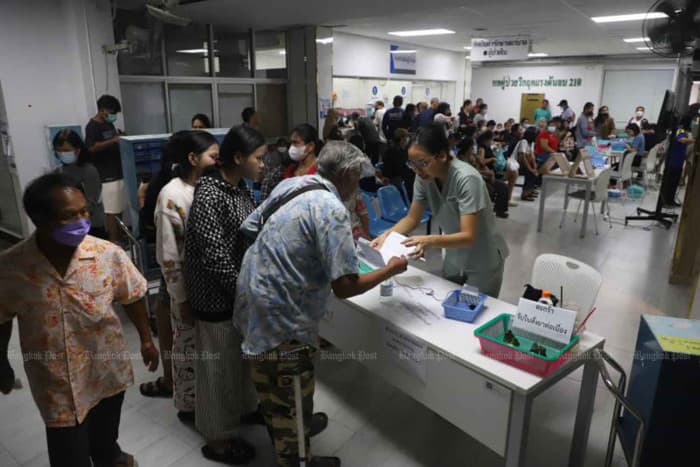
State hospitals in Thailand are grappling with a severe liquidity crisis, intensifying pressure on the Public Health Minister to overhaul the universal healthcare system.

Pension annuity sales have reached record highs, with average pots exceeding £80,000, while the public is invited to share their experiences and expectations regarding inheritance.
Qatar's Ministry of Endowments has urged the public to sight the crescent moon on the evening of February 17 to officially determine the start of the holy month of Ramadan.
An interactive tool allows the public to monitor whether hospital waiting times for treatment are improving or worsening at their local NHS facilities.